Energy investment of £28bn approved by regulator Ofgem
December 4, 2025
Energy grid investment of £28bn to push up household bills
 AFP via Getty Images
Household energy bills will rise to help fund a £28bn investment in the UK’s energy network.
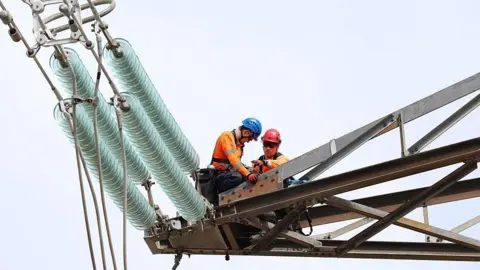
Energy regulator Ofgem has approved the funding in its five-year plan on improving electricity and gas grids. Most of the money will go towards maintaining gas networks, but £10.3bn will be used to strengthen the electricity transmission network.
Households will see an additional £108 added to energy bills by 2031 under the plan.
But Ofgem said that what people would end up paying for energy will only rise by £30 a year, as the investment will help lower the reliance on imported gas and make wholesale energy cheaper.
Companies that run energy networks – including power lines, cables and gas pipes – are separate from suppliers. They have monopolies in different parts of the country.
This plan sets the framework for how they deliver a safe and secure supply, and the cost controls they face for five years, from next year.
Ofgem chief executive Jonathan Brearley said the investment “will keep Britain’s energy network among the safest, most secure and resilient in the world”.
Speaking to BBC’s Breakfast programme, Mr Brearley said the UK needed to move away from its dependence on gas.
“Gas has a really big part to play in our energy system for some time but we need to diversify our risk,” he said.
Diversifying risk means “we’ll be much better at electricity prices in the future and that will protect people’s bills”.
Of the £108 added to energy bills, £48 will be for gas and £60 for electricity.
But Ofgem said the investment will deliver about £80-worth of savings, including £50 in savings alone from the energy grid expansion.
Mr Brearley said the £108 added to bills by 2031 “will go up over the five years, so it’s not all happening at once”.
“It’s about 2-3% on bills in April and increases roughly in a straight line from there.”
The regulator also said the investment will also remove inefficiencies in the system such as offshore wind farms being paid billions a year to switch off as the grid cannot take their power.
Speaking ahead of Ofgem’s announcement, Keith Anderson, the chief executive of Scottish Power told the BBC’s Today programme the removal of those constraints in the system was important.
“This will be the biggest wave of investment in our electricity infrastructure since it was built by our grandfathers back in the 1950s and it will give us a system that is fit for purpose for the country for the 21st Century,” he said.
National Gas owns and operates Britain’s gas transmission network, and will receive funding through the Ofgem plan.
Its chief executive Jon Butterworth welcomed the investment, saying it confirmed “the critical role that the gas transmission system plays in Britain’s energy security now and for decades to come”.
“In the coming weeks, we will undertake a more detailed review of Ofgem’s decision to ensure it enables us to deliver a safe, resilient network that secures Britain’s energy, maintains our industrial competitiveness and supports the country’s clean energy ambitions.”
Greenpeace UK’s senior climate adviser, Charlie Kronick, said the energy grid was “no longer fit for purpose” and needed immediate, vital upgrades.
“This money must be spent effectively, however, with robust safeguards and strong regulation to protect bill-payers, and ensure these upgrades deliver genuine value for money, offering fair but not excessive returns,” he said.
Ofgem’s announcement comes after a government pledge in the Budget to remove certain costs, the equivalent to about £150 from a typical annual energy bill.

Sign up for our Future Earth newsletter to keep up with the latest climate and environment stories with the BBC’s Justin Rowlatt. Outside the UK? Sign up to our international newsletter here.
Search
RECENT PRESS RELEASES
Related Post