Environmental groups praise, raise concerns over proposed Everett soccer stadium
January 2, 2026
The agreements the Kraft Group struck with the cities of Boston and Everett this week come with millions of dollars to mitigate the impact that the proposed 25,000-seat soccer stadium will have on local residents. Environmental advocates are praising the initial package of commitments for the planned new home for the New England Revolution, but say there’s a lot of work ahead in the permitting process.
To reduce car traffic and congestion, the current stadium plans call for only 75 spaces for on-site parking. But observers say that also puts pressure on public transit to get fans to the venue.
Brad Campbell, CEO of the Conservation Law Foundation said the state will need to do more in particular to offset the impact on Boston’s Sullivan Square, which is the nearest major transit hub and will bear the brunt of fans heading to the stadium. Campbell called the infrastructure needs in that area “huge.”
“We need to make sure that those benefits aren’t outweighed by deterioration of air quality and even more misery for commuters and motorists traversing the Sullivan Square area,” Campbell told GBH News.
He thinks a good reference point is the mitigation agreement struck with Wynn Resorts to build its Encore Boston Harbor casino in Everett, which is next door to the proposed stadium site. That agreement included money for improvements to Sullivan Square but few dispute the area is still a traffic-clogged mess.
Few details have been released, but commitments announced so far include $5 million from Kraft for improvements to Sullivan Square infrastructure before the stadium opens, and another $5 million over 15 years. Kraft has also committed to help fund a new entrance to the MBTA’s Assembly station in Somerville to connect the Orange Line to an already planned pedestrian bridge over the Mystic River to Everett.
Then there’s the 43-acre site itself, which contains a shuttered power station: the former Mystic Generating Station along the Mystic River.
While Kraft has agreed to dedicate roughly $100 million towards the environmental cleanup of the site, the current owners are already legally obligated to address contaminated soil and groundwater, according to federal and state guidelines.
Outgoing Everett Mayor Carlo DeMaria is confident the stadium will transform a dirty industrial site into a public asset. The city was home to several other brownfield sites like the former Monsanto plant where the Encore casino now stands. DeMaria said this latest project shows his “commitment to tackling the most contaminated sites” in the city.
“This is not a blank slate. It is a former power plant, and cleaning it up matters,” DeMaria said in a statement.
Patrick Herron, Executive Director at the Mystic River Watershed Association said his organization will be watching closely as the project proceeds through a mandatory state process for environmental review.
“Probably of greatest environmental and public health interest for everybody should be the demolition of the site,” said Patrick Herron, “Demolition can mobilize dust and debris in a way that would be more likely to impact people than once the construction starts and the capping of the material starts.”
The Kraft organization has not yet submitted its initial environmental filings to the state, and did not respond to a request for comment.
According to a preliminary agreement between Kraft and Everett, four acres of the site will be dedicated to publicly-available open space, including a waterfront path and a dock for accessing the Mystic River.
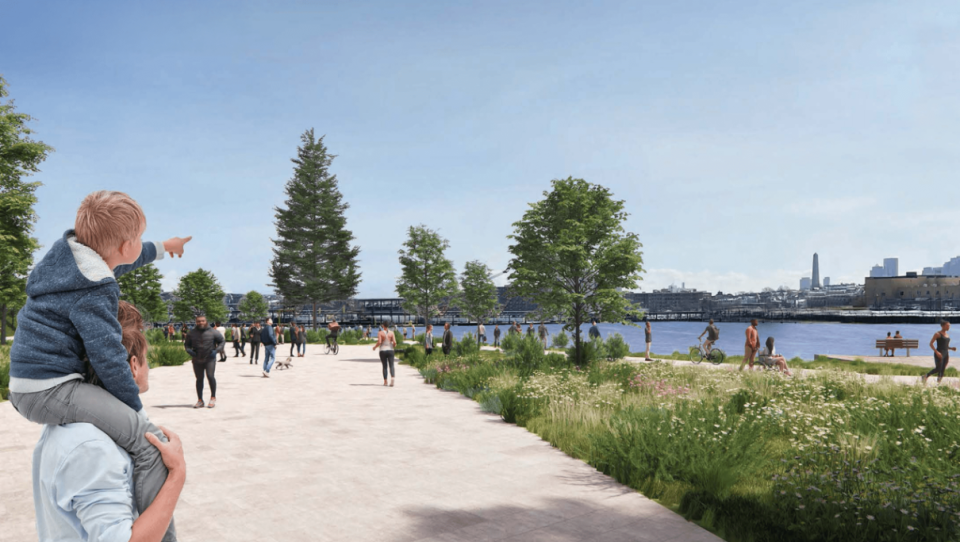
The Kraft Group
Herron is excited at the prospect of a public waterfront park, which he said will “open people’s eyes” to the value of the Mystic River.
“It’s home to one of the largest river herring runs in Massachusetts. And investing in this park can improve climate resilience and provide public access where it’s been missing for so many years,” Herron said.
He encouraged Everett residents to take advantage of the opportunity to help design the new waterfront park.
In a statement to GBH News, Governor Maura Healey said she expects the stadium will have “widespread” economic impacts for the city, the region and the state.
“Our administration is committed to working with all parties to ensure this project is a success,” Healey said.
Search
RECENT PRESS RELEASES
Related Post