Environmental Racism: A Global Overview
December 23, 2025
Explainers
Spotlight Explainers
by Adele Mutti
Global Commons
Dec 23rd 20256 mins
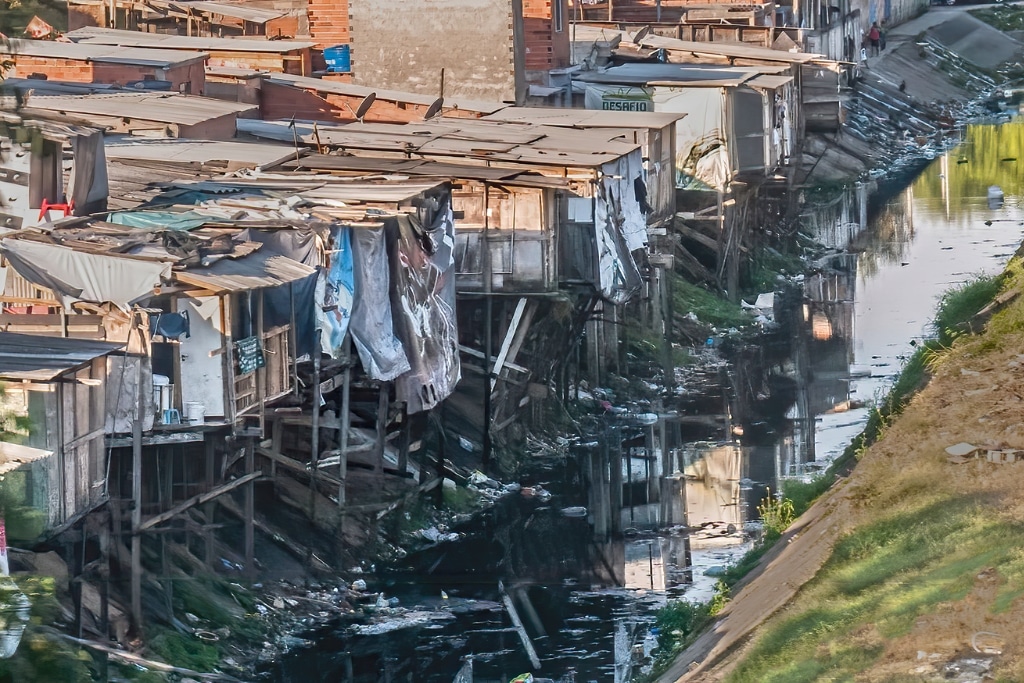
The term environmental racism was coined in 1982 but remains a persistent global reality today, accelerated by both globalization and the unequal impacts of climate change.
—
The concept of environmental racism did not originate from a policy report or a government briefing – it came from the streets. In 1982, residents of Warren County, North Carolina lay down in front of trucks carrying toxic waste to a newly approved landfill. Among the protesters was Benjamin Chavis, who later put a name to what communities across the US had been experiencing for decades: the pattern of placing hazardous sites, polluting industries, and dangerous infrastructure in neighborhoods of colour, while keeping wealthier and whiter areas safe.
Chavis called it “racial discrimination in environmental policy-making” – a system where toxic waste facilities are deliberately sited in minority communities and where people of color are excluded from decisions that directly affect their health. His words captured something that many already knew, but few in power were willing to say out loud.
Four decades later, history is repeating itself. From polluted air in South London to poisoned water in Flint, from Italy’s “Terra dei Fuochi” to the coastal slums of Manila – the communities hit hardest by environmental hazards are still overwhelmingly those with the least political and economic power. Environmental racism is not a relic of the 1980s but rather a global, ongoing reality.
As companies spread their supply chains across national borders, they bring with them polluting industries, typically to countries and communities with the weakest environmental protections. This allows wealthier nations to enjoy cheap goods while the environmental costs fall on low-income or Indigenous populations living near factories, mines, ports, or waste sites.
This isn’t accidental. Global trade rules and foreign investment incentives often reward countries that lower environmental standards to stay competitive. The result is a predictable pattern: toxic exposure concentrated in places with the least political power, from industrial zones in Southeast Asia to mining regions in Latin America and waste-processing hubs in West Africa.
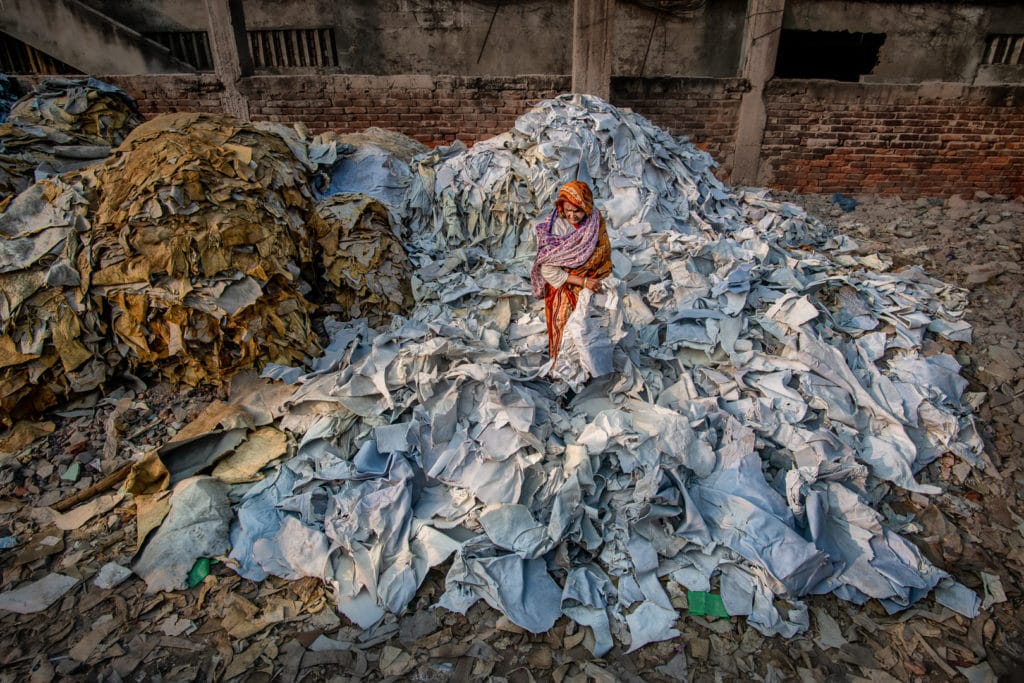
Globalization also pushes its consequences into the waste stream. E-waste, plastics, and discarded goods from richer countries are routinely shipped to developing nations, where informal workers handle them without protections, inhaling toxic fumes and working in contaminated soil and water.
Climate change does not hit everyone equally, and that’s exactly where environmental racism becomes visible. The communities already living with higher pollution, weaker infrastructure, and fewer public services are the same facing the harshest climate impacts.
Heatwaves are a clear example. Neighborhoods with fewer trees, more concrete, and poor-quality housing, often low-income or minority communities, suffer from what is known as the urban heat island effect, suffering a triple whammy of increased daytime temperatures, reduced nighttime cooling and higher air pollution.

Flooding follows the same pattern. Poor drainage, proximity to rivers or industrial zones, and lack of climate-resilient infrastructure mean that marginalized communities flood first and recover last.
The same patterns are noticeable on a more global scale. The countries least responsible for emissions – many in the Global South – face the worst impacts of climate change, including strongest storms, rising seas, droughts, and food insecurity. The people least able to relocate or rebuild are the ones forced to absorb the damage.
Climate change acts like a threat multiplier, amplifying existing inequalities. Communities already exposed to pollution, toxic sites, or poor health outcomes become more vulnerable to heat, contaminated water, crop failures, and displacement. In this sense, climate change does not just overlap with environmental racism – it accelerates it.
As urban areas expand, green spaces, parks, and clean air often become privileges distributed along socio-economic and racial lines. Wealthier neighborhoods host well-maintained parks, tree-lined streets, and cooler microclimates. Marginalized communities, meanwhile, are frequently left with fewer and less maintained green spaces, or none at all.
This uneven distribution isn’t random. It reflects long-standing patterns of discrimination that shape where people live, how infrastructure is built, and which neighbourhoods are prioritized. In many rapidly urbanizing regions, the fastest-growing areas tend to be the least served: overcrowded districts with little space for parks, higher exposure to heat islands, and limited public investment in environmental amenities.
Even when cities try to “green” themselves, these efforts can backfire. Adding parks, cycling lanes, or waterfront developments can sometimes trigger green gentrification, pushing out the same communities that were intended to benefit. Once again, environmental improvements end up reinforcing inequality instead of reducing it.
This pattern repeats globally. From Buenos Aires to Bogotá, from Berlin to São Paulo, studies show that minority and low-income communities consistently have less access to clean, safe, and well-maintained green areas. The consequences are immediate: higher stress, worse air quality, fewer spaces for physical activity, and increased exposure to heat and pollution.

Urban development, when shaped by unequal power and historical discrimination, becomes a silent engine of environmental racism. It determines who gets fresh air and who gets fumes, who has a park outside their door and who has a highway, who lives in a cooling green neighbourhood and who is trapped in an urban heat island. And as cities continue to grow, these inequalities only deepen.
Environmental racism operates through a mix of structural inequalities. Policy decisions often place highways, factories and landfills near minority neighborhoods, locking these communities into polluted environments. Economic marginalization pushes low-income residents toward cheaper housing located in already degraded areas, while political underrepresentation means they have little power to oppose harmful developments. Furthermore, information gaps leave affected communities without the necessary knowledge to protect themselves.
In cities like Manila and Jakarta, flooding consistently hits informal settlements the hardest. These communities are often situated on low-lying, hazard-prone land that wealthier residents tend to avoid. With limited drainage, poor infrastructure, and no legal protection, residents face repeated displacement and health risks every rainy season. Meanwhile, flood-control investments often prioritize commercial districts and affluent neighborhoods.
Urban air pollution disproportionately affects low-income migrant neighborhoods, a phenomenon particularly true in Chinese cities like Beijing, Guangzhou and Shenzhen. Here, migrant workers live close to factories, highways, and waste sites due to low rent and hukou-based exclusion from cleaner residential areas.
Rural environmental racism appears in “cancer villages”, where poor rural communities are located near highly polluting industries (chemical plants, mining, textile dyeing), suffering higher rates of respiratory and water-related diseases. It is estimated that China is home to 459 of them, spread across nearly every province.
Addressing environmental racism requires systemic, not symbolic, change. Community-led monitoring must be strengthened so residents can document pollution and hold institutions accountable. Governments need equitable zoning laws and full transparency on environmental data, ensuring no neighborhood is quietly sacrificed for industrial or infrastructural projects.
Embedding climate justice frameworks into national and local policies can redistribute both risks and benefits more fairly. Corporations must be held accountable for supply-chain pollution and waste dumping, rather than outsourcing harm to vulnerable communities. Crucially, marginalized voices must be included in decision-making through participatory urban planning, and all interventions must be intersectional, recognizing how race, gender, and class together shape exposure to environmental harm.
Environmental racism is a persistent and global challenge, but it is not inevitable. With community engagement, equitable policies, corporate accountability, and inclusive planning, cities and nations can begin to correct these injustices. By recognizing and addressing the unequal distribution of environmental risks and benefits, we have the opportunity to build healthier, fairer, and more resilient communities, proving that a sustainable future can also be a just one.
Featured image: Wikimedia Commons.
Our non-profit newsroom provides climate coverage free of charge and advertising. Your one-off or monthly donations play a crucial role in supporting our operations, expanding our reach, and maintaining our editorial independence.
About EO | Mission Statement | Impact & Reach | Write for us
Tagged:
Climate justice Explainer
Search
RECENT PRESS RELEASES
Related Post