EPA Claims ‘Overwhelming Rejection’ of EVs as It Moves to Loosen Air Pollution Rules
May 18, 2026
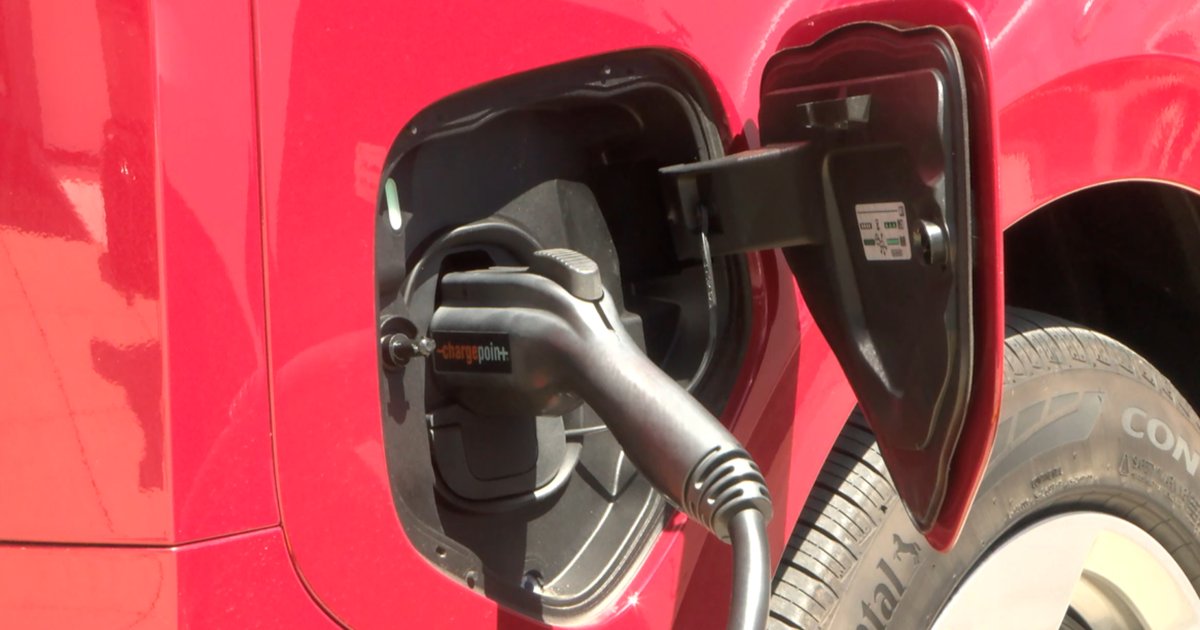
After eliminating the electric vehicle tax credit, rolling back fuel economy standards and blocking California’s stringent vehicle emissions rules, the Trump administration is now citing slowed electric vehicle growth as its rationale for loosening automobile air pollution standards.
In a rulemaking proposal released Friday, the U.S. Environmental Protection Agency announced plans to delay the adoption of Biden-era Tier 4 air pollution standards for passenger cars and trucks and, going forward, to reconsider them.
The agency said that the proposed change is in response to “the overwhelming rejection of Electric Vehicles (EVs) by the American people and manufacturers shifting away from them.” It comes amid debate over environmental regulation and the influence of industry interests in the Trump administration.
Established in April 2024, the Tier 4 Criteria Pollutant Standards represent the most recent batch of vehicle emissions standards adopted under the Clean Air Act. The standards would have required manufacturers to meet fleet-average limits on smog-producing volatile organic compounds, oxides of nitrogen (NOx) and particulate matter tailpipe emissions, with phase-in beginning in 2027.
Get Inside Clean Energy
Today’s Climate
Tuesdays
A once-a-week digest of the most pressing climate-related news, written by Kiley Price and released every Tuesday.
Get Today’s Climate
Breaking News
Don’t miss a beat. Get a daily email of our original, groundbreaking stories written by our national network of award-winning reporters.
Get Breaking News
ICN Sunday Morning
Go behind the scenes with executive editor Vernon Loeb and ICN reporters as they discuss one of the week’s top stories.
Get ICN Sunday Morning
Justice & Health
A digest of stories on the inequalities that worsen the impacts of climate change on vulnerable communities.
Get Justice & Health
When the standards were first adopted in 2024, electric vehicles accounted for 8 percent of new light-duty vehicles (cars, vans and trucks weighing less than 8,500 pounds) sold in the United States.
EV growth was projected to continue. But soon after President Donald Trump took office for his second term in January 2025, he initiated a series of deregulatory actions that stunted EV market growth.
On his first day in office, Trump moved to revoke California’s special exemption from a rule barring states from enacting stricter air and climate pollution rules than the federal government. In June, he signed three Congressional Review Act resolutions officially blocking the state’s stringent vehicle emissions standards.
With the One Big Beautiful Bill Act, Trump also set a September 2025 expiration date for federal tax credits for new and used EV sales. EV sales dropped sharply following the expiration of those credits, data from the U.S. Energy Information Administration shows.
Auto manufacturers are also poised to gain greater latitude following the reversal of the EPA’s endangerment finding, a 2009 rule underpinning federal regulation of greenhouse gas emissions.
Despite the Trump administration’s deregulatory actions in the auto sector and deliberate efforts to slow EV growth, the EPA has pinned the Tier 4 rule change on “faulty assumptions” about the industry by the Biden administration.
“In the intervening years since the Biden-Harris Administration established the 2024 Tier 4 emission standards, the assumptions about the trajectory of EVs have not come true,” the agency wrote in a Friday press release. “This makes the Tier 4 standards unattainable for manufacturers and drives up the cost of vehicles as they try to comply.”
Though the agency noted the federal government’s role in shaping EV markets, mentioning the use of the Congressional Review Act to repeal “EV mandates,” the rationale for the rule change seems to rest largely on apparent consumer disinterest.
“The American people have been very clear; they do not want EVs forced upon them,” EPA Administrator Lee Zeldin said in a press release.
In a follow-up statement to Inside Climate News, the agency provided several examples of major automotive companies discontinuing EV lines months before the administration’s regulatory decisions.
This story is funded by readers like you.
Our nonprofit newsroom provides award-winning climate coverage free of charge and advertising. We rely on donations from readers like you to keep going. Please donate now to support our work.
“I know it is a hard pill for the left to swallow, but Americans did not like EVs being forced upon them,” a representative from the agency’s press office wrote. “There is no other way to say it. Americans made this clear by leaving EVs unsold on car lots, and the Trump Administration listened to the American people.”
In response to the proposed rule change, the League of Conservation Voters has questioned whether the EPA can define its actions as consumer-oriented, especially as Americans face rocketing prices amid Iranian and U.S. conflicts in the Strait of Hormuz, a critical juncture for global oil shipping.
“With gas prices over $4.50 per gallon, the Trump administration’s decision to axe tailpipe standards that can help cars use less gas will further drive up costs for our families, while also making us sicker,” Matthew Davis, a former EPA scientist and the league’s vice president of federal policy, said in a statement issued Monday.
The International Council on Clean Transportation, an independent, nonprofit research organization headquartered in Washington, D.C., has linked declining U.S. EV sales to policy decisions.
In a press release on Friday, the council noted that the electric vehicle sector had experienced growth in all major markets except for the United States in 2025. “One in four cars sold globally last year was electric—a first-ever milestone. …Meanwhile, policy weakening in the United States has caused the market to largely stagnate,” the council reported.
The U.S. share of global EV production declined from 7 percent in 2024 to 5 percent in 2025 as automakers delayed production and reigned in investment, they wrote, decisions that will likely impact those companies’ “long-term competitive advantage.”
The automotive industry as a whole, however, is celebrating the proposed rule change.
“This is a smart and necessary step on the Tier 4 criteria emission standards from Administrator Zeldin and EPA that makes a lot of sense given current market conditions,” said John Bozzella, president and CEO of the Alliance for Automotive Innovation, in a statement to Inside Climate News. The alliance is a Washington, D.C.-based lobby group and trade association whose members include car and light-duty truck vendors operating in the U.S.
“Not only do the emission standards finalized under the previous administration remain unachievable absent significant growth in electric vehicle sales, but they would also make gas-powered vehicles more expensive,” Bozzella said.
The move to delay compliance phase-in dates represents part one of a “comprehensive review of the Tier 4 standards,” the EPA said. In part two, the agency plans to reconsider the entire Tier 4 program, potentially changing standards, implementation dates, test procedures and phase-in schedules.
About This Story
Perhaps you noticed: This story, like all the news we publish, is free to read. That’s because Inside Climate News is a 501c3 nonprofit organization. We do not charge a subscription fee, lock our news behind a paywall, or clutter our website with ads. We make our news on climate and the environment freely available to you and anyone who wants it.
That’s not all. We also share our news for free with scores of other media organizations around the country. Many of them can’t afford to do environmental journalism of their own. We’ve built bureaus from coast to coast to report local stories, collaborate with local newsrooms and co-publish articles so that this vital work is shared as widely as possible.
Two of us launched ICN in 2007. Six years later we earned a Pulitzer Prize for National Reporting, and now we run the oldest and largest dedicated climate newsroom in the nation. We tell the story in all its complexity. We hold polluters accountable. We expose environmental injustice. We debunk misinformation. We scrutinize solutions and inspire action.
Donations from readers like you fund every aspect of what we do. If you don’t already, will you support our ongoing work, our reporting on the biggest crisis facing our planet, and help us reach even more readers in more places?
Please take a moment to make a tax-deductible donation. Every one of them makes a difference.
Thank you,

Anika Jane Beamer
Reporter, Iowa
Anika Jane Beamer covers the environment and climate change in Iowa, with a particular focus on water, soil and CAFOs. A lifelong Midwesterner, she writes about changing ecosystems from one of the most transformed landscapes on the continent. She holds a master’s degree in science writing from the Massachusetts Institute of Technology as well as a bachelor’s degree in biology and Spanish from Grinnell College. She is a former Outrider Fellow at Inside Climate News and was named a Taylor-Blakeslee Graduate Fellow by the Council for the Advancement of Science Writing.
Search
RECENT PRESS RELEASES
Related Post