Everyone Is Wrong About Ferrari’s New Electric Vehicle
May 29, 2026
The data, charts, and storylines that explain Ferrari’s first-ever electric vehicle.
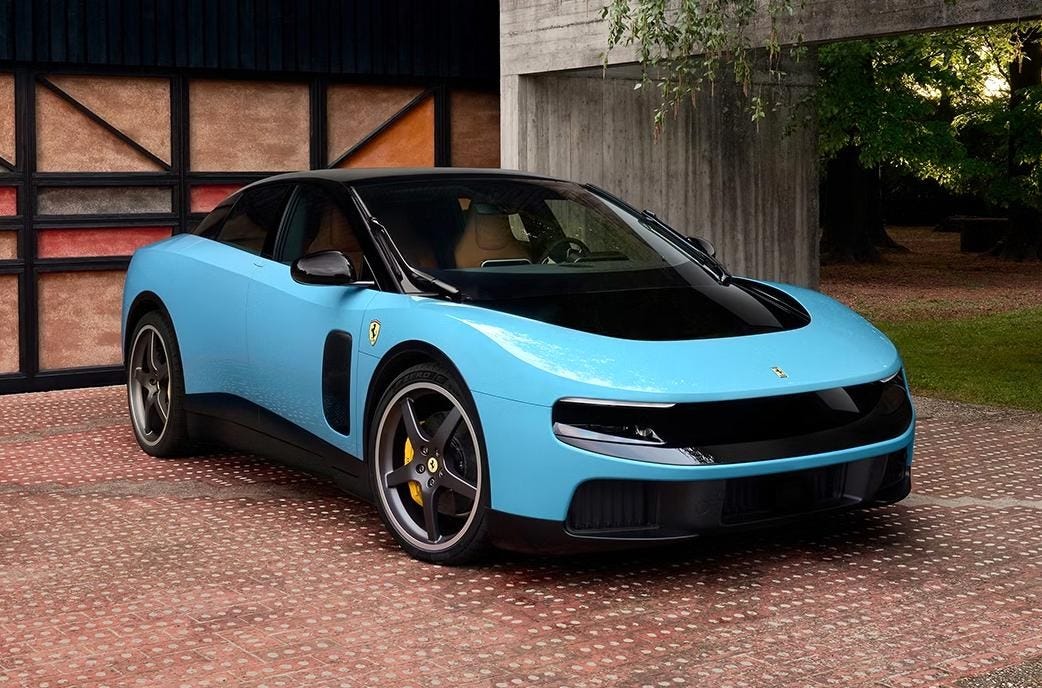
Ferrari unveiled its first-ever fully electric vehicle this week, and it might be the most controversial new car launch of my lifetime. Controversial probably isn’t even the right word because everyone seems to hate it. The memes have been endless, and the company’s stock dropped 8% the morning after the car was announced, effectively wiping out nearly $4 billion in equity value overnight.
On the surface, I get it. The $650,000 Ferrari Luce looks like a Nissan Leaf, performs worse than a Tesla, and costs ten times as much as both. It is the heaviest car Ferrari has ever made, and the company’s former chairman says the best part about the car is that it is so bad the Chinese won’t even try to copy it.
But there is just one problem: these people are wrong. You may not personally like the car’s design, but I’m willing to bet it will sell incredibly well and become a significant source of profit for Ferrari in the future. So for today’s newsletter, I’ve spent a few days compiling a bunch of data points, charts, and context to explain exactly why Ferrari built this car and what it will mean for their business.
Let’s get into it…
-
Let’s start with the financials because if the numbers didn’t make sense, the Luce wouldn’t exist. Ferrari hasn’t released US pricing yet, but the EU price converts to about $650,000 and likely will exceed $700,000 when you factor in customizations. That’s 40% higher than Ferrari’s current average sales price of $500,000. Ferrari can charge its customers such a premium because its cars are viewed as collectibles. The best data point is that Ferrari has produced about 330,000 cars over the last 75 years, and more than 90% of those cars are still in existence today. People don’t get rid of their Ferraris; they collect them. So if we assume that Ferrari will sell about 1,000 of these cars this year, which will be easy to do given the sales backlog is already full and 1,000 cars represent just 5-8% of Ferrari’s annual production, that’s $700 million in revenue. At Ferrari’s 50% gross profit margin, which is 2-4x higher than GM, Toyota, and Porsche (and more comparable to luxury brands like LVMH and Hermès), selling 1,000 EVs annually would generate roughly $350 million in gross profit. Those margins make it a no-brainer. Not only does a luxury EV diversify Ferrari’s offering without diluting its popular internal combustion engine (ICE) vehicles, but the Luce’s high average sales price ($700,000) pulls up Ferrari’s overall average while adding hundreds of millions in incremental annual revenue at premium margins. Not to mention, personalization revenue already accounts for approximately 20% of Ferrari’s vehicle and spare parts revenue, and the Luce might be the company’s most personalized car ever, with glass keys, bespoke color options, custom interior materials, and more.
Search
RECENT PRESS RELEASES
Related Post