Ford’s “Most Radical Change” Was Supposed to Reduce Costs. What if It Does the Opposite?
March 27, 2026
Unintended consequences, especially in business, can be painful lessons to learn. A recent unrelated example was Major League Baseball introducing a pitch clock to improve the speed of the game — it worked well and improved the game, by most accounts. However, the reduced overall game time and the shorter downtime gave fans less time to buy valuable products such as beer, food, and novelties, which is a big moneymaker. Ford Motor Company (F 1.98%) could find itself looking at unintended consequences as it begins its radical production change.
This is the way
More than a century after Ford pioneered the moving assembly line, current CEO Jim Farley thinks the automaker has yet again found a better way of making vehicles. While Ford’s Universal EV Production System, and its developing “assembly tree” process, isn’t the first time the process has been considered — Tesla touted a similar thought process years ago — it has the potential to accelerate Ford into the front of the pack in the race against Chinese competitors for cheaper vehicles and more efficient manufacturing.
“It gets Ford into the game,” Sam Abuelsamid, vice president of market research at Telemetry, told Automotive News. “I’m not aware of any other legacy automaker that is going down this path to this degree yet — certainly not GM and Stellantis. If they execute this properly, they’re back among the leading pack.”
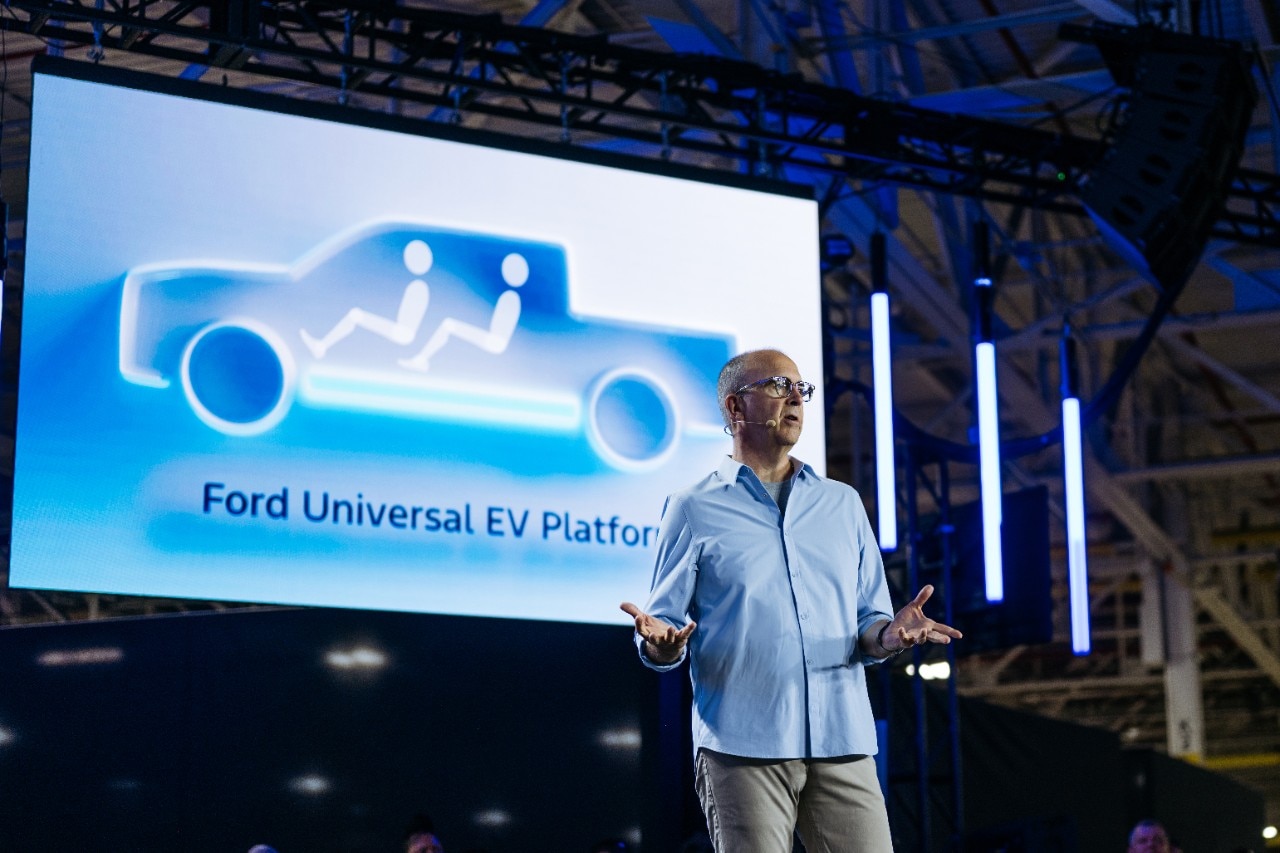
Image source: Ford Motor Company.
The process essentially adjusts a linear vehicle production line in favor of three simultaneous subassemblies. Larger aluminum castings and the battery get joined together later, and the process ultimately generates fewer but larger parts, more efficient workstations, and faster production times. Let’s take a second to raise some questions for investors.

Ford Motor Company
Today’s Change
(-1.98%) $-0.23
Current Price
$11.37
Unintended consequences?
Starting with Ford’s upcoming $30,000 midsize electric pickup in 2027, the automaker will replace hundreds of smaller components with two large aluminum “unicastings” — think the front and/or rear of the vehicle in one piece. While the positives of this production evolution are fairly apparent, it raises questions for repairability.
Ford had to ask itself honestly if consumer repair bills would skyrocket if collision centers had to replace a damaged piece that was one big chunk of the car, rather than a smaller piece, as in previous production scenarios. Not only would higher repair costs be something for consumers to consider, but the impact could be greater in Ford’s prized Ford Pro commercial business, where decisions for large fleet orders hang in the balance of cost variables such as this. While research is in the early stages, so far it has shown that vehicles with large castings can actually be less expensive to fix, provided the vehicles had been designed with repairability in mind — and Ford checked that box from the onset.
For long-term Ford investors, this is a much more important development than many realize, especially if the automaker can avoid any unintended consequences, repairability being one example. Chinese competitors are coming to the U.S. market eventually, and if Detroit automakers aren’t prepared to compete on price, manufacturing, and efficiency, it could be devastating for investors. Fortunately, developments and production evolution, such as Ford’s Universal EV Platform and assembly tree, are critical to becoming more cost-competitive to the rising Chinese auto industry threat. Ford’s history shows it can pioneer new production techniques and thrive, and now the company will be tested again.
Search
RECENT PRESS RELEASES
Related Post