From Chinese Leadership to Global Vision, the Upward Path of Hong Kong’s First HUD Stock
April 22, 2026
Gasgoo Munich-The global automotive industry has entered a deep transition defined by electrification and a decisive push for intelligence. The core battleground for vehicle competition is shifting from powertrain systems to the experience innovation of the smart cabin. As the primary interface for human-vehicle interaction, the smart cabin dictates both the driving experience and brand differentiation. This shift is propelling automotive display technology beyond traditional screen logic, accelerating its evolution toward safer, more immersive, and intelligent solutions.
Head-up displays (HUDs), in particular, are shattering the limitations of traditional instrument clusters. Leveraging “eyes-on-the-road” safety attributes and the immersive potential of augmented reality (AR) integration, HUDs have rapidly descended from high-end options in luxury vehicles to standard equipment in mainstream models, establishing themselves as an indispensable core interface within the smart cabin.
Industry data reveals that the penetration rate of automotive HUDs in China has surged from less than 5% in 2020 to nearly 14% in 2024. Projections suggest it will exceed 40% by 2029, marking a golden window for explosive growth in the sector. Concurrently, technological breakthroughs by local supply chains are accelerating import substitution, allowing Chinese brands to steadily seize control of the industry narrative.
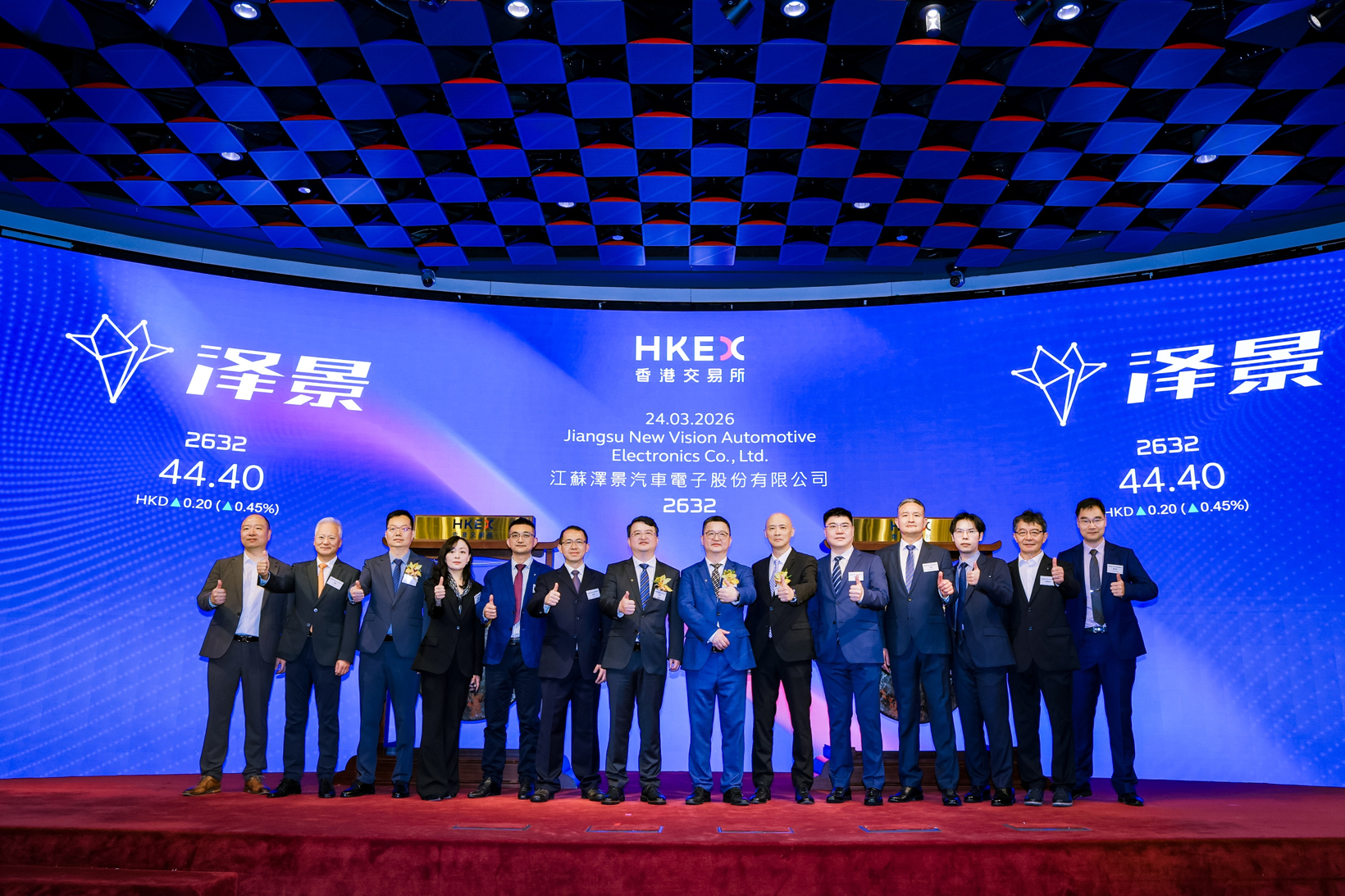
On March 24, Jiangsu New Vision Automotive Electronics officially listed on the Hong Kong Stock Exchange, becoming the market’s first pure-play HUD stock and the first dedicated to smart visual interaction. This milestone represents more than just a capital market triumph; it signals the arrival of a benchmark public company with global competitiveness in China’s smart cabin visual interaction sector. From introducing the first full-color HUD to the Chinese consumer market in 2018 to securing a spot in the industry’s first tier with a 16.2% market share in 2024, Jiangsu New Vision Automotive Electronics has transformed from a technological pioneer into an industry leader in just eight years.
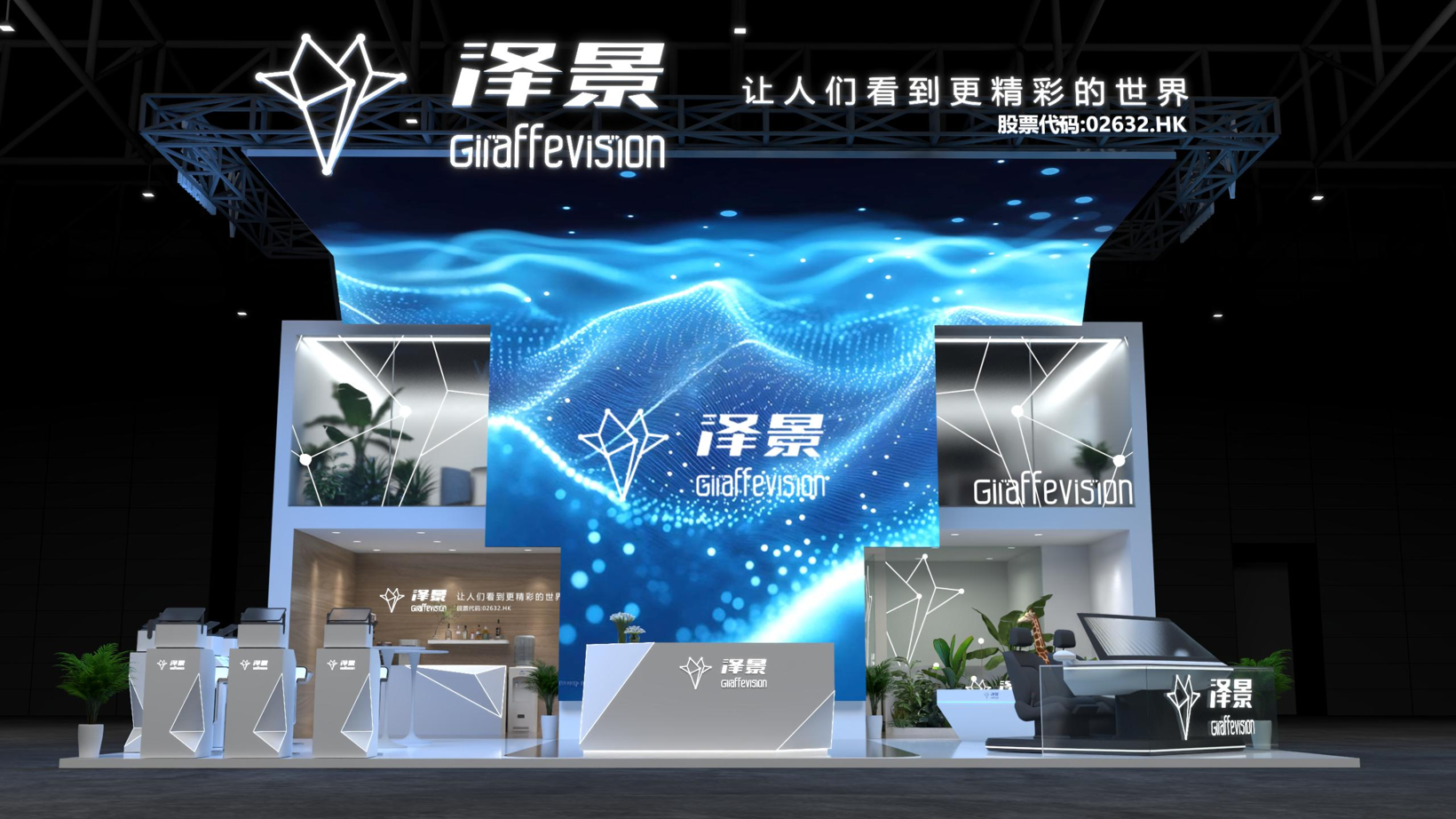
Standing at this new starting point, Jiangsu New Vision Automotive Electronics’s strategic vision has expanded beyond its domestic borders. Its appearance at the 2026 Beijing International Automotive Exhibition just one month post-IPO serves as a critical window for the company to showcase its technological prowess and global ambitions to the wider automotive industry.
The Confidence of a Leader
Amid the global wave of intelligent transformation, China’s smart cabin industry has leapfrogged from playing catch-up to setting the pace. This shift is fueled by a complete supply chain ecosystem, robust market demand, and relentless technological innovation.
For years, automotive HUDs—being technology-intensive components—saw their core optical designs, PGU (Picture Generation Unit) modules, and system integration solutions tightly monopolized by international Tier 1 suppliers like Bosch, Continental, and Denso. Domestic automakers were trapped between exorbitant procurement costs and lengthy adaptation cycles. Worse, they were constrained in developing customized features, making it nearly impossible to craft differentiated cabin experiences.
As intelligentization deepens, the urgency for domestic automakers to control their core components has intensified. Bolstered by policy support for the automotive electronics sector, breakthroughs by local R&D teams, and a maturing upstream supply chain, China’s HUD industry is seizing a historic opportunity for comprehensive import substitution. With local vendors steadily gaining market share and rewriting the competitive landscape, Jiangsu New Vision Automotive Electronics has emerged as both a key participant and a leader in this transformation.
Having cultivated expertise in the HUD field for over a decade, Jiangsu New Vision Automotive Electronics has built a full-stack, proprietary system spanning optical design, mechanical engineering, electronic architecture, software algorithms, and human-machine interaction. With over 300 core patents to its name, the company has achieved full autonomy from core components to system solutions. In 2018, Jiangsu New Vision Automotive Electronics’s full-color HUD entered mass production with the NIO ES8, marking the first large-scale deployment of a domestic HUD in a high-end new energy vehicle and kickstarting the acceleration of import substitution.
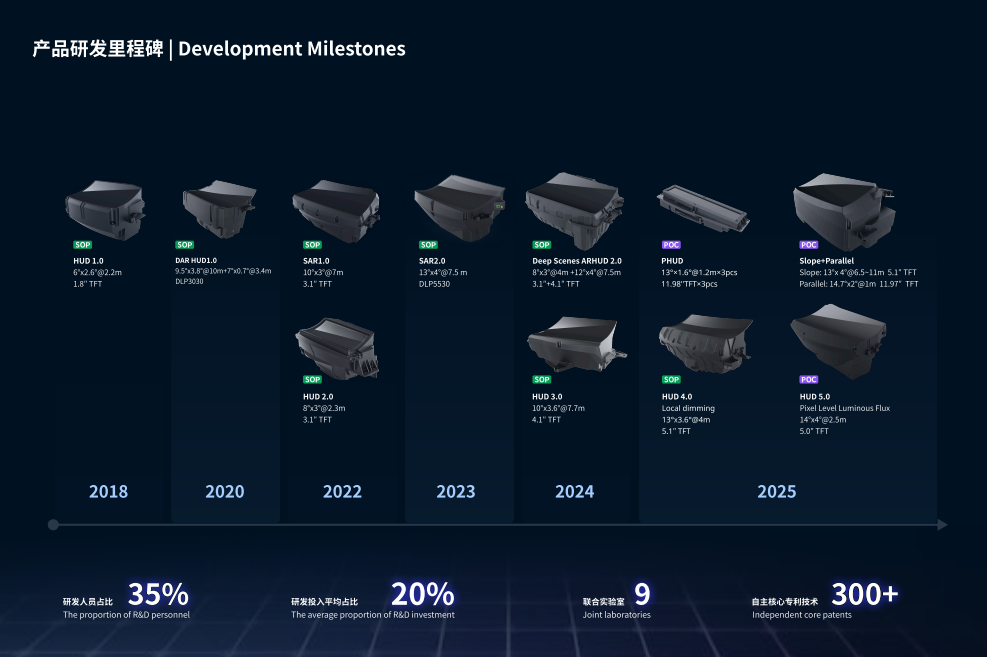
Leveraging continuous technological iteration, Jiangsu New Vision Automotive Electronics has established a comprehensive product matrix covering W-HUD, AR-HUD, LCoS AR-HUD, and dual-focal plane AR-HUD, ensuring its technical cadence aligns with market demand. This accumulation of technology has translated into tangible market results: in 2024, the company held a 16.2% market share, securing its place in the first tier of domestic vendors. By 2025, monthly peak shipments exceeded 80,000 units, with annual deliveries surpassing 800,000. By the end of 2025, cumulative shipments had breached 2.3 million units.
Regarding customer coverage, Jiangsu New Vision Automotive Electronics has partnered with 22 mainstream OEMs, including NIO, Li Auto, Xiaomi, BYD, Chery, and Geely. It has secured design wins for over 101 vehicle models, spanning new forces, traditional domestic brands, and joint ventures.
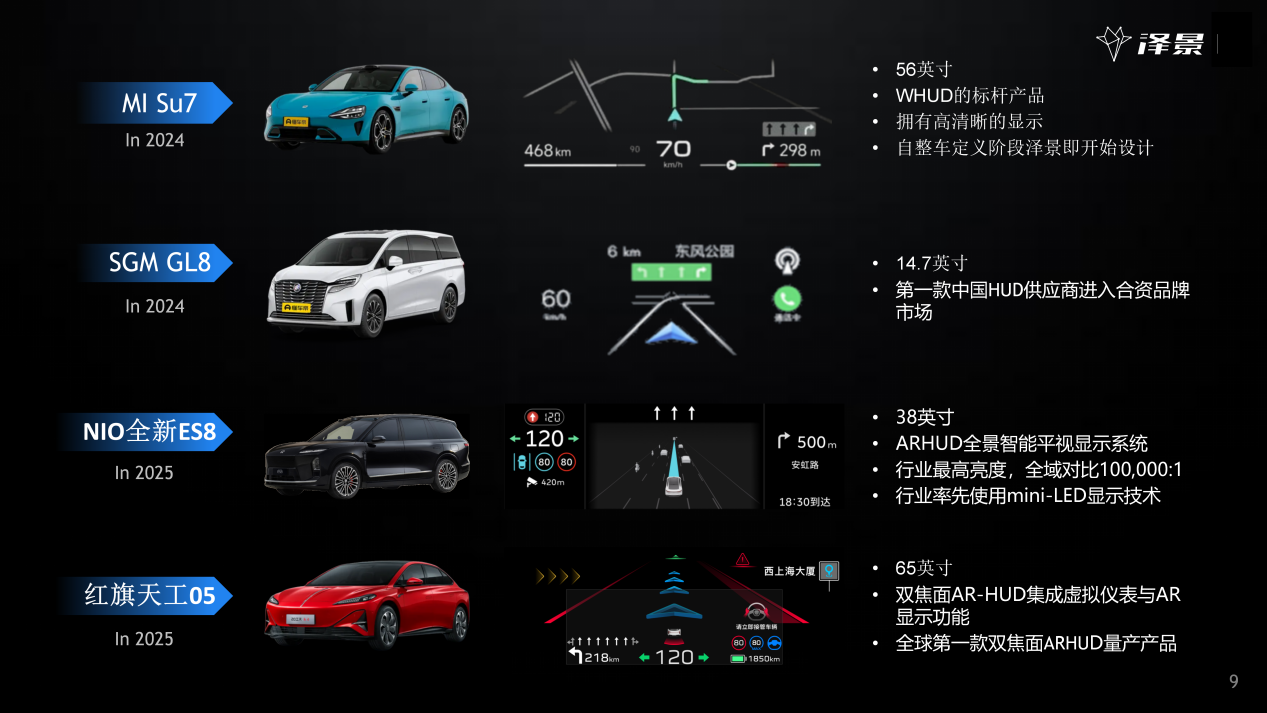
Flagship domestic models such as the NIO ES8 and ET5, Xiaomi SU7, Li Auto L7, Hongqi HS7, and Tiangong 05 all feature Jiangsu New Vision Automotive Electronics’s HUD solutions. Notably, in the SAIC-GM GL8 project, Jiangsu New Vision Automotive Electronics became the first domestic HUD vendor to penetrate a joint venture brand’s supply chain, achieving a breakthrough zero for domestic solutions in the JV market.
Jiangsu New Vision Automotive Electronics’s growth trajectory—from technological breakthrough to market adoption—mirrors the evolution of China’s automotive HUD sector from follower to leader. Underpinning its market position is a technological leap: shifting from merely “replacing instrument clusters” to “defining the interaction.”
At the 2026 Beijing Auto Show, Jiangsu New Vision Automotive Electronics will unveil three benchmark mass-production products. The 56-inch large-format HUD in the Xiaomi SU7—developed with deep involvement from the vehicle definition stage—has set an industry reference for ultra-high-definition display. The Hongqi Tiangong 05 features the world’s first mass-produced dual-focal plane AR-HUD, integrating a virtual instrument cluster with AR display to create an immersive 3D visual experience via a 65-inch image. The new NIO ES8 is equipped with a 38-inch Mini-LED panoramic AR-HUD, boasting a 100,000:1 full-screen contrast ratio that resets the industry standard for display performance.
Grounded in solid mass-production performance, Jiangsu New Vision Automotive Electronics has not only secured its footing in the domestic market but also built the technological confidence necessary to compete on the global stage.
From Domestic Champion to Global Tier 1
As the globalization of China’s automotive industry accelerates, high-quality domestic component manufacturers are seizing a historic opportunity to transition from local suppliers to global providers. Against the backdrop of a restructuring smart vehicle supply chain, simple product exports are no longer sufficient to meet the demands of global OEMs. Instead, localized R&D, manufacturing, and service have become the core pathways for globalization.
Jiangsu New Vision Automotive Electronics’s globalization strategy extends beyond mere overseas sales. Anchored in China, it aims to build a comprehensive network radiating across Europe and Asia. The company plans to establish a European subsidiary, complete with an R&D center and manufacturing base. By embedding every link—from R&D response and production delivery to after-sales support—into the global supply chain, Jiangsu New Vision Automotive Electronics intends to provide localized services close to international OEMs, thereby dismantling regional and supply chain barriers.
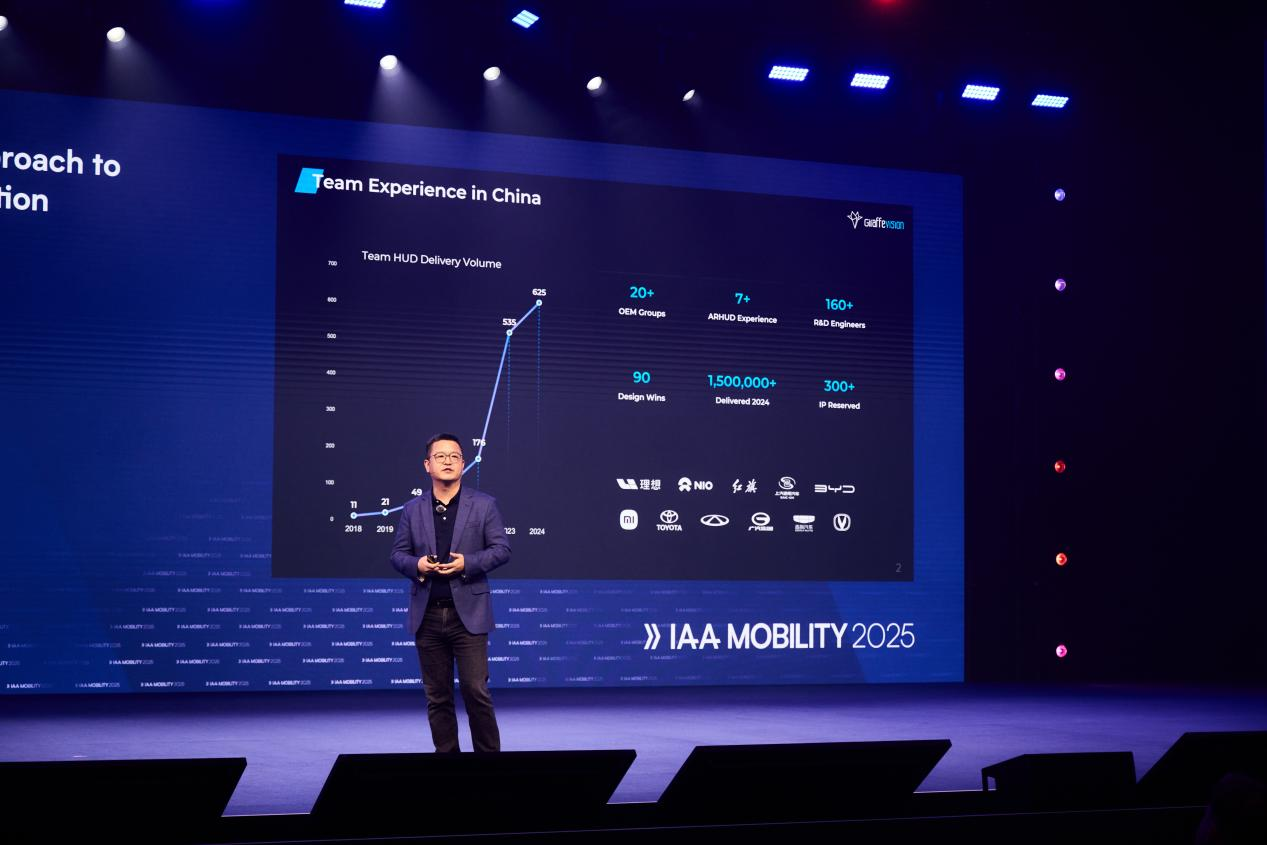
Underpinning this strategy is Jiangsu New Vision Automotive Electronics’s capability to align with international standards. On the manufacturing front, the Yizheng factory has a planned annual capacity of 1.72 million units. Equipped with a Class 300,000 clean room and constant temperature and humidity systems, it achieves fully automated production from SMT mounting and optical component assembly to End-of-Line (EOL) testing. Regarding quality, the testing center holds CNAS accreditation and possesses comprehensive verification capabilities for environmental, vibration, and optical stray light testing. On the process side, as the first domestic HUD vendor to implement ASPICE Level 2, the company has now successfully achieved ASPICE Level 3 certification, ensuring its software development processes fully meet the rigorous assessment standards of international OEMs.
Targeting the global market, Jiangsu New Vision Automotive Electronics has completed solution adaptation for mainstream European and American vehicle models. By benchmarking international standards in optical specifications, electronic architecture, and functional safety, the company can flexibly adapt to diverse regional regulations and usage scenarios.
On the customer front, starting with the GL8 joint venture project, Jiangsu New Vision Automotive Electronics has opened a window for international cooperation. It is currently advancing direct partnerships with leading overseas OEMs, steadily expanding its global customer footprint.
If HUD products are Jiangsu New Vision Automotive Electronics’s foundation, its repositioning as a “Smart Visual Interaction Expert” represents its core value for the future. In the era of smart vehicles, the HUD is no longer merely a display screen; it is the core interaction portal of the smart cabin and a critical carrier of information for intelligent driving. Moving beyond a single-product logic, Jiangsu New Vision Automotive Electronics focuses on the ecological positioning of the “visual interaction portal,” building full-link capabilities encompassing hardware, software, and algorithms.
On the software front, Jiangsu New Vision Automotive Electronics has developed a proprietary algorithm platform covering the input, execution, and output layers. It has established technological barriers in core areas such as AR fusion, dynamic distortion correction, and multi-modal interaction. By achieving the precise overlay of virtual information onto real roads, the company creates a natural experience where “gaze equals interaction.”
Simultaneously, the company is accelerating its deployment of AI efficiency tools. By utilizing AI-assisted optical design, intelligent simulation testing, and cross-disciplinary collaborative development, Jiangsu New Vision Automotive Electronics has significantly boosted R&D iteration efficiency. This allows the HUD to evolve from a device that merely “displays information” to an intelligent interface that “understands scenarios.”
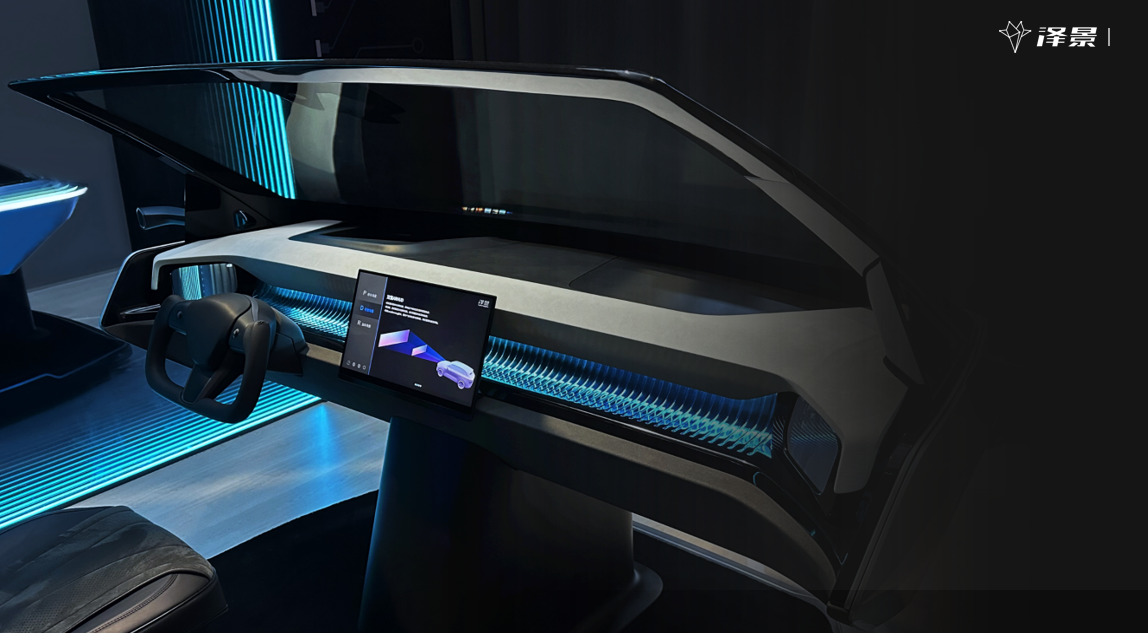
In terms of forward-looking technology and ecosystem layout, Jiangsu New Vision Automotive Electronics continues to lead the industry. The Inno·Vision Gen 1 concept cabin, centered on “AR is the future,” demonstrates the philosophy that “the HUD is the primary screen for intelligent assisted driving,” adapting to different driving needs through scenario-based information dispatch. Additionally, cutting-edge technologies like naked-eye 3D and aerial imaging have completed concept validation, reserving core technologies for the next generation of smart cabin interaction.
From breaking foreign monopolies to achieve import substitution, to listing on the HKEX and becoming a sector benchmark; from deep cultivation of the Chinese market to building a global presence as an international Tier 1, Jiangsu New Vision Automotive Electronics’s development reflects the rise of China’s automotive electronics industry. Amid the trend of deep integration between smart cabins and intelligent driving, Jiangsu New Vision Automotive Electronics is driven by technology, fueled by capital, and directed toward globalization. It continues to propel Chinese smart visual interaction technology onto the world stage, enabling global users to experience a safer, smarter driving and riding interaction.
Search
RECENT PRESS RELEASES
Related Post