Green spaces should be the norm for all new housing developments in England, guidelines sa
January 21, 2026
Housing where shops, schools, public transport and possibly pubs are close by, with green spaces and access to nature, and where heritage is preserved, should be the norm for all new developments, according to guidelines set out by the government.
King’s Cross in London, for example, where industrial buildings have been converted into shops, restaurants and public spaces, and where schools and care homes mingle with social and private housing near to a cleaned-up canal and nature reserve, could become the model, according to the new vision.
Or Temple Gardens, near Bath, where a vacant Grade II-listed pub was restored and reopened alongside new homes. The Ministry of Housing, Communities and Local Government has highlighted the case as “the kind of community-focused development these reforms will deliver”.
It said: “Bath shows how neighbourhood identity, shaped by local history, culture and landscape is reflected in building types, facades and architectural details. This allows people to connect to their local heritage.”
Other developments highlighted include Kampus in Manchester and the Malings in Newcastle upon Tyne.
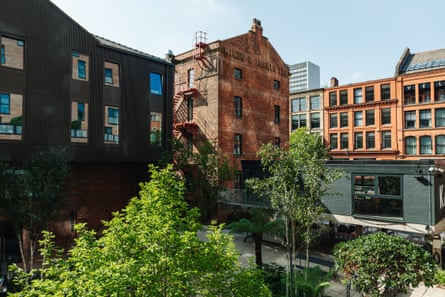
Provisions for nature such as swift bricks and hedgehog highways should be incorporated, as well as protections against the flooding that is becoming more prevalent owing to the climate crisis, the government said.
The design and placemaking planning practice guidance, published in draft on Wednesday for consultation, does not mandate any of these guidelines as requirements, leaving it open to developers to ignore them. Green experts told the Guardian this was a significant flaw.
Anna Hollyman, a co-head of policy and places at the UK Green Building Council, said: “[The plans acknowledge] the urgent need to raise the bar for new builds and to integrate liveability with climate mitigation, resilience and nature. Yet in light of the stark national security assessment on global ecosystems published yesterday, this is clearly not enough.”
The assessment warned of the dire impacts on Britain’s national security from the failure to plan for ecosystem collapse.
Hollyman called for clearer regulations. “The built environment sector has the potential to be a proactive contributor to restoring local places and wider ecosystems through biodiversity net gain, nature-based solutions and regenerative design. We need a systemic government response commensurate with the scale of the challenge, one that recognises biodiversity and climate resilience as critical infrastructure to every neighbourhood,” she said.
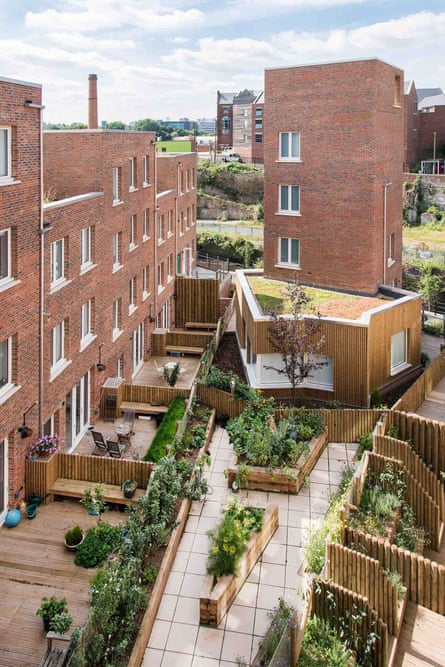
Rachel Hackett, a planning and development manager at the Wildlife Trusts, called for the government to specify measures for wildlife.
“We need a bolder, more ambitious plan that cements nature firmly into the housebuilding rules,” she said. “Nature-friendly design measures like swift bricks and hedgehog highways will only make a significant difference for wildlife if they are mandatory for all developments. We have had years of guidelines and optional choices for developers – and years of nature decline.”
The guidelines cover the planning of new neighbourhoods and amenities, and can be used by local authorities to set their own design codes for homes in their areas. In theory at least, developers who meet the guidelines should find it easier to obtain planning permission.
Matthew Pennycook, the housing and planning minister, said: “Exemplary development should be the norm, not the exception, so that more communities feel the benefits of new development and welcome it. These standards will help ensure new homes and neighbourhoods are attractive, well-connected, sustainable and built to last.”
The government has still to publish its regulations governing how new houses are constructed, which are expected to make solar panels, heat pumps and high standards of insulation mandatory on nearly all new homes. The long-delayed future homes standard is now expected early this year.
Search
RECENT PRESS RELEASES
Related Post