Grid upgrades and market reform: Reshaping Vietnam’s renewable energy market | INSIGHT
December 7, 2025

A solar and wind power plant in Vietnam. (Photo: iStock)
On 13th November 2025, the National Assembly of Vietnam approved the Resolution on the Socio-Economic Development Plan for 2026, setting an ambitious target of at least 10% annual economic growth. This marks the first year of implementing the 2026-2030 five-year strategic development plan in a new era, an era of prosperity and strength.
Under the plan, the manufacturing and processing industries are projected to contribute nearly a quarter of the total GDP, underscoring its critical role in driving economic expansion. The nation has determined that developing science, technology, innovation and national digital transformation will be the key drivers to foster social-economic growth. These priorities form the foundation for Vietnam to achieve its long-term targets in 2030 to become a developing nation with modern industry and upper-middle-income status, and in 2045 to become a developed, high-income country.
Vietnam’s growth targets and energy security risks
The ambitious socio-economic development targets of Vietnam create an urgent need for a secure, reliable and decarbonized supply of energy. The widespread power shortages in June 2023 underscored this reality. Severe blackouts across the Northern region disrupted commercial and industrial operations. The crisis was driven by a combination of factors: heavy dependence on hydro power under drought conditions, unplanned outages of aging coal-fired plants, and transmission bottlenecks that constrained power flows from the Central and Southern regions to the North. Based on a preliminary analysis by the World Bank, the 2023 power crisis of Vietnam resulted in an estimated economic loss of around USD 1.4 billion, equivalent to roughly 0.3% of national GDP [1].
In terms of installed capacity, Vietnam possesses the largest power grid in Southeast Asia and ranks among the top 20 globally. As summarized in Table 1 below, Vietnam’s power grid had a total installed capacity of 90 GW as of November 2025. Coal-fired generation and hydropower remain the two dominant sources, accounting for 32.7% and 27.8% of capacity respectively, while solar and wind power together contribute 26.8%.
Vietnam’s power grid is divided into three major regions, including the North, the Central, and the South, which are interconnected through a network of 220 kV and 500 kV transmission lines. The 500 kV North–South transmission corridor serves as the backbone of the national grid, enabling inter-regional power flows and facilitating exchange with neighboring countries.
Over the last seven years, strong incentives under the Feed-in-Tariff (FiT) mechanism have driven exponential growth in renewable energy integration, particularly solar and wind power projects concentrated in the Southern and Central provinces due to abundant solar irradiance and wind resources. This geographic concentration, combined with the North being the country’s largest load center, has resulted in significant regional imbalances. Congestion in transmission grids frequently occurs when transferring electricity from renewable energy-rich regions to the North, leading to substantial curtailment of solar and wind generation.
Transmission expansion and PDP8 capacity targets
To address these constraints, the 500 kV Circuit-3 transmission line, comprising nearly 520 km of double-circuit line, connecting the Central to the North was successfully completed at the end of August 2024 after just six months of construction, marking a milestone of Vietnam’s power grid.
This project plays a critical role in increasing transmission capacity on the 500 kV North–Central corridor from 2,500 MW to 5,000 MW, enhancing the operational stability of the national power system. It addresses grid congestion, strengthens power supply to the Northern region in 2025 and beyond, and contributes significantly to ensuring national energy security.
Table 1. Installed capacity and power resources mix of Vietnam power grid at present and by 2030
|
Power Resource |
Existing |
Revised PDP8 |
Capacity to be installed by 2030 |
|
Hydropower |
25,079.8 |
33,294 – 34,667 |
8,214.2 – 9,587.2 |
|
Coal |
29,539 |
31,055 |
1,516 |
|
Gas |
8,921 |
10,861 – 14,930 |
1,940 – 6,009 |
|
LNG |
22,524 |
22,524 |
|
|
Biogas |
312.5 |
1,523 – 2,699 |
1,210.5 – 2,386.5 |
|
Photovoltaics |
17,049.3 |
46,459 – 73,416 |
29,409.7 – 56,366.7 |
|
Nearshore & onshore wind |
7102.4 |
26,066 – 38,029 |
18,963.6 – 30,926.6 |
|
Offshore wind |
6,000 – 17,032 |
||
|
Nuclear |
4,000 – 6,400 |
||
|
Flexible generation |
2,000 – 3,000 |
2,000 – 3,000 |
|
|
Battery energy storage |
10,000 – 16,300 |
10,000 – 16,300 |
|
|
Pumped-storage hydropower |
2,400 – 6,000 |
2,400 – 6,000 |
|
|
Import (Laos, China) |
~2,422 |
9,360 – 12,100 |
6,938.0 – 9,678.0 |
|
Others |
2,373 (1.6%) |
1,486 – 2,182 |
|
|
Total domestic installed capacity |
90,377 |
183,291 – 236,363 |
92,914 – 145,986 |
The Revised National Power Development Plan (Revised PDP8) was approved in April 2025, showing ambitious targets of Vietnam towards energy security and clean energy transition. As shown in Table 1, the total installed capacity in 2030 is planned to reach 183,291 – 236,363 MW depending on the load development, in which solar and wind power account for 39.5 – 47.2%.
Capacity of energy storage system is increased significantly in the revised plan, reaching 12,400 – 22,300 MW. To meet this target, Vietnam must double its current installed capacity within the remaining five years, which is equivalent to what it has built over decades. The transmission grid must also be built in synchronism with the development of generation. In the period 2026 – 2030, it is projected that the total investment to develop the generation and transmission grid would be USD 136.3 billion, in which USD 118.2 billion for generation and USD 18.1 billion for transmission. This is basically a huge amount of investment and construction, and the private sector will play a vital role in achieving this ambitious target.
Key structural barriers to energy development
Reaching this target presents significant challenges for Vietnam, but the nation remains firmly committed to achieving it. Any delay in project implementation will directly affect national energy security and, consequently, the country’s ambition of sustaining double-digit economic growth. The structural barriers and market bottlenecks of Vietnam’s energy market were comprehensively addressed in the Resolution No 70-NQ/TW, dated 20 August 2025, on the National Energy Security through 2030, with a Vision to 2045 [4], including:
- The progress of many power projects remains slow, and the country’s energy potential has not been effectively utilized. In particular, the progress of several large-scale thermal power and hydropower projects has been significantly delayed, directly impacting national energy security. Energy supply continues to depend heavily on imports, and the risk of electricity shortages is evident.
- Energy infrastructure remains insufficient and is not synchronized. Transmission networks are not effectively connected to new generation projects. Regional and national grid congestion persists. The development of transmission networks generally lags that of generation sources, leading to suboptimal deployment of generation capacity.
- Competitive energy markets are underdeveloped. Energy pricing policies remain inconsistent and not fully aligned with market-based mechanisms, with cross-subsidization still occurring among customer groups. Electricity prices are not sufficiently attractive to draw investment into the sector. At present, the Government of Vietnam maintains several support policies to keep electricity prices low in order to stabilize the macro-economy and control inflation. Vietnam needs to establish a transparent pricing framework that accurately reflects all cost elements, including generation investment, transmission and distribution costs, system operation and maintenance, ancillary services, and retail costs.
- Policies and laws governing energy development contain many shortcomings and have been slow to be amended, supplemented, and completed – especially mechanisms and policies to mobilize resources for energy development, promote clean and renewable energy, and ensure flexible and timely planning decisions aligned with practical needs. Implementation remains inconsistent, particularly in power planning. The negotiation process for Power Purchase Agreements (PPAs) is prolonged, causing delays in investments.
- Administrative procedures remain cumbersome and complex. Energy development strategies, especially for the electricity sector, lack stability, synchronization, and strong linkages with socio-economic development plans at both national and local levels, as well as with other related industries.
The Resolution No 70-NQ/TW states that ensuring national energy security plays a critically important role in the coming period of rapid and sustainable national development. The energy sector must move ahead of demand, fully meeting the needs of socio-economic development, national defense, security, and improvements in living standards to achieve the double-digit socio-economic development targets in the next decades. The Resolution also highlights the role of private sectors in energy development, ensuring that private enterprises can compete on equal terms with other economic sectors in developing energy projects. To address the key barriers of Vietnam’s energy markets, grid upgrades and market reform will be at the central.
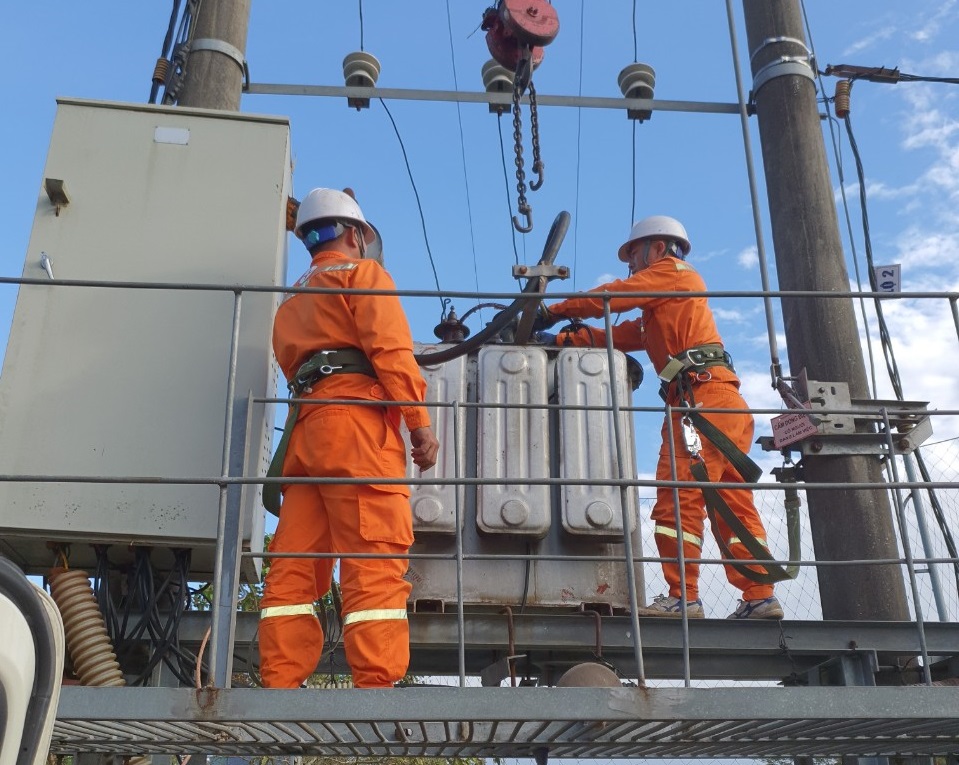
The DPPA framework is receiving strong interests from both energy investors and consumers due to the substantial benefits it offers. (Photo: EVN)
Grid upgrades and flexibility solutions
Regarding grid upgrades, Vietnam aims to build a smart and efficient power grid capable of securely interconnecting with regional grids, ensuring secure electricity supply that meets the N-1 criterion for critical load areas and the N-2 criterion for extremely critical load areas. The reliability of power supply and the electricity access index should rank among the top three in ASEAN.
To do this, the nation needs to urgently address obstacles to accelerate the implementation of key energy projects, particularly power generation projects and transmission grid projects. Vietnam needs to continue investing in the construction of 500 kV and 220 kV transmission lines and substations to ensure the capability to transmit electricity from power generation centers to major load centers, and to enable interconnection with ASEAN countries, particularly Cambodia and Laos. This addresses grid congestion problems and enables effective deployment of energy resources, particularly renewable energy resources. There must be mechanisms to encourage private sectors to participate in the development of transmission infrastructure through public–private partnership (PPP) models.
Currently, variable renewable energy resources occupy around 26.8% of the total installed capacity of Vietnam’s power grid, and operational challenges have been observed. The load patterns have changed significantly with sharper peaks and higher ramp rates. To ensure sufficient capacity to meet peak load, domestic gas turbine units and LNG-fired units may be started and stopped multiple times throughout the day to meet peak demand. However, such frequent start–stop cycling of gas turbines negatively affects unit durability and availability.
Given these technical constraints, maintaining this operating mode over a long period is not feasible, as it not only shortens equipment lifespan but also increases the risk of failures, potentially impacting on the safety and stability of the entire power system. Particularly during October and November 2025, a series of storms and flooding resulted in an oversupplied power system, leading to significant curtailment of renewable energy.
To this end, energy storage systems, particularly battery energy storage system (BESS) and flexible generation resources would be the solution to meet the peak demand due to their fast response and flexibility. This is clearly stated in the Revised PDP8 in which the total installed capacity of BESS is expected to reach 10,000 – 16,300 MW, and that of flexible generation is expected to reach 2,000 – 3,000 MW in 2030.
BESS also has an important application to the transmission grid called Storage as a Transmission Asset (SATA). SATA is the use of BESS interconnected at the transmission level to manage power flows, performing the functions of traditional transmission lines. By absorbing excess power during periods of high generation and injecting power when required, SATA helps utilities address grid congestion. By optimally placing BESS as SATA at critical locations along the transmission grid, utilities can defer or replace costly and time-consuming new transmission grid infrastructure.
Electricity market reform and DPPA rollout
Regarding electricity market reform, Vietnam targets to develop the electricity market toward greater competitiveness, transparency, and efficiency, while ensuring energy security. It targets to effectively implement the direct power purchase mechanism (DPPA), and enhance the ability of electricity consumers to access and choose suppliers that best meet their needs. It aims to develop and improve a comprehensive electricity trading system, including transparent, stable, and long-term Power Purchase Agreement (PPA) mechanisms that safeguard investors’ lawful rights and interests.
At present, the DPPA framework is receiving strong interests from both energy investors and consumers due to the substantial benefits it offers. On 3rd March 2025, the Government of Vietnam issued the Decree 57/2025/ND-CP which establishes the regulations on the mechanisms for direct electricity purchase and sale between renewable energy power generation units and large electricity consumers [5]. This marks an important milestone in Vietnam’s ongoing electricity market reform, strengthening the country’s ability to attract green energy investment and advance its national energy transition goals.
Under the DPPA framework, large electricity consumers are allowed to purchase renewable electricity directly from generators. This creates a dual advantage. First, it significantly attracts and encourages private sectors to invest in renewable energy. Second, it enhances Vietnam’s attractiveness to foreign direct investment, particularly in manufacturing, by enabling corporations to purchase clean electricity in alignment with their sustainability commitments and carbon-credit compliance requirements.
According to the regulations set in Decree 57/2025/ND-CP, there are two models of DPPA:
- Model 1: DPPA via private connection line or known as Physical DPPA. In this model, there is a direct and private transmission line between the renewable energy generator and the large electricity consumer. In this case, the DPPA is established between the generator and the consumer, and the electricity selling price is negotiated between the two parties but cannot be higher than the ceiling tariff specified in the generation price framework applicable to the corresponding type of power source.
- Model 2: DPPA via the national grid or known as Virtual PPA. In this model, there are three parties involved, including the renewable energy generator, the network operator, and the large electricity consumer. The renewable energy generator sells its entire generation output into the spot electricity market within the competitive wholesale electricity market. The large electricity consumer enters agreements with the generator, and Power Corporations/Power Companies. The DPPA cost comprises of the electricity cost based on the electricity market price, the network service cost, and the cost of difference compensation. The network service cost covers the costs of using the following services: transmission, distribution – retail, system operation and dispatch, electricity market operation, and sector management.
The implementation of DPPA in Vietnam remains relatively limited, reflecting some uncertainties in pricing mechanism and challenges. In the first DPPA model via private connection line (Physical DPPA), the electricity selling price is constrained by the ceiling price. This constraint may directly impact the financial feasibility of renewable energy projects under DPPA framework.
It is important to note that many foreign-invested (FDI) manufacturers and processing facilities have a strong demand for stable and reliable renewable energy supply, driven by decarbonization commitments and stringent ESG requirements. Many large electricity consumers are willing to pay a premium for guaranteed renewable energy supply. Another barrier is related to the large electricity consumer who must consume at least 200,000 kWh/month. This threshold may limit access for small and medium-sized enterprises (SMEs) to participate in the DPPA framework.
In the second DPPA model via the national grid (Virtual DPPA), there are uncertainties in determining and forecasting the network service costs and the cost of difference compensation. These uncertainties make it challenging for investors to develop accurate financial models and evaluate project bankability. Clear guidance on the methodologies used to determine these cost components will be essential. Furthermore, the renewable energy generators under Virtual DPPA still face the risk of generation curtailment under the conditions of oversupply or grid congestion to guarantee the grid stability. The DPPA mechanism should clarify the terms and conditions for generation curtailment.
Overall, the energy security will play a decisive role in achieving Vietnam’s socio-economic development targets in the upcoming periods. The country has huge potential of renewable energy resources, with estimated potential of 221,000 MW onshore and nearshore wind power, 600,000 MW offshore wind power, and 963,000 MW solar power.
To effectively unlock the nation’s energy potential and ensure energy security, the private sector and foreign investment would play a significant role. Vietnam has already demonstrated clear commitment through ongoing transmission grid upgrades and progressive steps toward a more competitive, transparent, and efficient electricity market. If these grid enhancements and market reforms are implemented effectively, Vietnam will be well positioned to attract sustainable investment, not only in the energy sector, but across the broader industrial landscape, supporting the nation’s vision of economic resilience, low-carbon growth, and regional leadership in clean energy.
References
- The World Bank, Making Public Investment Work for Growth, August 2023. Available at: https://openknowledge.worldbank.org/entities/publication/6f97a3f6-15a9-4301-877b-c65d3f951768
- National Electricity System and Market Operation (NSMO) Website. Available at: https://www.nsmo.vn/ThiTruongDien, accessed on 16th November 2025.
- Decision 768/QD-TTg, Approving the Revision to the National Power Development Plan for the period 2021–2030, with a vision to 2050 (“Revised PDP8”), 15th April 2025.
- Resolution No 70-NQ/TW, National Energy Security through 2030, with a Vision to 2045, 20th August 2025.
- Decree 57/2025/ND-CP, Regulations on the mechanisms for direct electricity purchase and sale between renewable energy power generation units and large electricity consumers, 3rd March 2025.
This column is a collaboration between RECCESSARY, Vietnam Clean Energy Association (VCEA), and Vu Ba Hau. All rights reserved. Reproduction without permission is strictly prohibited.
Have insights on energy or carbon issues? Share your perspective with us! Send your submission to [email protected] for a chance to be featured. Submissions may be edited for clarity and style.

Search
RECENT PRESS RELEASES
Related Post