Hawaiʻi Can Own Its Energy Future
January 11, 2026
Hawai‘i is the most petroleum-dependent state in the nation. We rely on oil for about 65% of our electricity and spend billions of dollars annually on it.
This dependence has resulted in high electricity and transportation costs and exposure to supply and price volatility. This vulnerability underscores why clean energy should be framed as a fight for energy independence. Emissions do matter, but the way to speed up the transition is to focus on economic outcomes: lower, more stable energy costs and local ownership of our energy assets.
Political scientist Jessica Green argues that climate politics is really a competition with trillions of dollars at stake. Fossil fuel asset owners are incentivized to delay the transition to protect their investments. Vulnerable asset owners face the consequences of climate change, e.g., property losses and higher insurance costs. Green asset owners are stakeholders whose assets gain value as the transition accelerates. We must consider these dynamics to accelerate progress.

Civil Beat is focusing on transparency, accountability and ethics in government and other institutions. Help us by sending ideas and anecdotes to sunshine@civilbeat.org.
Hawaiʻi already has many green asset owners. We have thousands of households with rooftop solar benefiting from reduced energy costs, owners of over 40,000 EVs on our roads converting gas to local electricity spending, and electric grids with 36% to 50% renewable energy. Importantly, electricians, installers, auditors, mechanics, engineers, and operators are also asset owners.
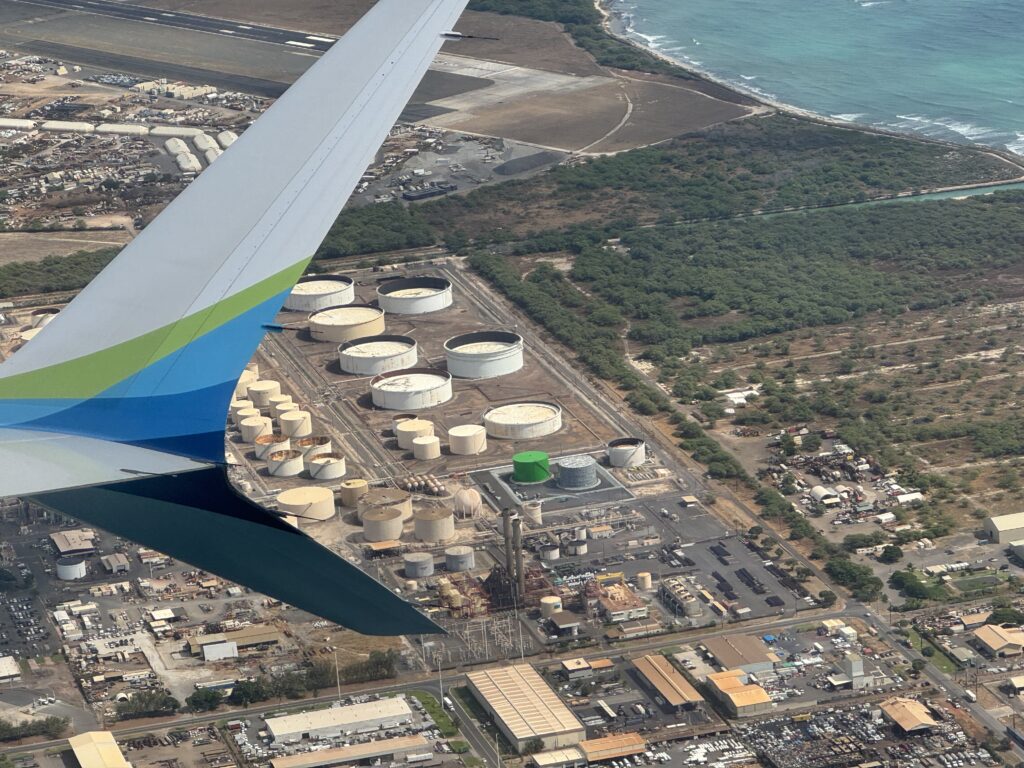
Our main fossil asset owner is Par Pacific, through its refinery and fuel distribution network. But it is already evolving, with part of the Kapolei refinery being converted to produce renewable diesel and sustainable aviation fuel for Hawaiian and Alaska Airlines in 2026. This is what a practical transition looks like and an example of how fossil fuel assets can be repurposed while protecting our workforce and economic capacity and increasing energy independence.
Clearly, much more must be done to achieve our energy future. Several solutions focused on transforming our fossil assets to locally owned renewable energy assets will expedite our energy independence and resilience. Each solution must perform its specific job well, prevent undesired consequences, and work with others so that the transition becomes self-reinforcing.
Here are a few priorities for our government and business leaders to consider in 2026:
Priority 1: Standardize and streamline permitting and modernize interconnection. This will speed up deployment of common projects (e.g., rooftop solar, EV chargers, batteries), prevent yearslong project delays for large grid-scale projects, and enable innovation in clean, firm power.
Priority 2: Scale green loans, rebates, and tax credits for energy efficiency, renewable energy, and clean transportation. Incentivize the transition with close attention to our low- and moderate-income households and small businesses.
Priority 3: Accelerate fleet electrification by deploying EV charging infrastructure and basing procurement on total cost of ownership, not just purchase price. This will ensure that our transportation goals are met and build general momentum for the transformation of our ground transportation system.
Priority 4: Fund workforce development programs to avoid worker capacity bottlenecks in clean tech, create career opportunities for our youth, and build economic resilience.
Priority 5: Create a carbon dividend program using our barrel tax. This would direct revenue to households, with additional support to those most exposed to energy price increases. This would protect households, provide businesses with certainty, and encourage investment in energy efficiency and clean transportation.
Priority 6: Publish a quarterly scorecard (with state, county, and utility inputs) to track progress on relevant metrics, e.g., rebate utilization, permit processing times, interconnection queue metrics, fleet and charger deployment, and household energy and fuel cost index.
Many of these changes can leverage federal grants, bonds and service-based delivery arrangements that don’t require upfront capital. Households and businesses can use PACE financing, solar leases, and community solar to convert capital expenditures into monthly energy and transportation costs at or below what they already pay.
We have a choice: the fossil asset corner, which means reliance on energy imports and vulnerability. Or we can move into the green asset corner, which means local energy production and local wealth creation, affordable energy, lower carbon pollution, and a self-sustaining, resilient Hawaiʻi. The choice is clear.
Search
RECENT PRESS RELEASES
Related Post