HCF expands social impact investment fund to $20M
January 23, 2026
The Hawai‘i Community Foundation is doubling down on impact investing, expanding its Social Impact Investment Fund to $20 million as leaders say the model has proven its ability to strengthen housing, food systems and small business financing across the islands.
HCF announced that its Board of Governors approved an additional
$10 million allocation from the foundation’s endowment, bringing the fund’s total size to $20 million. The decision follows several years of lending through the fund and what foundation leaders describe as clear evidence that the approach is working.
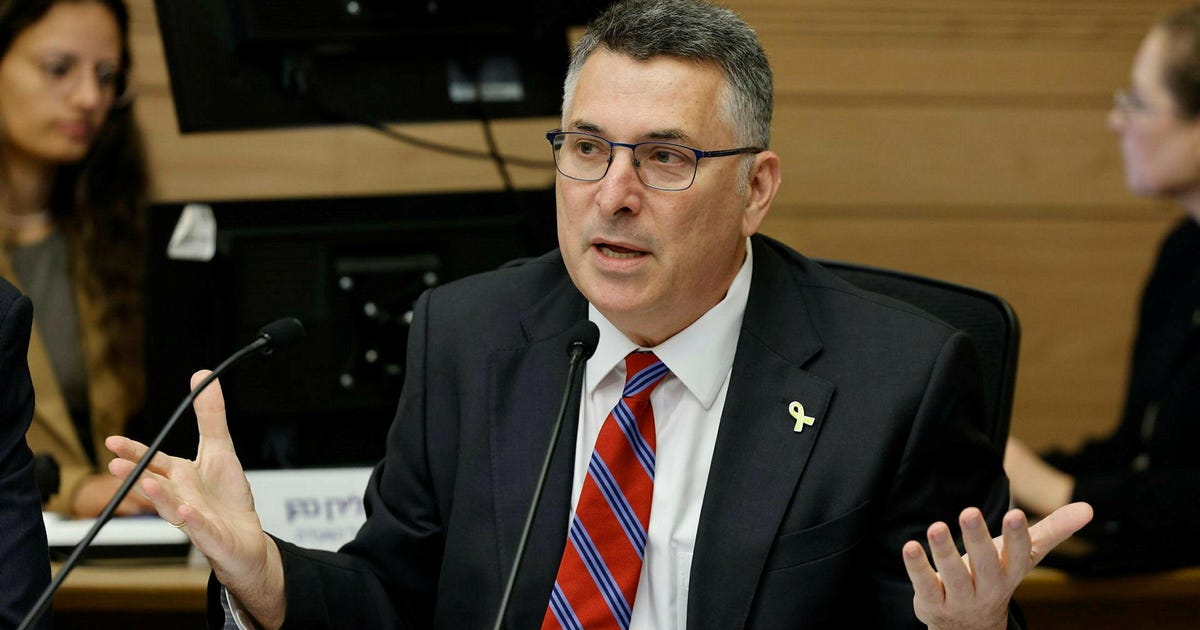
According to Michelle Ka‘uhane, HCF’s chief operating officer and executive vice president, the expansion comes after the foundation reached a turning point. The fund successfully deployed its initial $10 million with strong outcomes, giving HCF both the confidence and the data needed to scale the effort.
“We’ve reached a critical milestone with proof points that demonstrate the program’s success,” Ka‘uhane said. “Doubling the fund now is a natural next step in our evolution.”
Launched in 2019, the
Social Impact Investment Fund provides low-cost, patient loans to community
development financial institutions, or CDFIs, and other mission-aligned intermediaries. Those organizations then lend to small businesses, affordable housing developers, farmers and community groups statewide.
The approach differs fundamentally from traditional philanthropy. While grants remain a core part of HCF’s work, impact investments are structured as loans that are repaid and reinvested, allowing the same dollars to circulate through multiple projects over time.
“A grant doesn’t have
to be repaid, while a social impact investment is essentially a low-cost, patient loan,” Ka‘uhane said. “The beauty of this model is that we get to revolve those
dollars.”
HCF leaders say the scale of impact investing also changes the foundation’s role in Hawaii’s economy. Traditional grants typically range from $30,000 to $50,000, while social impact investments average about $500,000, allowing significantly more capital to reach organizations with the capacity to repay.
“Traditional grantmaking is one tool in the toolbox, but it’s not the only one,” Ka‘uhane said.
CDFIs play a central role in that strategy, filling financing gaps left by conventional banks. These mission-driven lenders provide capital and technical assistance to borrowers who often lack access to traditional credit, including Native Hawaiian entrepreneurs, rural communities and ALICE households — families who are asset-limited, income-
constrained and employed.
HCF credits its early focus on investing through experienced CDFIs for the fund’s strong performance. To date, the fund has deployed $7.5 million in loans, typically structured as seven-
year loans at about 1%
interest, and has maintained a 0% default rate.
“When we launched this fund, we intentionally made our first investments into local CDFIs — this is their bread and butter,” Ka‘uhane said.
Participating CDFIs have also seen their combined assets under management grow nearly 400%, from
$18 million to $87 million. On the ground, that growth translates into greater access to capital for local families, farmers and businesses, particularly in underserved and rural areas.
“Access to capital is the lifeblood of any community, and not everybody has equal access to capital here in Hawaii,” Ka‘uhane said.
She pointed to examples ranging from nonprofits accessing pandemic-era relief funds to small farmers using cooperative models to invest collectively in processing and value-added products. Expanded access to capital, she said, allows businesses to innovate and adapt without relying solely on high-interest credit cards or payday loans.
As federal funding becomes more uncertain, HCF leaders say impact investing can help organizations bridge temporary gaps, particularly for government contracts that operate on
reimbursement schedules. Ka‘uhane emphasized, however, that loans cannot replace federal grants.
“This does not replace federal funding because these are loans, not grants,” she said. “What they do is help fill financial gaps so there can be continuity of service for organizations.”
Not every need is suited for impact investing. Ka‘uhane said direct service providers, such as kupuna care and childcare programs, still rely heavily on grant funding to cover staffing and operating costs. The
Social Impact Investment Fund is designed instead
for organizations with
revenue-generating activities that can sustain loan
repayment while delivering social benefits.
The fund currently supports a wide range of partners, including the Council for Native Hawaiian Advancement, Feed the
Hunger Fund, Hawai‘i Community Lending, Hawaii Habitat for Humanity, HHOC Mortgage, Hawaii Community Reinvestment Corporation, Hawaii Investment Ready, Mana Up, Rural Community Assistance Corp. and the Hawai‘i ‘Ulu Cooperative.
Those investments have supported microloans to
Native Hawaiian-owned businesses, food system financing, emergency household lending, affordable housing development, mortgage assistance for first-time buyers and agricultural infrastructure across multiple islands.
The Social Impact Investment Fund also plays a key role in advancing HCF’s broader CHANGE Framework, particularly its focus on building a community-
centered economy. Ka‘uhane said impact investing complements initiatives such as the ALICE Initiative and House Maui by offering practical financial tools that align with those goals.
“For ALICE families living paycheck to paycheck,
it’s better for them to access a loan from a CDFI to bridge financial gaps than
to resort to a payday loan,” she said.
Since launching the fund, HCF has also learned that its investments can serve as a catalyst for additional capital. By committing its own endowment dollars, the foundation has helped attract other institutional and private investors who may have been hesitant to enter the space.
“Our investment provides credibility and builds trust, making others comfortable engaging in this market,” Ka‘uhane said.
As HCF looks to grow the fund further, foundation leaders say the broader
lesson for philanthropy is the importance of adapting to Hawaii’s evolving
challenges.
“It’s insanity to keep doing the same thing and expect different results,” Ka‘uhane said.
HCF said it is inviting corporate partners, private foundations and individual donors to participate in
expanding the fund, positioning impact investing
as a long-term strategy
to recycle capital, strengthen local economies and build resilience across Hawaii.
Search
RECENT PRESS RELEASES
Related Post