Honda reports net loss of $2.7B
May 14, 2026
TOKYO — Honda Motor Co. on Thursday reported its first annual loss since becoming a publicly traded company in Japan seven decades ago, as the costly retreat from its ambitious electric vehicle targets plunged earnings into the red.
The automaker reported a net loss of $2.7 billion for the fiscal year that ended March 31. Earnings were weighed down by more than $9 billion in restructuring charges and write-downs after a retrenchment of its EV strategy. It is the first loss that the 77-year-old company has reported since listing on the Tokyo Stock Exchange in 1957.
The sharp downturn underscores the extent to which Honda — and many other automakers that poured billions into electric vehicles — has been buffeted by cooling demand.
“The business environment and customer demand have changed beyond our expectations,” said Toshihiro Mibe, Honda’s CEO, at a news conference Thursday in Tokyo. “We were not able to respond flexibly enough.”
The Japanese automaker said losses related to its EV operations are estimated to total $16 billion, incurred mostly in the fiscal year just ended and the current fiscal year.
Analysts say Honda might have been too ambitious too fast, when many markets weren’t ready. As a result, Honda abandoned many of its plans for EV models, including those in the works in a joint venture with Sony Corp.
“EV demand has declined considerably, due to the rollback of environmental regulations in the U.S. and other factors,” Honda said in a statement.
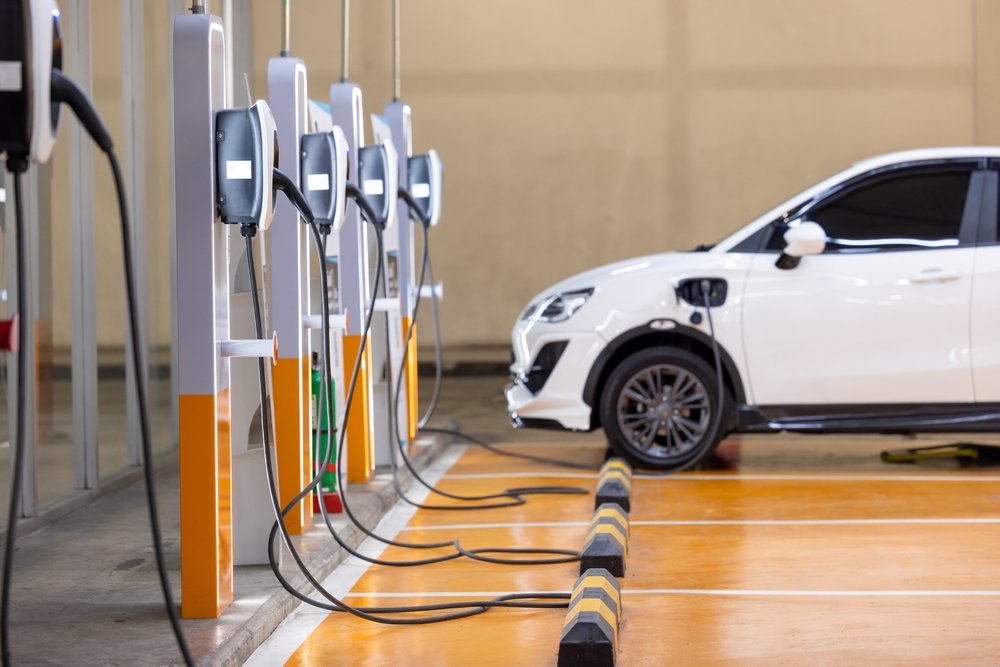
The Trump administration in the U.S. has pulled back on incentive programs for EVs and withheld money to states wanting to add more EV charging stations, even as gas prices have soared over the war in Iran.
U.S. President Donald Trump also blocked California’s stringent electric vehicle mandates last year, backpedaling on the shift to environmental models.
Trump’s tariffs on imported autos and auto parts, although lowered to 15% from the initial 25%, also worked to dent Honda’s profitability.
Tokyo-based Honda’s bottom line got a lift from its healthy motorcycle business, helping Honda’s overall sales for the fiscal year through March to rise 0.5% to $138 billion.
Honda, which makes the Accord sedan and Super Cub motorcycles, sold 3.4 million vehicles around the world in the fiscal year through March, down from 3.7 million the previous year.
It sold 22.1 million motorcycles, up from 20 million a year before. Honda dominates some markets in motorcycles, including India.
Honda forecast a return to profit for the fiscal year through March 2027, at $1.7 billion.
Just five years ago, Honda was racing to catch up to Tesla and Chinese rivals such as BYD in building electric cars. It pledged to make its entire lineup electric or hydrogen-powered by 2040, a more aggressive transition than rival Japanese automakers such as Toyota, which remained cautious about fully electric cars and continued to throw its weight behind hybrid and gasoline-powered models.
For some, Honda’s rapid pivot to electric vehicles was unexpected for a company long known for its mastery of the internal combustion engine. Still one of Japan’s top-selling automakers behind Toyota, Honda first made inroads in the United States in the 1970s with a fleet of low-cost vehicles powered by some of the world’s most efficient engines.
Starting in 2021, Honda — an automaker that traditionally eschewed big strategic alliances — began investing billions to develop battery-powered cars both in-house and in partnerships with General Motors and Sony, the Japanese electronics giant. For a time, its 2040 target won praise from investors and environmental groups alike.
However, many consumers were not quite ready. After an initial wave of early adopters propped up sales, other mainstream buyers balked, largely because of lingering concerns about charging infrastructure and high sticker prices. Then, last year, federal subsidies for many electric models were effectively gutted under the Trump administration.
In 2025, electric vehicle sales in the United States fell, snapping a record-breaking growth streak half a decade long for electric cars. The slowdown has also weighed on U.S. majors. Earlier this year, Ford Motor said its electric-vehicle division lost $4.8 billion in 2025 and was likely to lose money for at least two more years.
Honda has also faced challenges in its other key markets, including China and Southeast Asia, from an influx of low-cost Chinese vehicles. Honda’s unit sales in Asia in 2025 were down by more than one-fifth from the previous year.
In March, Honda announced the cancellation of three major electric models originally destined for the North American market. An affordable line that Honda was developing with GM and a software-laden vehicle it was developing with Sony have been put on ice.
On Thursday, Mibe said the company would nix its 2040 target of selling only electric and hydrogen-powered cars. That target was based on the Biden administration’s environmental policies in the United States, the company’s biggest market, he said.
“A year ago, there was a drastic change. We have seen a shift from a focus on the environment to the opposite,” Mibe said. Honda’s previous target, he added, “is now not realistic.”
For now, Honda said, it will double down on gasoline-electric hybrids, introducing 15 next-generation, high-efficiency models, including larger vehicles in North America, by 2030. Combined with plans to cut costs and accelerate development, this push is intended to restore Honda to record profits by the end of the decade, Mibe said.
Honda is not giving up on developing “highly competitive electric vehicles,” Mibe said. The idea, he added, “is to lay technological groundwork while ensuring greater flexibility and a wider range of options so that we will be well prepared to meet demand when it emerges.”
Information for this article was contributed by River Akira Davis of The New York Times and by Yuri Kageyama of The Associated Press.
Search
RECENT PRESS RELEASES
Related Post