Housing Or The Environment? Debate Emerges On Impacts Of Proposed Ban…
January 10, 2026

For the last seven months, the Board of Health has seemed poised to adopt a ban on so-called “nitrogen loading credits” in sensitive areas, which would limit the ability of homeowners to add additional bedrooms to some buildings on Nantucket. But now, after months of silence, the rest of the island’s local government has sprung into action, and the future of the ban is suddenly much less clear.
The issue had remained largely undiscussed in public by the rest of the island’s local government until last Wednesday’s Select Board meeting, when the town’s Housing Department recommended against a total ban. In the aftermath of the meeting, the town’s Communication Department partially walked back the recommendation. The Planning Board and Select Board are both now scheduled to write letters to the Board of Health on the proposed regulations, and it’s uncertain where the boards will come down on the ban.
As it stands, regulations limit the number of bedrooms homeowners with septic systems can have based on square footage. However, applicants can ask for a variance from the regulations, and historically, the Board of Health has generally granted these requests when applicants plan to switch from a conventional septic system to an innovative/alternative, or IA system. These systems are believed to reduce the amount of nitrogen that enters the environment by treating sewage more effectively. The Board of Health then allows for nitrogen loading credits, permitting the addition of extra bedrooms.
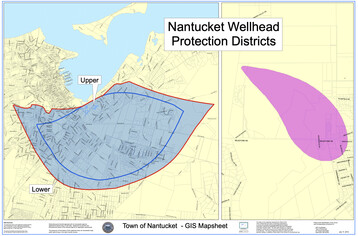
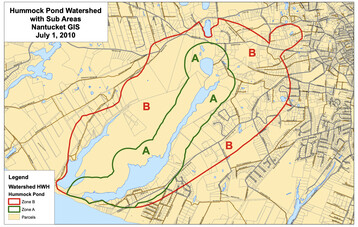
But the Board of Health instituted a moratorium on variance requests in June and has spent the last seven months crafting a set of regulations that would bar nitrogen loading credits entirely in the wellhead protection district and the Hummock Pond watershed, both of which are considered nitrogen-sensitive areas. The regulations would prevent homeowners from adding more bedrooms.
The new rules would also require all homeowners to switch to an IA system, without receiving any credits, if their existing system fails, if any new construction or structural alterations are proposed, or if the property is transferred from one owner to another.
Health director Roque Miramontes spoke in favor of the ban, which currently appears to have the support of the majority of the Board of Health, at Wednesday’s meeting, citing the negative health impacts of nitrogen.
“Nitrogen in your drinking water, from a public health perspective, is incredibly dangerous,” he said. “It is so dangerous. I would almost rather drink a little bit of a PFAS than a little bit of nitrogen.”
Miramontes referred to the well-documented connection between nitrogen-rich drinking water and cancer, as well as “blue baby syndrome,” in which the red blood cells of infants struggle to carry oxygen effectively, which can also be caused by nitrogen in water.
But the Housing Department, represented by deputy housing director Dylan Metsch-Ampel, recommended against a total ban, concerned that it could negatively affect attainable and affordable housing on the island.
“Eliminating the variance completely and removing that potential for expanded housing could have a significant impact on reducing housing opportunities and certainly housing flexibility,” deputy housing director Dylan Metsch-Ampel said. “Our recommendation would be for the Board of Health to maintain the septic variance request for the bedroom allowance conditional on upgrading [to] an [innovative/alternative] septic system.”
Metsch-Ampel urged revisions to the proposed regulations, potentially including exceptions for year-round residents or covenant lots, a hardship waiver, cost assistance, and an allowance for specific variance requests to be accepted at the Board of Health’s discretion.
During the meeting, Metsch-Ampel said that the revisions had been drafted in concert with the Nantucket Land and Water Council (NLWC), a local nonprofit focused on protecting Nantucket’s land and water resources.
After the meeting, NLWC representatives clarified that they supported revisions in the wellhead protection district, but not the Hummock Pond watershed.
“While we do believe the Hummock Pond watershed should be regulated consistently with our other formally designated nitrogen-sensitive watersheds like Nantucket and Madaket Harbors, we support considering amendments to the proposed regulatory changes in the wellhead protection district that align environmental and housing objectives,” NLWC executive director Emily Molden wrote in an email to the Current.
When reached for clarification on whether their recommendations were intended to apply to both districts, or just the wellhead protection district, Housing Department staff declined to answer, instead directing questions to the Communication Department. The Communications Department also represents the Health Department, which appears to support a total ban, based on comments made by its director at Wednesday’s meeting.
Communications manager Florencia Rullo claimed that the Housing Department’s recommendations “were brought forward for discussion and consideration only,” and that “last Wednesday’s presentation was intended to outline potential approaches for consideration.”
Despite Metsch-Ampel making direct recommendations during his presentation, Rullo said that the intent of the presentation was merely to “ask the Board of Health to consider the possibility” of allowing specific variances. Rullo did not explain why a presentation directed to the Board of Health was delivered to the Select Board.
The Select Board voted Wednesday to draft a letter urging the Board of Health to consider the potential impacts of the ban on nitrogen loading credits could have on housing inititives, but the letter will need to be reviewed by the Select Board before it is sent, and the Select Board seemed divided Wednesday on how strongly to push the Board of Health on the proposed regulatory changes.
“I would like to see more analysis of what the actual impact is,” Select Board member Matt Fee said. “I think we want to make sure we’re not, under the guise of one thing, creating another set of problems.”
The members of the Board of Health are appointed by the Select Board.
The dispute over the potential ban highlights a perceived conflict between two of the key priorities outlined in the island’s strategic plan: housing and environmental protection. Without more bedrooms, many Nantucket residents will continue to be severely cost-burdened by the price of housing amid the island’s ongoing affordable housing crisis.
“I absolutely support maintaining an option for a variance and carve-outs for year-round deed restrictions,” Select Board member Brooke Mohr said. “We do want to encourage the development of year-round housing.”
Mohr suggested that the new restrictions could be enormously damaging to the island’s covenant housing program, which offers home ownership opportunities to islanders with moderate incomes.
“It would kill the program in certain areas,” she said.
But more bedrooms might come at another cost—one borne by the environment that makes Nantucket so attractive to many people.
“If we have too many people and too many houses, we won’t have an environment,” said Select Board member Malcolm MacNab, who served on the Board of Health for many years. “I’m sorry, I would prefer the environment over housing.”
Metsch-Ampel doesn’t see it that way.
“Housing is certainly a sustainability and environmental health issue, and sufficient housing reduces the strain on our infrastructure and, in turn, on our environment,” he said. “I’d like to, personally, avoid the dichotomy of choosing between the environment and housing.”
In theory, even with the allowance for additional bedrooms, switching to an IA system could reduce the amount of nitrogen entering the environment. Still, several Board of Health members have expressed concerns that the existing policies are outdated and do not reflect the latest science. The new regulations would expand the areas subject to a ban on loading credits, which already include the Madaket and harbor watershed regions.
They would also restrict affordable housing. While the town’s properties in the two impacted regions are connected to town water and sewer, meaning they don’t have septic systems, the rules would limit flexibility for homeowners and developers looking to add more bedrooms in large portions of the island and make it more costly for year-round islanders to purchase homes, as they would have to foot the bill for the new systems.
And IA systems are expensive. Metsch-Ampel cited an estimate of about $40,000, about three times as much as a conventional system and far more costly than leaving an existing system in place.
“We would anticipate situations where year-round residents, unable to afford the IA system, may have to either sell their properties, risking losing that property to a summer resident or a summer compound, or they themselves [may have] to begin short-term renting to offset the costs,” Metsch-Ampel said. “We fear losing year-round residents because of the cost.”
The ban on loading credits isn’t the only controversial ban the Board of Health is considering. Last month, days after the School Committee voted 4-1 to endorse a proposal to renovate the high school’s athletic complexes with a turf field and a synthetic track, the Board of Health moved to schedule a special meeting to consider a blanket ban on artificial turf, which could put them at odds with another town body.
Select Board member Tom Dixon, recently appointed to replace MacNab as the Select Board’s representative on the Board of Health, has expressed hesitation on both of the controversial bans the Board of Health is considering.
While Rullo claimed that the presentation was directed to the Board of Health, Metsch-Ampel said in both his verbal remarks and his written report that Dixon asked the Housing Department to present to the Select Board on the potential housing impacts of the block on loading credits. Dixon also voted against scheduling a meeting to consider a ban on turf.
“I think what the Housing Department is asking for is reasonable,” Dixon said. “It gives the Board of Health options to weigh.”
As the Board of Health begins to stir controversy, the disconnect with its Select Board member is especially notable, given that the Select Board appoints the Board of Health.
When the Conservation Commission began to run up against other town bodies several years ago, the Select Board ousted its chair in back-to-back years, and a third Commission member resigned soon after.
As friction increases between different town departments and elected boards surrounding issues the Board of Health is pushing, those dynamics hang over the debate. During the next few weeks, that debate will play out both in public—in front of the Select Board, Planning Board, and Board of Health—and in private, as town staffers meet behind closed doors to hash out a potential compromise.
Search
RECENT PRESS RELEASES
Related Post