How Your Outdoor Gear Could Be Harming The Environment Without You Even Realizing It
December 20, 2025
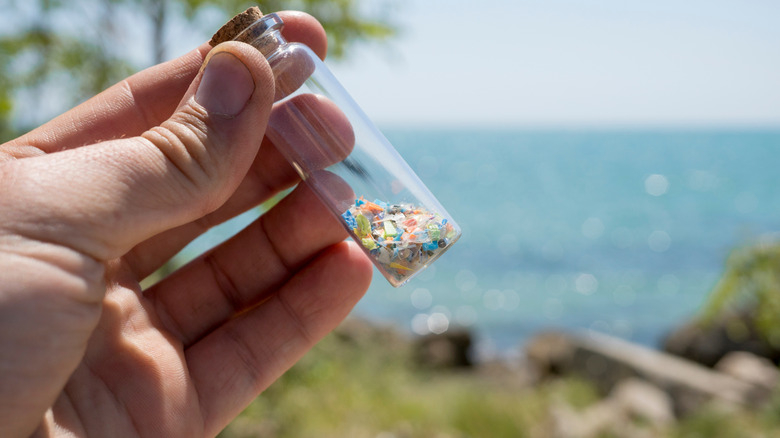
If you’re an outdoor recreation enthusiast who loves activities like hiking, camping, rock climbing, mountain biking, or snowboarding then you’re probably someone who values nature. It’s no surprise that a passion for outdoor recreation and environmentalism go hand in hand for many travelers. Once you fall in love with nature’s beauty, it doesn’t take much to realize that we should all work together to protect the planet, but even if you do your best to live a sustainable lifestyle and take more eco-friendly vacations, you might be contributing to one of the worst environmental problems — microplastic pollution.
Microplastics are becoming a major issue, and the National Institute of Health has identified them as a global health concern. “Plastic pollution in various forms has emerged as the most severe environmental threat. Small plastic chunks, such as microplastics and nanoplastics derived from primary and secondary sources, are a major concern worldwide due to their adverse effects on the environment and public health,” a scientific article published by NIH states.
The tiny plastic particles are particularly dangerous when they make their way into bodies of water because they’re easily ingested by fish and other creatures. They can travel up the food chain and cause all sorts of problems in humans and animals. Without knowing it, you may be making the microplastic problem worse whenever you embark on a hike. A recent study has shown that we are transporting microplastics to wild places via our outdoor clothing and gear.
Researchers found elevated microplastic levels in a remote lake and it’s coming from hikers’ clothing and gear
 SIVStockStudio/Shutterstock
In July, 2025 a team of researchers found elevated levels of microplastics in Lake Tear of the Clouds – which is where the mighty Hudson River begins. They attributed the plastic pollution to hikers’ clothing, gear, and shoes since the lake is in a remote location that wouldn’t usually be affected by plastic pollution.
Dr. Tim K. Keyes, a data scientist who participated in the study, said in a press release that synthetic fibers “appear to be significant contributors to microplastics finding their way into these remote, otherwise pristine waters.” They found 16.4 plastic particles per milliliter of water in Lake Tear. Those results were compared to samples taken from Moss Pond, which has a similar elevation and is located about a mile away. Moss Pond is harder for hikers to reach and only had .73 particles per milliliter of water.
Microplastics can cause numerous health problems in humans and animals, including developmental delays, reproductive problems, and cancers. They even make it harder for living things to fight off diseases, according to the NOAA National Ocean Service.
How to help combat the microplastic problem
 Heidi Penner/Shutterstock
With so many potential health hazards, we should all be extremely concerned about microplastics. Unfortunately, almost everything we buy (including our clothing and outdoor gear) contains some amount of plastic.
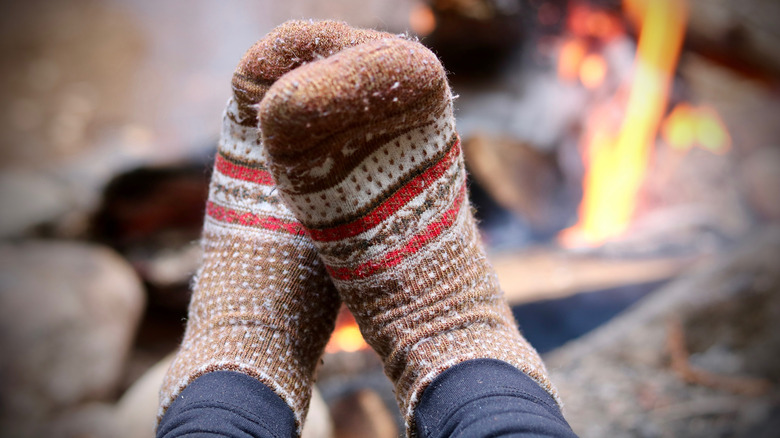
Plastic fabrics like polyester and nylon are commonly used to make outdoor gear. You know that cozy fleece that you love to wear camping? It’s probably shedding a bunch of microplastics. Moisture-wicking athletic clothing (like your favorite pair of hiking leggings) is usually made from synthetic plastic fabrics, too. Spandex and acrylic are also produced from plastic. These fibers can take hundreds or even thousands of years to break down in the environment. Mass-produced plastic has existed for less than 100 years, and yet it’s now present almost everywhere on earth — including inside our bodies.
It has become increasingly challenging to find clothing and gear that doesn’t contain plastic, but it is possible. If you want to avoid contributing to microplastic pollution while hiking, consider purchasing clothing and gear made from natural fibers the next time you’re in need of something new. Opt for stainless steel water bottles and cooking utensils for sustainable, waste-free camping. The brand PACT sells organic cotton leggings that cost under $50. Merino wool is a natural moisture-wicking and temperature-regulating fabric that’s great for outdoor activities like hiking. When choosing your next pair of hiking boots, look for options made from natural leather with a thick rubber sole. You can even find hiking backpacks and tents for wild camping excursions crafted from natural cotton canvas.
Search
RECENT PRESS RELEASES
Related Post