I watched a Joby electric Air Taxi take off and land in New York City, and now I can’t wait for our Uber of the skies future
April 28, 2026
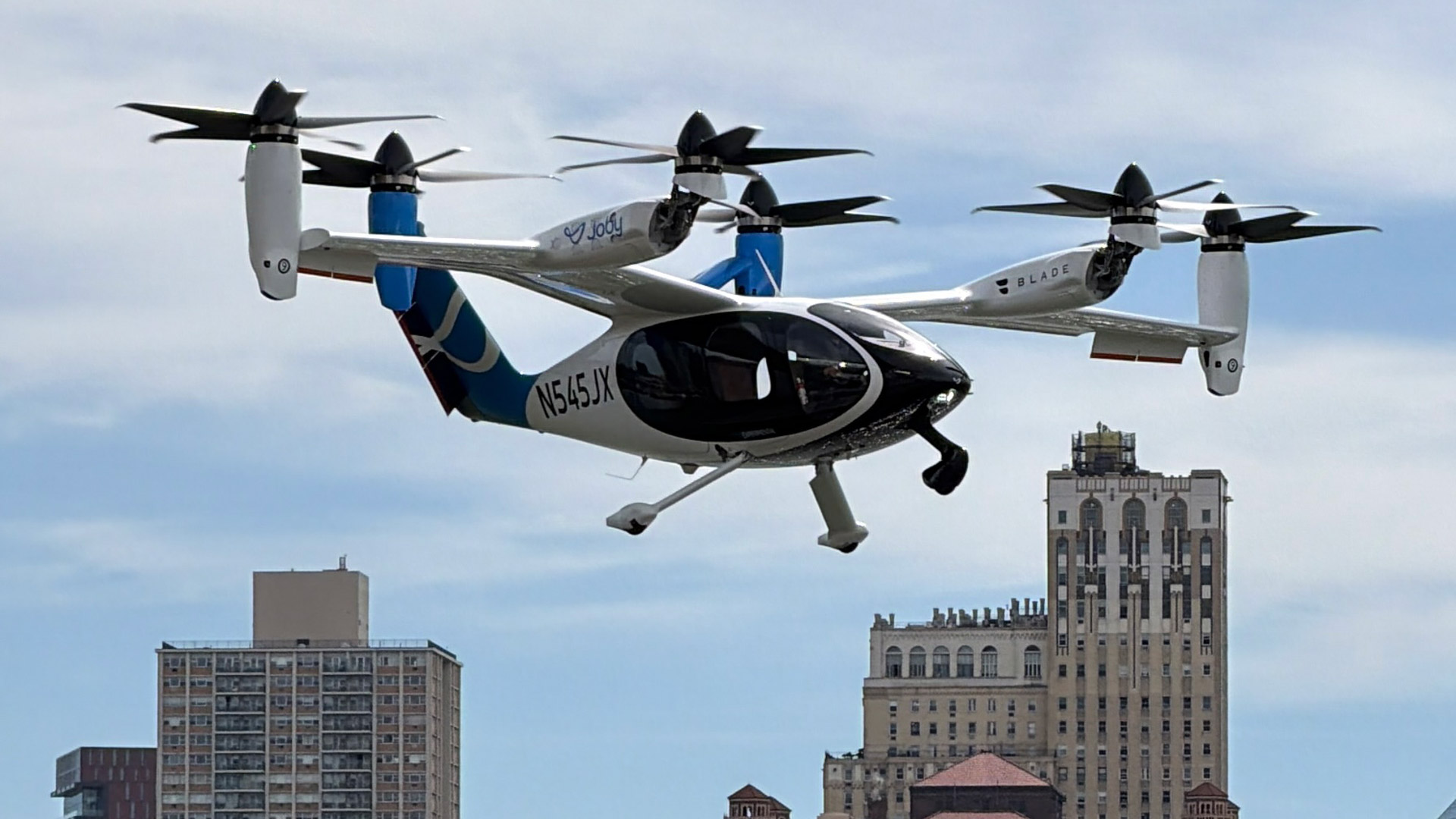
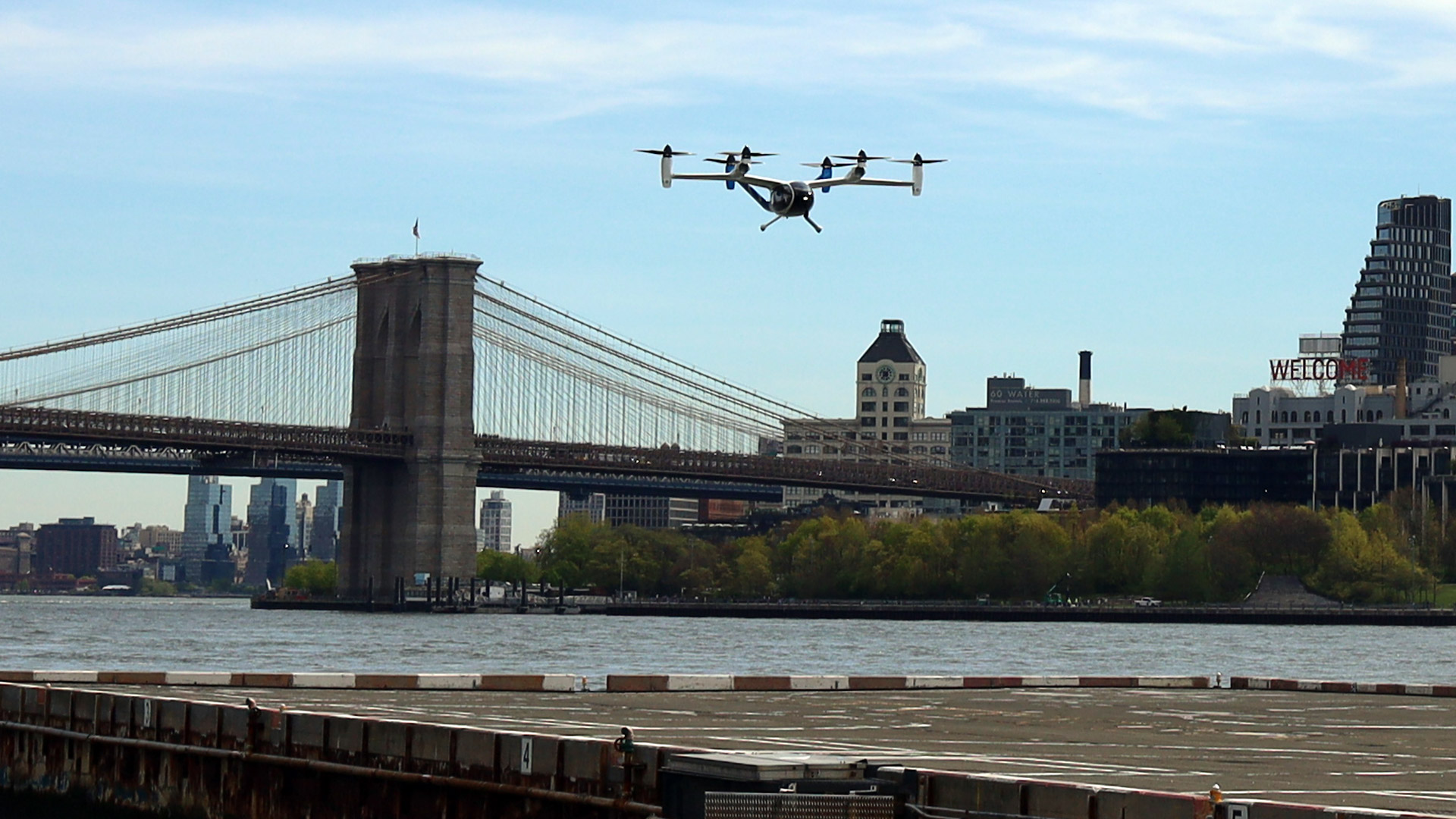
Unlike most airplanes or helicopters, I saw the all-electric Joby Air Taxi long before I heard it. It was cruising silently around Governor’s Island and past the Brooklyn Bridge in New York as it made its approach to the NYC Downtown Skyport in Lower Manhattan. When it touched down moments later, it made history, completing the first point-to-point EV air taxi demonstration in New York City history.
As someone who’s been following the growing eVTOL (electric vertical take-off and landing) industry for almost a decade, this was a watershed moment for me, too. Never, in all that time, had I seen one in flight. Yes, I missed the smaller New York City Joby prototype demonstration in 2023. Still, the truth is, these EV vehicles, which can perform vertical takeoffs before converting into basically airplane mode, have yet to receive the necessary Federal Aviation Administration (FAA) clearance. And with how slowly bureaucracy moves, I assumed it might be another decade before I’d see one in flight outside of a highly controlled test, airfield.
Article continues below
Easy EV to fly
Pilot Buddy Denham hopped out wearing a snappy, blue Joby’s jump suit and greeted me warmly. I asked about how hard it is to fly what looks like a cross between a giant drone and a classic airplane.
The EV, which will fly four passengers and a pilot once certified by the FAA, is “highly augmented fly by wire,” explained Denham. This means that while he controls speed and altitude with physical controllers, much of what happens is when he tells the flight control system what he wants, and it carries it out.
Denham should know. Before joining Joby seven years ago, he was with the Navy, where he helped develop a unified control concept for the F-35 fighter jet’s hover system, essentially the same system the Joby aircraft uses today.
While Denham described the Joby Air Taxi as “easy to fly,” it is a complex air vehicle that does the neat trick of converting back and forth from hovercraft to, basically, aircraft. Denham gestured toward the two most forward of the six propellers and explained how they start facing up to support vertical liftoff and then automatically tip down to face forward to support airplane-like flight.
A turning point for the eVTOL industry
“We’re excited that this is going to transform how people move around New York and the world.” Joby CEO JoeBen Bevirt told me shortly after the flight demonstration.
That transformation is about noise and air pollution. As an all-electric vehicle capable of traveling up to 200mph, the Joby Air Taxi produces zero emissions and, unlike the majority of helicopters flying over and around New York, it is whisper-quiet when in the air. While the noise level rises appreciably as the eVTOL is lifting off or landing, it’s by no means ear-piercing. One company representative told me its in-flight “acoustic profile is 100 times lower than a helicopter.”
Perhaps nothing drove that point home more forcefully than when Bevirt was speaking to the assembled crowd as a large helicopter inexplicably (or purposely) pulled up to the skyport and hovered in space for a minute, essentially drowning out Bevirt’s speech.
Bevirt later told me that this is a pivotal moment for Joby and the industry and believes the day’s flight is “a good indication of where we are going.”
It’s notable, though, that the pilot flew alone and only over water. Without FAA approval, the Joby Air Taxi, which could just as easily land in your backyard as this skyport, cannot fly over land. Joby’s efforts, though, were fast-tracked by a recent FAA eIPP (eVTOL Integration Pilot Program).
Triggered by an order from US President Donald Trump, the eIPP helps foster public-private partnerships and made the day’s flight, a joint operation between Joby and the New York and New Jersey Port Authority, possibly. Full FAA clearance will still be necessary before you catch a Joby from JFK.
Is it safe?
In the meantime, Joby’s latest production prototype is jam-packed with safety features, including multiple redundancies that make it possible to continue flying if one of the six propellers fails. Even inside each propeller is a dual system to prevent failure.
Joby representatives believe they may get FAA clearance to fly as early as next year. If so, customers will use the Joby app to book flights, much like they would an Uber. In fact, Joby and Uber are partners, and the idea is that you could book one trip that includes a Joby flight out of JFK and an Uber to pick you up at the skyport.
There’s an undeniable cool factor to vertical liftoff from JFK and touching down at your destination, but from a practical perspective, you have to ask why. What’s the benefit of living this George Jetson existence? Why not just take an Uber from JFK to Midtown Manhattan? Joby CEO Bevirt has the obvious answer: “5 minutes instead of an hour,” he grinned.
While this day’s flight took 10 minutes from point to point, a Joby that’s allowed to fly over land will get the job done in as little as five minutes.
That sounds amazing, but one can only imagine the costs will be sky (ahem) high. A Joby spokesperson admitted to me that “initially the price might be a bit higher,” but they “want to make this accessible to all.” Ultimately, it should cost no more than a comparable Uber Black ride. So figure, if and when this operation gets off the ground, $150 per ride.
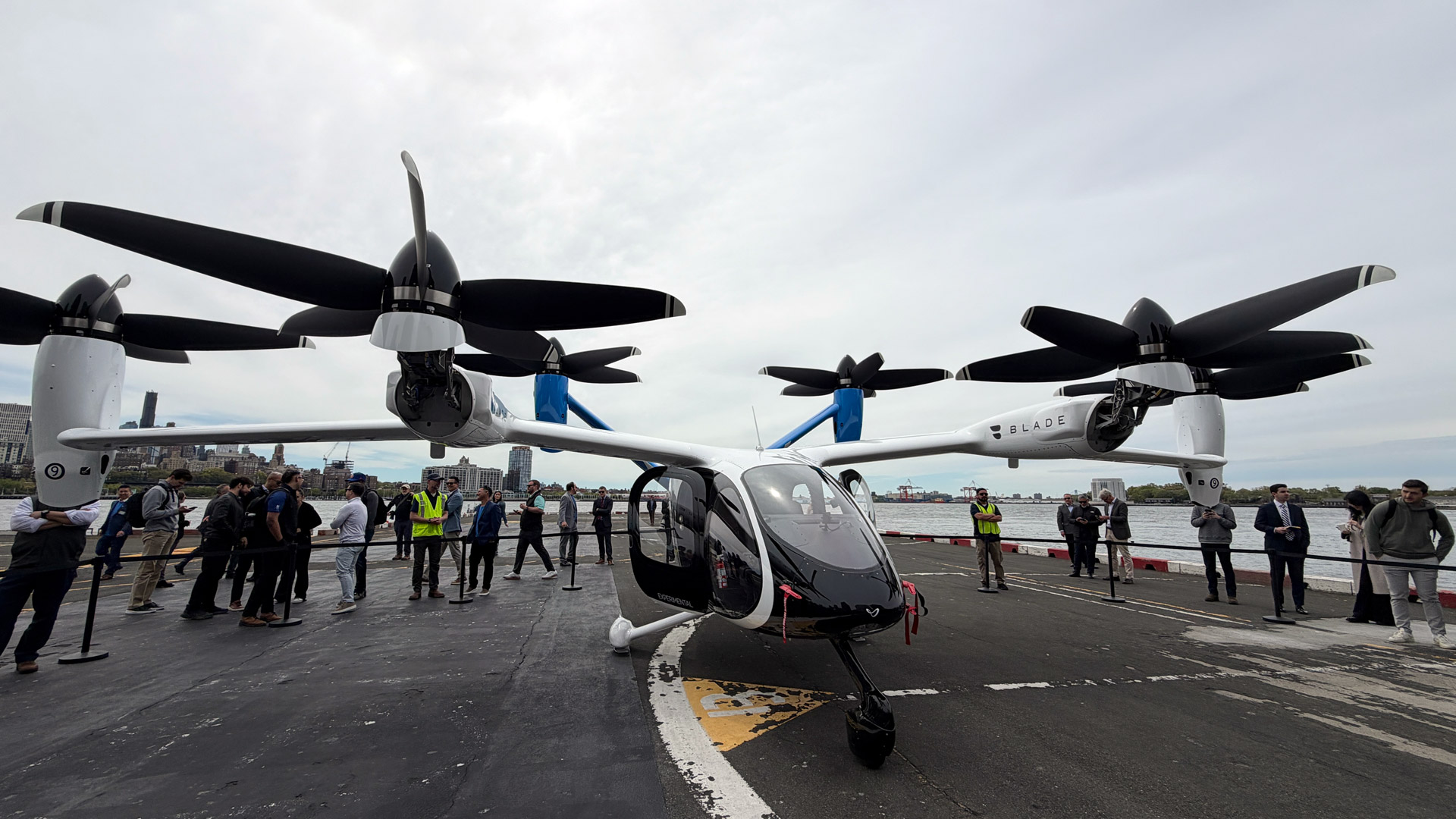
With a spacious cabin, four leather seats, and big windows, the Joby EV air Taxi could someday be the perfect New York City sightseeing vehicle, but first, the company has to build its EVs. This production prototype is close to the final EV, but Joby still has to build more — a lot more.
Even here, though, the company is bullish. As a vertically aligned company, it builds the components it needs in Ohio and assembles the EV Air Taxis in California. A Joby spokesperson told me that by 2027, they hope to eventually build four aircraft a month.
When Joby has enough Air Taxis and is certified to fly, its first passenger will be CEO Joben Bevirt. When I asked if the vehicles were safe, he said, “Absolutely,” and when I followed with if he would be the first passenger, he quickly added, “I am.”

Follow TechRadar on Google News andadd us as a preferred source to get our expert news, reviews, and opinion in your feeds.
Search
RECENT PRESS RELEASES
Related Post