I went to the Beijing Auto Show and it’s a glimpse at the future of the auto industry
April 26, 2026
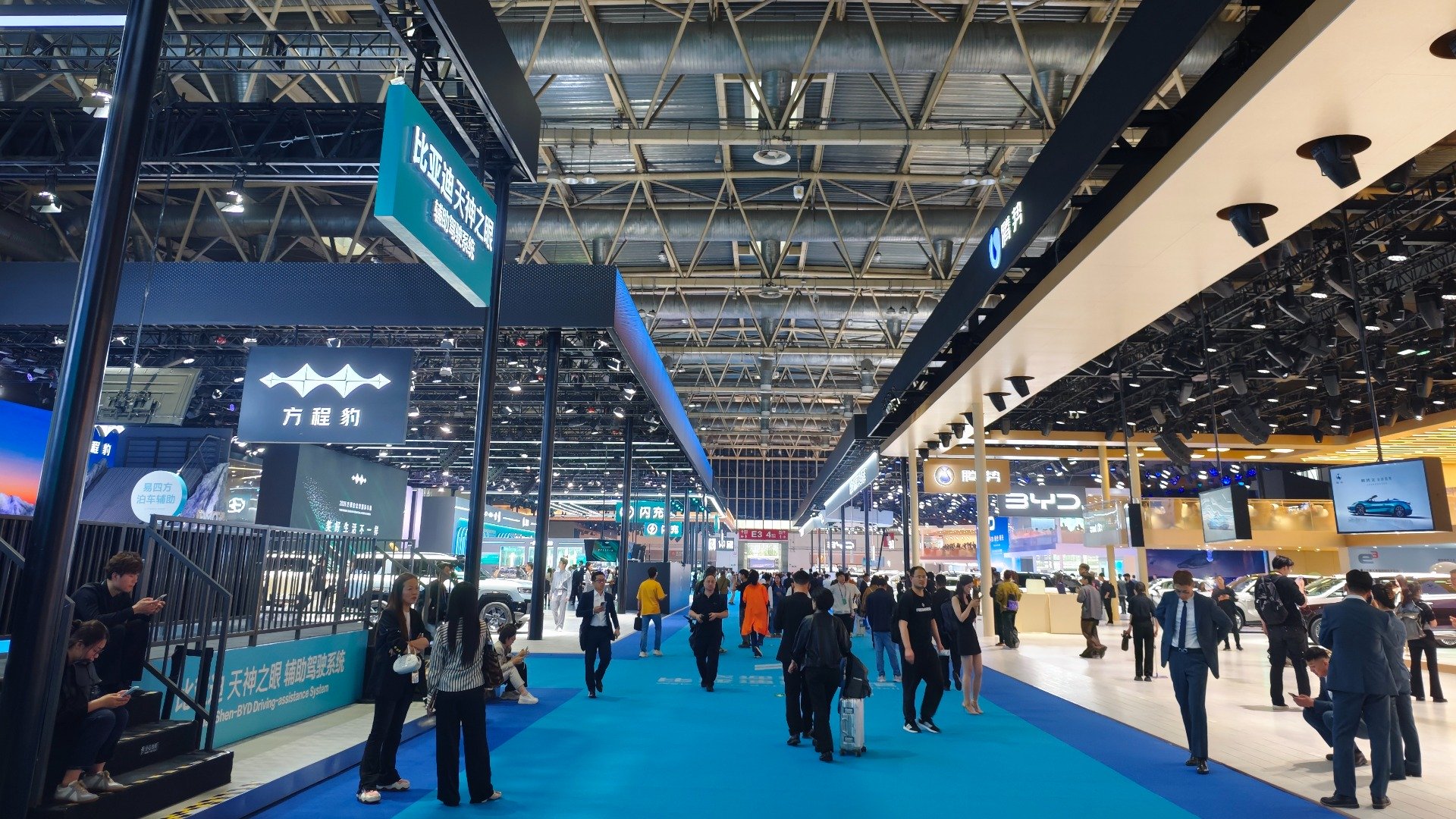
I just spent two days at the 2026 Beijing Auto Show (Auto China 2026), and I need to tell you something: the future of the auto industry is electric and Chinese. I’m not being dramatic. Just realistic.
In a single hall at the show, there were more EV models on display than there are available ones in the entire United States. There are 17 halls at this show. Seventeen. And they all have more EVs than the US market.
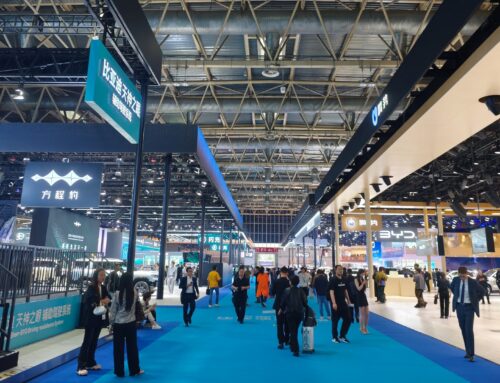
The show features 1,451 vehicles, including 181 world premieres and 71 concept cars, sprawling across a record-breaking 380,000 square meters of exhibition space at two venues. It’s now the largest auto show in the world — and it’s not even close.
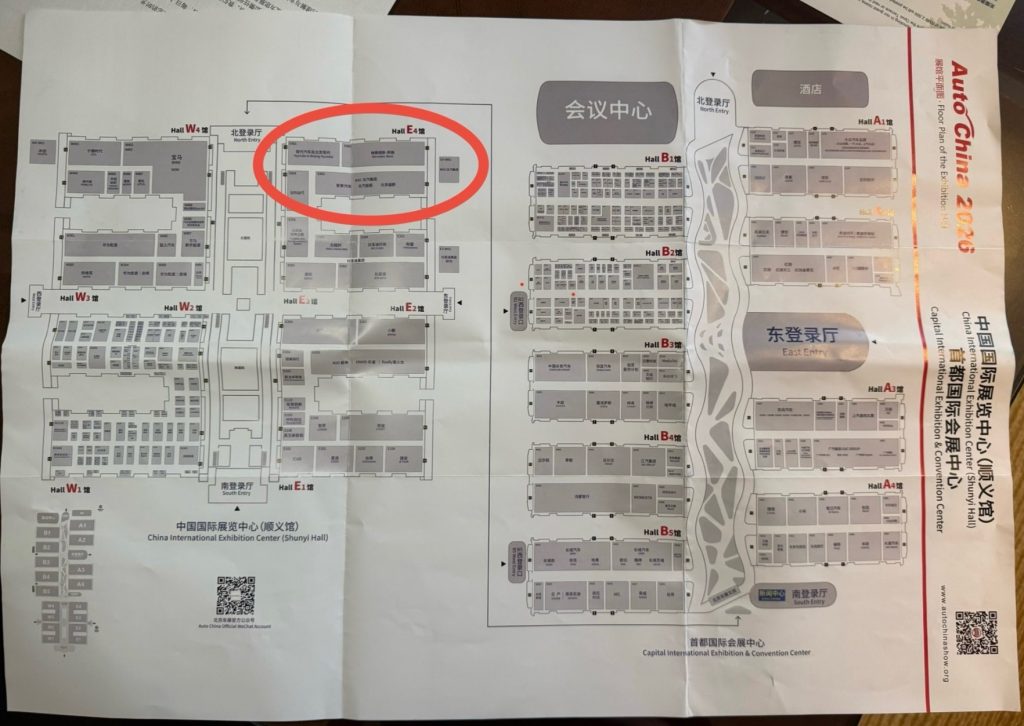
Here are my impressions and photos from the show.
Advertisement – scroll for more content
Walking through the show, the first thing that hits you is the scale. This is not like any auto show I’ve attended in the West. The energy is different. The booths are massive. The vehicles are ambitious. And almost everything is electric or electrified.
Chinese automakers are competing like crazy over here, sharpening their tools while western automakers are hiding behind protectionism and falling behind. Will all of these EV programs succeed? Of course not, but the best ones will — and they will dominate.
Every major Chinese automaker had a massive presence, and even the western brands that showed up brought their electric game.
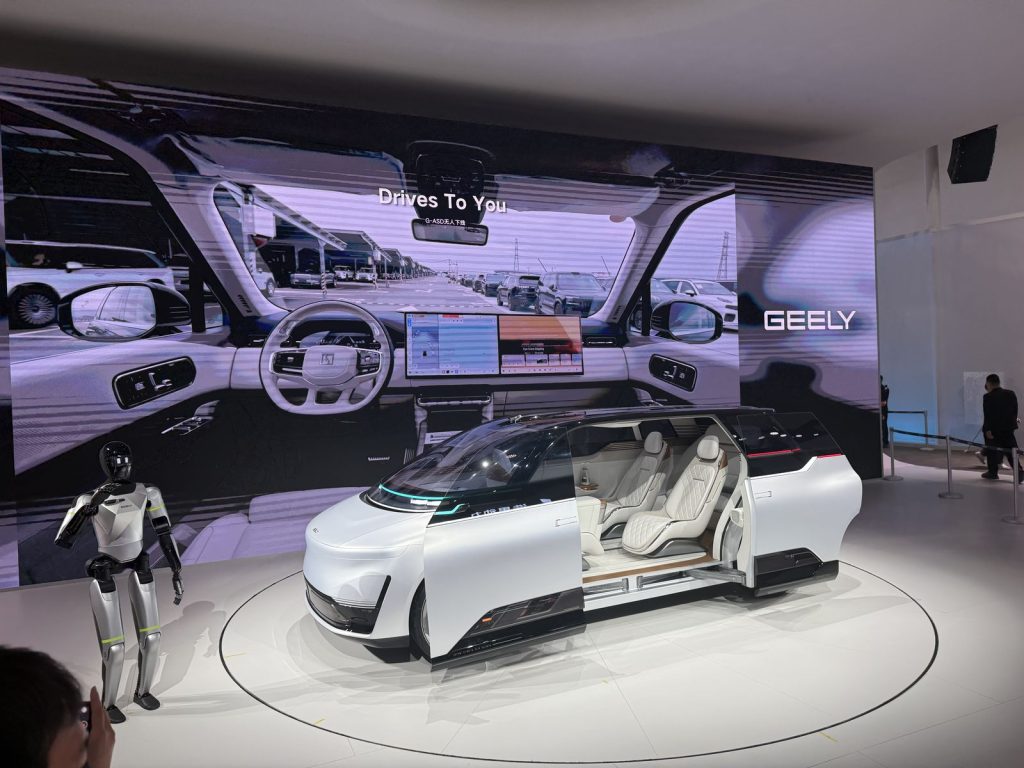
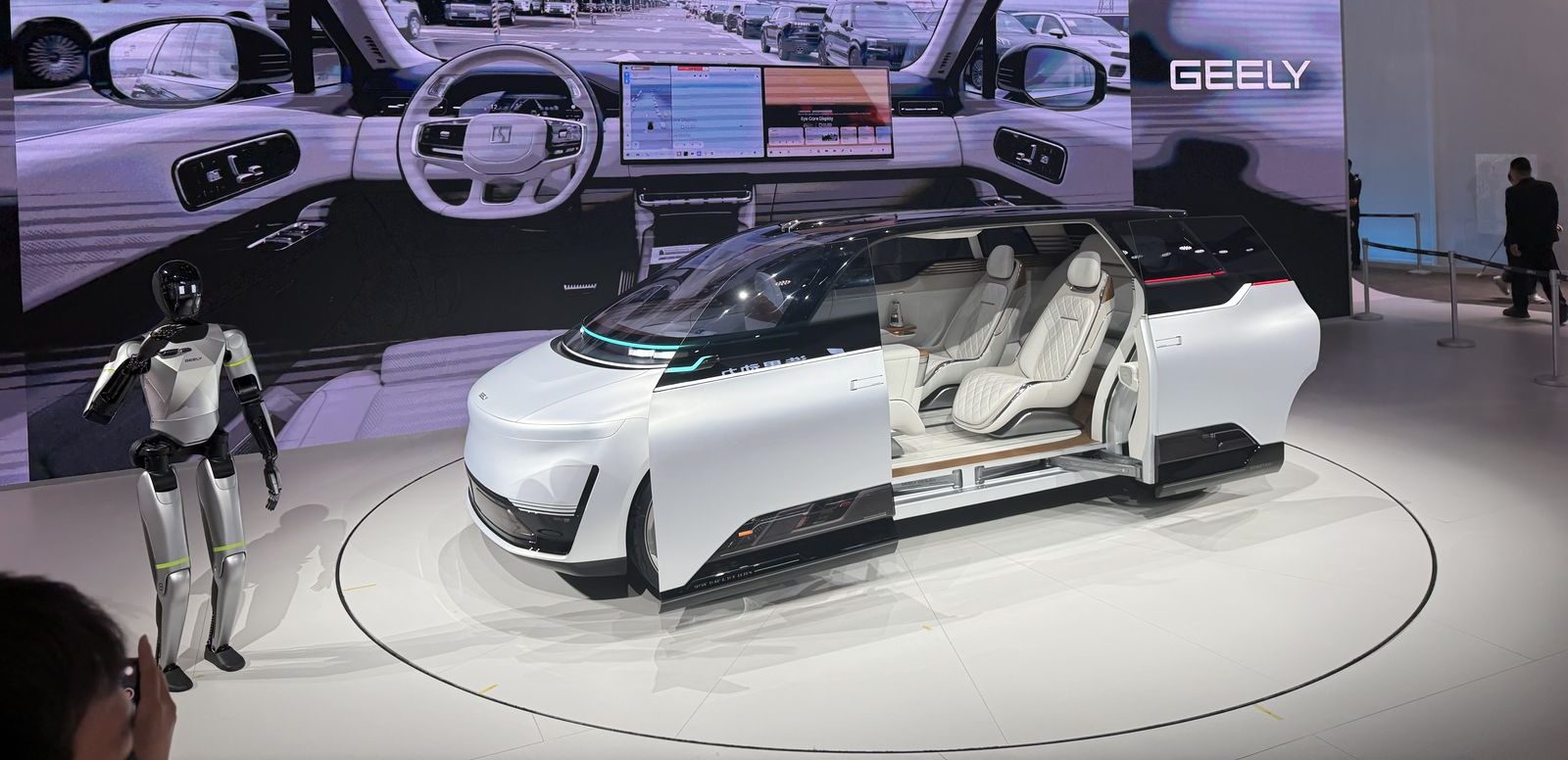
Geely’s autonomous robotaxi concept with a humanoid robot standing guard. The concept features “Drives To You” autonomous capability and a luxurious lounge-like interior.
Geely showcased its vision for autonomous mobility with a stunning robotaxi concept featuring pillarless coach doors, a full-length glass roof, and a lounge interior. Geely also unveiled China’s first native robotaxi prototype, a purpose-built driverless model developed as a Waymo-like platform with its Galaxy Light concept equipped with over 3,000 TOPS of computing power.
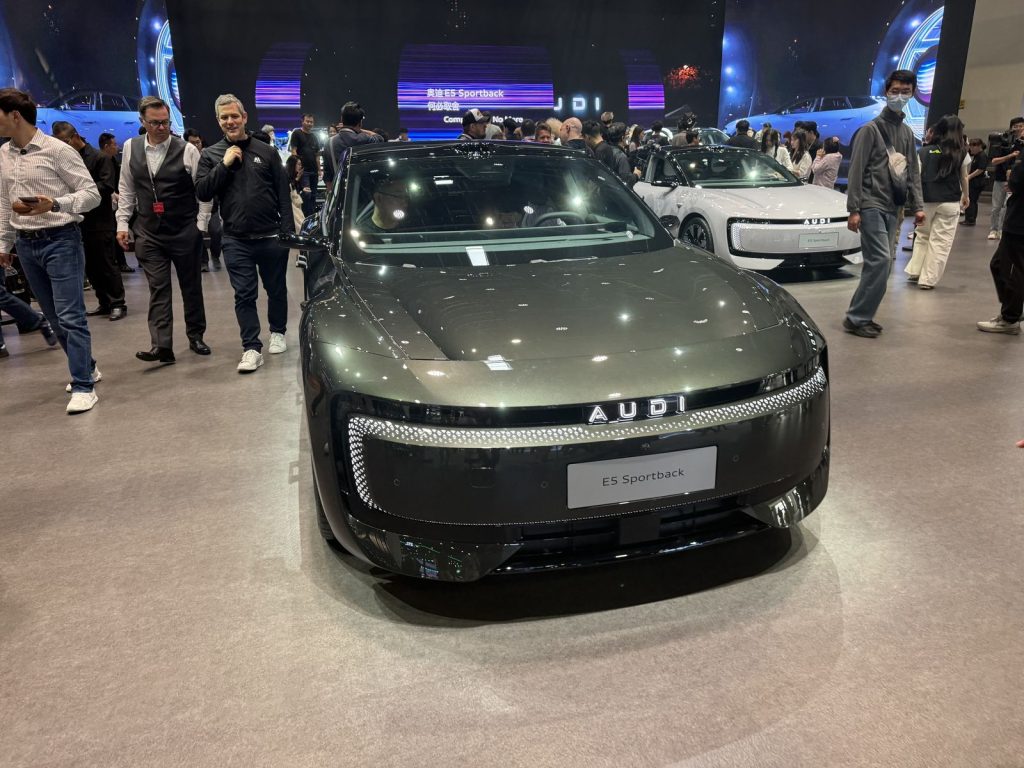
The Audi E5 Sportback made its public debut at the show. Audi is betting big on China-specific EVs.
Audi brought the E5 Sportback, a China-specific electric sedan built on the PPE platform. It’s a sign that even legacy German automakers know they need China-tailored products to compete in this market.
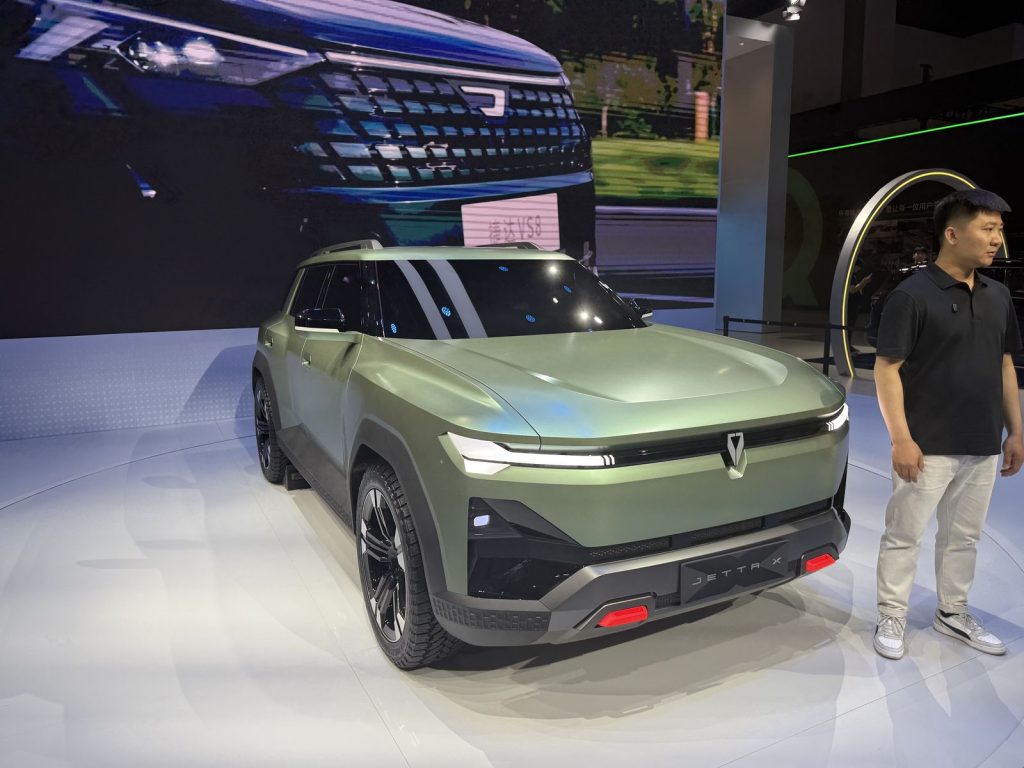
Volkswagen’s Jetta X electric SUV concept. VW is turning its budget brand electric to compete on price in China.
Volkswagen turned the Jetta into an affordable electric SUV for China, a rugged, matte green off-roader that looked genuinely compelling. VW said it’s “intended to carry its leadership position in affordable internal combustion engine vehicles into the electric age.” The design is bold and the proportions are right — it could be a hit if priced correctly.
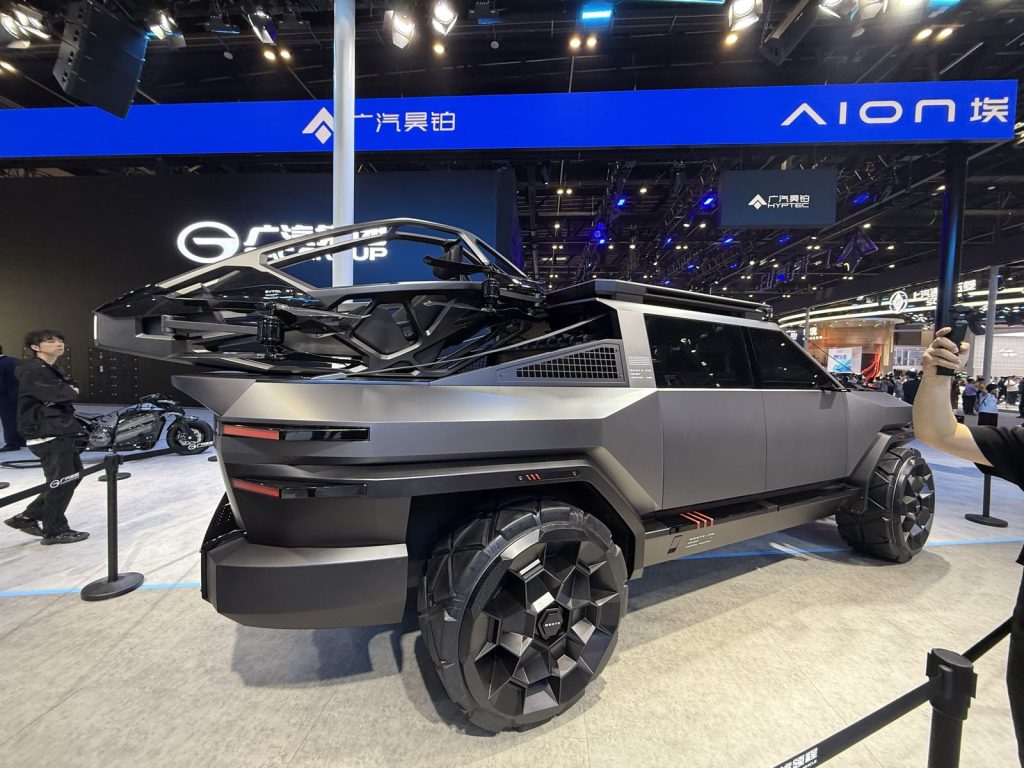
GAC Group’s concept electric pickup truck looks like it was designed for a sci-fi movie. And yes, it gives Cybertruck vibes.
GAC Group brought this wild concept electric pickup truck that looks straight out of a Batman movie. The angular, matte-black design with massive geometric wheels and a roll cage made it one of the most photographed vehicles at the show. The Aion brand was prominently displayed alongside it.
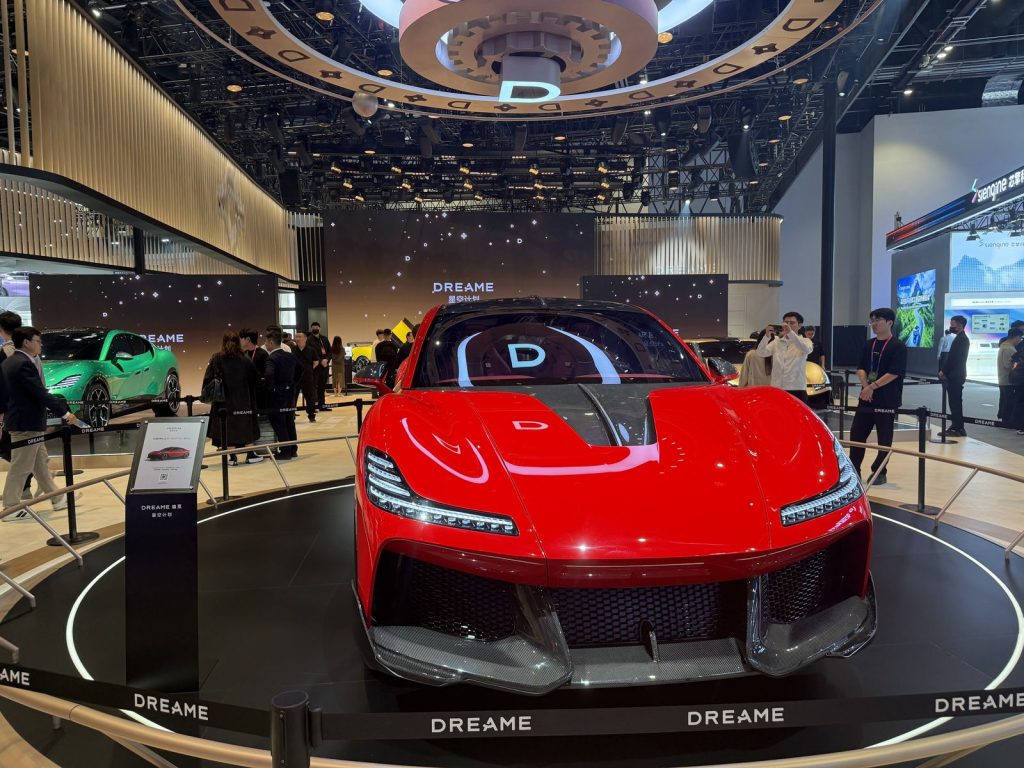
Yes, that says “Dreame” — the robot vacuum company. They brought a sports car concept to an auto show.
One of the stranger sights at the show: Dreame, a company known for making robot vacuums and stick vacuums, had a massive booth with a red electric sports car concept. It tells you something about the Chinese market — even companies outside the auto industry see EVs as an opportunity worth pursuing.
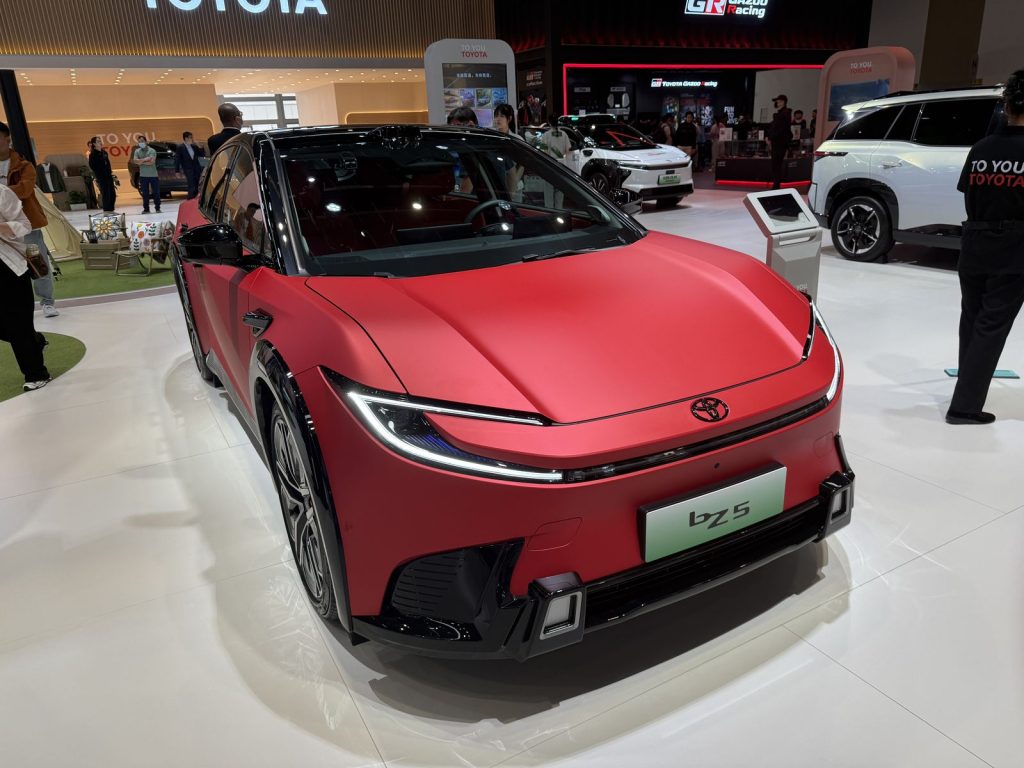
The Toyota bZ5 in a striking matte red finish at the Beijing show. Toyota is finally getting serious about EVs in China.
Toyota showed up with the bZ5 in a striking matte red finish. Even Toyota, the most EV-resistant major automaker, knows it needs to electrify in this market or get left behind entirely.
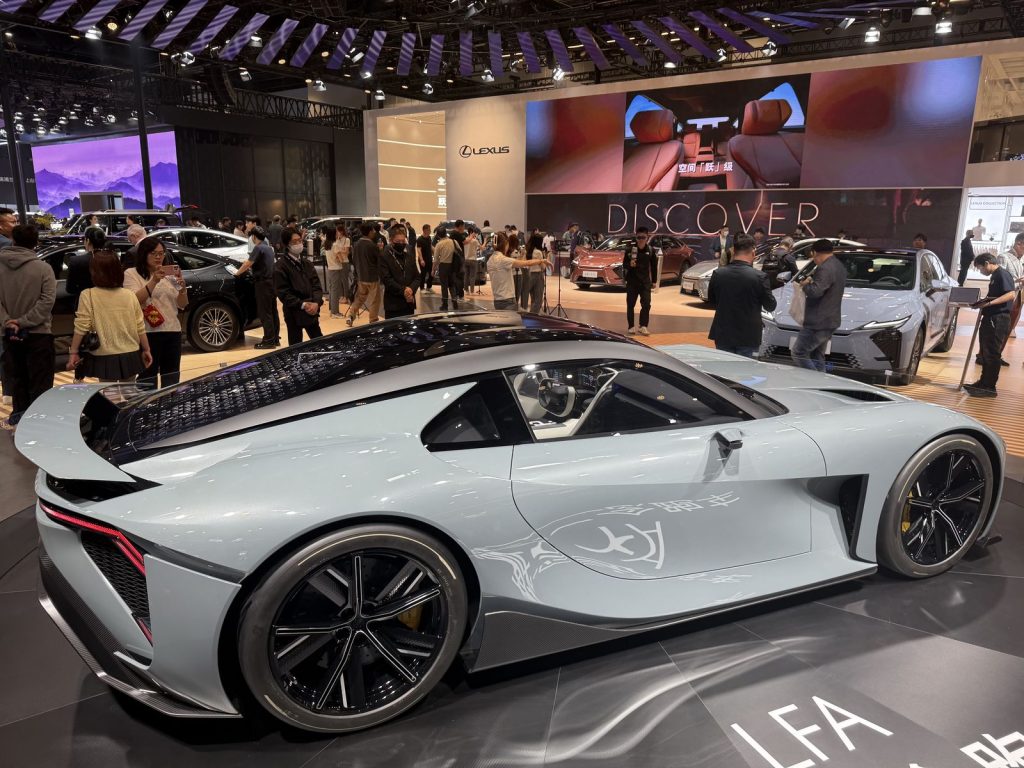
A DIFA supercar concept near the Lexus booth. Chinese brands are now competing at every market segment, including supercars.
Near the Lexus booth sat a DIFA supercar concept — a low-slung, mid-engine-style electric hypercar with massive wheels and aerodynamic bodywork. Chinese brands are now competing at every market segment, from $10,000 city cars to million-dollar hypercars.
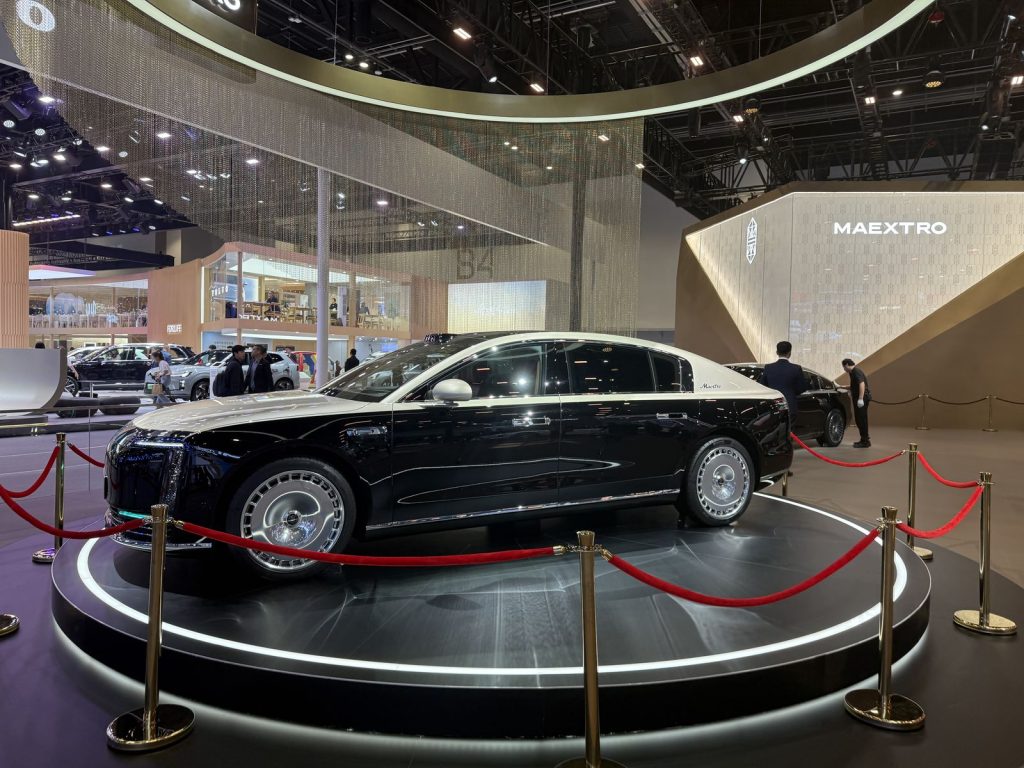
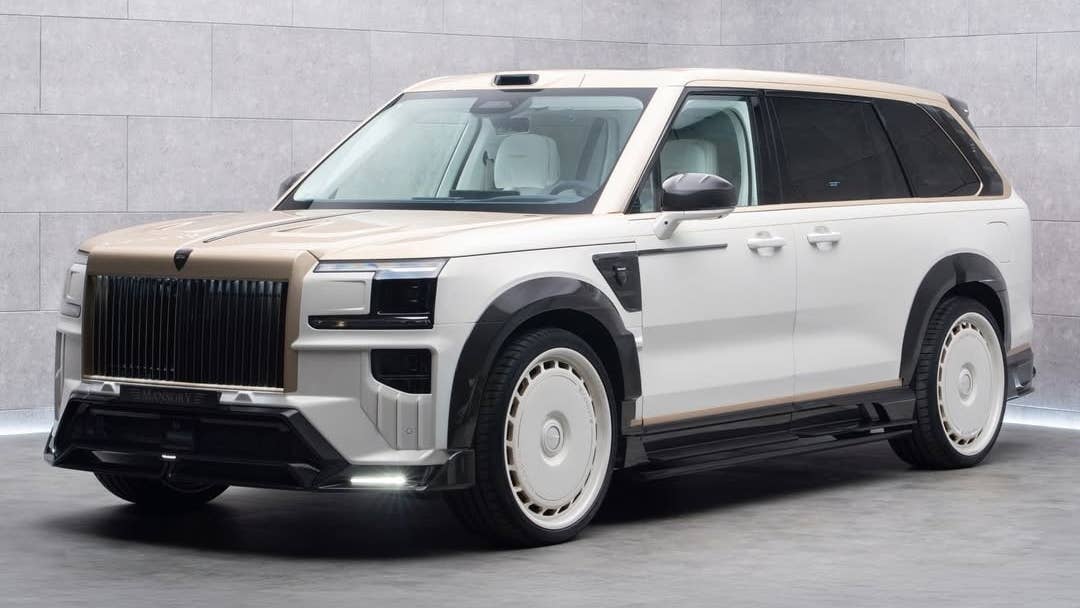
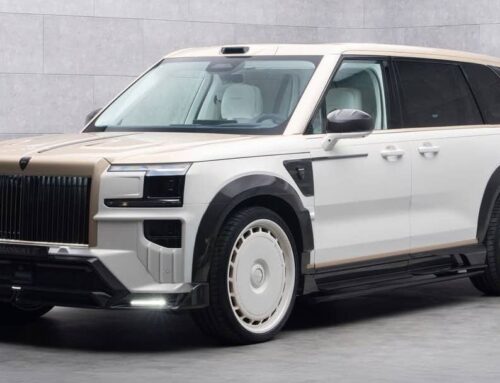
The Maextro luxury sedan — Huawei’s ultra-luxury EV brand. It’s gunning for Rolls-Royce and Maybach.
Huawei’s Maextro luxury sedan was displayed behind velvet ropes like a museum piece. This two-tone, ultra-luxury electric sedan is targeting the Rolls-Royce and Maybach segment. It’s a statement that Chinese EV ambitions extend all the way to the top of the market.
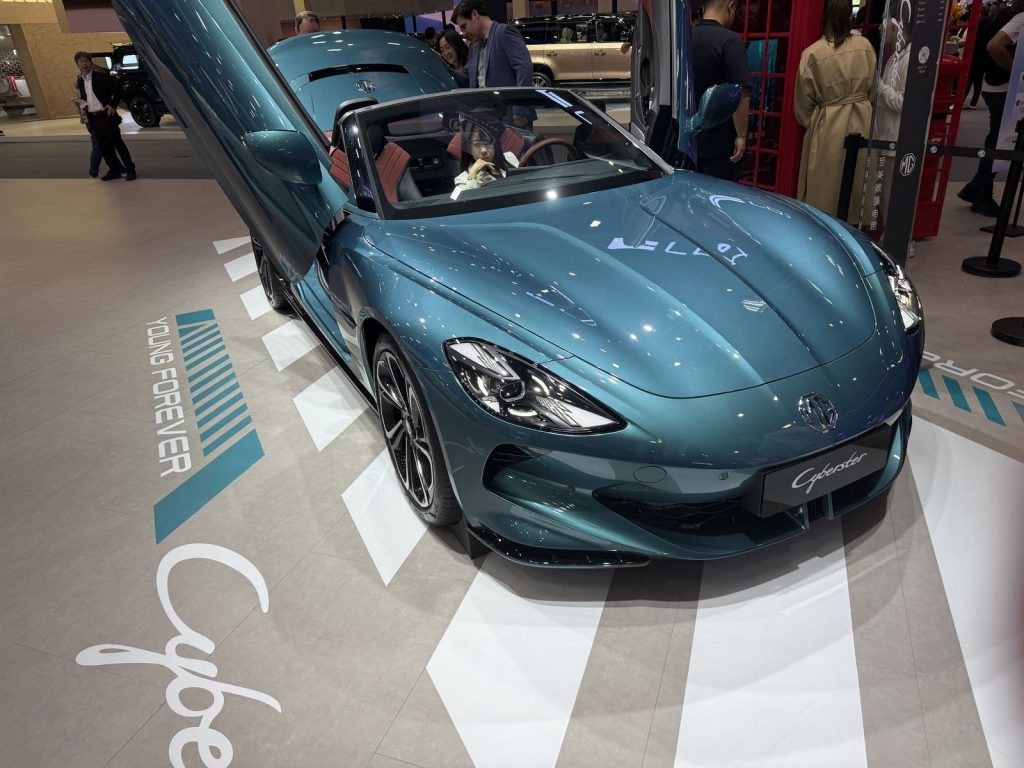
The MG Cyberster convertible. One of the few electric sports cars you can actually buy.
MG had the Cyberster convertible on display — one of the few electric sports cars on the market. Under the SAIC umbrella, MG is pushing hard into Europe and other markets with affordable, attractive EVs.
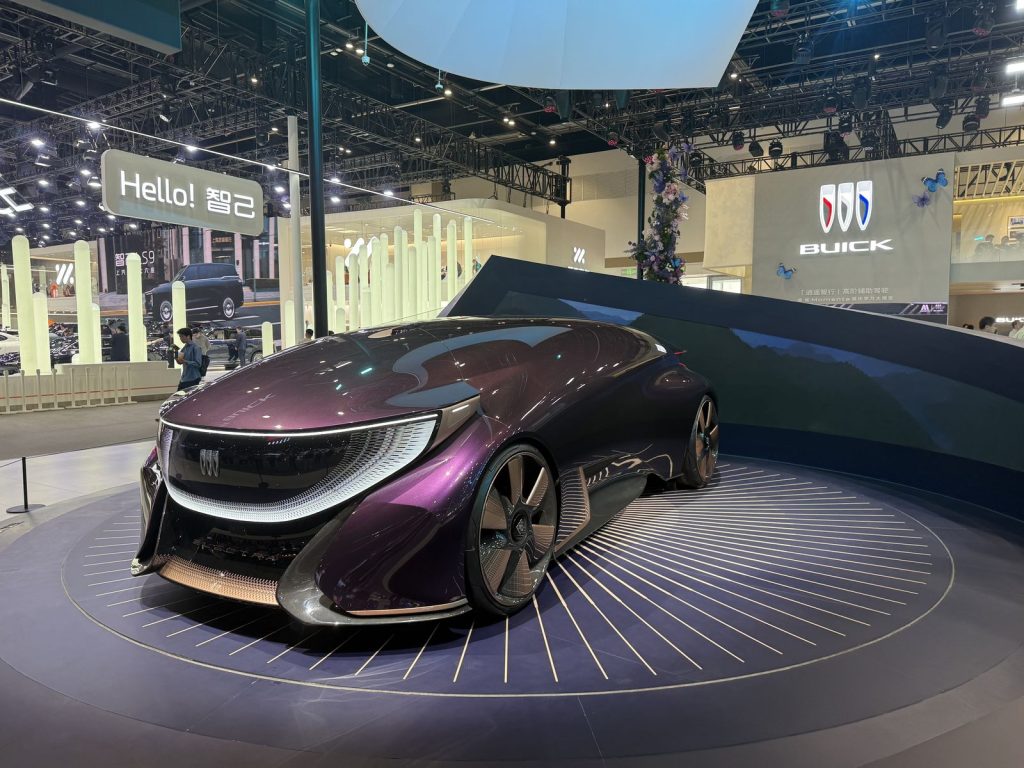
Buick’s futuristic concept EV. GM’s Buick brand is huge in China and going all-in on electric.
Buick, which sells far more cars in China than in the US, brought a stunning purple-black concept EV with a glass canopy roof. GM’s Chinese operations are fighting hard to stay relevant against the domestic onslaught.
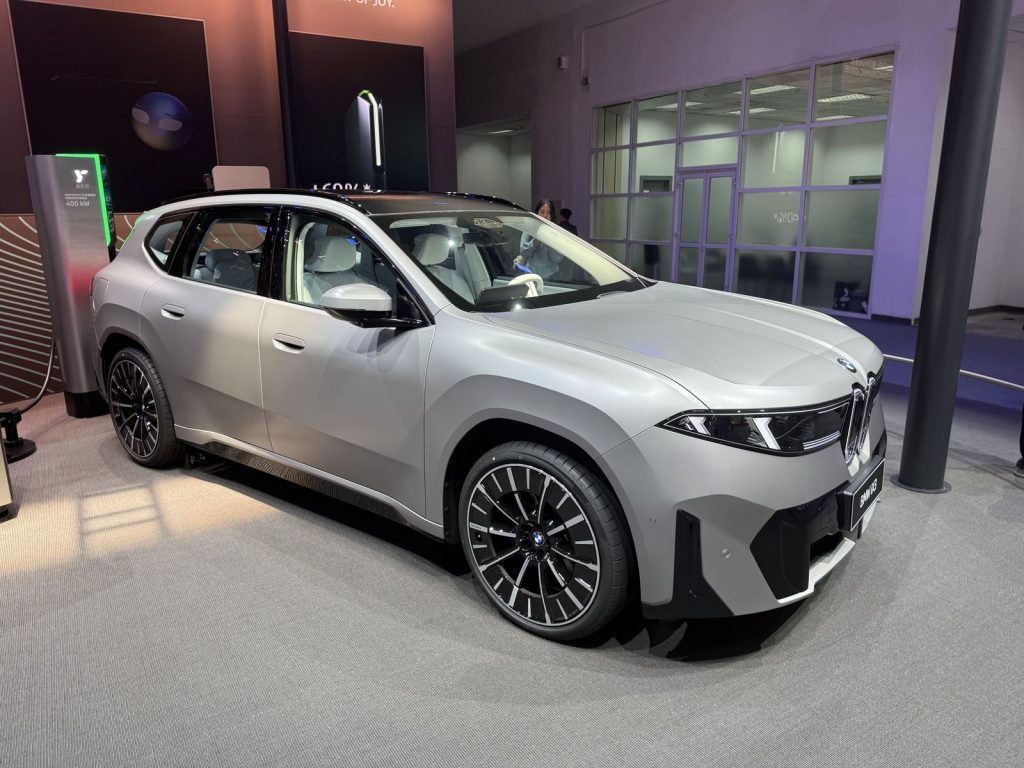
The new-generation BMW iX. BMW is one of the few western brands still investing heavily in China.
BMW brought the new-generation iX along with the i7 luxury sedan. BMW is one of the few western brands that appears to still be genuinely investing in competing in this market rather than retreating.
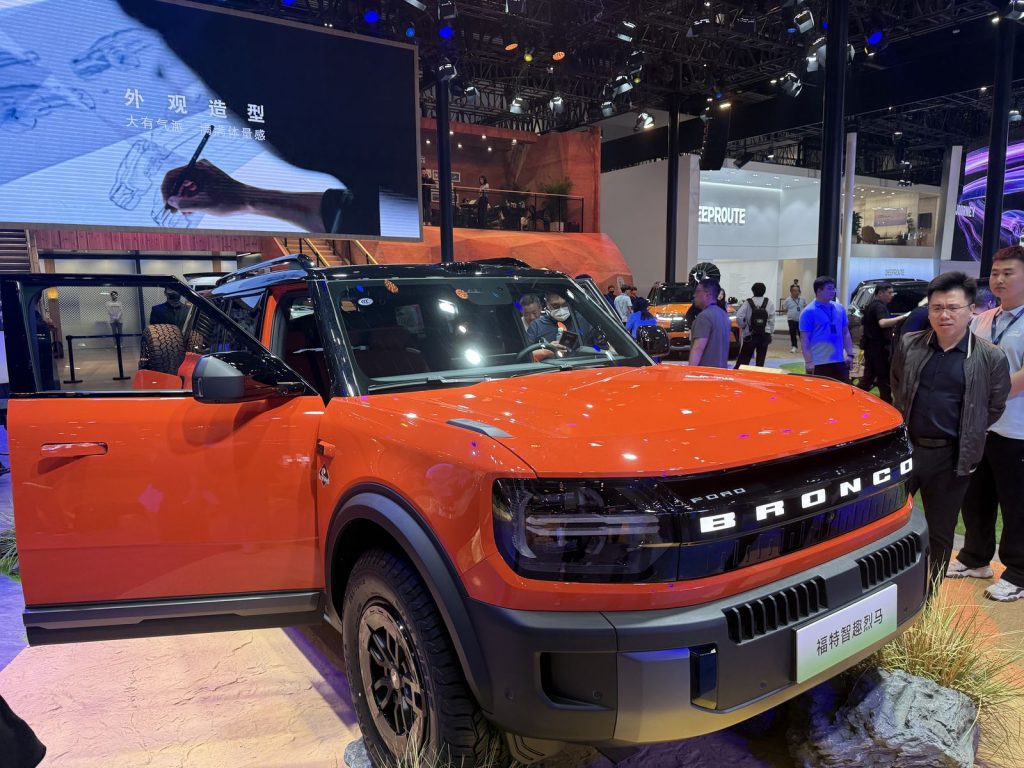
Ford brought the Bronco to Beijing — one of the few American brands still showing up.
Ford showed up with the Bronco, complete with a camping setup in the bed. It makes no sense that Ford doesn’t bring the electric Bronco to the US.
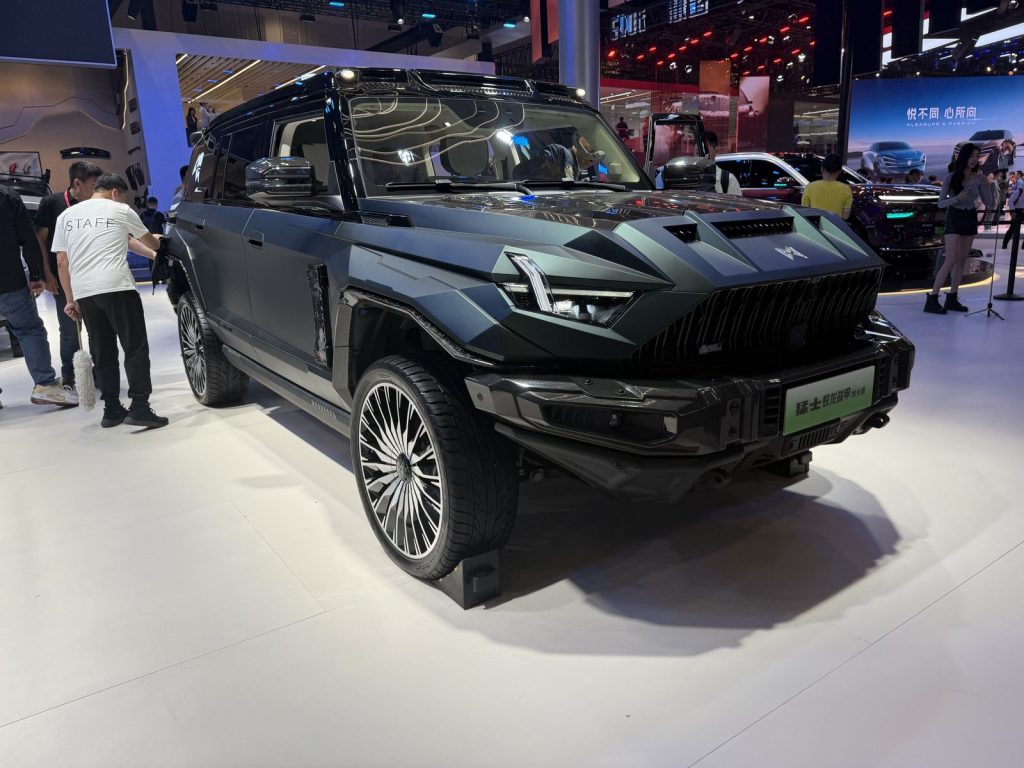
Dongfeng’s Mengshi luxury off-road EV. Military-grade styling, luxury pricing.
Dongfeng’s Mengshi luxury off-road brand had an armored-looking electric SUV that screams premium military-grade engineering. BYD’s luxury off-road brand also unveiled its first electric sedan and sports car at the show, proving that off-road EVs are becoming a full category in China.
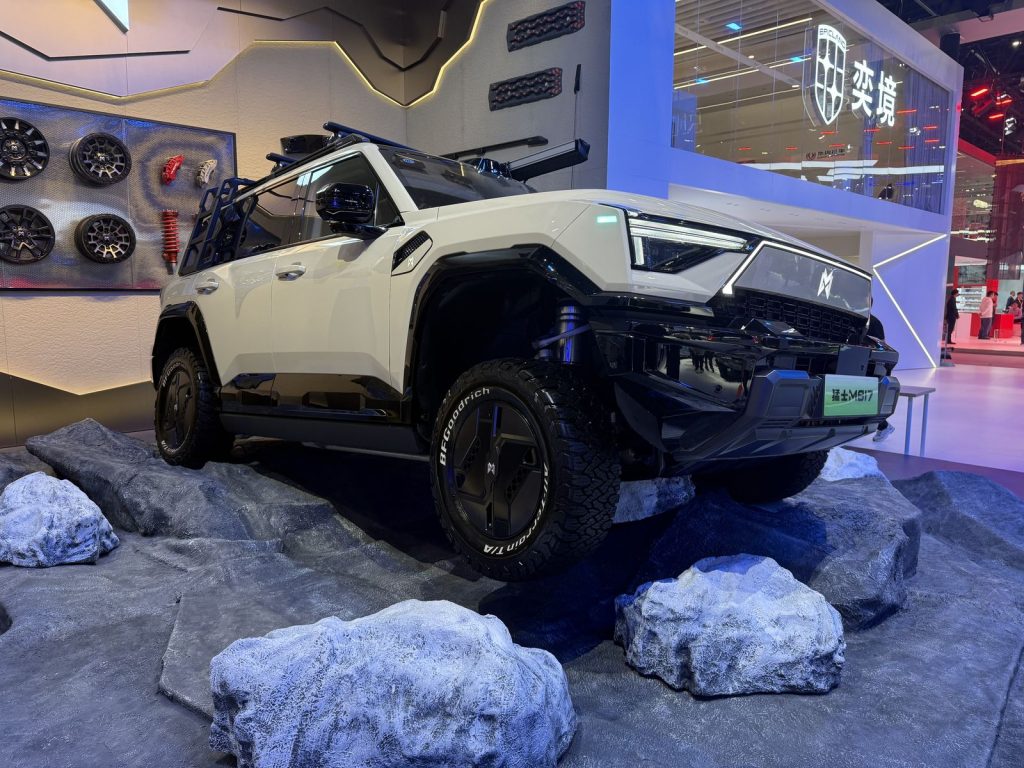
The Yijing M817 off-road electric SUV, displayed on rocks with BFGoodrich tires. Adventure EVs are a growing segment in China.
The Yijing M817 was displayed on a rock formation with BFGoodrich all-terrain tires and a roof rack — trying to convey that this is a serious off-road machine, not just a city SUV with cladding.
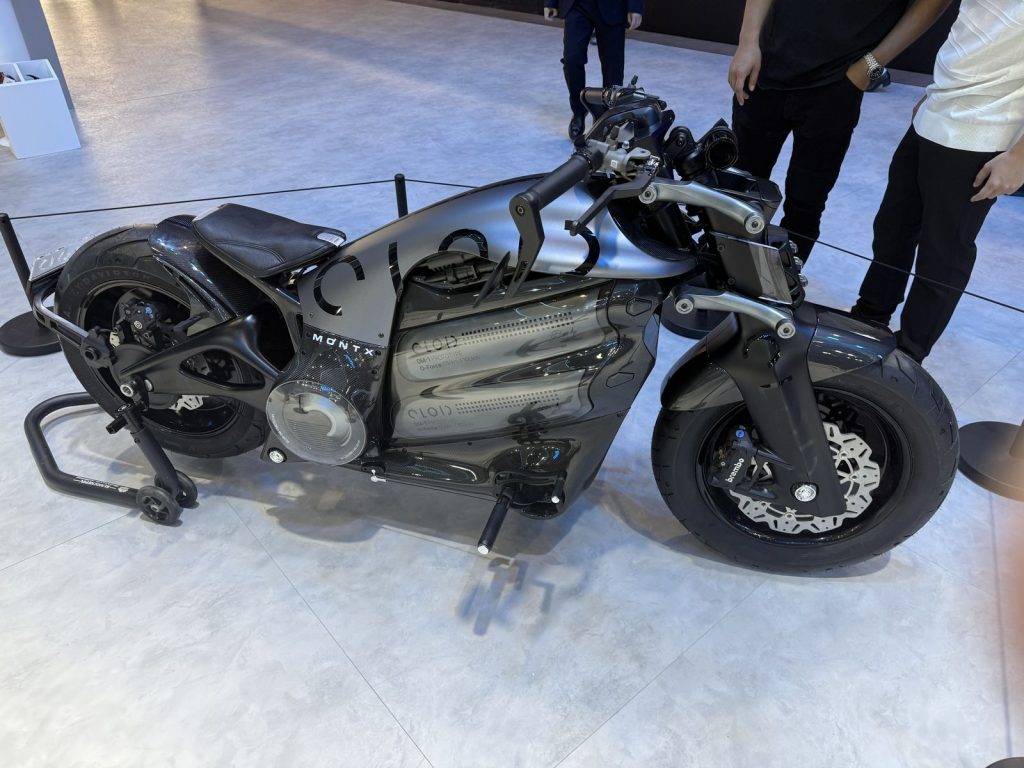
The MontX/CLOD electric motorcycle. Even the two-wheelers at this show are electric.
Even the motorcycles were electric. The MontX (branded CLOD) electric motorcycle had a muscular, naked-bike design that drew plenty of attention. The EV revolution in China isn’t limited to four wheels.
One of the most striking aspects of the show was the sheer number of robots walking around. Humanoid robots and robot dogs were everywhere, at seemingly every other booth.
It makes sense for companies like XPeng, which actually builds its own humanoid robot called IRON and plans to begin mass production in late 2026. But many other companies simply bought a Unitree robot and brought it to their booth as an attraction. When you see dozens of them roaming around, the novelty wears off quickly and the whole thing feels less special.
In the West, the concept of car show models has been increasingly frowned upon over the last decade. At the Beijing Auto Show, it’s alive and well. While there were no bikini models, there were plenty of models standing next to cars at nearly every booth.
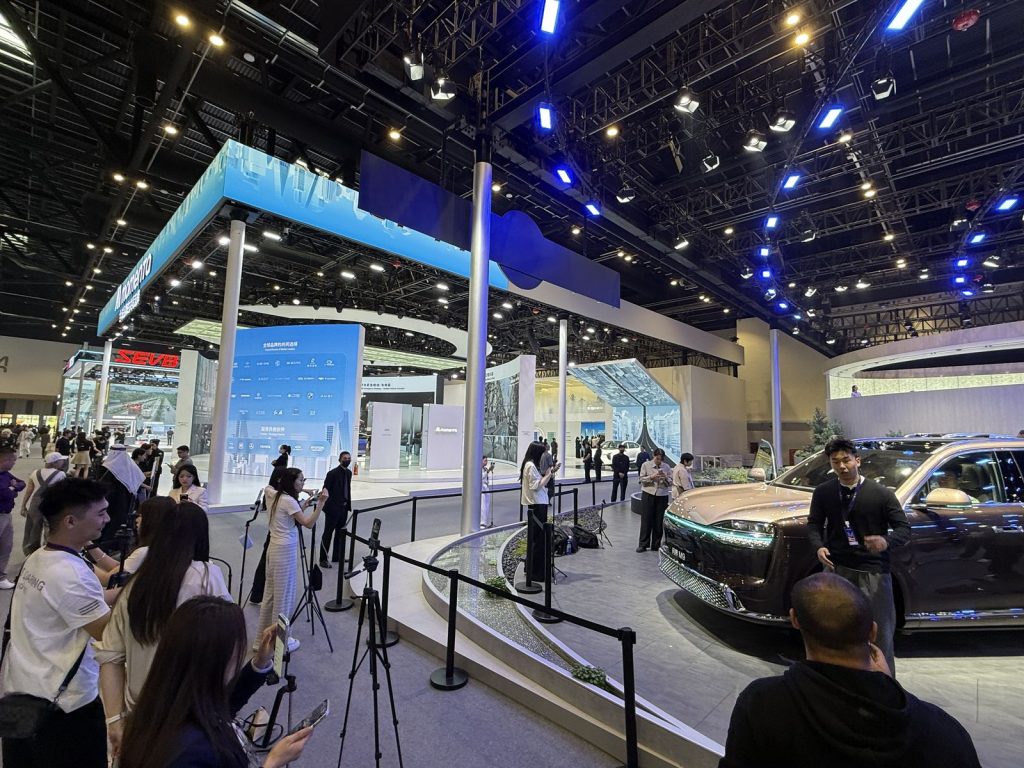
The show floor was full of influencers livestreaming next to vehicles — a uniquely Chinese auto show phenomenon.
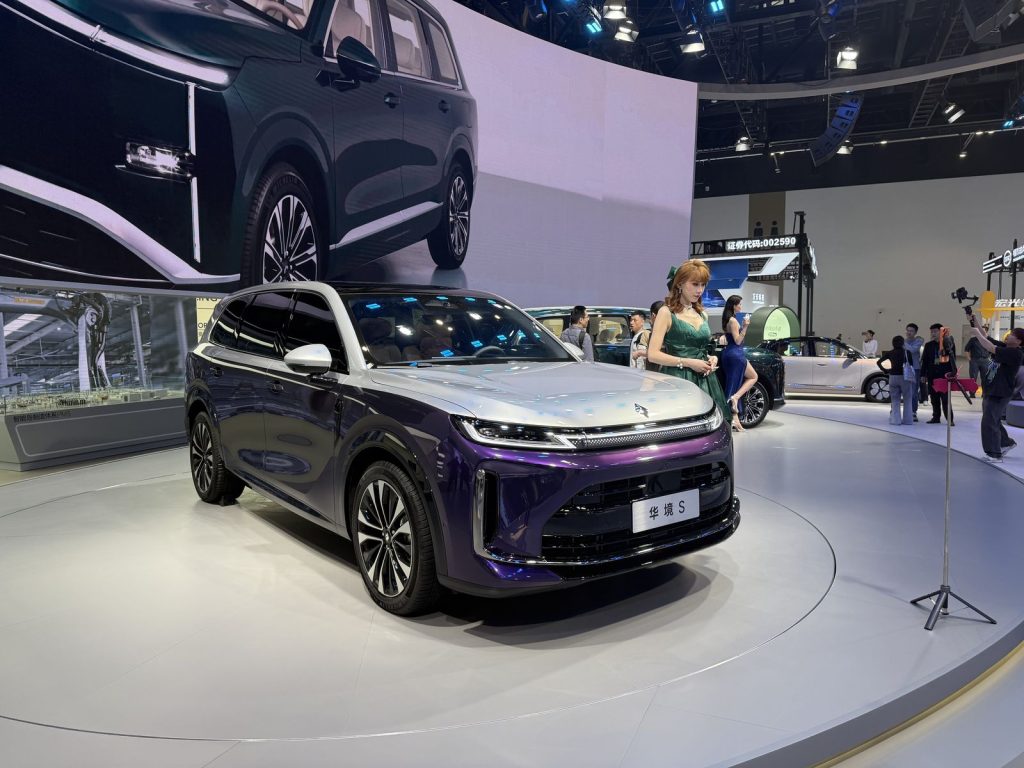
Models remain a fixture at Chinese auto shows, standing next to vehicles at nearly every booth.
But here’s the part that surprised me: many of these models weren’t just standing next to the cars — they were simultaneously filming themselves and livestreaming. Several car companies hired influencers who were just standing next to vehicles, responding to their “chat” in real-time. It’s a uniquely Chinese phenomenon that blends traditional auto show culture with the country’s massive livestream commerce industry.
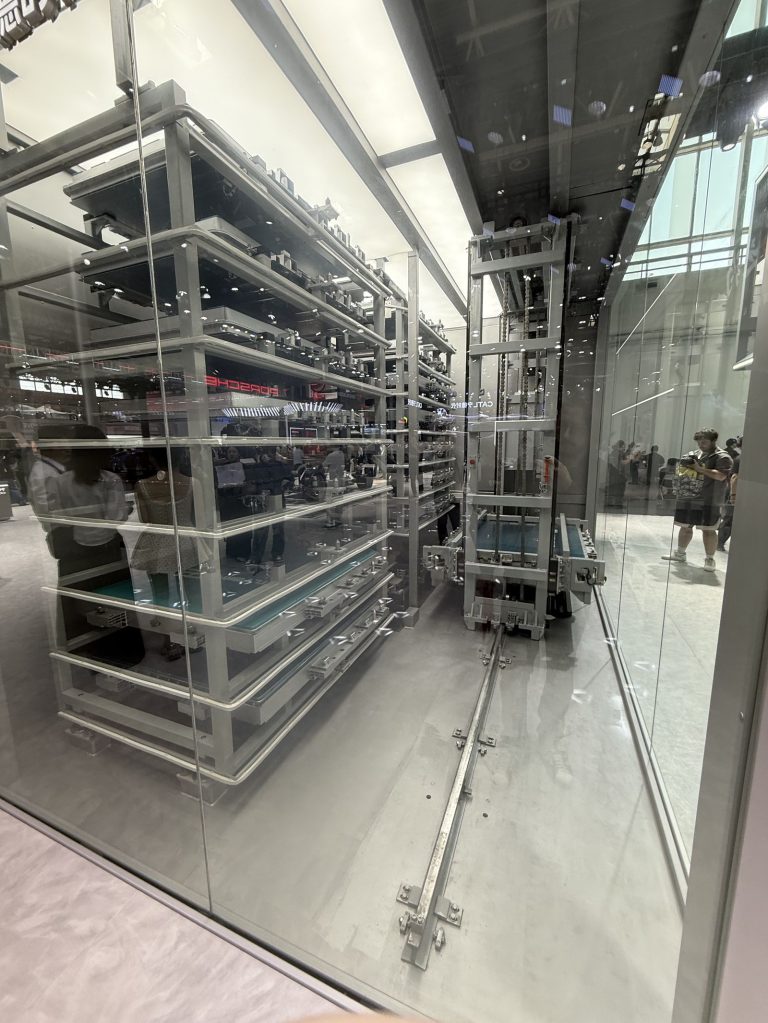
One of the main reasons China dominates the EV world is that it also dominates batteries. At the Beijing Auto Show, there were a dozen battery manufacturers with massive booths — some as big as or bigger than the automaker booths.
CATL had a 1,500-square-meter “Energy Technology Experience Area” at the entrance of the exhibition hall, showcasing everything from battery cell production to its battery-swapping network and recycling systems. CATL also brought its third-generation Shenxing ultra-fast charging battery, which can charge from 10% to 98% in just six minutes.
CALB, EVE Energy, and several others also had enormous exhibition areas. They have all the biggest battery makers with all the different chemistries and 1,000 kW 5-minute charging capability.
Having close access to the world’s largest battery makers is a giant advantage of the Chinese auto industry.
One company that was notably absent: Tesla. I couldn’t find them anywhere at the show. Tesla has now skipped three consecutive Beijing Auto Shows — 2024, 2025, and now 2026. Other no-shows included Jaguar, Land Rover, Maserati, Subaru, and Chevrolet, though GM’s Buick and Cadillac brands were present.
Tesla’s absence is particularly striking given that China remains one of its most important markets and competition is intensifying from every direction. XPeng unveiled its GX flagship SUV with 750 km range and L4-ready hardware for $58,000, and BYD unveiled the Denza Z, a 1,000+ hp drop-top electric hypercar heading to Europe.
We have been covering China’s EV dominance for years, but attending the Beijing Auto Show in person drives the point home in a way that articles and data alone simply cannot.
The scale of what’s happening here is staggering. In 17 halls of exhibition space, Chinese automakers are showcasing vehicles that span every possible market segment — from $10,000 city cars to million-dollar hypercars, from off-road adventure SUVs to autonomous robotaxis, from electric motorcycles to luxury sedans that rival Rolls-Royce.
The battery makers are the unsung heroes. CATL, CALB, EVE Energy, and others had booths that rival the automakers themselves, and they’re pushing technology forward at a pace that makes western battery efforts look sluggish.
The competition among Chinese brands is fierce. Not all of these programs will succeed — that’s a certainty.
In fact, many of the vehicles looked similar or had little brand identity, but the ones that survive this brutal domestic competition will emerge as battle-hardened global competitors. Western automakers hiding behind tariffs and protectionism are buying time, not building advantages. They have the supply chain, the manufacturing capacity, the energy, the charging infrastructure. Unless there is a major shift in momentum, they are going to dominate the entire industry. It’s just a fact.


Search
RECENT PRESS RELEASES
Related Post

![Electric haul trucks could save Fortescue over $400 million in fuel per year [update]](https://stockwatchindex.com/wp-content/uploads/2026/04/liebherr-t264-PVnOOS-500x383.jpg)