IFAT Munich showcases next generation of municipal electric vehicles
May 7, 2026
IFAT is regarded as the leading trade fair for environmental technologies, bringing together the water management, recycling and circular economy sectors in Munich every two years. Until 7 May, around 3,000 exhibitors are showcasing their latest innovations at the exhibition grounds of the Bavarian state capital. European truck manufacturers and bodywork specialists are using this major platform to present their portfolios for municipal applications. Municipalities are a key customer group, and competition for their attention at IFAT is fierce.
We took a closer look at the truck OEMs and many other exhibitors. Mercedes-Benz Trucks, Volvo Trucks, Scania and MAN were represented with relatively large stands. DAF and Iveco have booked fewer square metres, though DAF has at least returned to IFAT after skipping the previous event. Renault Trucks did not have its own stand; vehicles from the French manufacturer are only on display at the special-purpose vehicle manufacturer Terberg.
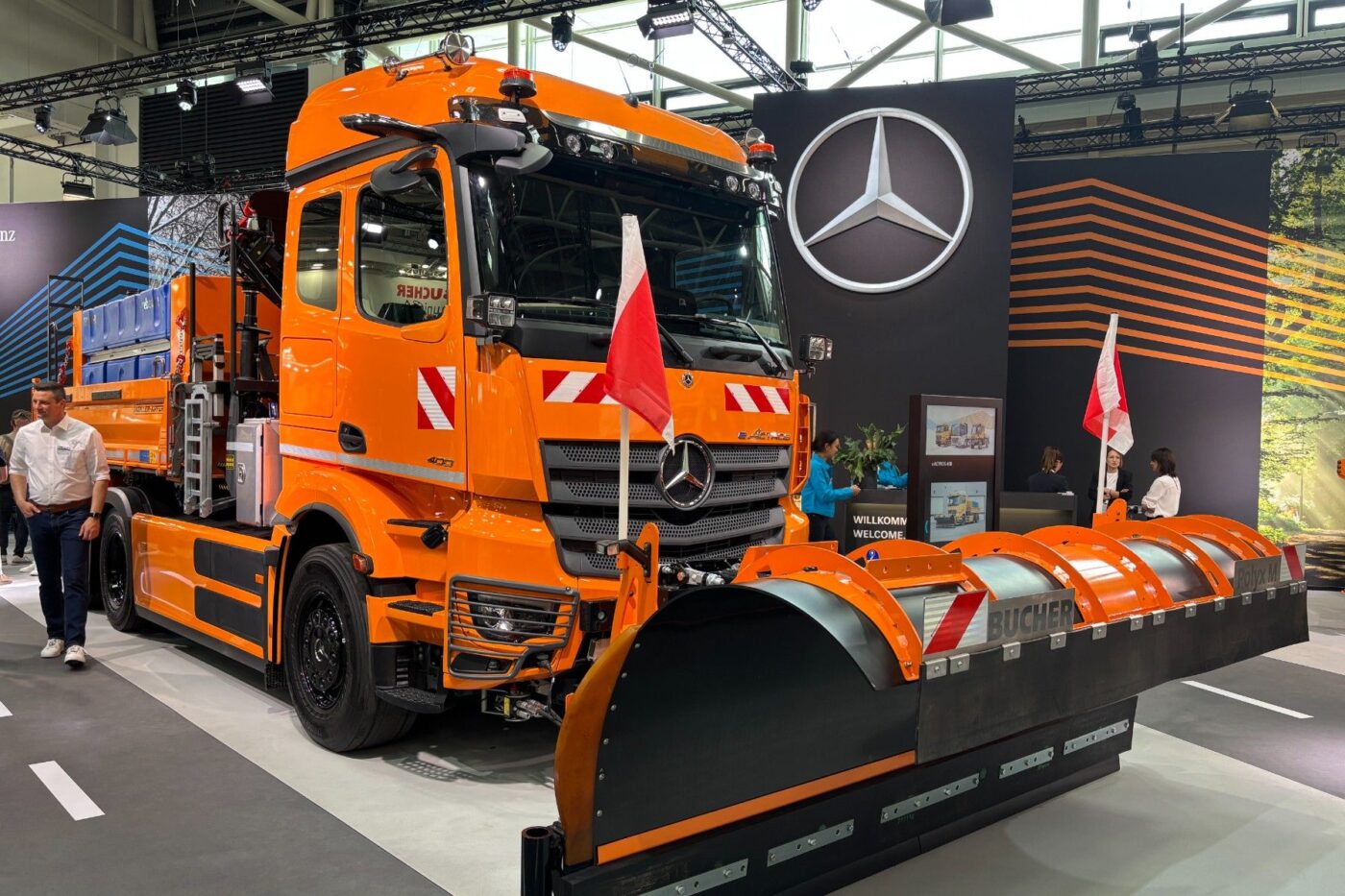
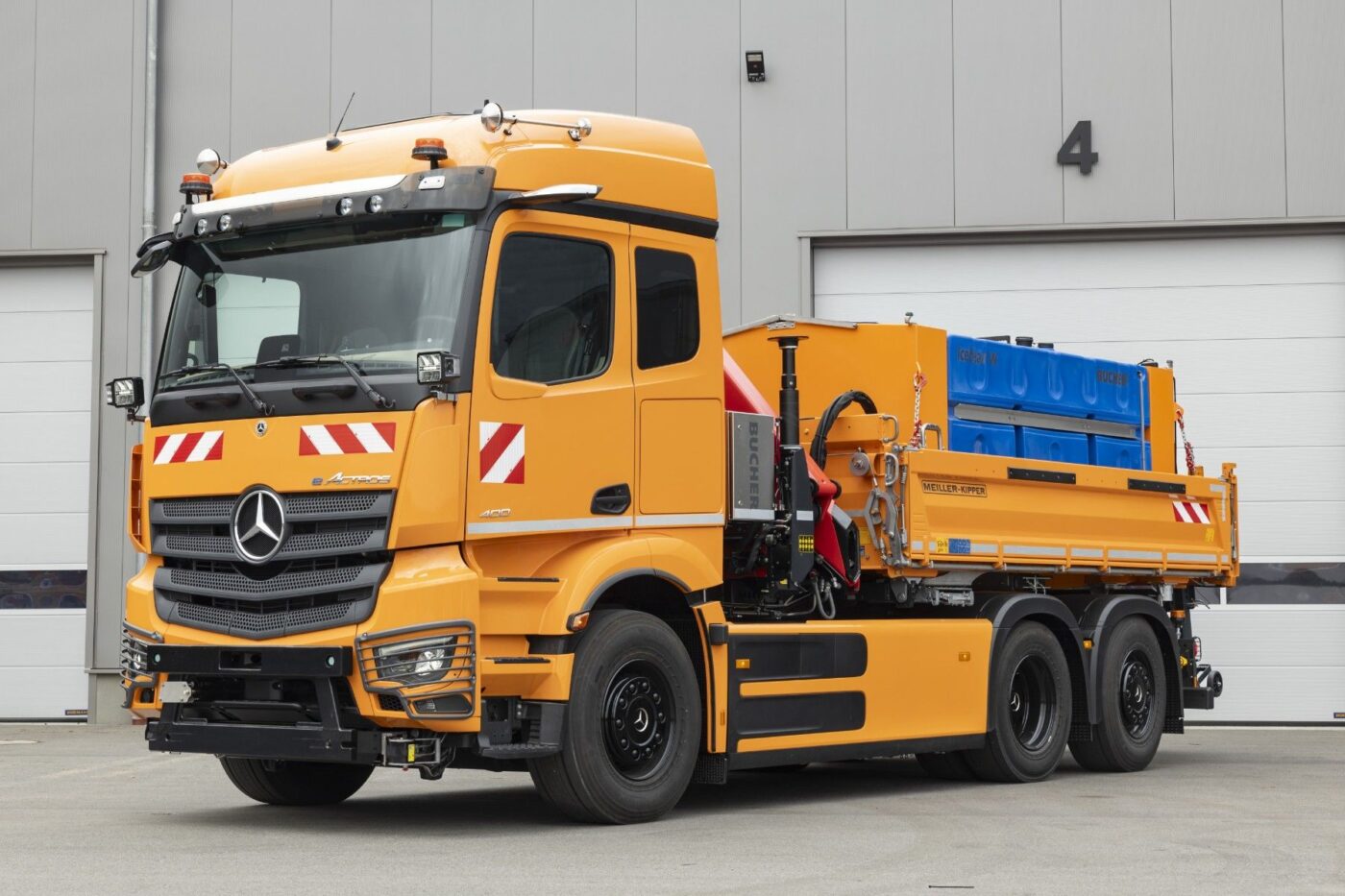
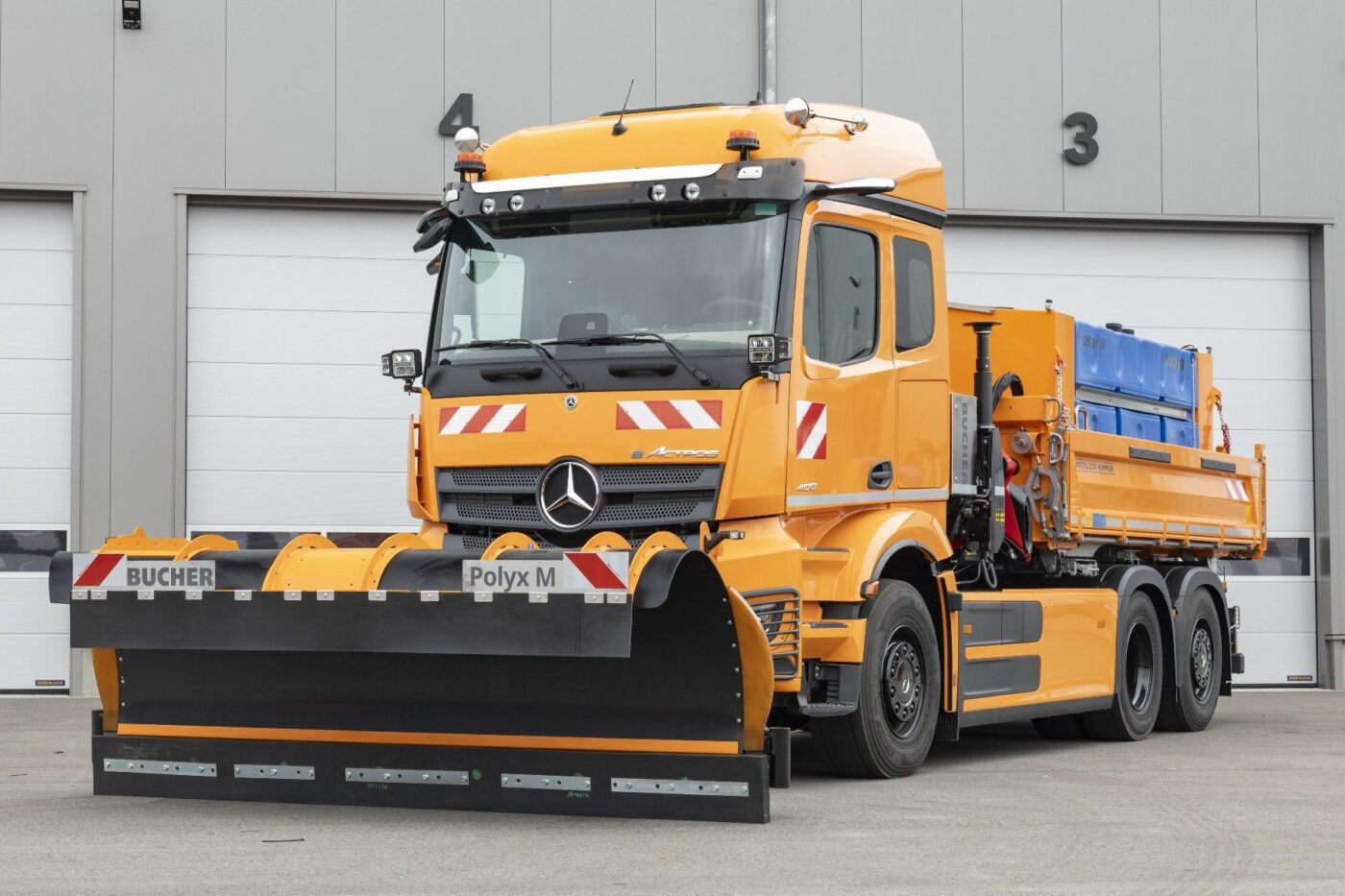
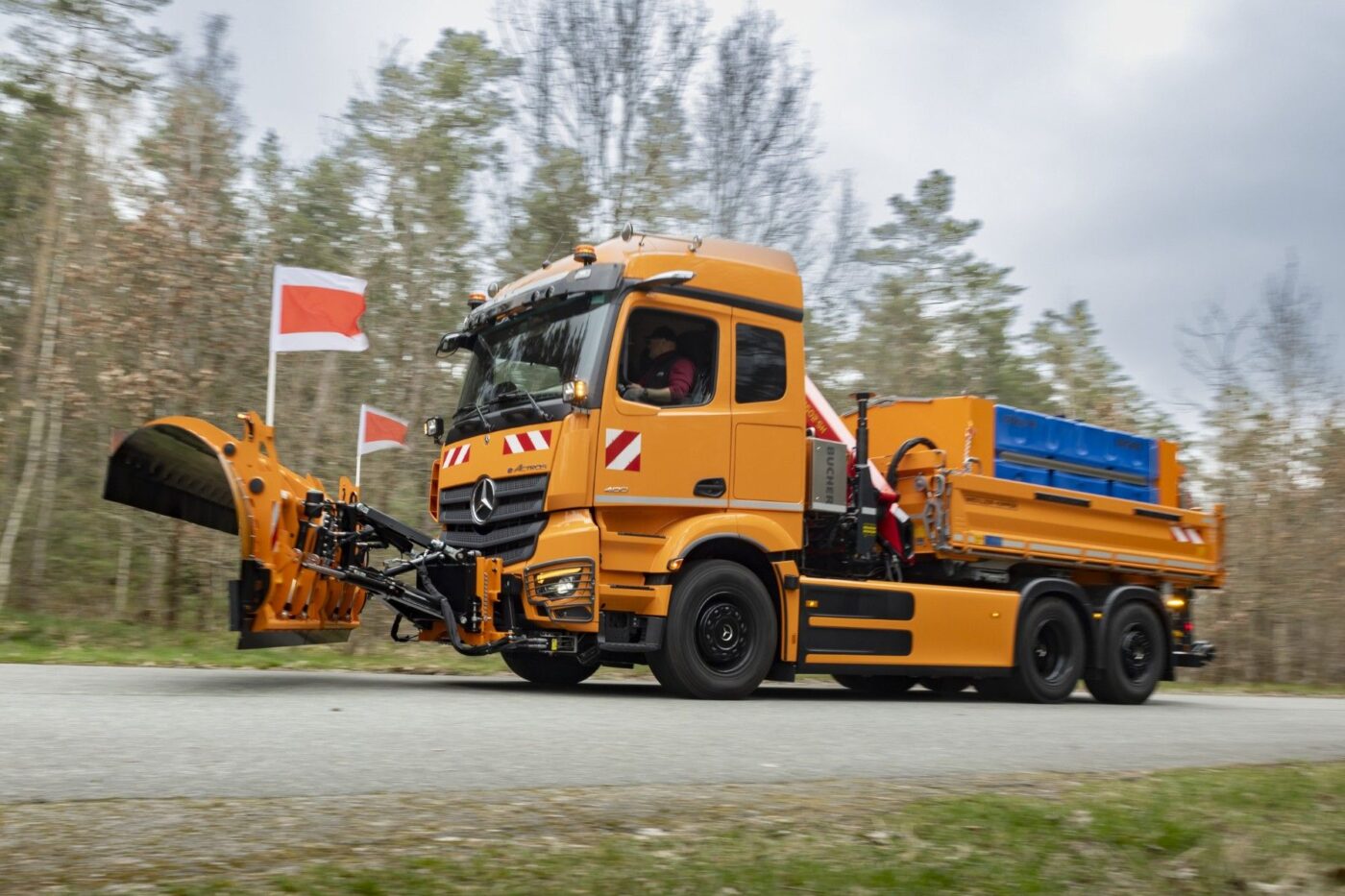
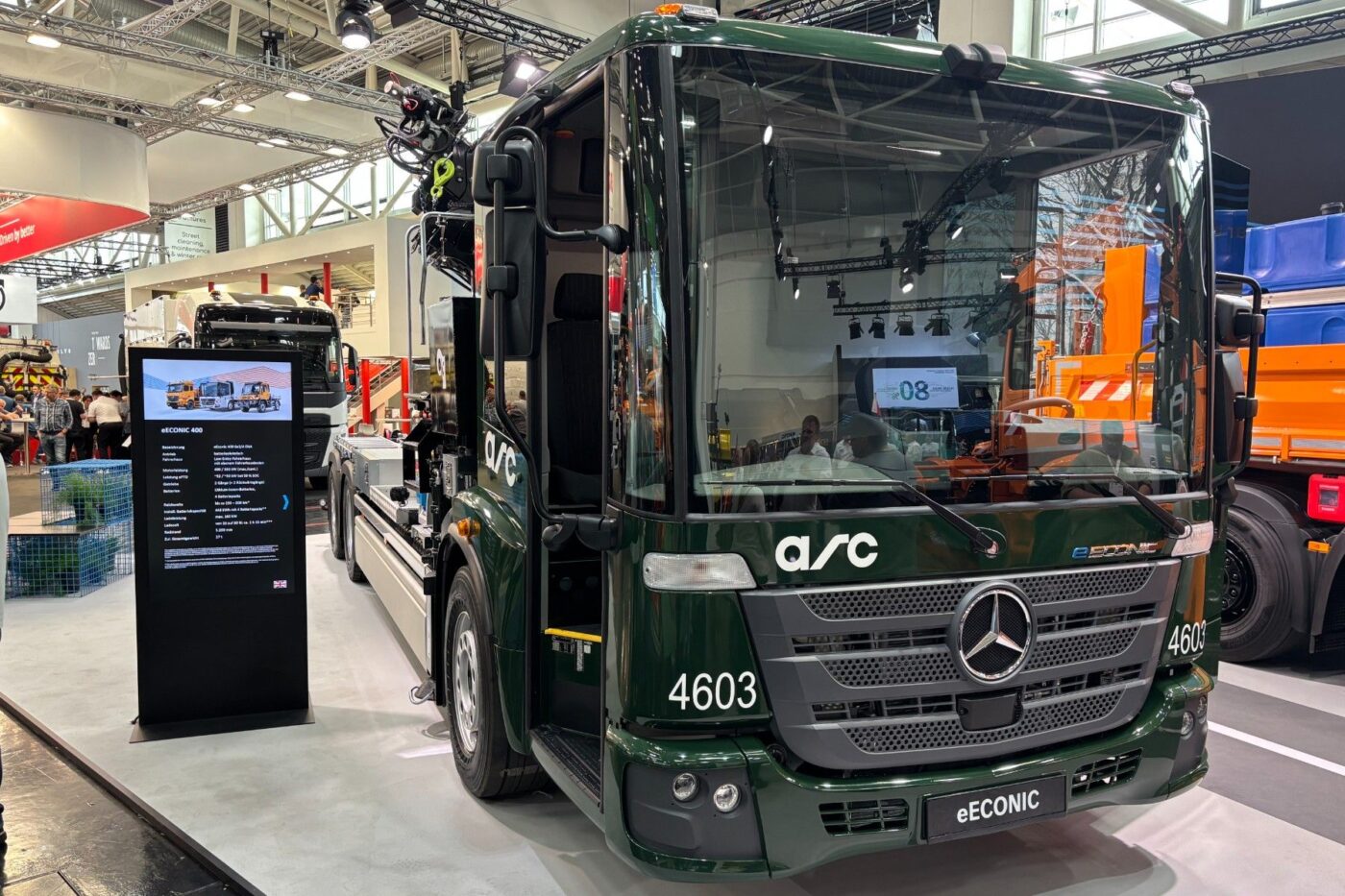
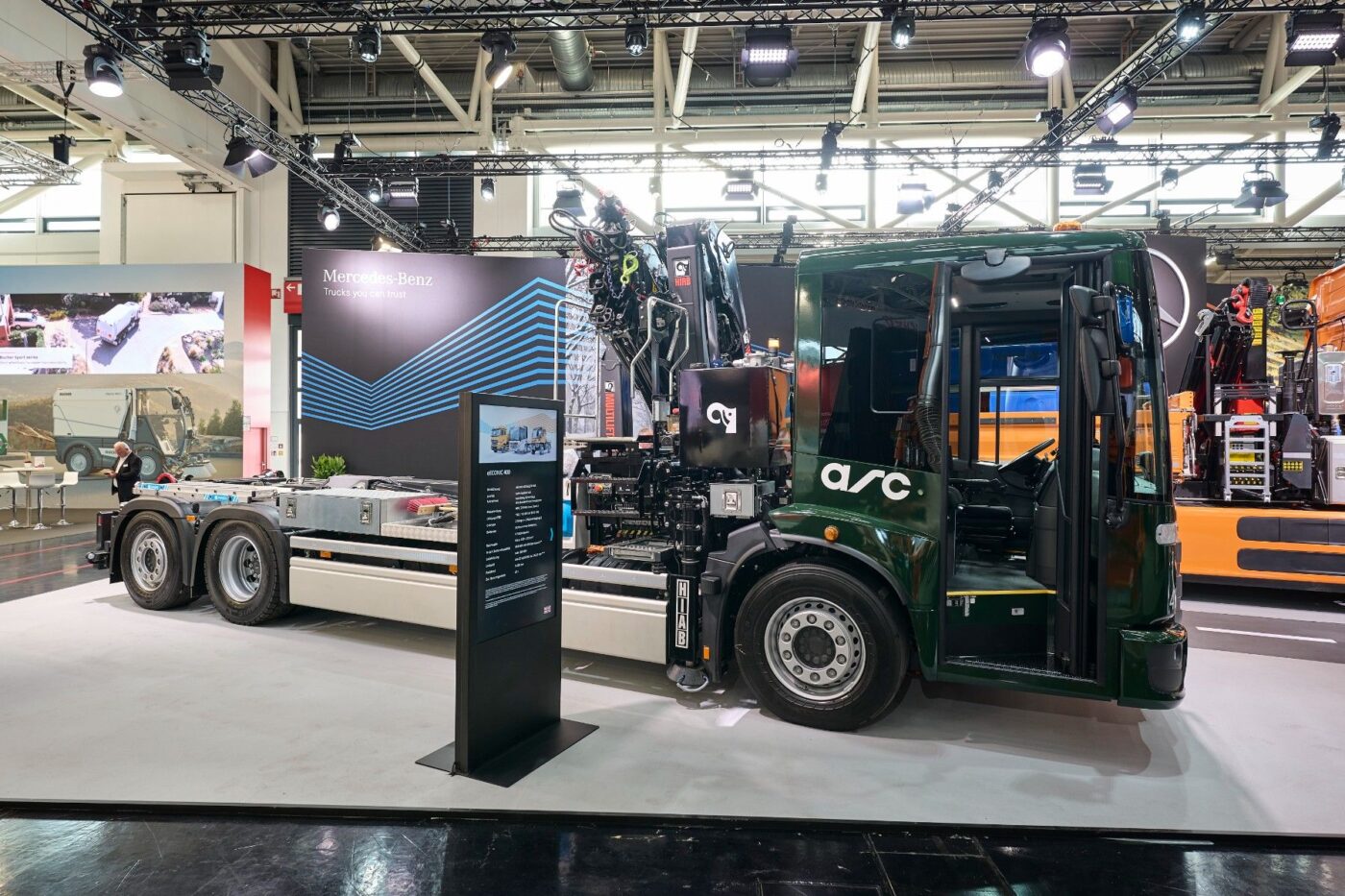
Starting with Mercedes-Benz Trucks: the German manufacturer brought eleven vehicles to Munich, including several eEconic models and an eActros 400, which is specifically designed for winter services and municipal summer operations.
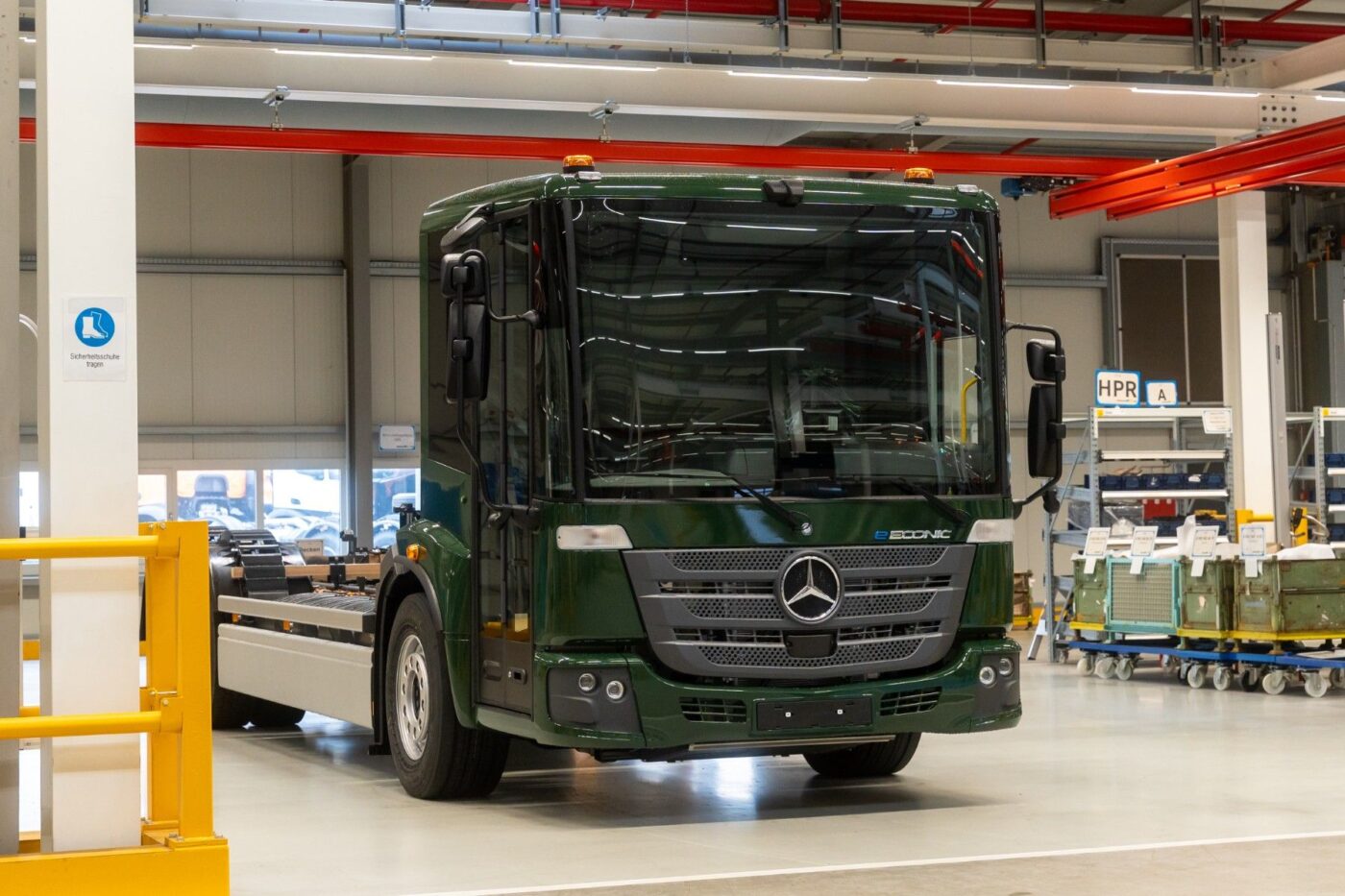
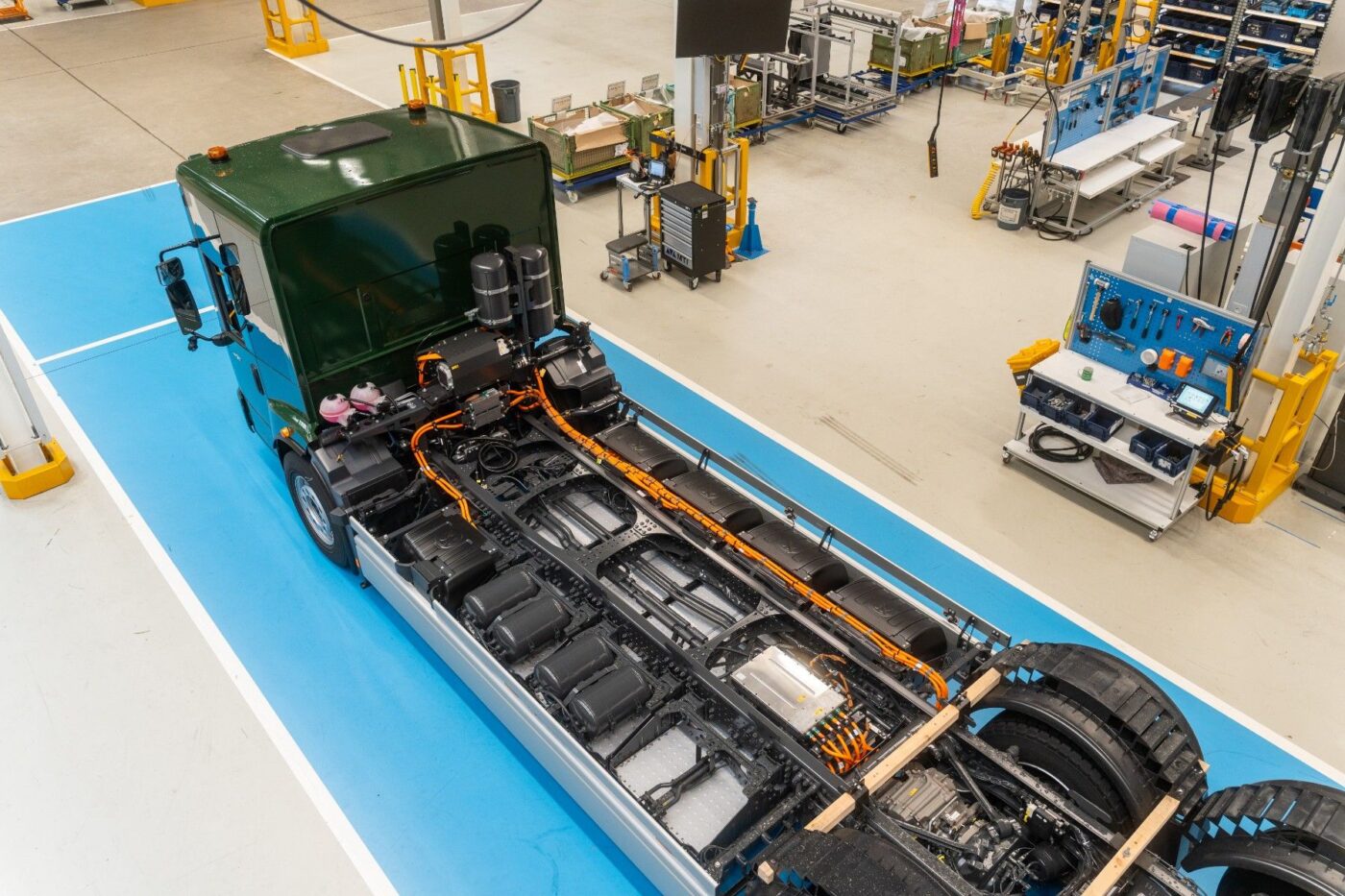
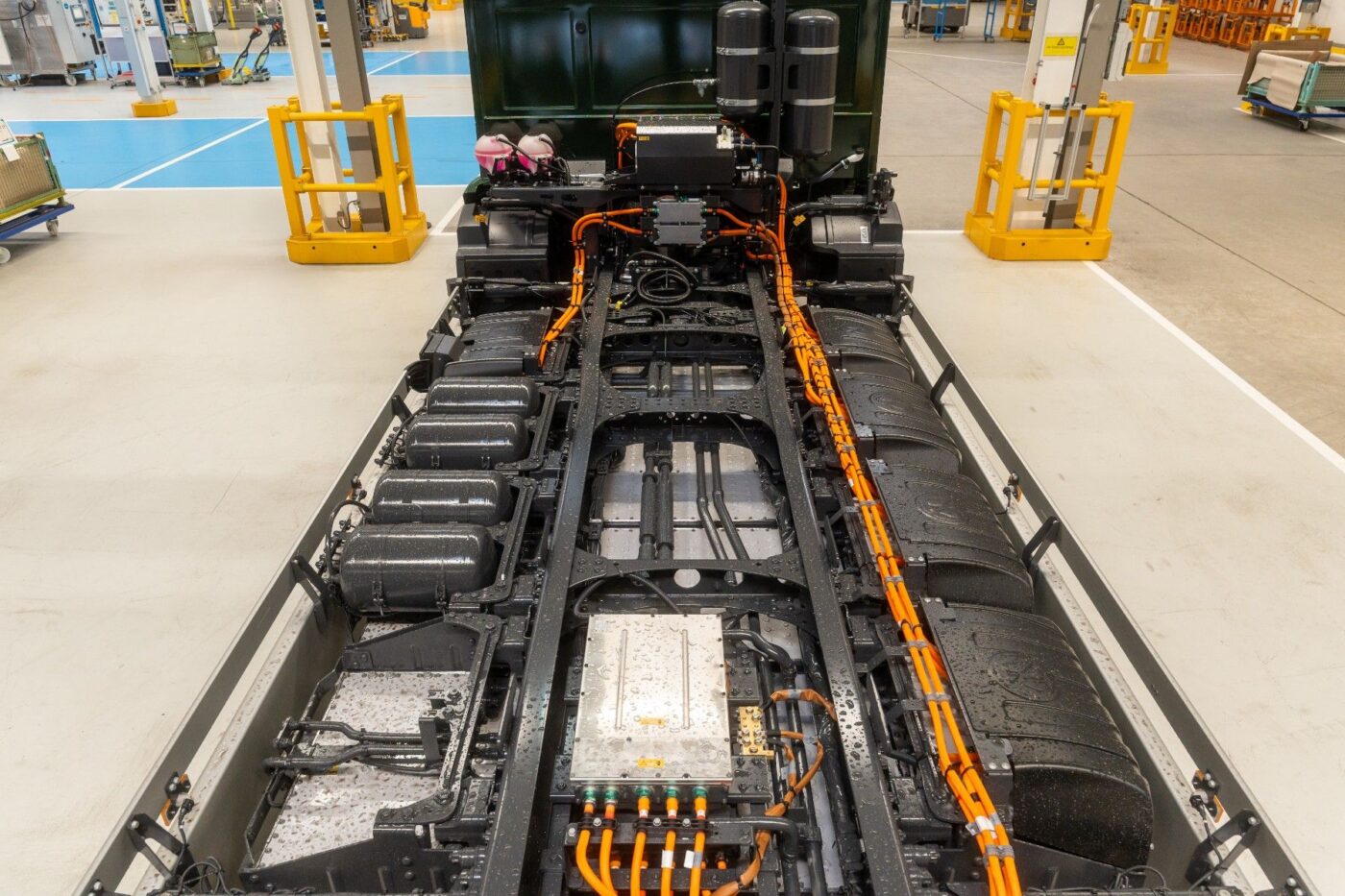
The brand celebrated a premiere at the trade fair, unveiling the eEconic 400. Unlike the existing eEconic 300, this new model can accommodate an additional battery pack. To achieve this, the developers extended the wheelbase from exactly four to 5.02 metres. With four packs instead of three, the energy capacity increases from 300 to 400 kWh, and the range (depending on the application) rises from up to 150 kilometres to between 150 and 200 kilometres.
The first units of the eEconic 400 will be delivered to Denmark, said the responsible product manager, Linda Fritzenwanker: “The city of Copenhagen is purchasing six units and has already signalled interest in a larger quantity.” With the new variant, customers can now choose whether they prioritise greater range or higher payload.
The eEconic remains the only electric truck from Stuttgart to continue using NMC batteries. It is not adopting the platform shift introduced by the flagship eActros 600, which includes LFP batteries, for municipal applications. “Our customers are very satisfied with the truck,” said Dennis Kinzelmann, CEO of Mercedes-Benz Special Trucks since the beginning of the year.
To recap: the eEconic was launched in 2022. Production of the other models from the first generation of electric trucks (eActros 300/400) has since been discontinued by Mercedes-Benz Trucks.
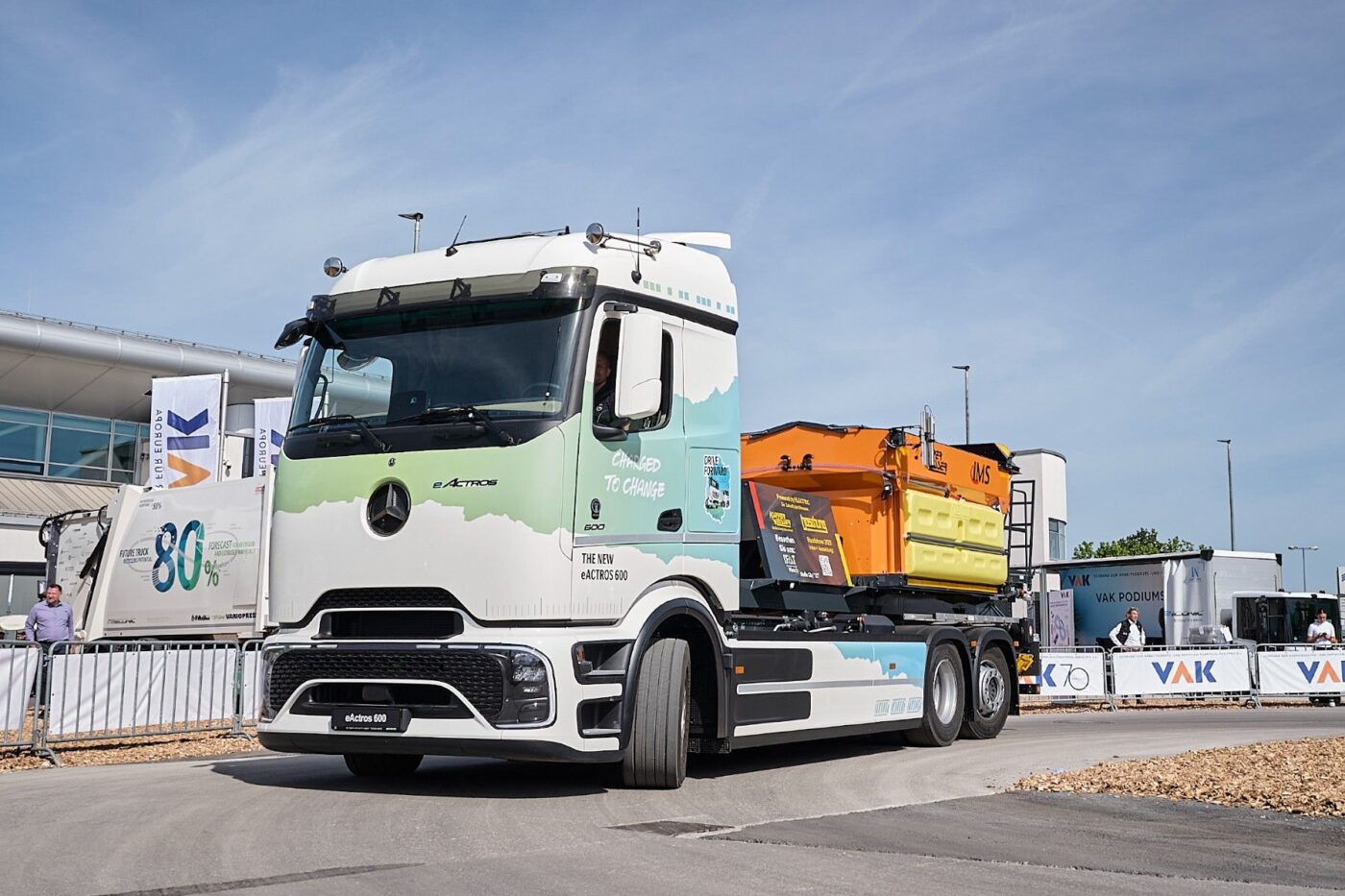
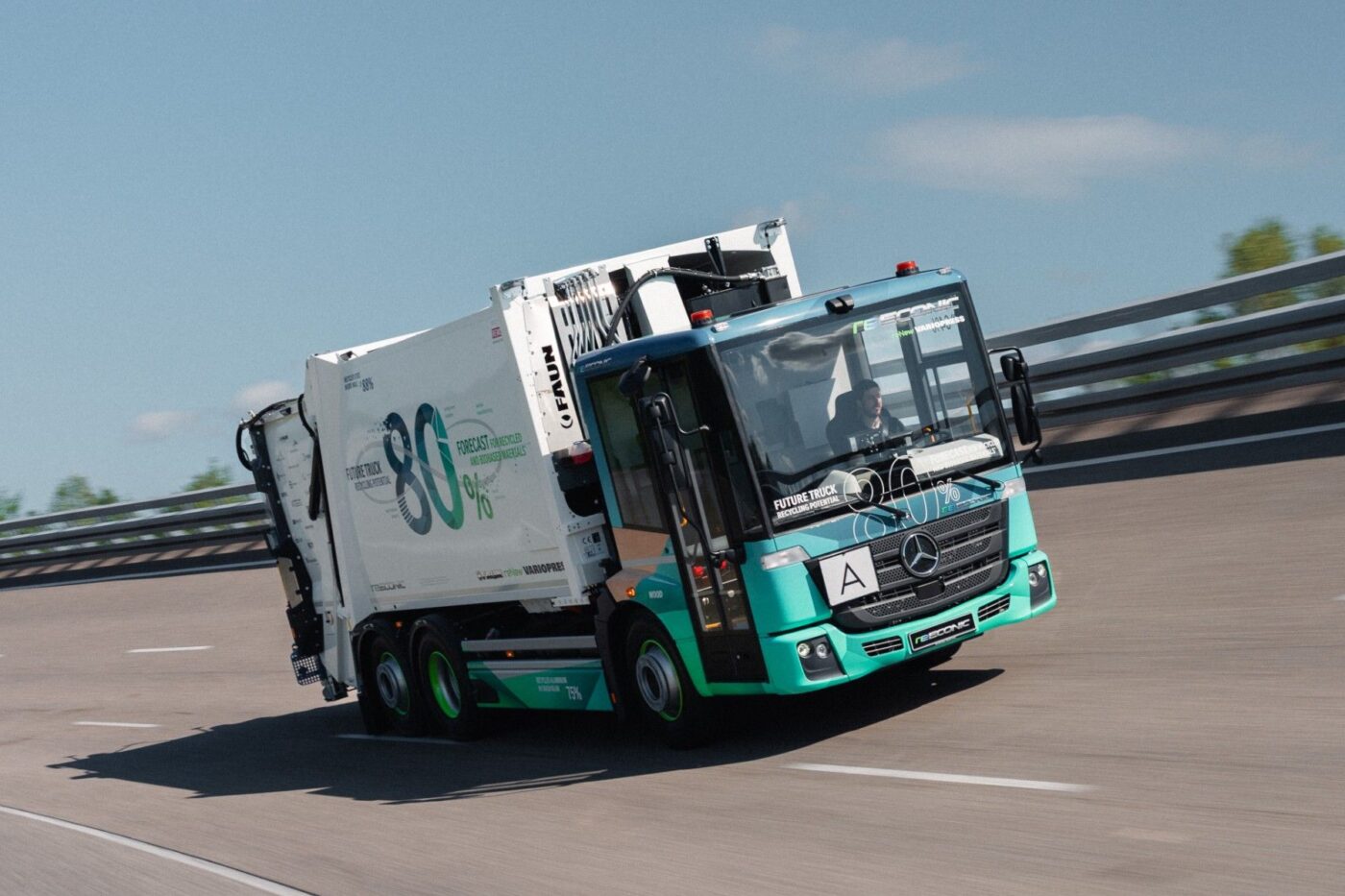
Another premiere in Munich was the Mercedes-Benz ReEconic – a concept vehicle in which the manufacturer is pushing the reuse of recycled materials in the interior, panelling and glazing. Following a one-year trial in Frankfurt am Main, the ReEconic aims to provide impetus for the use of secondary raw materials in series production. This applies not only to the eEconic but across all the manufacturer’s trucks, regardless of powertrain.
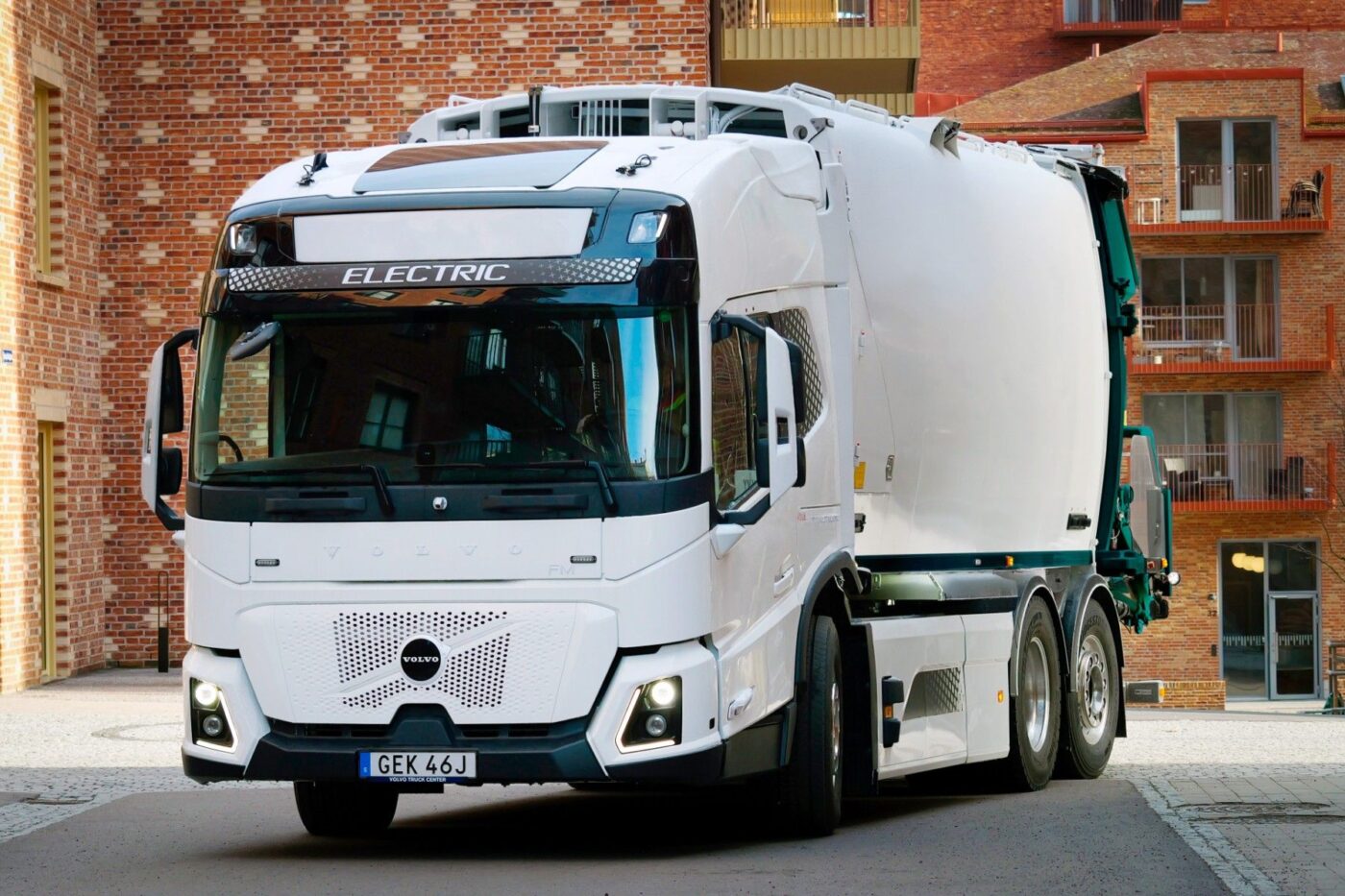
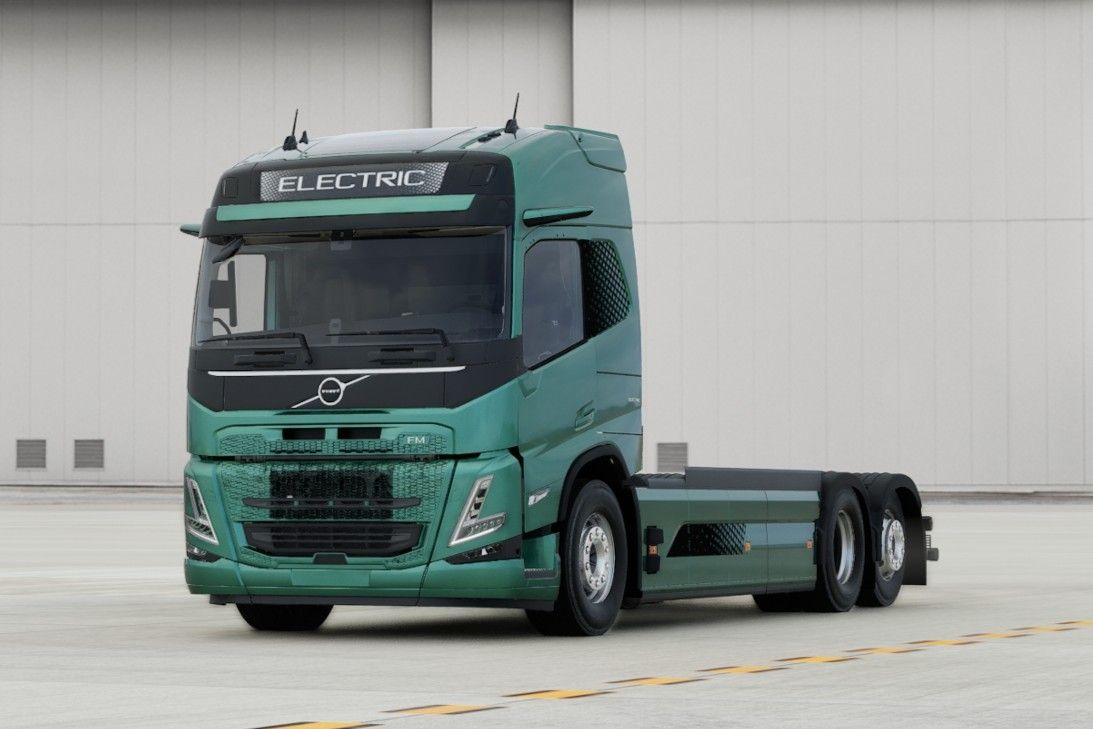
Volvo Trucks showcased an entirely electric lineup at its stand. The company brought two electric trucks with different bodywork configurations and an electric wheel loader from Volvo CE. The Volvo FM Low Entry, designed as a refuse collection vehicle, is already well-known. The other truck, however, features the words ‘Next Generation’ in large letters.
This is where it gets interesting: Volvo Trucks is set to unveil the second generation of its electric trucks soon, which will offer a range of up to 700 km thanks to a new e-axle and improved batteries. As part of this update, the existing FM with a cardan shaft is also receiving a major upgrade. And this is on display at IFAT: the Volvo FM Electric 6×2 Roll-Off, which now boasts a range of up to 400 kilometres – over 100 km more than before.
The improvement is due to enhanced NCA cells from the existing battery cell supplier Samsung SDI, as well as mechanical and other drivetrain enhancements. Volvo remains somewhat vague about the details. However, one thing is clear: AC charging has been phased out as part of the update. The other electric truck at the stand, the FM Low Entry with a 200 km range, still supports AC charging.
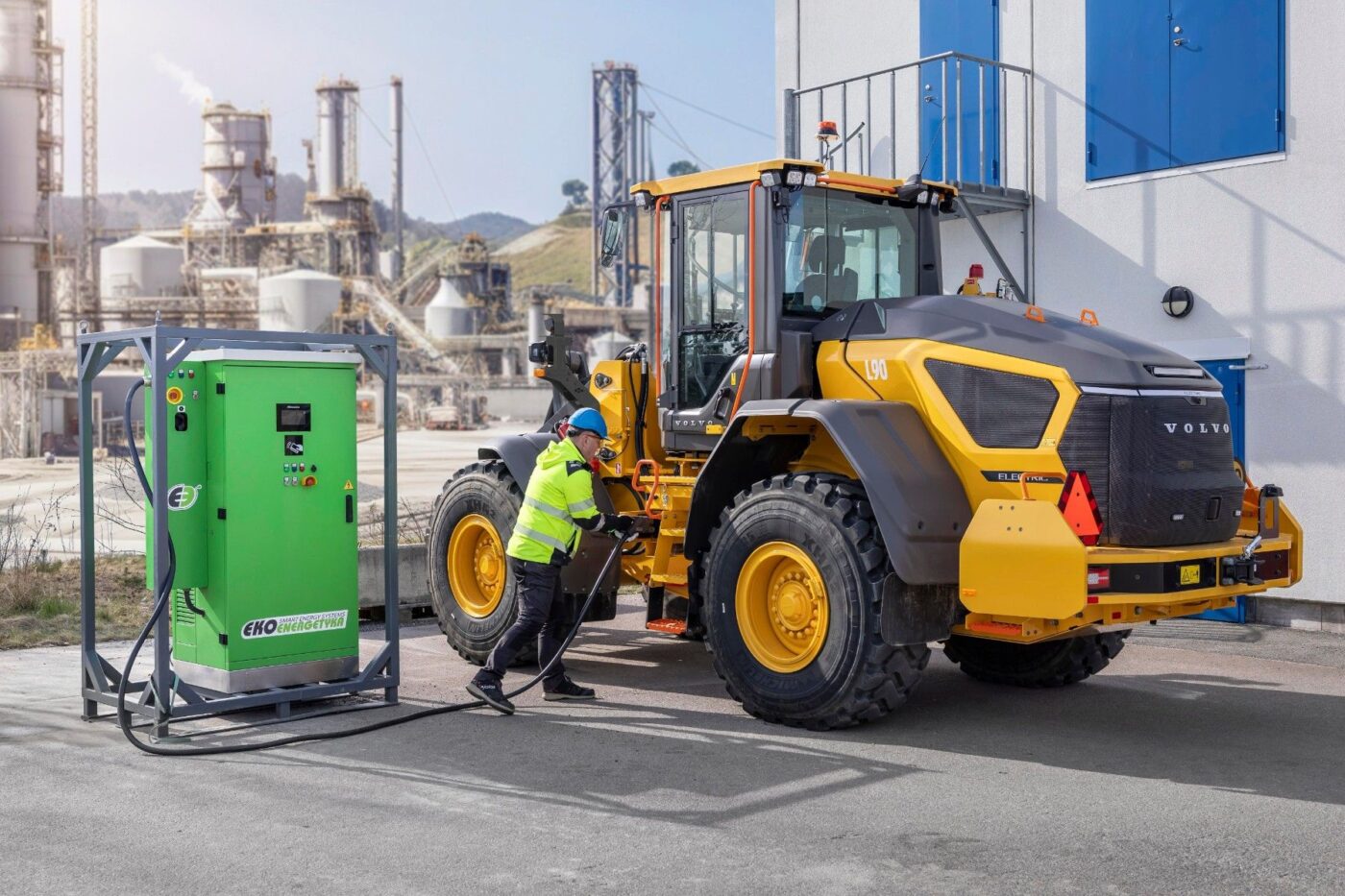
Benjamin Schiebler, Manager of electric mobility at Volvo Trucks, emphasises that Volvo Trucks continues to pursue a dual strategy for the future market: battery-electric trucks and fuel cell trucks. The company still plans to introduce its first hydrogen-powered truck by ‘the end of the decade.’ Meanwhile, market competitor Daimler Truck (which, together with the Volvo Group, is a joint venture partner in Cellcentric for fuel cell technology) has postponed the market launch of its hydrogen truck to the early 2030s. Perhaps by the next IFAT in 2026, there will be a concrete outlook for a Swedish hydrogen truck.
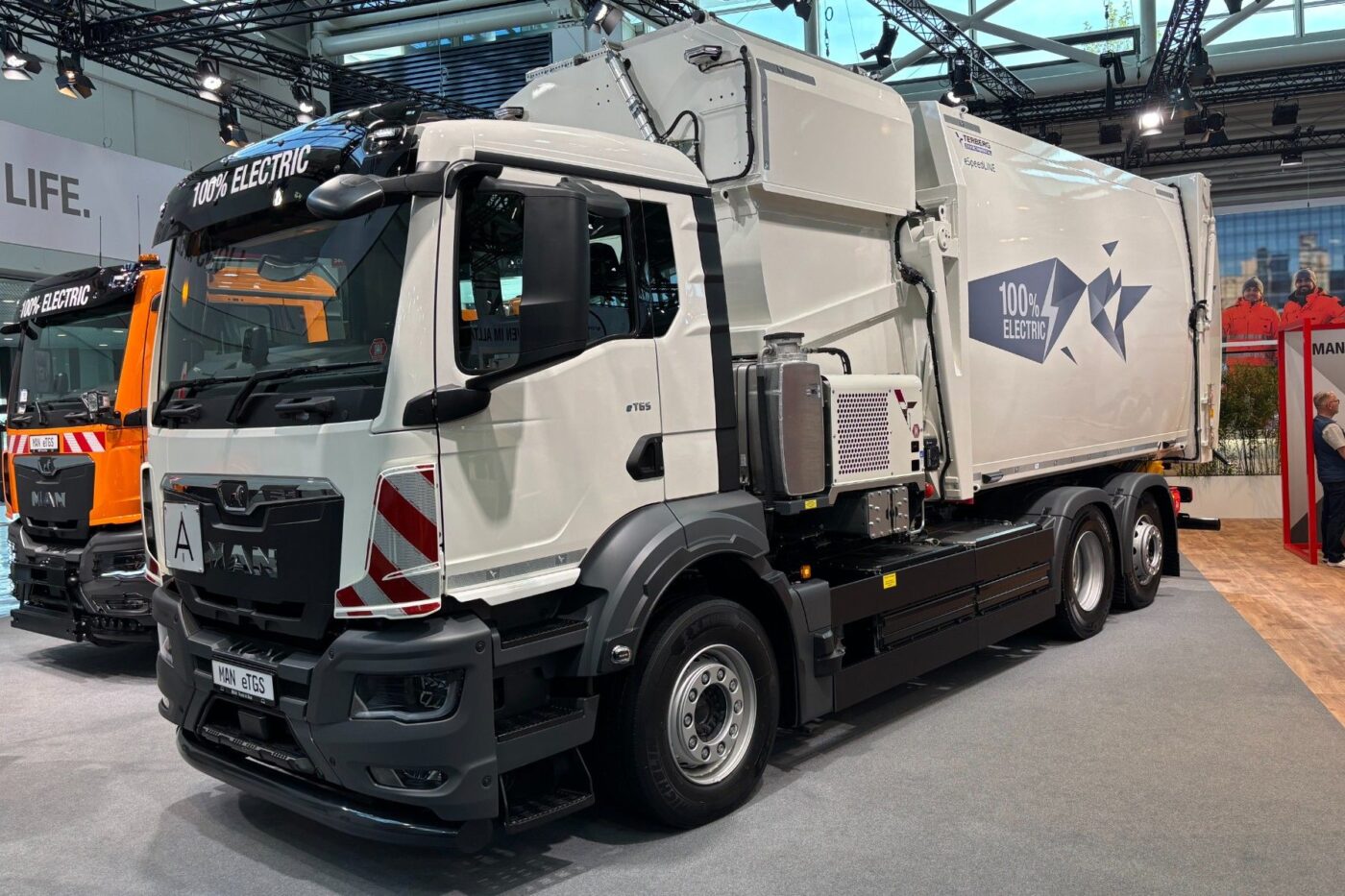
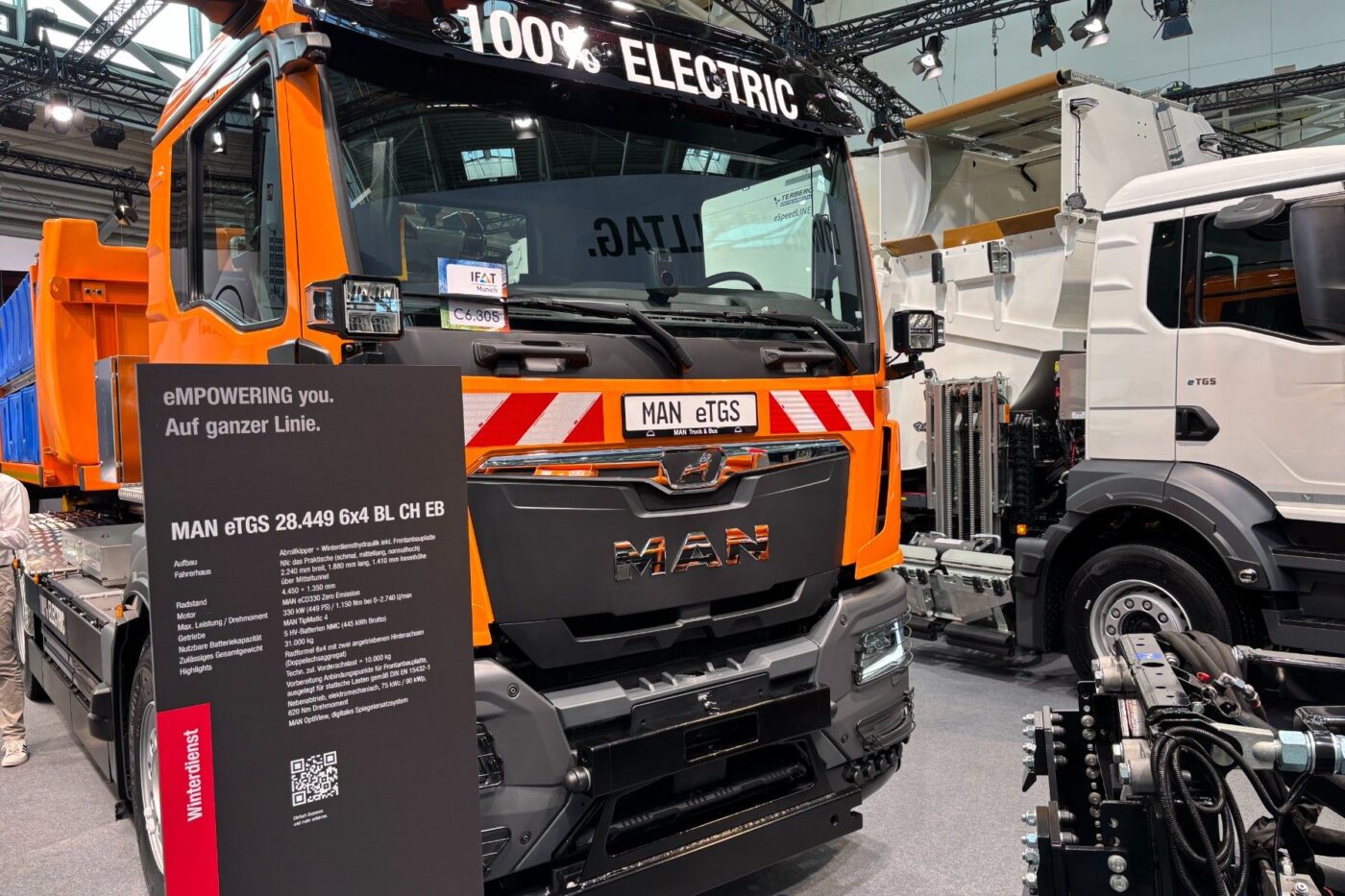
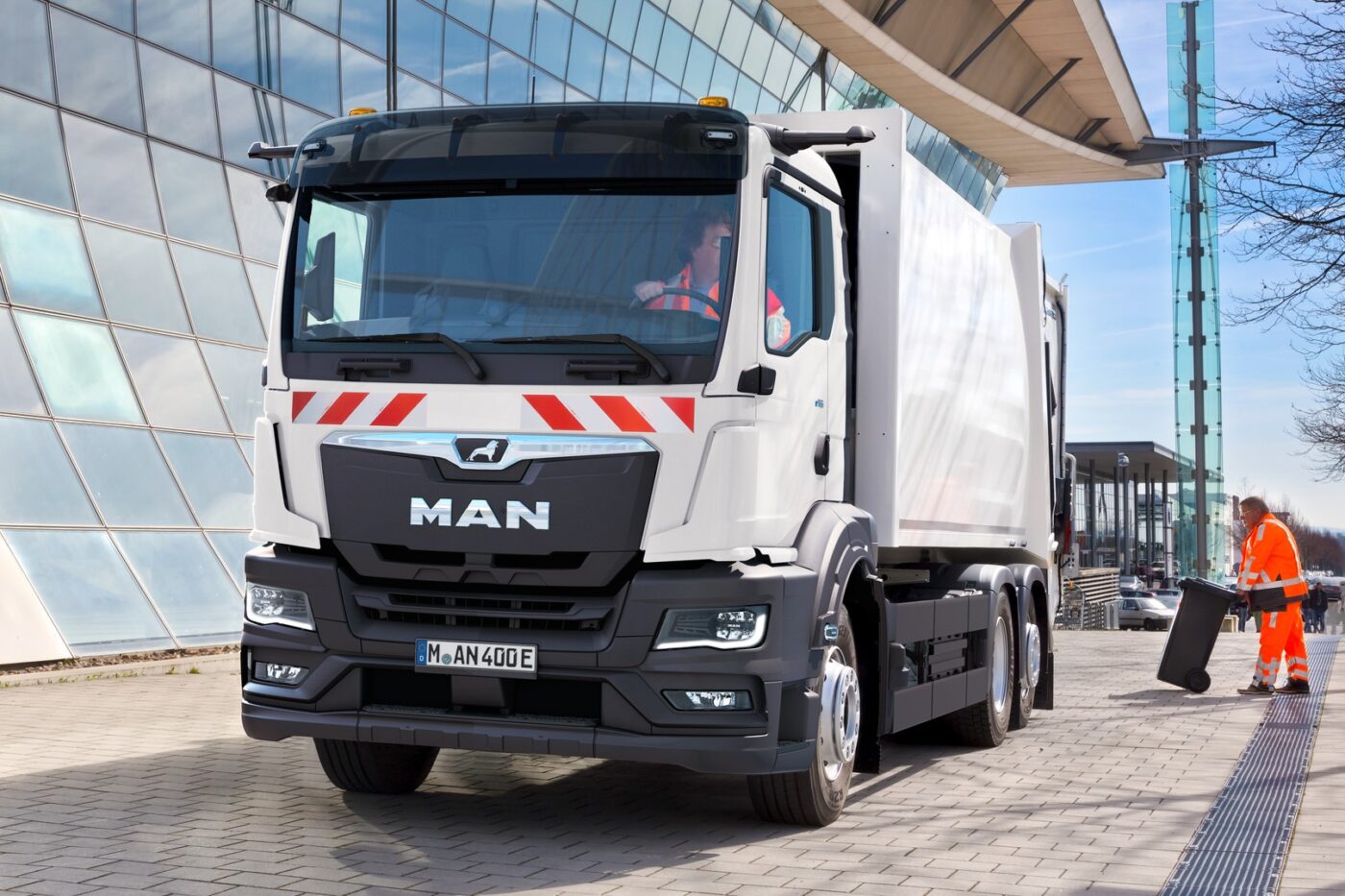
Just a few stands away, MAN highlighted three trucks – all with electric drivetrains. The company showcased different eTGS models to demonstrate the advantages of its modular battery concept. Depending on the chassis configuration, the eTGS’s frame layout can accommodate three to seven NMC battery packs, allowing range and payload to be optimised for various operational profiles.
One eTGS with a 6×4 axle configuration at the stand was presented as a 28-tonne roll-off tipper for winter services. The other two three-axle models (6×2) were designed for waste management: one features a classic rear-loader body by Zöller, while the other has a side-loader body by Terberg.

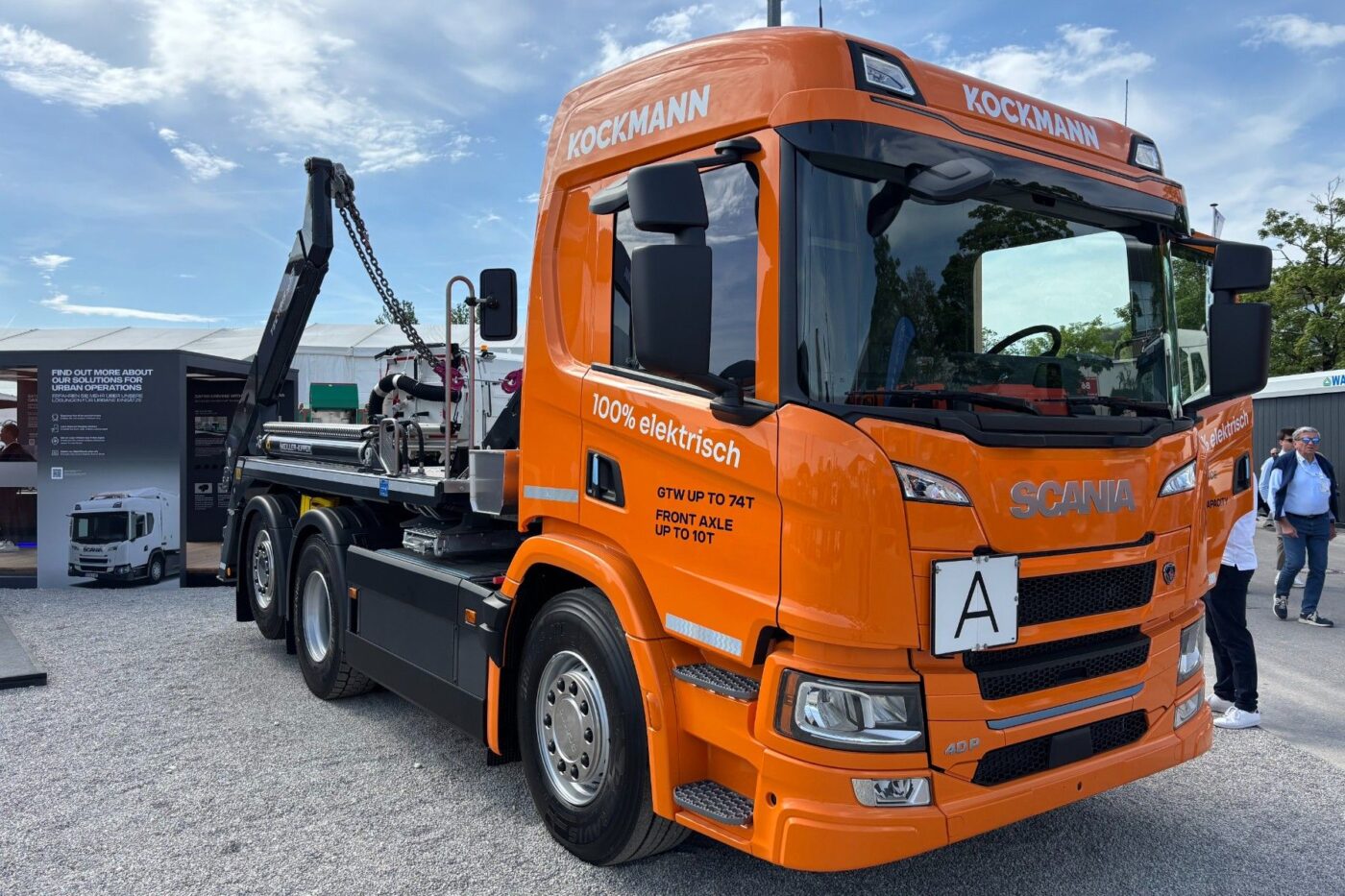
MAN’s corporate sister, Scania, positioned its stand in the outdoor area of the trade fair and brought four vehicles – one biogas truck and three battery-electric trucks, some of which will only be available for order later this year. Scania is deliberately focusing on vehicles ‘that are difficult to electrify,’ as a stand representative emphasised. One example is the Scania 40P 6×2*4 with a Meiller roll-off tipper body. This 400 kW truck is factory-fitted with a gross battery capacity of 445 kWh. It will be available for order in this configuration from September, we learned on-site. Scania states the range as 400 kilometres.
Already available is the 36P 4×2 with an energy content of 356 kWh, which the Swedes also factory-adapt for sweeper vehicles to accommodate the necessary bodywork. However, the company plans to introduce a version with 445 kWh later this year. The third XXL electric truck in the lineup is the 27P 6×2*4 chassis, which has been extended by 60 centimetres behind the cab and, thanks to repositioned batteries, is optimised specifically for crane installations.
DAF made a return to IFAT. The Dutch manufacturer’s stand is entirely dedicated to e-mobility: alongside the XDe 270 FAN 6×2 with a Meiller roll-off tipper, DAF is showcasing a fast-charging station developed within the group under the Paccar Power Solutions brand. As is the case for almost all manufacturers, DAF vehicles can also be found at numerous other exhibitors. For the Dutch manufacturer, these include partner companies such as Cappellotto, Faun, Meiller, Terberg, Wiedemann enviro tec and Zöller.
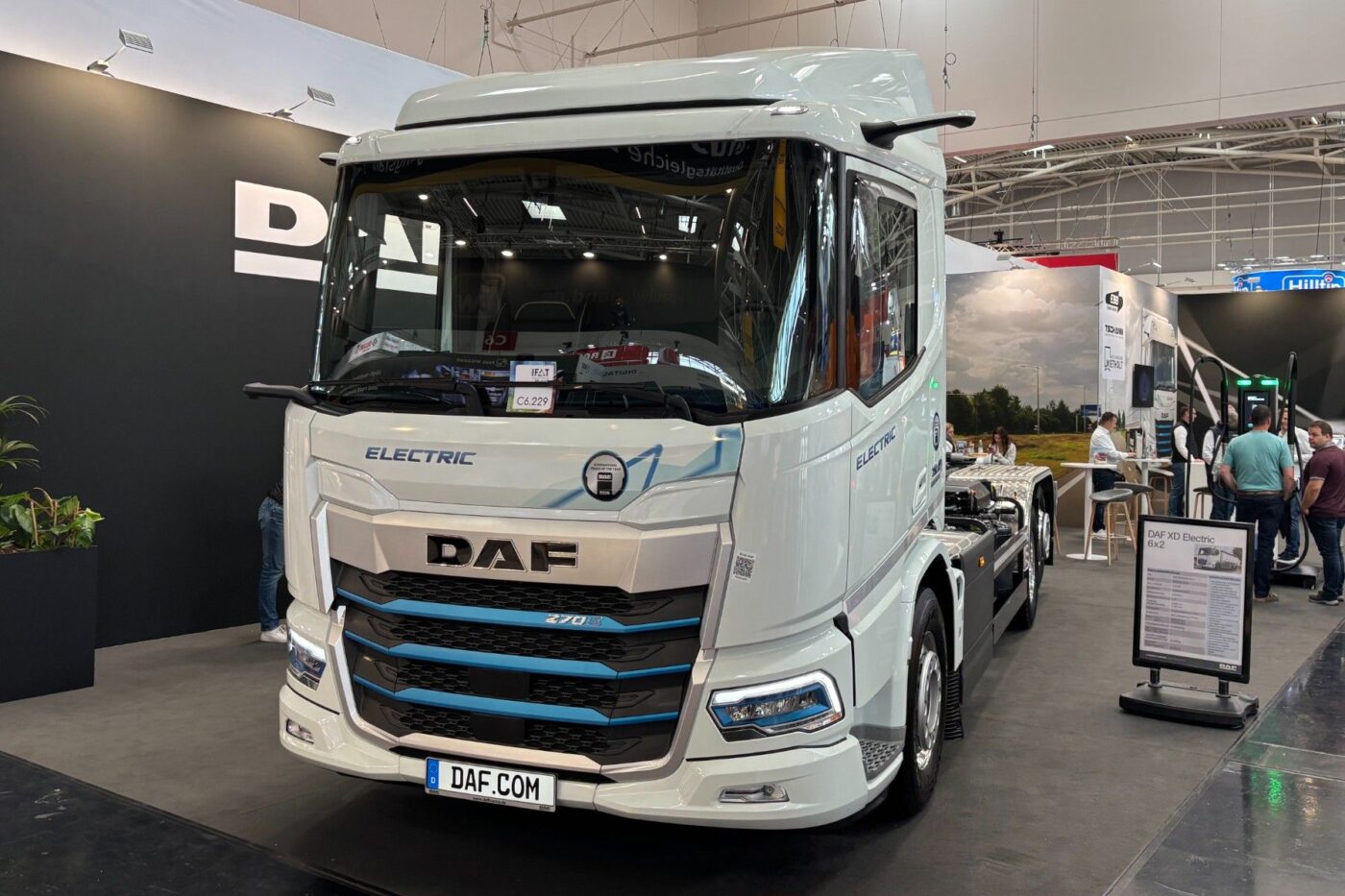
Matthias Schiegl, Industry Manager at DAF Trucks Germany, stated: “IFAT is a key trade fair for us, where we can demonstrate our expertise in the municipal and commercial waste management sectors. This year, we are particularly pleased to be represented together with three of our trading partners. Whether diesel or zero-emission electric trucks – we offer the right vehicle for every requirement and work closely with renowned German and European bodywork partners.”
Renault Trucks, as mentioned, does not have its own stand but is represented by one electric truck, the E-Tech D Wide 6×2, and three diesel models at Terberg.
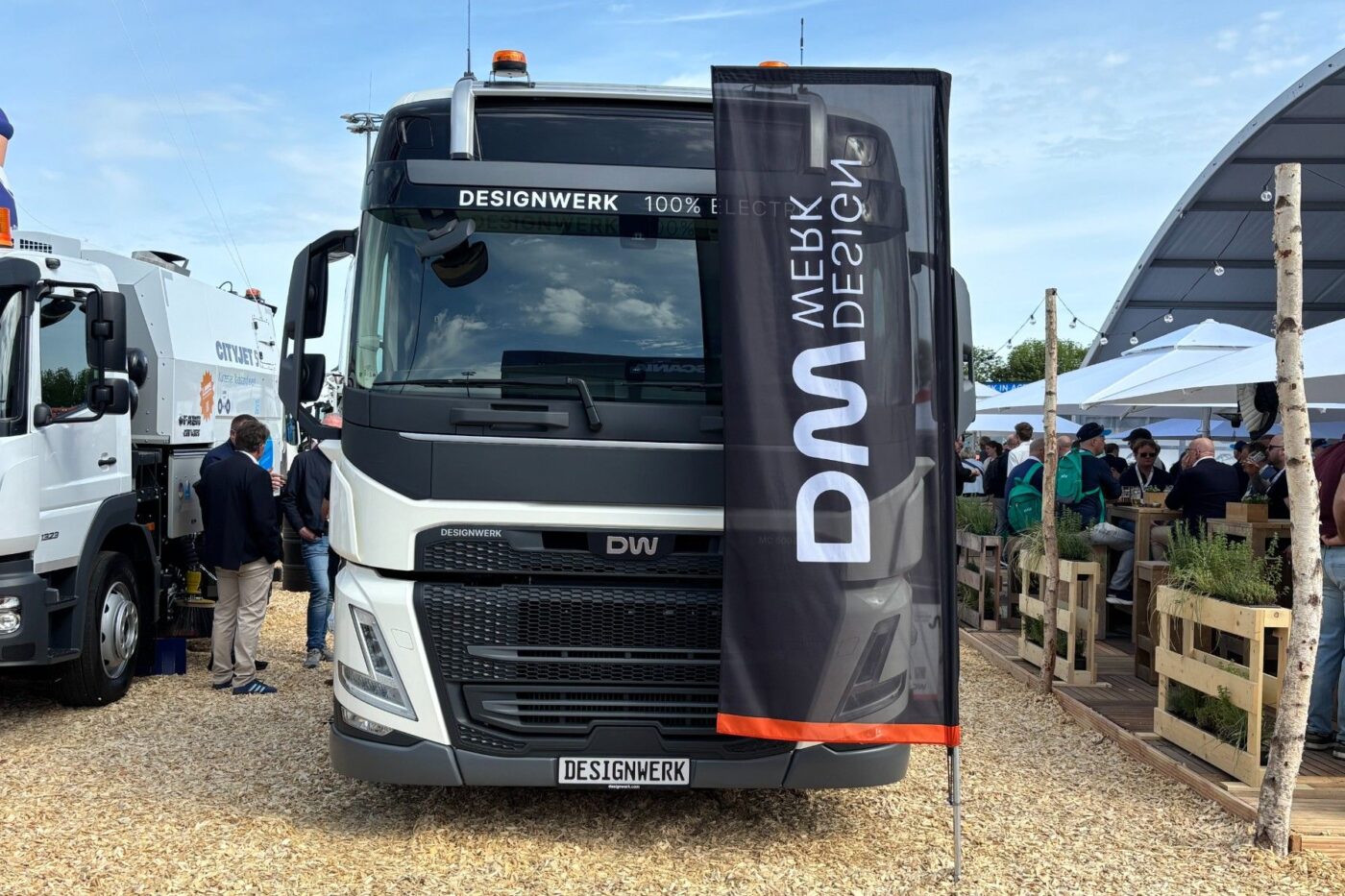
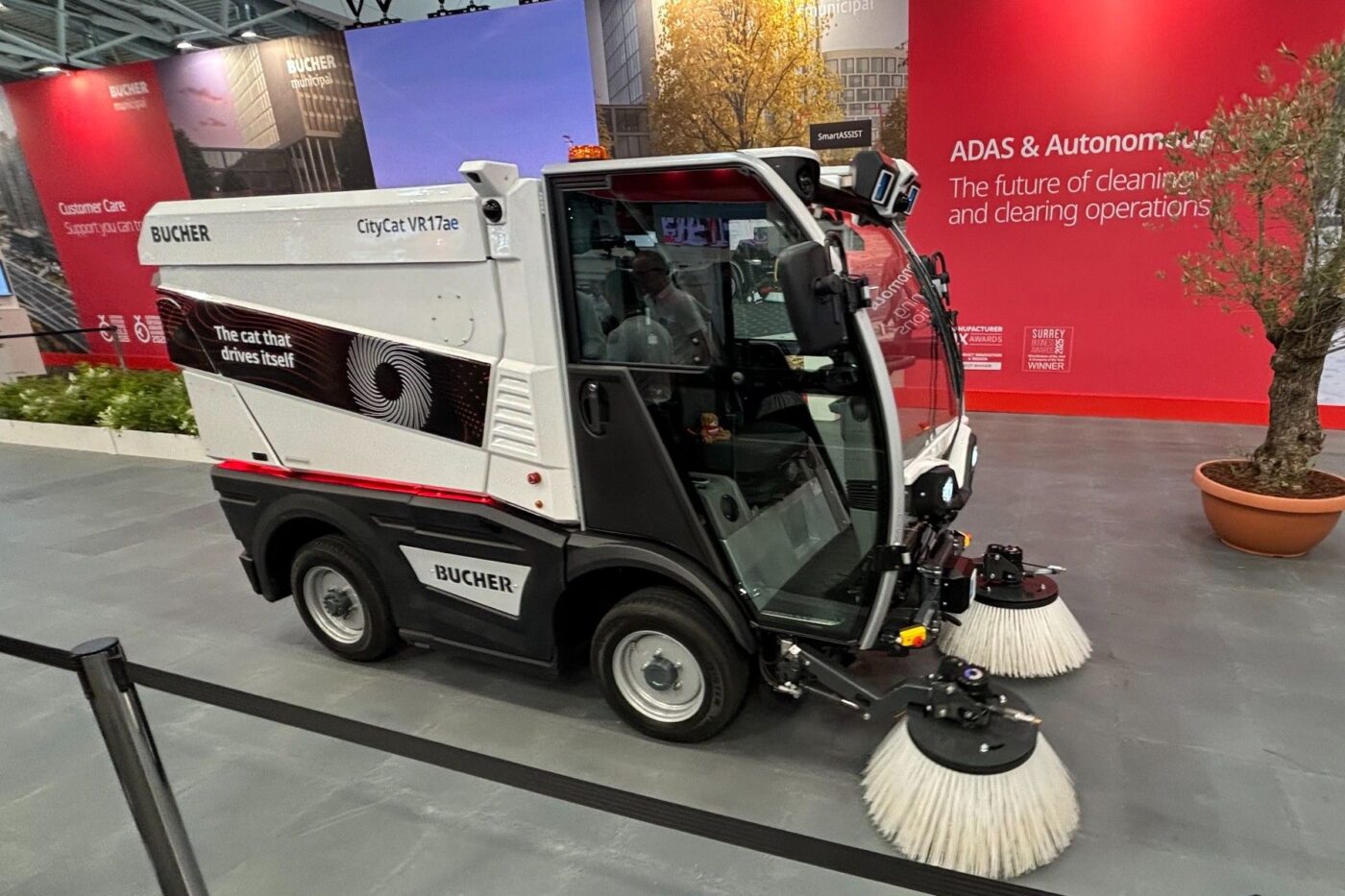
However, during our tour of the trade fair, we encountered other smaller manufacturers, including the Swiss electric truck specialist Designwerk with one of its XXL electric trucks. The largest stand in the vehicle sector is occupied by another Swiss company – Bucher Municipal, a provider of cleaning and snow removal vehicles. Here, electric sweepers of various sizes were on display. One particularly eye-catching exhibit was a small, lone electric sweeper in a cordoned-off area. The scene made sense as the CityCat VR17ae suddenly started moving autonomously and swept its designated area. Once trained, this CityCat – which can reach speeds of up to 40 km/h – can clean independently, we are told.
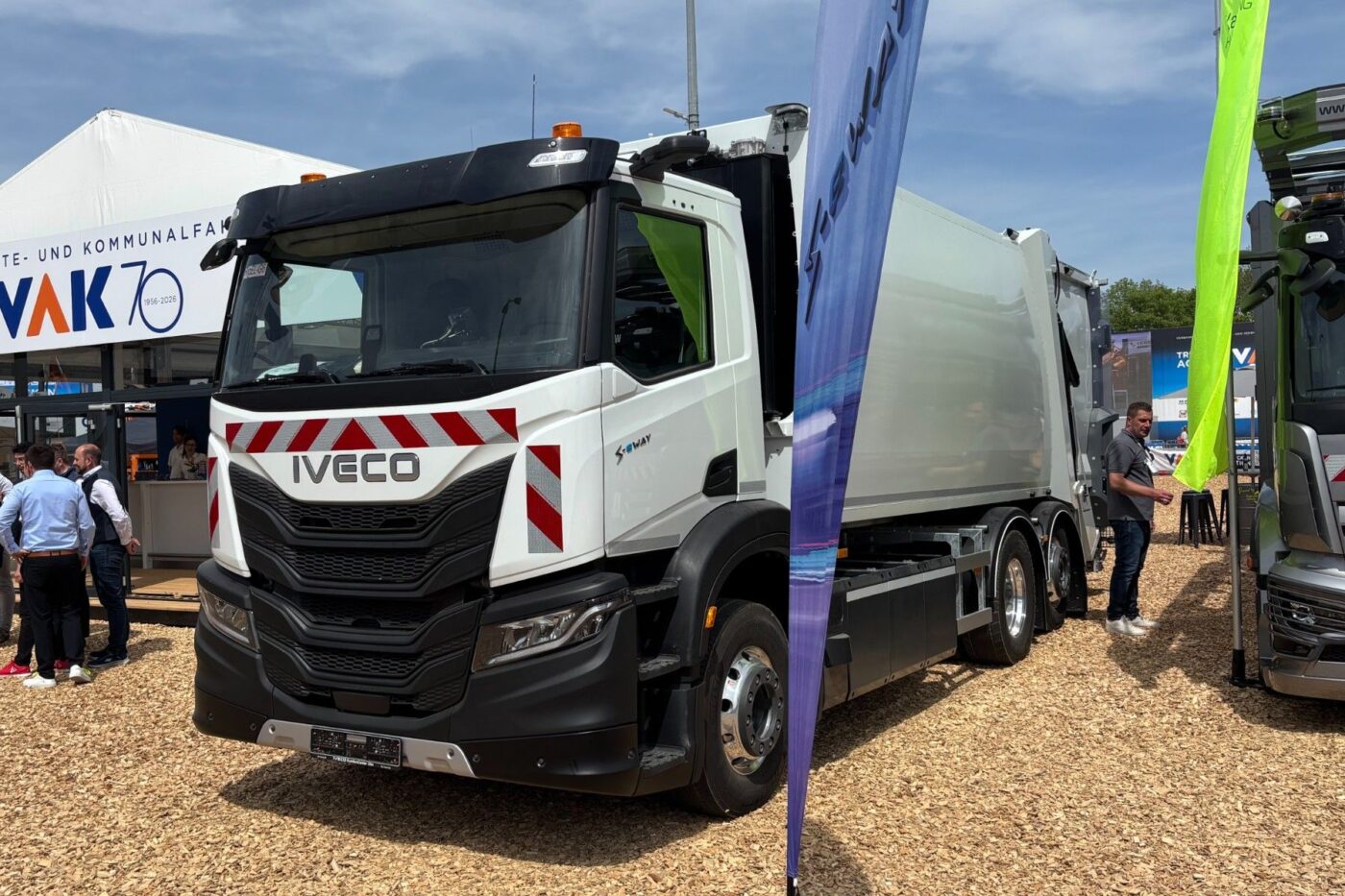
Iveco was also present with an S-eWay 6×2 chassis fitted with a waste collection body. According to Raphael Richter, Head of Bodybuilder Support at Iveco, the electric truck is equipped with five battery packs totalling 350 kWh, which is two packs fewer than the truck’s maximum configuration.
Iveco has brought its technical support team along, as ‘there is high demand for advice on electric trucks among trade fair visitors,’ Richter explained. People have many technical and practical questions. He also said that the development of battery-electric vehicles is taking collaboration with bodybuilders to a new level: “The cooperation has always been close. But now, we are sitting down together again for strategic alignment. This is about much more than just interfaces between the vehicle and bodywork.”
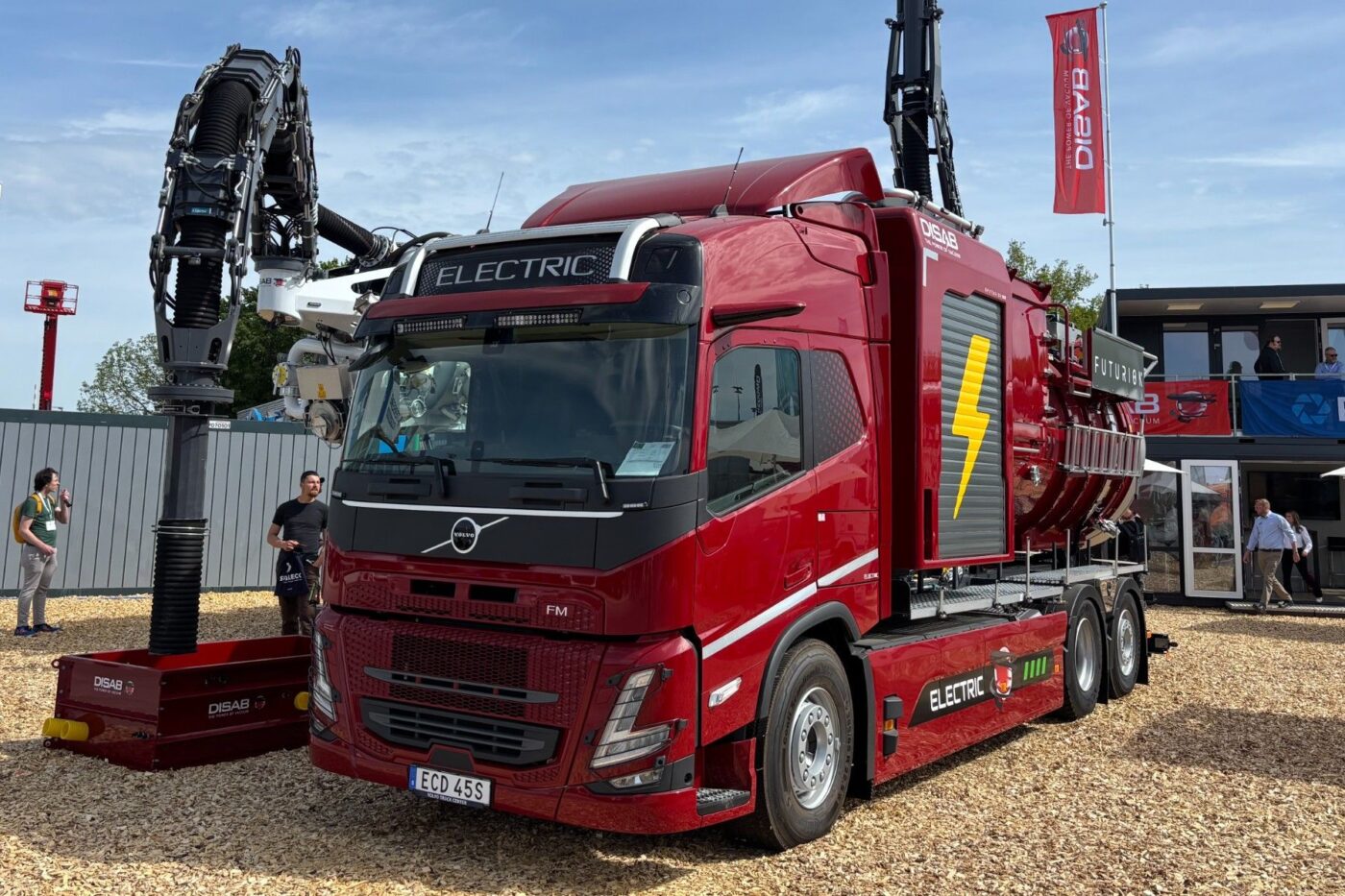
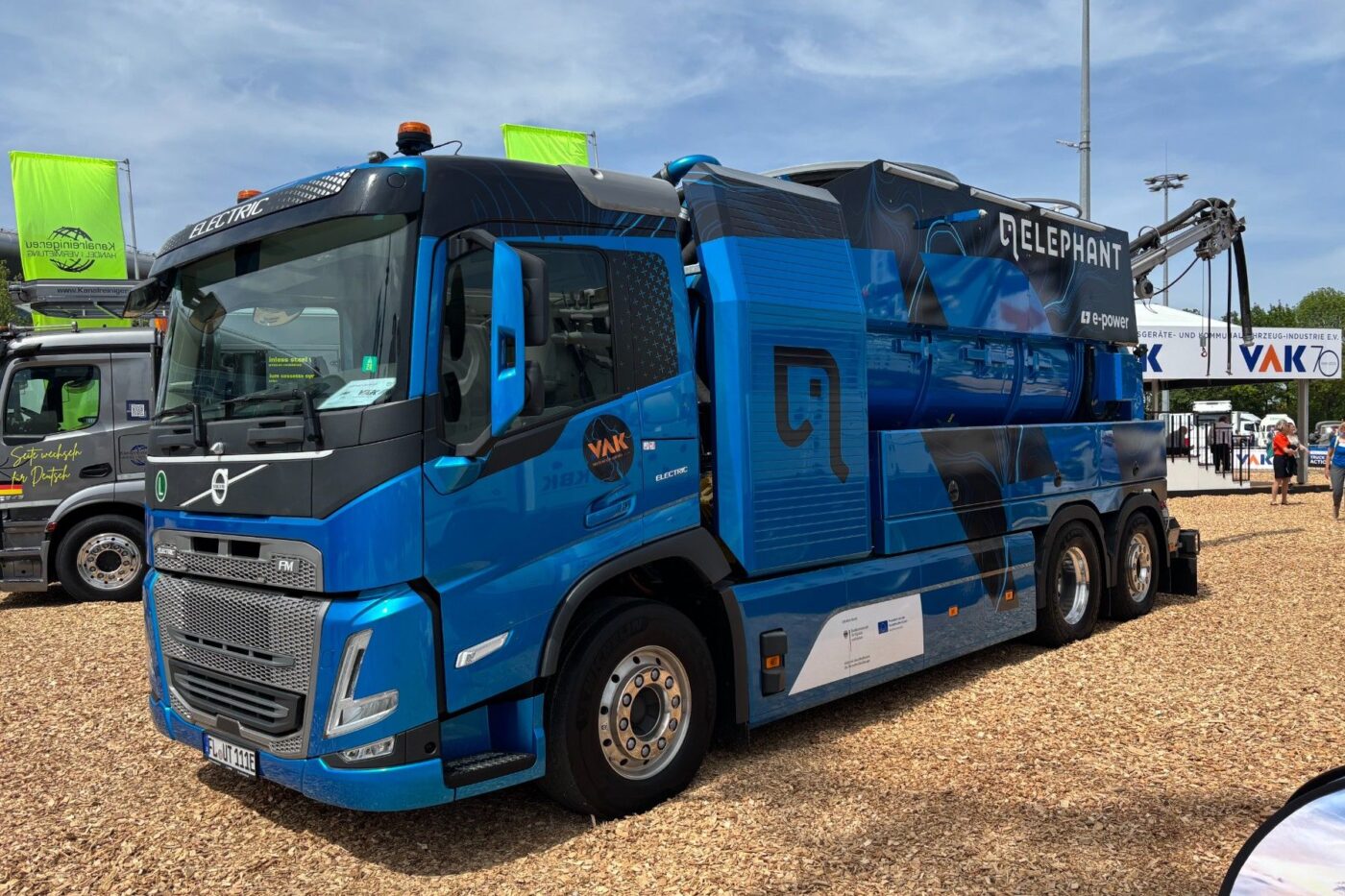
Among the bodybuilders at IFAT, all the key players were present. Faun, Zöller and Terberg secured the largest stands, but smaller providers are also vying for attention. Electric trucks are ubiquitous. We encountered, for example, the impressive vacuum suction truck Disab Futurion, based on a Volvo electric truck (model name: e-Futurion Q10). Equally striking is the bright blue Elephant e-power, a suction and flushing vehicle also built on a Volvo chassis.
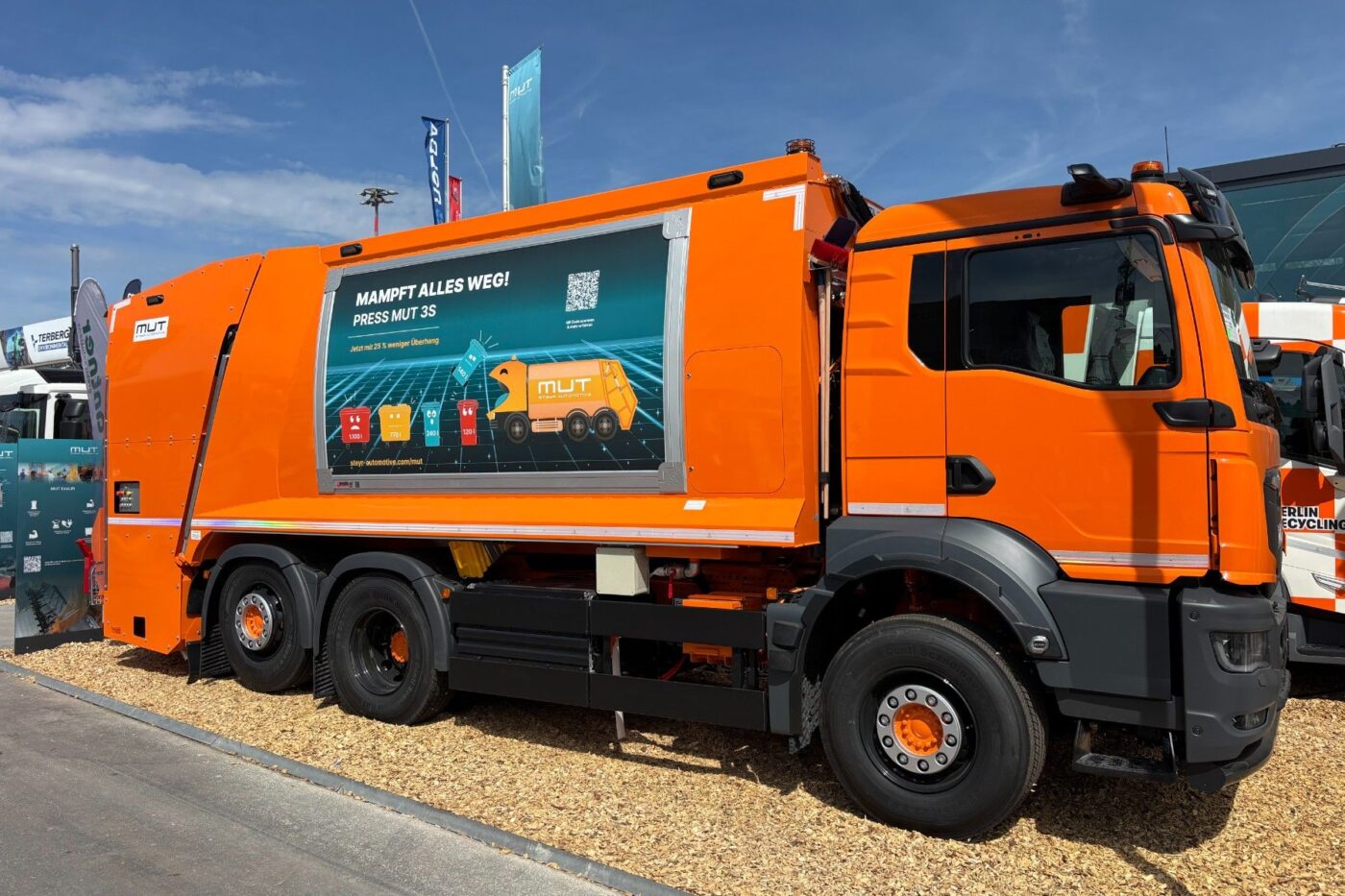
Smaller stands, such as that of MUT/Steyr Automotive, also reflect the industry’s commitment to transformation. Two of the three vehicles exhibited by the Austrians are fully electric (based on Volvo and MAN chassis). One of the refuse collection vehicles even includes an integrated washing system for collection containers.
These are still prototypes, requiring significant manual labour to equip the supplied OEM chassis with auxiliary frames, additional batteries for the lifter, PTO and other components. However, Johannes Holzleitner from MUT/Steyr Automotive reports growing interest: “Demand for electric vehicles is particularly strong in waste collection.”
This statement is echoed throughout the trade fair. The often regional operational scope of municipal vehicles makes them ideally suited for battery-electric vehicles, we hear – in contrast to trucks that must cover as many kilometres as possible in a day. When stop-and-go routes, such as those for refuse collection vehicles, are added to the equation, e-mobility can play to its strengths.
The keyword here is recuperation. This development has been foreseeable for several years, and as a result, many electric vehicles were already on display at IFAT 2024.
However, the still-young market has continued to mature. Or, as one exhibitor put it: “Two years ago, e-mobility was still heavily hyped; now, electric vehicles have simply become a fixed part of the trade fair.”
daimlertruck.com, volvotrucks.de (in German), press.mantruckandbus.com (in German), scania.com, ifat.de (exhibitor directory)
Search
RECENT PRESS RELEASES
Related Post