Imperial Valley city sues to force environmental review of massive data center project
December 12, 2025
For two weeks, a fight has been brewing over a massive data center project proposed in the Imperial Valley that is designed to power artificial intelligence technology.
Now, the small city of Imperial is suing to bring the project to a temporary halt.
In a lawsuit filed late last week in Imperial County Superior Court, city officials are seeking an injunction that would overturn the county government’s approvals for the data center and block the developer from moving forward with construction.
The suit accuses county officials of violating California’s environmental laws, along with some of their own regulations, by prematurely greenlighting elements of the project. The city is asking the court to overturn any permits or approvals the county has granted so far.
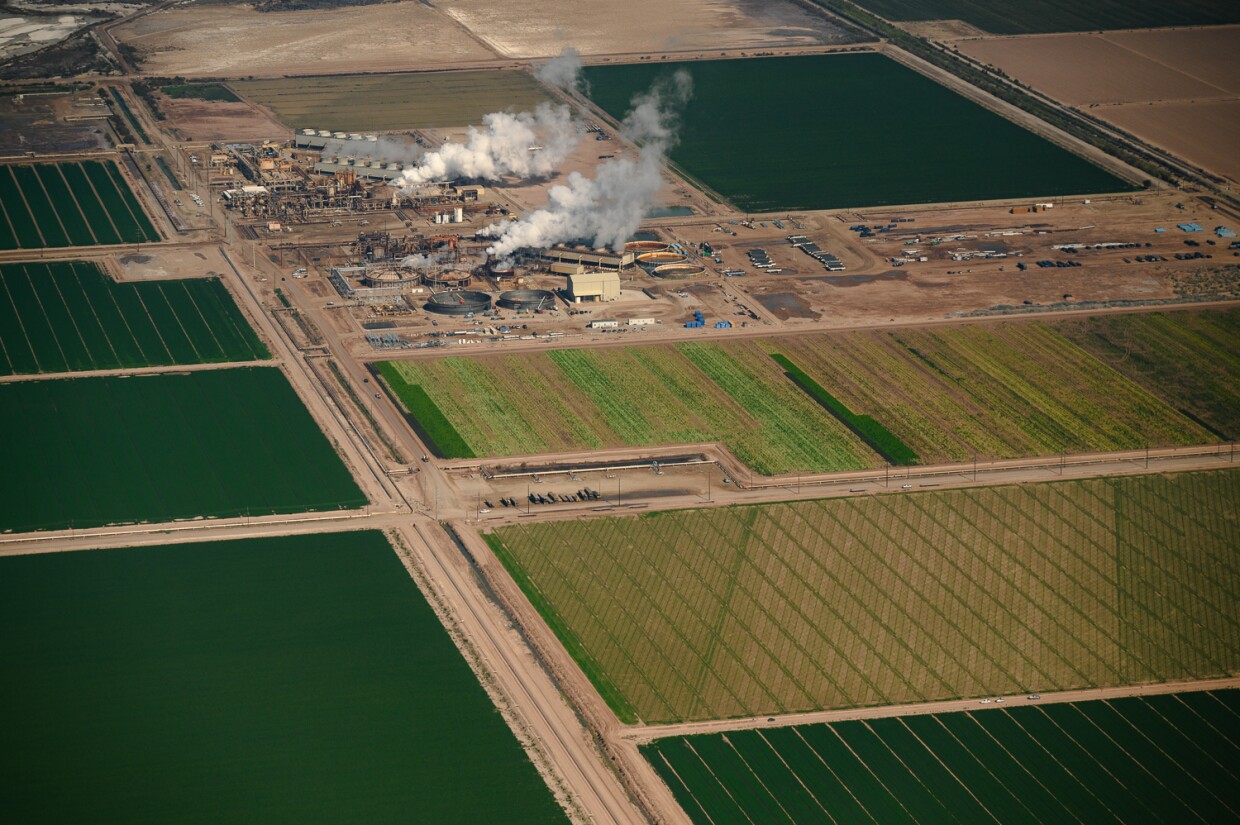
Imperial is the county’s fourth-largest city, with a little over 22,000 residents. The planned data center would be located in unincorporated land in the heart of the city.
Imperial City Manager Dennis Morita said they ultimately decided to file a lawsuit because of the scale of the project — and because county officials appeared to be rapidly moving forward with little public input.
“The City Council also felt very strongly that its residents should have a voice in how this development happens,” Morita told KPBS Thursday.

Kori Suzuki for KPBS / California Local
On Thursday, representatives of the Huntington Beach-based developer behind the project, Imperial Valley Computer Manufacturing, said they had not yet had a chance to view the suit. But they argued the project is planned for land already set aside for industrial purposes.
“We will continue to engage in good faith, correct misinformation, and work with neighbors on specific, workable measures,” wrote Sebastian Rucci, a Huntington Beach-based attorney and managing member of the company, in a text Thursday afternoon.
Critics of the planned data center celebrated the city of Imperial’s decision.
Imperial resident Francisco Leal has lived next to the planned data center site for 18 years. In recent weeks, he has rallied his neighbors to oppose the project and helped organize a petition that has garnered more than 1,000 signatures.
Leal said he was inspired to push back against the project’s construction by reading about pollution the facilities can produce and the resources they consume. He said he doesn’t want his two children to grow up in the backyard of a massive technology complex.
“That gives us hope,” Leal said Thursday after learning of the city’s lawsuit. “That makes us feel like they got our back.”

Ted Shaffrey
/
AP
Data centers are essentially massive, air-conditioned warehouses full of computer chips and other hardware and have been part of the infrastructure of the internet for a long time.
But they have become an increasing flashpoint in communities across the country as major tech companies like Google and Meta have sought to dramatically expand their footprint amid their frenzied race to develop generative AI technology.
That’s because data centers consume massive amounts of energy and water to power their computing equipment and keep it cool. Some facilities emit an audible hum. They also drive up emissions of greenhouse gasses.
In many cases, data centers are also built and run by private, third-party companies. As a result, the public has little information about how they are affecting the energy grid and environment.
On Monday, a coalition of more than 200 environmental groups demanded that Congress enact a nationwide emergency stop on data center development, calling it “one of the biggest environmental and social threats of our generation.”
The proposed data center in the Imperial Valley has a listed electric power rating of 330 megawatts, according to planning documents published by City of Imperial officials.
A megawatt is a measurement of how much energy the facility can receive at any given moment. Around 100 megawatts of electric power could support electricity for 80,000 households in the United States, according to the Congressional Research Service.
Rucci said the data center would require 750,000 gallons of water per day for facility operations. That’s equivalent to the daily water use of about 9,000 U.S. households, according to the Environmental Protection Agency.

Rumblings about the project have reached a crescendo over the past two weeks.
The increasingly heated discussion was triggered by an announcement the city of Imperial released the week of Thanksgiving. In it, they said the city had recently become aware of the data center project and was unsure how close county officials were to granting it final approval.
That uncertainty, Morita said, was key to their decision to raise the alarm.
“We did not want to be put in a position where we somehow waived anything relative to the entirety of the project,” he said.
Since then, hundreds of Valley residents have demanded more information about the project. Last week, California State Sen. Steve Padilla, D-18, sent a letter to the county Board of Supervisors calling for more public input and a full environmental impact report.
On Tuesday, the data center debate took over the Board of Supervisors’ meeting — even though it wasn’t on the agenda.
Residents, environmental activists and representatives from other advocacy groups packed the county administration building and demanded the county hold a public hearing on the project.
Rucci, the developer, has pushed back forcefully against the criticism, describing the project as “ministerial” — a technical planning term for a project that automatically meets county requirements.
“The property we selected is not some hidden pocket of farmland suddenly targeted for heavy development,” he wrote over text Thursday. “It is industrially zoned land near other industrially zoned and near major infrastructure–high-voltage transmission lines and railroad tracks.”
Kori Suzuki for KPBS / California Local
The City of Imperial disputes some of Rucci’s claims.
In court filings, city officials said the project site has several different zoning designations, including for urban farmland and various levels of industrial activity. Some of those zones, they said, do not allow data centers or the planned battery storage facility.
The battery storage and other elements of the project, the suit alleged, should have required a conditional use permit — a special permit that would require county planners to hold a public hearing and a formal vote.
The city also accused county officials in the suit of violating the California Environmental Quality Act by evaluating individual components instead of the project as a whole.
Rucci, the suit said, actually approached the City of Imperial about building a data center months before working with the county.
City officials weighed his request. Morita said they did see potential benefits in the project for the city and the county, and acknowledged that their suit could discourage other developers.
“I’m hopeful that we can get there in a way that this development can move forward,” he said, “but in a responsible way.”
Leal is less optimistic. Although Rucci has made promises that the data center would rely primarily on recycled water and renewable energy, Leal questions whether those commitments are true and whether they would be binding.
“We want to hear from the county because they’re the authority,” he said. “They’re the ones that got elected by us, so they need to tell us.”
Rucci is not the only developer with plans to bring data centers to the Imperial Valley.
On the north end of the valley, the Tustin-based start-up CalETHOS is also aiming to start building a 200,000 square-foot data center next year, along with a broader technology campus.
That data center would be located along Highway 111, between the towns of Niland and Calipatria.
Search
RECENT PRESS RELEASES
Related Post