Implications of policy-driven transmission expansion for costs, emissions and reliability

December 4, 2025

Abstract

The US power system requires substantial transmission expansion to meet long-term demand growth, improve reliability and accommodate more renewable energy. However, interregional transmission deployment has been slow. Multiple congressional proposals aim to address this issue. This study evaluates these proposals through a representative policy-driven expansion methodology requiring regions to interconnect. We assess impacts on transmission builds, cost, reliability during extreme events and emissions. We highlight the difference between policy-driven expansion that pursues expansion in all regions and an expansion focused on capturing the benefits of low-cost generation potential. Policy-driven expansion increases interregional transmission by 68%, distributing expansion across regions, whereas the least-cost solution concentrates builds in the central USA. Although the least-cost approach yields US$1.52 billion (1.13%) greater savings and 28.6 million metric tons (3.65%) lower CO2 emissions, policy-driven expansion improves reliability during extreme events by enabling broader electricity exchange. The study highlights key trade-offs to inform transmission policy decisions.

This is a preview of subscription content, access via your institution

Access options

Buy this article

USD 39.95

Prices may be subject to local taxes which are calculated during checkout
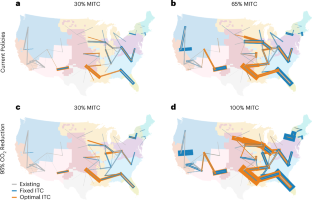
Fig. 1: Map of existing and new interregional transfer capability between zones.
Fig. 2: Total annual system costs.
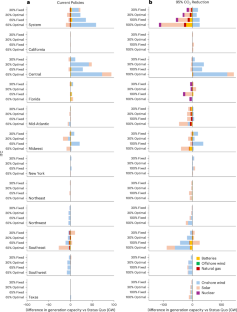
Fig. 3: Regional difference in investments in new generation capacity per ITC and decarbonization scenario vs Status Quo.
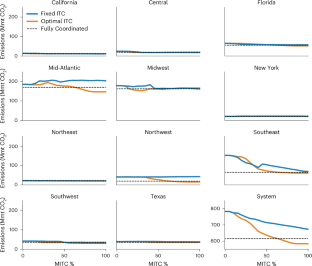
Fig. 4: Regional and system CO2 emissions in the Fixed and Optimal ITC under the Current Policies scenario.
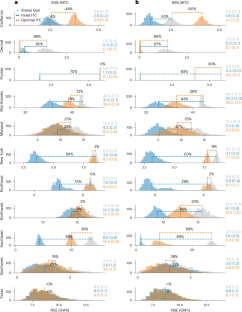
Fig. 5: Histogram of simulated average hourly NSE per region.
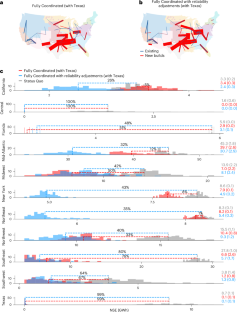
Fig. 6: Transmission builds and reliability results for the Fully Coordinated scenarios.
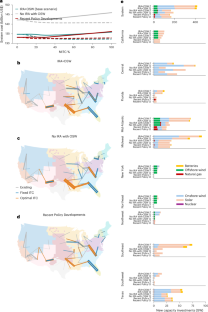
Fig. 7: Comparisons between the IRA+OSW and Recent Policy Developments scenarios.

Data availability

We provide a supplementary document that discusses additional methods and assumptions and more detailed results on base and sensitivity scenarios. Data necessary to replicate the results in the paper are provided via Github at https://github.com/JRLSenga/Transmission_PolicyImpacts. Source data are provided with this paper.

Code availability

Replication software is provided via Github at https://github.com/JRLSenga/Transmission_PolicyImpacts.

References

  1. Renewable Power Generation Costs in 2022 (IRENA, 2022); https://www.irena.org/Publications/2023/Aug/Renewable-Power-Generation-Costs-in-2022

  2. U.S. construction costs dropped for solar, wind, and natural gas-fired generators in 2021. EIA Today in Energy https://www.eia.gov/todayinenergy/detail.php?id=60562 (2023).

  3. Dimanchev, E. G., Hodge, J. L. & Parsons, J. E. The role of hydropower reservoirs in deep decarbonization policy. Energy Policy 155, 112369 (2021).

    Article 

    Google Scholar
     

  4. Gagnon, P. et al. 2022 Standard Scenarios Report: A U.S. Electricity Sector Outlook (NREL, 2023); https://docs.nrel.gov/docs/fy23osti/84327.pdf

  5. Denholm, P. et al. Examining Supply-Side Options to Achieve 100% Clean Electricity by 2035 NREL/TP-6A40-81644, 1885591, MainId:82417 (NREL, 2022); https://www.osti.gov/servlets/purl/1885591/

  6. Shi, N. The Role for Electricity Transmission in Net-Zero Energy Systems: A Spatially Resolved Analysis of the Continental US. MSc thesis, Massachusetts Institute of Technology (2023); https://hdl.handle.net/1721.1/151926

  7. Becker, S. et al. Features of a fully renewable US electricity system: optimized mixes of wind and solar PV and transmission grid extensions. Energy 72, 443–458 (2014).

    Article 

    Google Scholar
     

  8. Bloom, A. et al. The value of increased HVDC capacity between eastern and western U.S. grids: the interconnections seam study. IEEE Trans. Power Syst. 37, 1760–1769 (2022).

    Article 

    Google Scholar
     

  9. Brown, P. R. & Botterud, A. The value of inter-regional coordination and transmission in decarbonizing the US electricity system. Joule 5, 115–134 (2021).

    Article 

    Google Scholar
     

  10. Wiser, R. et al. Land-Based Wind Market Report: 2023 Edition (Lawrence Berkeley National Laboratory, 2023); https://www.energy.gov/sites/default/files/2023-08/land-based-wind-market-report-2023-edition.pdf

  11. Rodríguez, R. A., Becker, S., Andresen, G. B., Heide, D. & Greiner, M. Transmission needs across a fully renewable European power system. Renewable Energy 63, 467–476 (2014).

    Article 

    Google Scholar
     

  12. Brown, T., Schlachtberger, D., Kies, A., Schramm, S. & Greiner, M. Synergies of sector coupling and transmission reinforcement in a cost-optimised, highly renewable European energy system. Energy 160, 720–739 (2018).

    Article 

    Google Scholar
     

  13. National Transmission Planning Study (DOE, 2024); https://www.energy.gov/gdo/national-transmission-planning-study

  14. National Transmission Needs Study (DOE, 2023); https://www.energy.gov/sites/default/files/2023-12/National%20Transmission%20Needs%20Study%20-%20Final_2023.12.1.pdf

  15. Hausman, C. Power flows: transmission lines, allocative efficiency, and corporate profits. Am. Econ. Rev. 115, 2574–2615 (2025).

    Article 

    Google Scholar
     

  16. Joskow, P. L. Facilitating transmission expansion to support efficient decarbonization of the electricity sector. Econ. Energy Environ. Policy 10, 57–92 (2021).


    Google Scholar
     

  17. Ansolabehere, S. et al. Crossed Wires: A Salata Institute-Roosevelt Project Study of The Development of High-Voltage Transmission Lines in the United States (Salata Institute for Climate and Sustainability at Harvard University, 2024); https://salatainstitute.harvard.edu/grid-report/

  18. Hickenlooper, J. & Peters, S. S. 2827 The BIG WIRES Act (118th Congress, 2023); https://www.congress.gov/bill/118th-congress/senate-bill/2827

  19. Jenkins, J. D. & Sepulveda, N. A. Enhanced Decision Support for a Changing Electricity Landscape: The GenX Configurable Electricity Resource Capacity Expansion Model (MIT, 2017); https://energy.mit.edu/wp-content/uploads/2017/10/Enhanced-Decision-Support-for-a-Changing-Electricity-Landscape.pdf

  20. Joskow, P. L. Transmission capacity expansion is needed to decarbonize the electricity sector efficiently. Joule 4, 1–3 (2020).

    Article 

    Google Scholar
     

  21. EPA Report on the Social Cost of Greenhouse Gases: Estimates Incorporating Recent Scientific Advances (EPA, 2023); https://www.epa.gov/system/files/documents/2023-12/epa_scghg_2023_report_final.pdf

  22. Arrington, J. C. H.R. 1 One Big Beautiful Bill Act (119th Congress, 2025); https://www.congress.gov/bill/119th-congress/house-bill/1/text

  23. Temporary withdrawal of all areas on the outer continental shelf from offshore wind leasing and review of the federal government’s leasing and permitting practices for wind projects. White House https://www.whitehouse.gov/presidential-actions/2025/01/temporary-withdrawal-of-all-areas-on-the-outer-continental-shelf-from-offshore-wind-leasing-and-review-of-the-federal-governments-leasing-and-permitting-practices-for-wind-projects/ (2025).

  24. Department of Energy terminates taxpayer-funded financial assistance for grain belt express. DOE https://www.energy.gov/articles/department-energy-terminates-taxpayer-funded-financial-assistance-grain-belt-express (2025).

  25. Schivley, G. Power genome. GitHub https://github.com/PowerGenome/ (2023).

  26. Vimmerstedt, L. et al. 2022 Annual Technology Baseline (ATB) cost and performance data for electricity generation technologies. NREL https://data.openei.org/submissions/5716 (2022).

  27. Mai, T. T. et al. Electrification Futures Study: Scenarios of Electric Technology Adoption and Power Consumption for the United States NREL/TP–6A20-71500, 1459351 (NREL, 2018); http://www.osti.gov/servlets/purl/1459351/

  28. Mai, T. et al. Electrification Futures Study Load Profiles (NREL, 2020).

  29. Form EIA-860 detailed data with previous form data. EIA https://www.eia.gov/electricity/data/eia860/ (2022).

  30. Ho, J. et al. Regional Energy Deployment System (ReEDS) Model Documentation: Version 2020 (NREL, 2021); https://www.nrel.gov/docs/fy21osti/78195.pdf

  31. EPA’s power sector modeling platform v6 using IPM. EPA https://www.epa.gov/power-sector-modeling/post-ira-2022-reference-case (2022).

  32. Phase II Report: Interregional Transmission Development and Analysis for Three Stakeholder Selected Scenarios and Gas-Electric System Interface Study (EIPC, 2015); https://static1.squarespace.com/static/5b1032e545776e01e7058845/t/5cb37389c830257d563c0034/1555264398511/02+Phase+II.pdf

  33. Kasina, S. & Hobbs, B. F. The value of cooperation in interregional transmission planning: a noncooperative equilibrium model approach. Eur. J. Oper. Res. 285, 740–752 (2020).

    Article 
    MathSciNet 

    Google Scholar
     

  34. Jabr, R. A. Robust transmission network expansion planning with uncertain renewable generation and loads. IEEE Trans. Power Syst. 28, 4558–4567 (2013).

    Article 

    Google Scholar
     

  35. Ruiz, C. & Conejo, A. Robust transmission expansion planning. Eur. J. Oper. Res. 242, 390–401 (2015).

    Article 

    Google Scholar
     

  36. Bagheri, A., Wang, J. & Zhao, C. Data-driven stochastic transmission expansion planning. IEEE Trans. Power Syst. 32, 3461–3470 (2017).

    Article 

    Google Scholar
     

  37. Velloso, A., Pozo, D. & Street, A. Distributionally robust transmission expansion planning: a multi-scale uncertainty approach. IEEE Trans. Power Syst. 35, 3353–3365 (2020).

    Article 

    Google Scholar
     

Download references

Acknowledgements

We would like to acknowledge B. Patten, S. Wang, D. Mallapragada, N. Shi, S. Chakraborty and P. Duenas Martinez for insightful discussions on GenX, feedback on the models, assumptions and policy implications. All views expressed in this paper are those of the authors and do not necessarily reflect the views of acknowledged individuals or affiliated institutions.

Author information

Authors and Affiliations

Authors

Contributions

Conceptualization: A.B., C.R.K., J.E.P., J.R.L.S. and S.D.S. Methodology: A.B., C.R.K., J.E.P., J.R.L.S. and S.D.S. Software: J.R.L.S. Formal analysis: A.B., C.R.K., J.E.P., J.R.L.S. and S.D.S. Data curation: J.E.P. and J.R.L.S. Writing–original draft: J.R.L.S. Writing–review and editing: A.B., C.R.K. and J.E.P. Visualization: J.R.L.S.

Corresponding author

Correspondence to
Juan Ramon L. Senga.

Ethics declarations

Competing interests

The authors declare no competing interests.

Peer review

Peer review information

Nature Energy thanks Will Gorman, Shelley Welton and the other, anonymous, reviewer(s) for their contribution to the peer review of this work.

Additional information

Publisher’s note Springer Nature remains neutral with regard to jurisdictional claims in published maps and institutional affiliations.

Extended data

Extended Data Fig. 1 Regional and System CO2 Emissions in the Fixed and Optimal ITC under the Recent Policy Developments scenario.

Solid (dashed) lines represent the Fixed (Optimal) ITC scenarios. The IRA+OSW scenario show the same results as in Fig. 4.

Source data

Extended Data Fig. 2 Histogram of Simulated Average Hourly Non-Served Energy per Region.

We show the (a) IRA+OSW and (b) Recent Policy Developments scenarios with a 30% MITC under a Current Policies scenario. Colored values in each graph represent the mean (standard deviation) value for the scenario. Each histogram consists of 1000 data points, where each data point corresponds to a random capacity outage for that region. The y-axis represents the number of simulated outages while the x-axis represents the value of hourly NSE in gigawatt-hours. The dashed lines connect the average NSE under each policy with the average NSE under the status quo, while the percentages indicate the relative change in NSE. Note the different x and y-axis scales per region.

Source data

Supplementary information

Supplementary Information

Supplementary Figs. 1–34, discussion, methods and Tables 1–20.

Supplementary Data 1

Contains the data necessary to replicate the figures in the Supplementary Information file.

Source data

Source Data Fig. 1

Existing transmission capacity per line and transmission capacity investments per line per policy and MITC combination.

Source Data Fig. 2

Total system cost per MITC and breakdown per cost component.

Source Data Fig. 3

New capacity investments per region, technology and policy.

Source Data Fig. 4

Total CO2 emissions per region, MITC and policy.

Source Data Fig. 5

Extreme weather event simulated outages per region and policy.

Source Data Fig. 6

a,b, Existing transmission capacity per line and transmission capacity investments per line for the Fully Coordinated scenarios. c, Extreme weather event simulated outages per region and policy in the Fully Coordinated scenarios.

Source Data Fig. 7

a, Total system cost for the IRA+OSW, No IRA with OSW and Recent Policy Development scenarios. b–d, Existing transmission capacity per line and transmission capacity investments per line for the IRA+OSW, No IRA with OSW and Recent Policy Development scenarios. e, New capacity investments per region, technology and policy.

Source Data Extended Data Fig. 1

Total CO2 emissions per region and MITC for the IRA+OSW and Recent Policy Development scenarios.

Source Data Extended Data Fig. 2

Extreme weather event simulated outages per region for the IRA+OSW and Recent Policy Development scenarios.

Rights and permissions

Springer Nature or its licensor (e.g. a society or other partner) holds exclusive rights to this article under a publishing agreement with the author(s) or other rightsholder(s); author self-archiving of the accepted manuscript version of this article is solely governed by the terms of such publishing agreement and applicable law.

Reprints and permissions

About this article

Check for updates. Verify currency and authenticity via CrossMark

Cite this article

Senga, J.R.L., Botterud, A., Parsons, J.E. et al. Implications of policy-driven transmission expansion for costs, emissions and reliability in the USA.
Nat Energy (2025). https://doi.org/10.1038/s41560-025-01921-7

Download citation

  • Received: 03 March 2025

  • Accepted: 28 October 2025

  • Published: 04 December 2025

  • Version of record: 04 December 2025

  • DOI: https://doi.org/10.1038/s41560-025-01921-7


Search

RECENT PRESS RELEASES

Implications of policy-driven transmission expansion for costs, emissions and reliability

December 4, 2025

Abstract

The US power system requires substantial transmission expansion to meet long-term demand growth, improve reliability and accommodate more renewable energy. However, interregional transmission deployment has been slow. Multiple congressional proposals aim to address this issue. This study evaluates these proposals through a representative policy-driven expansion methodology requiring regions to interconnect. We assess impacts on transmission builds, cost, reliability during extreme events and emissions. We highlight the difference between policy-driven expansion that pursues expansion in all regions and an expansion focused on capturing the benefits of low-cost generation potential. Policy-driven expansion increases interregional transmission by 68%, distributing expansion across regions, whereas the least-cost solution concentrates builds in the central USA. Although the least-cost approach yields US$1.52 billion (1.13%) greater savings and 28.6 million metric tons (3.65%) lower CO2 emissions, policy-driven expansion improves reliability during extreme events by enabling broader electricity exchange. The study highlights key trade-offs to inform transmission policy decisions.

This is a preview of subscription content, access via your institution

Access options

Buy this article

USD 39.95

Prices may be subject to local taxes which are calculated during checkout
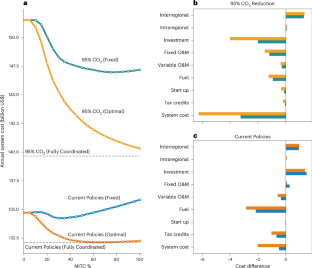
Fig. 1: Map of existing and new interregional transfer capability between zones.
Fig. 2: Total annual system costs.
Fig. 3: Regional difference in investments in new generation capacity per ITC and decarbonization scenario vs Status Quo.
Fig. 4: Regional and system CO2 emissions in the Fixed and Optimal ITC under the Current Policies scenario.
Fig. 5: Histogram of simulated average hourly NSE per region.
Fig. 6: Transmission builds and reliability results for the Fully Coordinated scenarios.
Fig. 7: Comparisons between the IRA+OSW and Recent Policy Developments scenarios.

Data availability

We provide a supplementary document that discusses additional methods and assumptions and more detailed results on base and sensitivity scenarios. Data necessary to replicate the results in the paper are provided via Github at https://github.com/JRLSenga/Transmission_PolicyImpacts. Source data are provided with this paper.

Code availability

Replication software is provided via Github at https://github.com/JRLSenga/Transmission_PolicyImpacts.

References

  1. Renewable Power Generation Costs in 2022 (IRENA, 2022); https://www.irena.org/Publications/2023/Aug/Renewable-Power-Generation-Costs-in-2022

  2. U.S. construction costs dropped for solar, wind, and natural gas-fired generators in 2021. EIA Today in Energy https://www.eia.gov/todayinenergy/detail.php?id=60562 (2023).

  3. Dimanchev, E. G., Hodge, J. L. & Parsons, J. E. The role of hydropower reservoirs in deep decarbonization policy. Energy Policy 155, 112369 (2021).

    Article 

    Google Scholar
     

  4. Gagnon, P. et al. 2022 Standard Scenarios Report: A U.S. Electricity Sector Outlook (NREL, 2023); https://docs.nrel.gov/docs/fy23osti/84327.pdf

  5. Denholm, P. et al. Examining Supply-Side Options to Achieve 100% Clean Electricity by 2035 NREL/TP-6A40-81644, 1885591, MainId:82417 (NREL, 2022); https://www.osti.gov/servlets/purl/1885591/

  6. Shi, N. The Role for Electricity Transmission in Net-Zero Energy Systems: A Spatially Resolved Analysis of the Continental US. MSc thesis, Massachusetts Institute of Technology (2023); https://hdl.handle.net/1721.1/151926

  7. Becker, S. et al. Features of a fully renewable US electricity system: optimized mixes of wind and solar PV and transmission grid extensions. Energy 72, 443–458 (2014).

    Article 

    Google Scholar
     

  8. Bloom, A. et al. The value of increased HVDC capacity between eastern and western U.S. grids: the interconnections seam study. IEEE Trans. Power Syst. 37, 1760–1769 (2022).

    Article 

    Google Scholar
     

  9. Brown, P. R. & Botterud, A. The value of inter-regional coordination and transmission in decarbonizing the US electricity system. Joule 5, 115–134 (2021).

    Article 

    Google Scholar
     

  10. Wiser, R. et al. Land-Based Wind Market Report: 2023 Edition (Lawrence Berkeley National Laboratory, 2023); https://www.energy.gov/sites/default/files/2023-08/land-based-wind-market-report-2023-edition.pdf

  11. Rodríguez, R. A., Becker, S., Andresen, G. B., Heide, D. & Greiner, M. Transmission needs across a fully renewable European power system. Renewable Energy 63, 467–476 (2014).

    Article 

    Google Scholar
     

  12. Brown, T., Schlachtberger, D., Kies, A., Schramm, S. & Greiner, M. Synergies of sector coupling and transmission reinforcement in a cost-optimised, highly renewable European energy system. Energy 160, 720–739 (2018).

    Article 

    Google Scholar
     

  13. National Transmission Planning Study (DOE, 2024); https://www.energy.gov/gdo/national-transmission-planning-study

  14. National Transmission Needs Study (DOE, 2023); https://www.energy.gov/sites/default/files/2023-12/National%20Transmission%20Needs%20Study%20-%20Final_2023.12.1.pdf

  15. Hausman, C. Power flows: transmission lines, allocative efficiency, and corporate profits. Am. Econ. Rev. 115, 2574–2615 (2025).

    Article 

    Google Scholar
     

  16. Joskow, P. L. Facilitating transmission expansion to support efficient decarbonization of the electricity sector. Econ. Energy Environ. Policy 10, 57–92 (2021).


    Google Scholar
     

  17. Ansolabehere, S. et al. Crossed Wires: A Salata Institute-Roosevelt Project Study of The Development of High-Voltage Transmission Lines in the United States (Salata Institute for Climate and Sustainability at Harvard University, 2024); https://salatainstitute.harvard.edu/grid-report/

  18. Hickenlooper, J. & Peters, S. S. 2827 The BIG WIRES Act (118th Congress, 2023); https://www.congress.gov/bill/118th-congress/senate-bill/2827

  19. Jenkins, J. D. & Sepulveda, N. A. Enhanced Decision Support for a Changing Electricity Landscape: The GenX Configurable Electricity Resource Capacity Expansion Model (MIT, 2017); https://energy.mit.edu/wp-content/uploads/2017/10/Enhanced-Decision-Support-for-a-Changing-Electricity-Landscape.pdf

  20. Joskow, P. L. Transmission capacity expansion is needed to decarbonize the electricity sector efficiently. Joule 4, 1–3 (2020).

    Article 

    Google Scholar
     

  21. EPA Report on the Social Cost of Greenhouse Gases: Estimates Incorporating Recent Scientific Advances (EPA, 2023); https://www.epa.gov/system/files/documents/2023-12/epa_scghg_2023_report_final.pdf

  22. Arrington, J. C. H.R. 1 One Big Beautiful Bill Act (119th Congress, 2025); https://www.congress.gov/bill/119th-congress/house-bill/1/text

  23. Temporary withdrawal of all areas on the outer continental shelf from offshore wind leasing and review of the federal government’s leasing and permitting practices for wind projects. White House https://www.whitehouse.gov/presidential-actions/2025/01/temporary-withdrawal-of-all-areas-on-the-outer-continental-shelf-from-offshore-wind-leasing-and-review-of-the-federal-governments-leasing-and-permitting-practices-for-wind-projects/ (2025).

  24. Department of Energy terminates taxpayer-funded financial assistance for grain belt express. DOE https://www.energy.gov/articles/department-energy-terminates-taxpayer-funded-financial-assistance-grain-belt-express (2025).

  25. Schivley, G. Power genome. GitHub https://github.com/PowerGenome/ (2023).

  26. Vimmerstedt, L. et al. 2022 Annual Technology Baseline (ATB) cost and performance data for electricity generation technologies. NREL https://data.openei.org/submissions/5716 (2022).

  27. Mai, T. T. et al. Electrification Futures Study: Scenarios of Electric Technology Adoption and Power Consumption for the United States NREL/TP–6A20-71500, 1459351 (NREL, 2018); http://www.osti.gov/servlets/purl/1459351/

  28. Mai, T. et al. Electrification Futures Study Load Profiles (NREL, 2020).

  29. Form EIA-860 detailed data with previous form data. EIA https://www.eia.gov/electricity/data/eia860/ (2022).

  30. Ho, J. et al. Regional Energy Deployment System (ReEDS) Model Documentation: Version 2020 (NREL, 2021); https://www.nrel.gov/docs/fy21osti/78195.pdf

  31. EPA’s power sector modeling platform v6 using IPM. EPA https://www.epa.gov/power-sector-modeling/post-ira-2022-reference-case (2022).

  32. Phase II Report: Interregional Transmission Development and Analysis for Three Stakeholder Selected Scenarios and Gas-Electric System Interface Study (EIPC, 2015); https://static1.squarespace.com/static/5b1032e545776e01e7058845/t/5cb37389c830257d563c0034/1555264398511/02+Phase+II.pdf

  33. Kasina, S. & Hobbs, B. F. The value of cooperation in interregional transmission planning: a noncooperative equilibrium model approach. Eur. J. Oper. Res. 285, 740–752 (2020).

    Article 
    MathSciNet 

    Google Scholar
     

  34. Jabr, R. A. Robust transmission network expansion planning with uncertain renewable generation and loads. IEEE Trans. Power Syst. 28, 4558–4567 (2013).

    Article 

    Google Scholar
     

  35. Ruiz, C. & Conejo, A. Robust transmission expansion planning. Eur. J. Oper. Res. 242, 390–401 (2015).

    Article 

    Google Scholar
     

  36. Bagheri, A., Wang, J. & Zhao, C. Data-driven stochastic transmission expansion planning. IEEE Trans. Power Syst. 32, 3461–3470 (2017).

    Article 

    Google Scholar
     

  37. Velloso, A., Pozo, D. & Street, A. Distributionally robust transmission expansion planning: a multi-scale uncertainty approach. IEEE Trans. Power Syst. 35, 3353–3365 (2020).

    Article 

    Google Scholar
     

Download references

Acknowledgements

We would like to acknowledge B. Patten, S. Wang, D. Mallapragada, N. Shi, S. Chakraborty and P. Duenas Martinez for insightful discussions on GenX, feedback on the models, assumptions and policy implications. All views expressed in this paper are those of the authors and do not necessarily reflect the views of acknowledged individuals or affiliated institutions.

Author information

Authors and Affiliations

Authors

Contributions

Conceptualization: A.B., C.R.K., J.E.P., J.R.L.S. and S.D.S. Methodology: A.B., C.R.K., J.E.P., J.R.L.S. and S.D.S. Software: J.R.L.S. Formal analysis: A.B., C.R.K., J.E.P., J.R.L.S. and S.D.S. Data curation: J.E.P. and J.R.L.S. Writing–original draft: J.R.L.S. Writing–review and editing: A.B., C.R.K. and J.E.P. Visualization: J.R.L.S.

Corresponding author

Correspondence to
Juan Ramon L. Senga.

Ethics declarations

Competing interests

The authors declare no competing interests.

Peer review

Peer review information

Nature Energy thanks Will Gorman, Shelley Welton and the other, anonymous, reviewer(s) for their contribution to the peer review of this work.

Additional information

Publisher’s note Springer Nature remains neutral with regard to jurisdictional claims in published maps and institutional affiliations.

Extended data

Extended Data Fig. 1 Regional and System CO2 Emissions in the Fixed and Optimal ITC under the Recent Policy Developments scenario.

Solid (dashed) lines represent the Fixed (Optimal) ITC scenarios. The IRA+OSW scenario show the same results as in Fig. 4.

Source data

Extended Data Fig. 2 Histogram of Simulated Average Hourly Non-Served Energy per Region.

We show the (a) IRA+OSW and (b) Recent Policy Developments scenarios with a 30% MITC under a Current Policies scenario. Colored values in each graph represent the mean (standard deviation) value for the scenario. Each histogram consists of 1000 data points, where each data point corresponds to a random capacity outage for that region. The y-axis represents the number of simulated outages while the x-axis represents the value of hourly NSE in gigawatt-hours. The dashed lines connect the average NSE under each policy with the average NSE under the status quo, while the percentages indicate the relative change in NSE. Note the different x and y-axis scales per region.

Source data

Supplementary information

Supplementary Information

Supplementary Figs. 1–34, discussion, methods and Tables 1–20.

Supplementary Data 1

Contains the data necessary to replicate the figures in the Supplementary Information file.

Source data

Source Data Fig. 1

Existing transmission capacity per line and transmission capacity investments per line per policy and MITC combination.

Source Data Fig. 2

Total system cost per MITC and breakdown per cost component.

Source Data Fig. 3

New capacity investments per region, technology and policy.

Source Data Fig. 4

Total CO2 emissions per region, MITC and policy.

Source Data Fig. 5

Extreme weather event simulated outages per region and policy.

Source Data Fig. 6

a,b, Existing transmission capacity per line and transmission capacity investments per line for the Fully Coordinated scenarios. c, Extreme weather event simulated outages per region and policy in the Fully Coordinated scenarios.

Source Data Fig. 7

a, Total system cost for the IRA+OSW, No IRA with OSW and Recent Policy Development scenarios. b–d, Existing transmission capacity per line and transmission capacity investments per line for the IRA+OSW, No IRA with OSW and Recent Policy Development scenarios. e, New capacity investments per region, technology and policy.

Source Data Extended Data Fig. 1

Total CO2 emissions per region and MITC for the IRA+OSW and Recent Policy Development scenarios.

Source Data Extended Data Fig. 2

Extreme weather event simulated outages per region for the IRA+OSW and Recent Policy Development scenarios.

Rights and permissions

Springer Nature or its licensor (e.g. a society or other partner) holds exclusive rights to this article under a publishing agreement with the author(s) or other rightsholder(s); author self-archiving of the accepted manuscript version of this article is solely governed by the terms of such publishing agreement and applicable law.

Reprints and permissions

About this article

Check for updates. Verify currency and authenticity via CrossMark

Cite this article

Senga, J.R.L., Botterud, A., Parsons, J.E. et al. Implications of policy-driven transmission expansion for costs, emissions and reliability in the USA.
Nat Energy (2025). https://doi.org/10.1038/s41560-025-01921-7

Download citation

  • Received: 03 March 2025

  • Accepted: 28 October 2025

  • Published: 04 December 2025

  • Version of record: 04 December 2025

  • DOI: https://doi.org/10.1038/s41560-025-01921-7


Search

RECENT PRESS RELEASES

Go to Top