Investing in Africa’s growing young population for prosperity
January 29, 2026
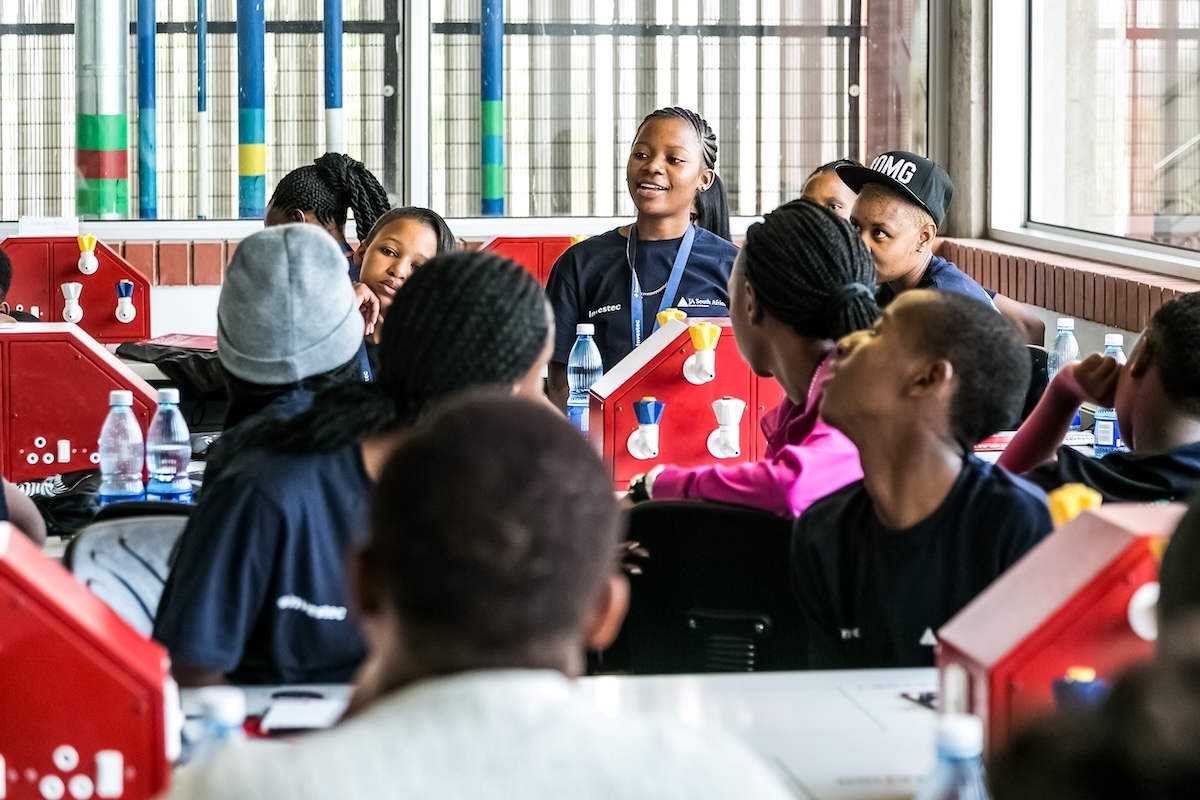
Only by investing in its youthful population will Africa claim a prosperous 21st century.
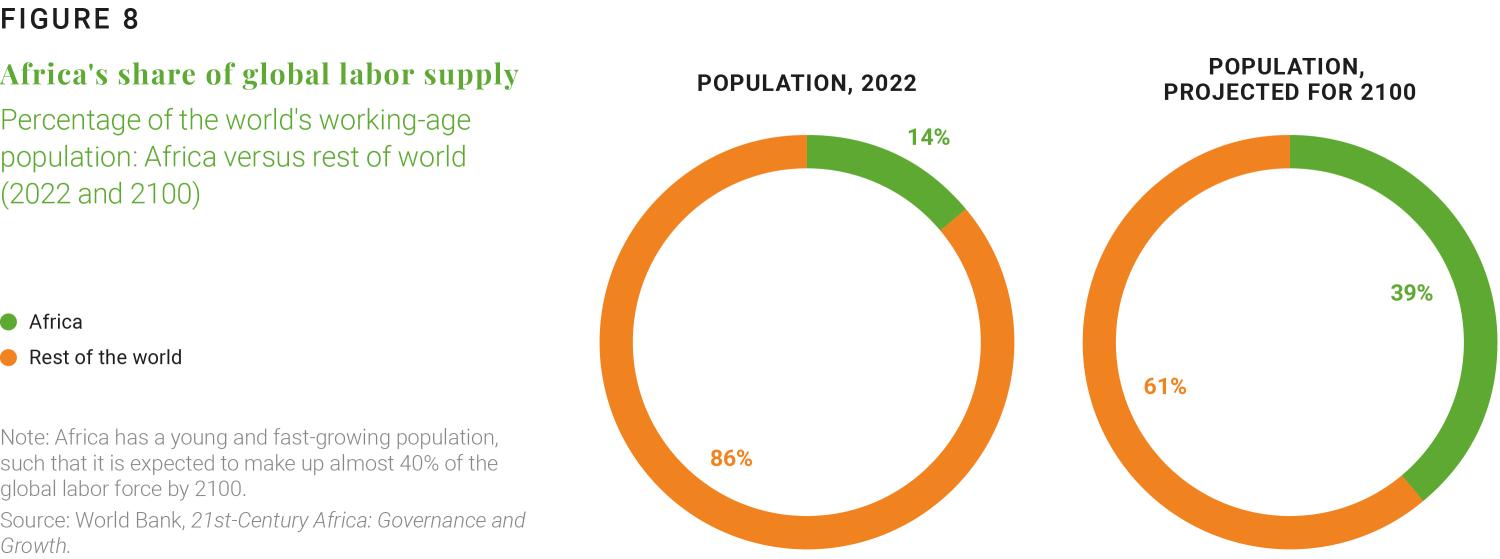
Africa1 stands at a pivotal juncture: Between 2025 and 2050, the continent is set to undergo one of the fastest expansions of the working-age population in world history, with total population rising from about 1.4 billion today to as many as 2.5 billion by mid-century.2 Central to this surge are an estimated 830 million youth aged 15–353—an unprecedented concentration of young talent. Will this demographic dividend fuel transformation or deepen fragility? The answer lies in Africa’s ability to equip its youth with the skills, health, and education to compete effectively in a 21st century labor market. Only by investing in its youthful population will Africa claim a prosperous 21st century. This youth potential can only be unlocked when personal competencies are matched by state systems that provide stability, good governance, and an economy dynamic enough to create opportunities.
Below are recommended policy foci which could be used to turn pledges into concrete results that deliver progress for Africa’s youth.
1. Strong start: Health and nutrition for life, especially in early years
Youth development begins long before school. While there have been successes—a 22% reduction in under-five mortality4 and a 27% decline in stunting5 since 2000—a child born in Africa in 2020 is expected to achieve only 40 percent of their potential human capital.6 Data from seven countries in eastern and southern Africa shows that only 18% of children aged three and four are on track in literacy and numeracy.7 These realities block the path to building a skilled workforce for the 21st century. Overcoming them will require strong action to expand immunization, improve maternal health care, and strengthen social protections that lift families out of poverty while ensuring children have access to proper nutrition and quality pre-primary education.
2. Beyond access: Turning schooling into learning
Primary school enrollment in Africa rose from 57% in 1985 to 77% by 2010.8 But progress in educational access masks a deeper crisis. In 2022, over 86% of children aged 10-14 in Sub-Saharan Africa were learning poor: either out-of-school or learning deprived.9 Expanded access has also not been equal, with only 27% of adolescent girls completing secondary school due to barriers like unsafe environments, cultural norms, and lack of reproductive health education.10 Reducing learning poverty requires strengthening early-grade teaching by providing well-trained teachers, structured leaning materials, and regular assessments to ensure children master foundational skills. It also calls for expanding access to quality schooling—especially for marginalized groups—through investments in safe classrooms, targeted remediation programs, and effective community engagement.11
3. Future skills: Preparing youth for tomorrow’s jobs
Even graduates often lack the skills demanded by the labor market, particularly in STEM and digital competencies. Bridging this gap between education and work will require expanded youth employment programs, particularly those tailored to young women. This includes apprenticeships, vocational education, and entrepreneurial training targeted at fast-growing sectors. At tertiary levels, it calls for advanced technical training as well as research and development. Finally, it is crucial to broaden the skill mix to include soft skills such as problem-solving, managerial competence, and teamwork.
4. Resilience under pressure: Shocks, climate, and inequality
The COVID-19 pandemic exposed the fragility of youth systems, disrupting learning, health services, and early job prospects. Climate change further compounds these pressures, from rising food insecurity to migration. Both shocks risk reversing gains and widening inequality. Building resilient systems demands sustained financing (especially for health and climate adaptation), governance reform, and public-private partnerships that foster innovation and create jobs.
5. Twin pillars: Governance and growth to power people
While the core of Africa’s transformation is investment in people, human capital flourishes only when anchored in two mutually reinforcing pillars. The first is a committed, capable, and credible state that ensures peace and stability, delivers services efficiently, and builds trust in institutions. The second is sustained economic dynamism—driven by private investment, regional trade, and digital innovation— that generates jobs and opportunities for a rapidly growing labor force. Expanding access to digital tools, green industries, and diversified markets not only fuels growth but also connects Africa’s youth to global value chains. Together, these twin foundations—effective governance and vibrant economic growth—will make human capital not just an aspiration, but Africa’s engine of prosperity in the 21st century.
Related Content
5 assets Africa can turn into good jobs at scale

Brookings AGI at the Annual Meetings: Accelerating job creation for a prosperous Africa
Making Africa’s integration work for jobs, scale, and structural change

-
Footnotes
- This writeup is based on the following publication: World Bank, 21st-Century Africa: Governance and Growth, ed. Chorching Goh (World Bank, 2025).
- U.N. Department of Economic and Social Affairs, World Population Prospects 2019: Highlights (United Nations, 2019).
- World Bank, The Next Generation Africa Climate Business Plan – Ramping Up Development-Centered Climate Action (2020).
- “Estimates from the United Nations Inter-agency Group for Child Mortality Estimation (United Nations Children’s Fund, United Nations Economic and Social Affairs Population Division, World Bank, World Health Organization.”
- “United Nations Children’s Fund, World Health Organization, and World Bank Group joint child malnutrition estimates.”
- World Bank, “Human Capital Index (HCI) (Scale 0-1), 2020,” Human Capital Data Portal, 2020.
- “African Region’s Maternal and Newborn Mortality Declining, but Progress Still Slow,” WHO Africa, April 7, 2025.
- Veronika Samborska, “Since 2010, Progress in Primary School Enrollment in Sub-Saharan Africa Has Stalled,” Our World in Data, December 9, 2024.
- World Bank et al., The State of Global Learning Poverty: 2022 Update (2022).
- Uraidah Hassani, “A Critical Moment to Prioritize Girls’ Secondary Education in Sub-Saharan Africa,” World Bank Blogs, April 19, 2024.
- World Bank, 21st-Century Africa: Governance and Growth.
This writeup is based on the following publication: World Bank, 21st-Century Africa: Governance and Growth, ed. Chorching Goh (World Bank, 2025).
U.N. Department of Economic and Social Affairs, World Population Prospects 2019: Highlights (United Nations, 2019).
World Bank, The Next Generation Africa Climate Business Plan – Ramping Up Development-Centered Climate Action (2020).
“Estimates from the United Nations Inter-agency Group for Child Mortality Estimation (United Nations Children’s Fund, United Nations Economic and Social Affairs Population Division, World Bank, World Health Organization.”
“United Nations Children’s Fund, World Health Organization, and World Bank Group joint child malnutrition estimates.”
World Bank, “Human Capital Index (HCI) (Scale 0-1), 2020,” Human Capital Data Portal, 2020.
“African Region’s Maternal and Newborn Mortality Declining, but Progress Still Slow,” WHO Africa, April 7, 2025.
Veronika Samborska, “Since 2010, Progress in Primary School Enrollment in Sub-Saharan Africa Has Stalled,” Our World in Data, December 9, 2024.
World Bank et al., The State of Global Learning Poverty: 2022 Update (2022).
Uraidah Hassani, “A Critical Moment to Prioritize Girls’ Secondary Education in Sub-Saharan Africa,” World Bank Blogs, April 19, 2024.
World Bank, 21st-Century Africa: Governance and Growth.
The Brookings Institution is committed to quality, independence, and impact.
We are supported by a diverse array of funders. In line with our values and policies, each Brookings publication represents the sole views of its author(s).
Search
RECENT PRESS RELEASES
Related Post





Commentary
Chor-ching Gohand
Chor-ching GohLead Economist
– World Bank Group
Andrew Dabalen
Andrew Dabalen
Chief Economist for the Africa Region
– World Bank Group
January 29, 2026