Investors should beware of AI’s circular financing trap, look for alternatives like Broadc
December 30, 2025
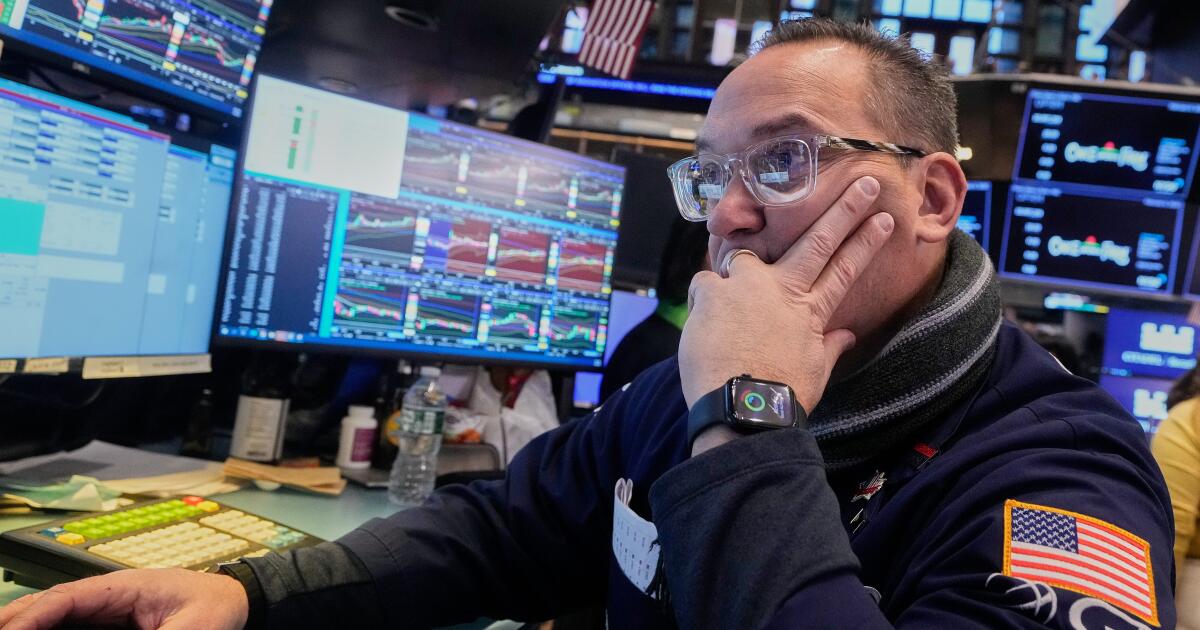
The AI gold rush has investors cautious that the industry may be feeding itself through a risky cycle of circular financing.
“I would be cautious on the financing aspect of OpenAI, the circular financing,” Miramar Capital co-founder Max Wasserman told Yahoo Finance’s Opening Bid. “Given the concentration, you need to diversify the portfolio, and you need to understand what you own and what happens if you’re wrong.”
He added that if the AI trade “goes south, it’s going to take the indices with it.”
An example of this cycle is where Big Tech titans invest billions into AI startups, which then use that money to buy cloud services or hardware from said investor. For instance, OpenAI (OPAI.PVT), Yahoo Finance’s 2025 Company of the Year, committed to buying 10 gigawatts of Nvidia’s (NVDA) chips, while Nvidia intends to invest up to $100 billion into the startup.
Wasserman warned that these deals could mask cash burn. “The stock market valuations are still elevated, given the AI trade, which skews market indices and ignores many inherent risks of the market,” he added.
Moreover, as the economy shows signs of cooling, with manufacturing activity dropping and layoffs beginning to tick upward, AI valuations have increasingly veered away from fundamental business reality.
“I don’t think you’re going to get these double-, triple-digit returns like you have,” Wasserman warned. “I think you have to go to other parts of the market.”
For investors looking to stay in the chip space, Broadcom (AVGO) offers a more grounded option.
Unlike many AI darlings that rely on speculative future software revenue, Broadcom has built a defensive moat through hardware specialization and high-margin integration.
This strategy has paid off. Shares are up roughly 51% year to date, significantly outperforming the S&P 500’s (^GSPC) 17% gain.
Wasserman argued that Broadcom “is a little misunderstood” and that its value proposition differs from AI names like Nvidia in three key areas: VMware integration, specialized silicon via custom chips, and consistent dividend discipline.
“I think their growth rate and the ownership has been tremendous,” he said. “But again, we’ve been trimming this position because it grew to so much in our accounts.”
Wasserman forecasts a 2026 shift involving a “broadening” of the market. As the Federal Reserve likely cuts interest rates to combat slowing growth, the “other 493” stocks in the S&P 500 may finally get their day in the sun.
That rotation likely leads back to “boring” but reliable cash generators. Retailers and consumer staples like Home Depot (HD) and McDonald’s (MCD) are expected to benefit from lower short-term rates.
Meanwhile, defensive heavyweights like Chevron (CVX), AbbVie (ABBV), and Waste Management (WM) offer a sanctuary of dividends if the AI bubble begins to leak — or pops, in a worst-case scenario.
Ultimately, investors don’t necessarily need to bet against AI, but they should certainly stop betting their entire portfolio on it. “We continue to caution investors not to become too concentrated in technology,” Wasserman said.
Francisco Velasquez is a Reporter at Yahoo Finance. Follow him on LinkedIn, X, and Instagram. Story tips? Email him at francisco.velasquez@yahooinc.com.
Click here for the latest technology news that will impact the stock market
Read the latest financial and business news from Yahoo Finance
Search
RECENT PRESS RELEASES
Related Post