Iran Shock Jolts Asia and Europe to Speed Up Energy Transition
June 3, 2026
Even before the Iran war, Walter Serrano was struggling with his electricity bills. On hot days, the nurse’s family of five slept in one room of his Manila home to save on air conditioning.
Energy has long been expensive in the Philippines, and the conflict in the Middle East threatened to turn an affordability issue into a full-blown crisis. To ensure stable power, the Philippines needs liquefied natural gas, which it mostly imports from the Middle East. The effective closure of the Strait of Hormuz — the narrow waterway through which a fifth of the world’s gas and oil normally transits — has caused LNG prices to spike.
Serrano decided to get ahead of the coming shortages. “I wanted my own source of energy,” he said.
In mid-April, Serrano had solar panels and batteries installed on his property. At around $9,700, the price of the system is equivalent to his annual pay, but he was able to take advantage of a new program by the Philippine government, which offers low interest loans of up to 500,000 pesos ($8,100) for residential clean energy. Now his monthly electricity charge from the power utility will be about $16 — one-eighth of his previous bills. “I will still have to face the loan,” he said. “But at least it’s a fixed amount.”
The loan scheme is part of a package of measures that Manila has implemented to try to cushion the blow from the energy shock. With citizens and businesses facing rising petrol and diesel prices, the government has cut fuel taxes and offered free bus rides to the public. To reduce pressure on the grid, they have asked the public and government offices to cut their energy use, and told coal power plants to burn more to replace natural gas.


Alongside these short-term measures, the Philippine government has also taken steps towards a deeper, more structural plan to reduce the country’s dependence on fossil fuels, announcing that it will speed up the development of utility-scale renewable plants. Across Asia and Europe, other countries are doing the same.
History shows that successive severe shocks tend to drive profound changes to the global energy mix. The scale of the disruption to oil and gas supplies caused by the war in the Middle East is unprecedented, and comes just four years after another crisis precipitated by Russia’s full-scale invasion of Ukraine. This time the shift is likely to be away from fossil fuels and internal combustion engines, and toward renewables and electric devices, as governments and consumers reckon with their vulnerability to volatile prices in an insecure world.
“What we are experiencing is not simply an energy crisis, it is a fossil fuel crisis. And it comes only a few years after the shock triggered by Russia’s invasion of Ukraine,” said Dan Jørgensen, commissioner for energy and housing at the European Commission. The lesson, he said, “is now impossible to ignore: dependence on imported fossil fuels is not only an environmental liability, it is a major strategic and economic vulnerability.”
The Iran War Sent Oil Prices Above $100 a Barrel, Four Years After Russia Invaded Ukraine
Monthly average Brent crude price
Governments have developed a playbook to respond to short-term energy shocks. Wealthy countries typically cut fuel taxes or subsidize imports in order to reduce the immediate cost to their citizens and businesses. Poorer countries, where shortages and price hikes are often felt more acutely by the population, try to nudge their citizens into consuming less energy.
The 1973 and 1979 oil shocks, caused by the Yom Kippur war and the Iranian Revolution respectively, are remembered for the lines at gas stations in the US and rationing of fuel in Europe. But the longer the crises dragged on, costs of quick fixes mounted and their effectiveness waned. That made policymakers look for more enduring solutions.
Two Oil Shocks of the 1970s Led to Deep Policy Changes
Annual average Brent crude price
Before the twin shocks, cheap crude meant that oil was being used extensively for electricity generation. When the price spiked, governments pushed electricity utilities to switch to other sources of energy. In France and Japan, that was nuclear, while in other countries, including the US, many power plants went back to coal. Coal, the most carbon-intensive and polluting fossil-fuel in the mix, had been in decline, but after the shock it maintained its position until solar and wind power scaled up in the 21st century.
Oil Was Squeezed Out From the Global Electricity Mix
Share of electricty generation by source
In the 1970s, cheap electric cars weren’t on the market. In the US — then the world’s largest importer of crude oil — the government instituted fuel-efficiency standards to try to lower consumption. That drastically increased the mileage of cars, leading to a notable reduction in oil consumption in the 1980s. While European countries did not introduce such standards until the 1990s, the high cost of fuel led to consumers buying smaller cars.
Oil Shocks Drove Changes to Fuel Efficiency Standards
Fuel consumption, in liters per 100km
Per capita use of oil and gas plateaued after the 1970s, but electricity consumption kept rising. By the time the next big shock to the global energy markets arrived in the 21st century, countries and consumers had options. Renewable energy generation has become cost competitive with other sources, in the most part because of a massive increase in production capacity in China.
Fossil Fuel Use Per Person Has Flattened, But Electricity Use Keeps Rising
Global final energy consumption per capita
Europe Wakes Up
By the 2020s, the US had become an exporter, rather than importer of hydrocarbons, but Europe remained heavily dependent on gas, much of which came from Russia. When the Kremlin launched its full-scale invasion of Ukraine in 2022, European nations hurried to try to decouple themselves from their hostile neighbor.
In the short-term, that meant buying expensive LNG and seeking new long-term gas supply from other sources, such as the US and Qatar. But countries also started to deploy record quantities of renewables. Spain, Portugal and Hungary in particular rushed to build solar power, rapidly reducing the share of natural gas in their electricity mix.
Gas Crisis of 2022 Led Europe to Deploy More Wind and Solar
Share of electricity generation by source
Before the full-scale invasion, the continent already had ambitious climate goals, but its energy transition was stuck, largely because of complex regulations. The shock of the attack shifted the debate away from the climate and towards an urgent conversation about security. “It led to profound rethinking and reordering of where Europeans get their energy from,” said Sam Geall, associate fellow at Chatham House, a think tank.
Subsidizing Fuel
Despite the US government promising a swift end to its war with Iran and repeatedly teasing a reopening of the Strait of Hormuz, the combatants remain unable to agree on a lasting peace deal. Traffic through the strait is still a fraction of pre-war levels, and even if the waterway does open soon, it will be months before normal service resumes.
Since late February, the price of Brent crude has hovered around $100 a barrel, which is about 50% higher than before the war started. However, the cost to people’s wallets is better reflected in refined products — gasoline, diesel and liquefied petroleum gas — which have shot up even higher in some places, especially in Asia.
Pump Prices Remain Elevated
Change in gasoline price between February 23 and June 1, 2026
- <0
- 0–10
- 10–20
- 20–30
- 30–40
- >40%
- No data
- 👆
CAGBLVLTUSCZSKFRBGMDUAGTJMADROCNSVBACYGENPHNGDPKBDMMTHLALBKHVNPAMAJOLKMYAEPHPEGYSLKEPYCVRWTZMWNZCLFJZWZALS
Governments all over the world have tried to ease the burden on consumers by suspending or reducing fuel duties — measures that run counter to the long-term need to transition. Germany announced the suspension of fuel taxes, providing €1.6 billion ($1.9 billion) in relief, while the UK postponed a rise in fuel duty until the end of the year, at a cost of £455m ($611 million). Brazil is set to spend 2.9 billion reais ($575 million) per month on subsidizing gasoline and diesel.
However, countries are also trying to accelerate their longer-term reordering in response to the Iran war, partly by offering subsidies, loans or tax breaks to households for solar energy, batteries and heat pumps, which reduce the amount of power they draw from the grid, or move them off gas-based heating systems.
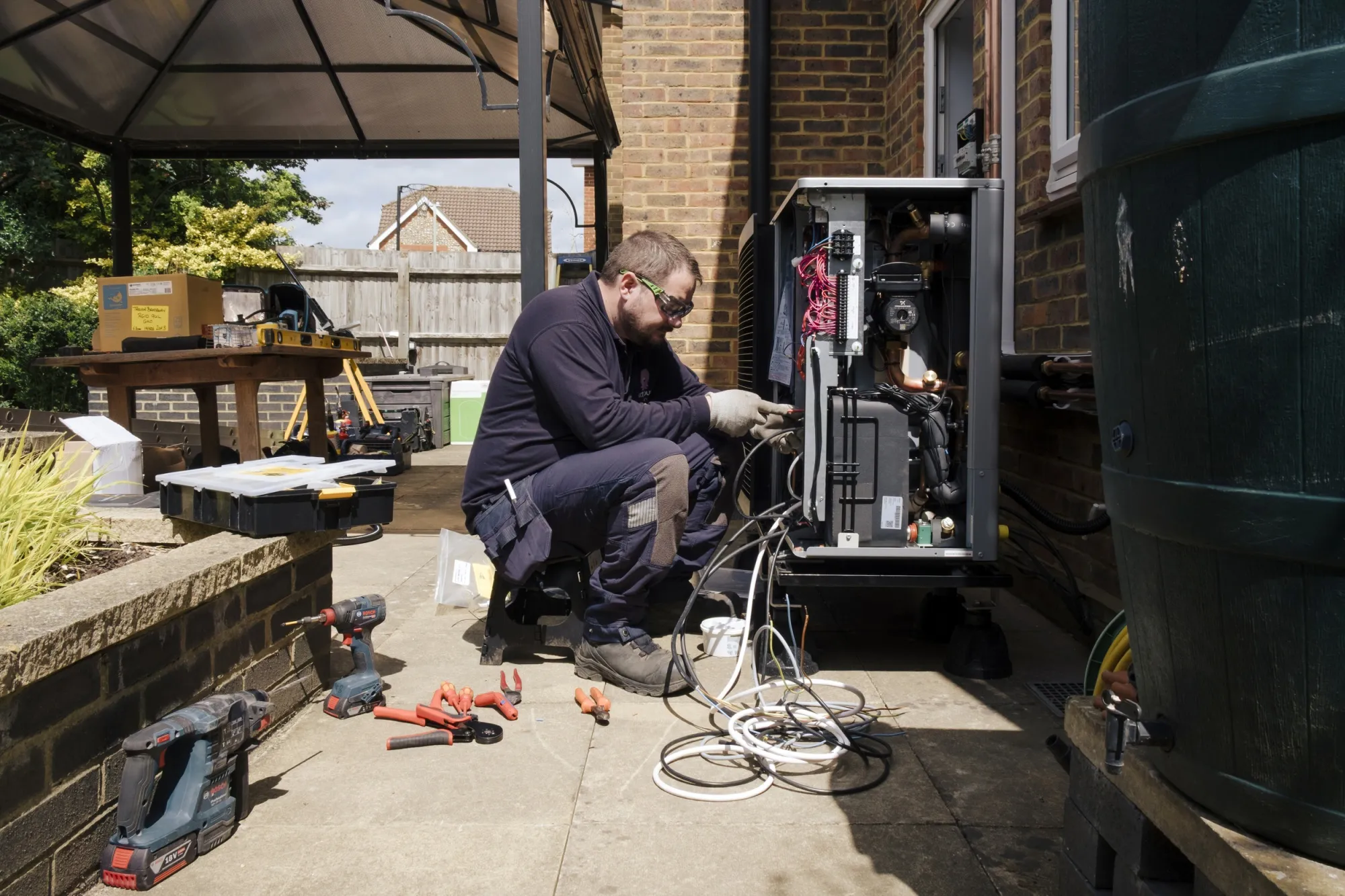

France announced the doubling of subsidies to speed up the deployment of heat pumps and electric vehicles, as part of a sweeping plan that states electrification is the “only structural and sustainable response to frequent energy crises.” In the UK, the government announced new planning regulations in March that will require developers to install heat pumps and solar panels in all newly built homes.
Germany and Spain have rolled out new incentives to try to encourage citizens to switch to electric vehicles. But the high price of fuel is making consumers lean toward EVs even without new policies. European sales surged for the third straight month since February, while more than 30 countries, including some in Asia, set a new record for monthly sales in March.
Largest Electric Vehicle Markets Set Records for Vehicles Sold
Cars sold in March 2026 for reporting markets excluding China and change since March 2025
Asia’s Ukraine Moment
The second LNG supply shock in four years has undermined the fuel’s reputation as a reliable and affordable energy source, threatening long-term efforts by Asia’s developing nations to expand its use — at least in the near term. China and India have scaled back purchases, turning to alternative energy sources, while cash-strapped governments in Bangladesh and Pakistan are scrambling to reassess LNG’s role in their energy mix.
Some Asian countries have reacted to the energy crisis by increasing imports of coal, which is more carbon-intensive and polluting than gas. In Pakistan, which has seen some of the most severe blackouts since the Iran war began, power from imported natural gas dropped more than 80% in April compared to last year, while electricity from imported coal rose 27%. Japan’s use of coal for generation in April and May is up 10% compared to the same period last year.
China’s thermal power generation — which is primarily made up of coal — grew for a fourth straight month in April to help meet growing demand, while output from wind turbines and nuclear reactors fell. In India, which saw record power consumption in May on rising temperatures, coal burn increased by 10% and renewables 29%.
Governments across the continent are also promising to build out renewables and switch to electric devices. South Korea’s President Lee Jae Myung said the country “must swiftly transition to renewable energy.” Indonesia’s President Prabowo Subianto said, “I want everything to be electric.” Vietnam’s government has directed that 10% of all households should have rooftop solar by the end of this year.
It remains to be seen how much of this rhetoric will turn into real action. Indonesia had less than 2 GW of solar deployed at the end of 2025, which makes the president’s pledge to install 100 GW of solar by 2029 difficult to reach. Vingroup, the largest company by market value in Vietnam, wants to cancel a plan to build a natural-gas power plant and replace it with solar panels, wind turbines and batteries, but it hasn’t received formal government approval to make the switch yet.
However, there’s reason to believe that at least some of the pledges will be met. Asian countries are already electrifying faster than Europe or the US, because “electrification is now an economic growth opportunity,” said Dinita Setyawati, senior energy analyst for Asia at the think tank Ember. Even if the electricity comes from coal, electric cars and heat pumps are vastly more efficient. That makes it possible to get the same services at lower emissions than burning oil or gas.
Asian Economies Have Increased Electricity’s Share in Their Energy Use
Share of electricity generation in total energy supply
Policymakers in Asia are increasingly speaking of renewable energy in terms of security, rather than sustainability.
“The war in the Middle East, following the conflict in Ukraine, has starkly demonstrated that energy security is a critical issue directly tied to a nation’s survival,” South Korea’s minister of climate, energy and environment Kim Sungwhan said in an emailed response to questions. “An energy structure that relies excessively on fossil fuels such as oil and gas is inevitably vulnerable to external shocks. In response, countries around the world are increasingly viewing the transition to domestically and reliably produced energy, particularly renewable energy, as a key national security strategy.”
The South Korean government is not going to focus just on short-term crisis management, but intends to push ahead “unwaveringly” with an energy transition, Kim said. “The successive energy shocks are a clear signal accelerating a break from the old system.”
Wind and Solar Outpaced Gas Globally for the First Time in April
Share of electricity generation by source
Just as Russia’s attack on Ukraine destroyed Europe’s assumptions about the security of supply afforded by gas from the east, the US’ attack on Iran and the closure of the Strait of Hormuz have brought similar considerations to the fore in other markets. Although energy exports from the US have helped keep markets supplied, America’s unpredictable foreign policy and apparent inability to break the deadlock in the Gulf have led some to question the future stability of flows from the region.
“Hydrocarbons have now entered a different risk regime, with the US unable to guarantee stable supplies from the Middle East,” said Tim Sahay, research scientist at Johns Hopkins University, whose focus is climate and energy policies.
Chatham House’s Geall put it more starkly. “It’s the Ukraine moment for Asia,” he said. “It’s a wake up call.”
While the US-led war has destabilized markets and created the specter of energy crises around the world, it’s China that has been able to offer countries a way out of their dependency on hydrocarbons.

As the world’s largest fossil fuel importer, China has long been concerned about security of supply. It began putting policies to electrify the economy and build renewable energy industries more than two decades ago, which is why Chinese companies now dominate almost every element of the electrotech supply chain.
Today, countries have access to affordable Chinese exports of solar panels and electric vehicles which, if supported by policy, could speed up their transitions. With a few exceptions, such as India, Asian countries have not put up huge policy barriers to Chinese imports compared to their counterparts in Europe or North America.
This story is part of China’s New Power, a series examining the country’s dominance in powering the world’s electrified future. Read the other stories here.
“Energy security could overcome geopolitical tensions in this moment, because China is where the technology is advancing the fastest,” Setyawati said.
Having already successfully expanded across the region, China’s electrotech firms have been pushing harder to build market share since the Iran war started. Early indications are that some are already benefiting, with trade data showing that exports of solar, EVs and batteries surged in March and in April.
Chinese Clean Tech Exports Exceeded $20 Billion In March
Export value of batteries, EVs and Solar PV technologies in US dollars
The conflict has highlighted how vulnerable oil and gas markets are to disruption. The three main objectives of any energy policy are reliability, affordability and security, said Gerald Butts, chairman of the political-risk consultancy Eurasia Group. When the US protected global trade, fossil fuels could often meet those objectives. “Clean energy technologies and electrification can now offer it too,” he said.
“When an aggressively marketing player like China can arrive at your policymaker’s doorstep with an entire electric stack, it’s a very attractive prospect,” Butts said. “People are underappreciating how much this crisis will accelerate the energy transition.”
Search
RECENT PRESS RELEASES
Related Post