The Strait of Hormuz has been closed for nearly two months, causing oil and gas prices to surge around the globe.
In the United States, the cost of a gallon of gas has increased by over a dollar since the strait closed, and the cost of diesel is up nearly 50 percent. Gas prices in Europe have increased by around 10 percent, and the region is facing a jet fuel shortage and concerns about the flow of liquid natural gas (LNG). Asia is being hit even harder. Roughly 20 percent of the world’s oil and LNG passes through the strait. Over 80 percent of this fuel goes to Asia. Several Asian countries, such as the Philippines, Japan, and South Korea, are now facing a real energy crisis.
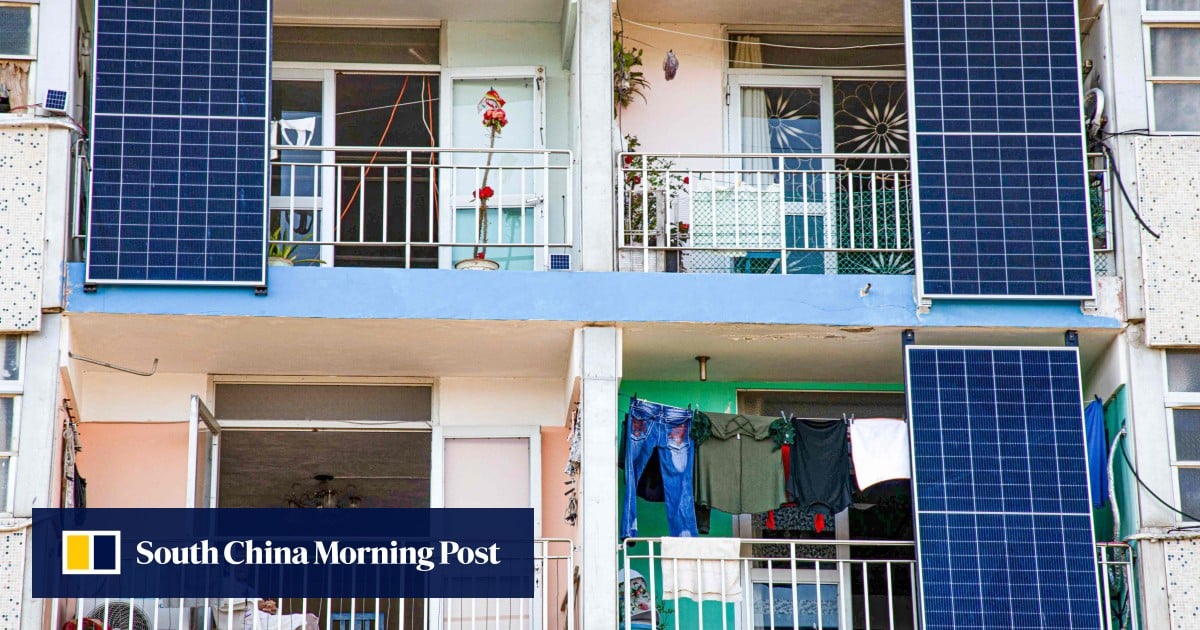
All of this is obviously bad news for consumer prices in the short term, but it might benefit the climate in the long term. China produces most of the world’s solar panels, and the country’s solar exports hit a record high in March. It’s also exporting a lot more lithium batteries. Electric vehicle sales are increasing around the world.
“The fact that countries must import fossil fuels from faraway regions subjects them to uncertainties,” Mark Z. Jacobson, a professor of civil and environmental engineering at Stanford University, tells Rolling Stone. “It is obvious that many countries want to reduce that reliance. The way to do that is to supply your own electricity and heat from clean renewable sources — primarily wind, solar, geothermal and hydroelectric. Every country has the potential to do this for themselves.”
Jacobson notes that the government of South Korea recently committed to reaching 100 gigawatts of renewable energy by 2030. The country’s energy minister has stated that the Iran war is “serving as a significant turning point” for South Korea to shift toward renewable energy and away from oil.
“Many countries rely 100 percent on oil imports and do not produce their own,” Jacobson says. “These countries are especially vulnerable. It makes sense that they would want to transition to electrification.”
Similar actions are being taken in Europe, Jacobson says, with some countries starting to focus on escalating their transition to renewable energy. The UK, for example, last month moved to require heat pumps and solar panels in new homes. Poland, meanwhile, just invested more in renewable energy and nuclear power. Jacobson says there’s also been a notable surge in interest in rooftop solar across Europe.
Federica Genovese, a professor of political science and international relations at the University of Oxford, who focuses on climate policy, tells Rolling Stone that it’s not yet clear how big of an impact this energy crisis will have in Europe.
“The EU is trying to push member states … toward an energy transition — now framed as an energy security and economic resilience mechanism — but it remains to be seen if countries will follow through,” Genovese says.
Genovese notes that Italy is the country most exposed to natural gas disruptions in Europe, but far-right politicians in Italy are not pushing for an energy transition. Germany is working on transitioning to renewables, but it’s also focusing on ways to reduce gasoline prices.
Europe was dealing with an energy crisis not that long ago, thanks to the war in Ukraine and the continent’s reliance on Russian oil, and Genovese says this got countries on a path to relying less on fossil fuel imports already.
“One of the reasons some European countries are somewhat insulated now is precisely because of the bitter pill they had to swallow with the energy shock that the Russian invasion caused,” Genovese says. “I am not saying that Europe is doing fine, and politically this Iran crisis is big, but in the raw economy … Europe is looking more resilient to this shock than they were in 2022, precisely because of the lessons from the Ukraine crisis.”
Unfortunately, the U.S. government has no interest in increasing the development of renewable energy or scaling back its reliance on fossil fuels. President Donald Trump hates renewable energy and loves the fossil fuel industry. However, Americans are showing increased interest in EVs and solar power, so consumers might escalate the country’s energy transition anyway — especially considering the economic impact.
“It is possible for every country in the world to transition to clean, renewable energy. The benefits include lower costs, less land use, more jobs, and reduced health damage from air pollution,” Jacobson says. “Regardless of whether people care about climate damage, renewables are more efficient and they save lives. What’s not to like?”
![[INSTITUTE NOW] UNIST Technology Holdings Secures Official Venture Capital License in Ulsa](https://stockwatchindex.com/wp-content/uploads/2026/04/17771717187479-Z3DikF-500x383.jpg)