IRENA 16A: Assembly Live Coverage
January 11, 2026
Welcome to the Sixteenth session of the IRENA Assembly under the theme: Powering Humanity: Renewable Energy for Shared Prosperity
This Assembly session gathers over 1500 participants, including global leaders and energy decision-makers to discuss progress and outline actions to accelerate the global renewable energy transition, aligned with the UAE Consensus, the 2030 Sustainable Development Agenda, and the Paris Agreement.
Follow this page for live blog coverage from all sessions on 11 and 12 January and check IRENA social media channels for updates on #IRENA16A.
See the full schedule and live stream here.
See the live stream of the Opening session and welcoming remarks:
The outgoing President of the 15th Assembly, H.E. Mr. Bojan Kumer, Minister of the Environment, Climate and Energy of Slovenia, declared the 16th Assembly Session open, welcoming all delegates and speakers. He reaffirmed that “IRENA’s core mission is to facilitate multilateral cooperation in advancing the clean energy transition” and that the Agency remains “the right institution for the promotion of renewable energy worldwide.
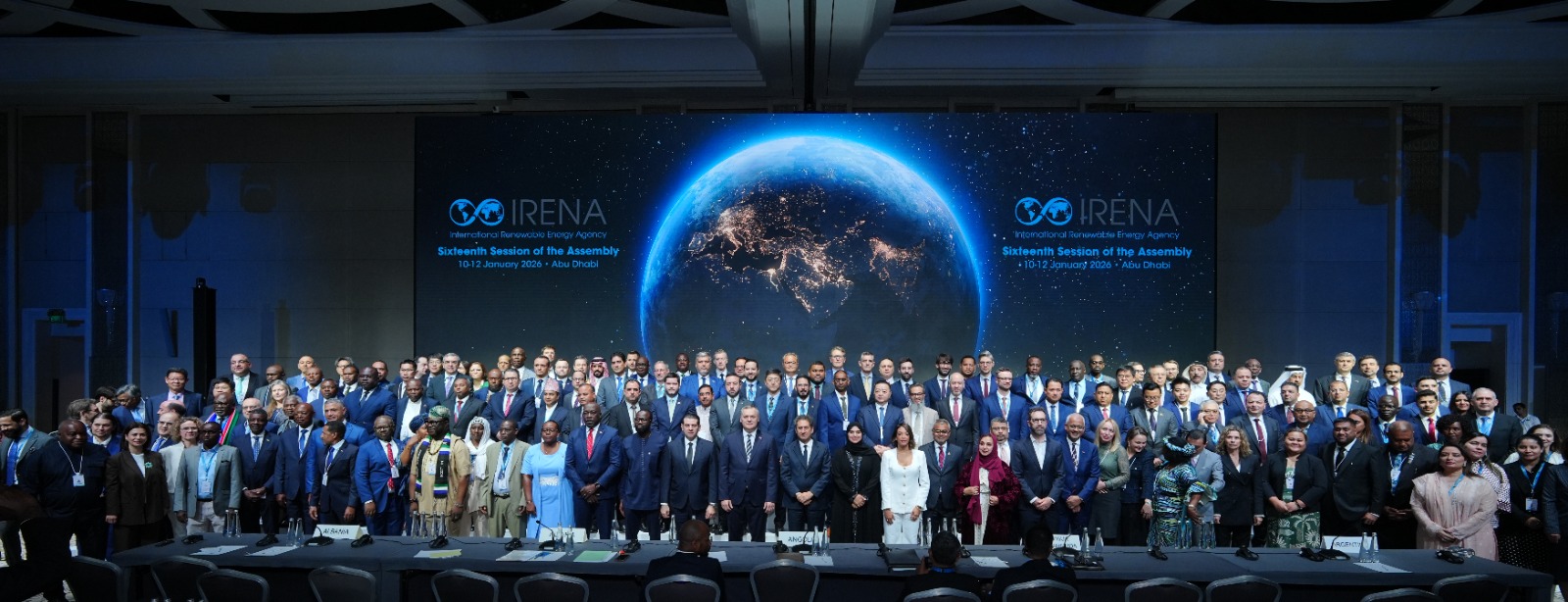
H.E Joel Santos Echeverría Minister of Energy and Mines for the Dominican Republic, incoming President of the 16th Assembly, delivered his video remarks stating “This assembly must contribute in a complete and effective manner to accelerating a just, inclusive, and result-oriented energy transition,” adding that “for developing countries and particularly for Small Island Developing States, this transition is inseparable from climate resilience, energy security, economic stability, and the fundamental right of our people to a sustainable future.” Reflecting on the Assembly theme, “Powering Humanity: Renewable Energy for Shared Prosperity,” he reaffirmed commitments to tripling renewable energy capacity and doubling energy efficiency by 2030. He concluded: “Shared prosperity can only emerge when countries work together in a spirit of solidarity, cooperation, and shared responsibility.”
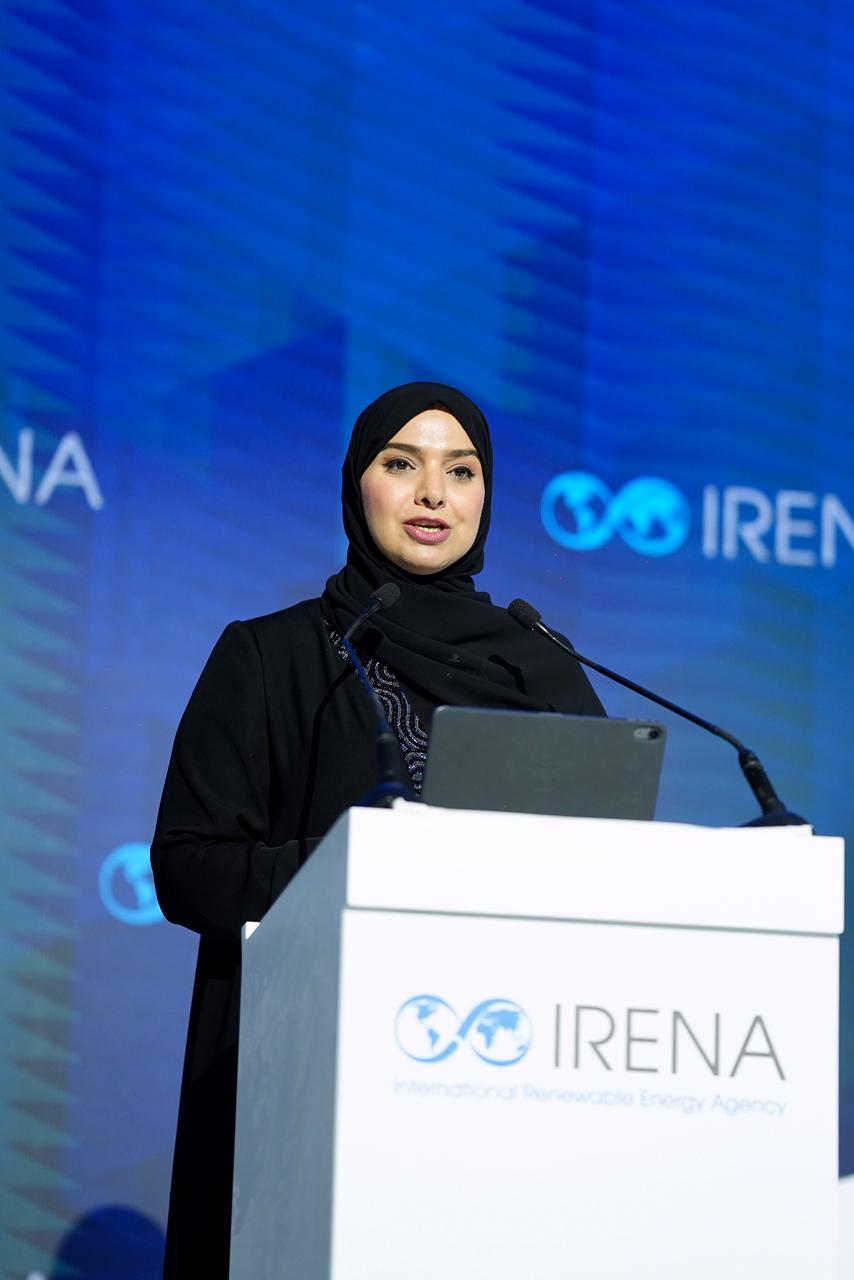
“Geopolitical tensions, economic uncertainties and climate crisis have intensified, placing additional pressure on the renewable energy landscape,” stated |
IRENA Director-General, Francesco La Camera, opened the 16th Assembly by welcoming a record 1,524 participants from 139 countries, underscoring the strength of multilateral cooperation in advancing the energy transition. He noted that92% of newly installed power capacity last year was renewable, stating that “renewables have claimed dominance in the global energy landscape, this process is unstoppable, and nothing can reverse it.” He emphasised: “Renewable energy is not just a climate solution, it is a competitiveness solution, a development solution, and an energy security solution.” Reflecting on the Assembly theme,Powering Humanity: Renewable Energy for Shared Prosperity, he concluded: “The greatest measure of success in the renewables-based energy transition will not be in the megawatts we install, but in the lives we empower and transform for the betterment of humanity.”
Antonio Guterres, Secretary-General of the United Nation, addressed the 16th Assembly through his video remarks stating, “The clean energy transition is unstoppable and irreversible,” when commenting on the accelerating momentum of renewable energy globally. “Solar and wind are smashing records. In 2025, clean energy investment soared to 2.2 trillion US dollars, double fossil fuel spending,” he noted, while cautioning that “while technology races ahead, infrastructure lags far behind.” He concluded by urging action to “build energy systems that are clean, secure, and aligned with a 1.5° world.”
See his full video remarks below:
“The march to a renewable energy future has proven unstoppable,” said H.E. Annalena Baerbock, President of the United Nations General Assembly, calling on delegates to recommit to scale up financing, foster partnerships, reform financial architecture, and build a skilled renewable workforce. She spotlighted that global renewable capacity has grown from 153 gigawatts in 2015 to over 4,400 gigawatts last year, adding: “While we often talk of tipping points in the negative sense when discussing climate change, there is a positive tipping point as well, and this is, for sure, renewable energy.” Remarking on the record investment in the energy transition in 2024, she emphasised: “There is no way back.”
See her full video remarks below:
High-Level Dialogue on Reimagining Energy Futures: Bold Visions for Shared Prosperity
The day commences with a High-Level Dialogue, shaping collective visions for future energy systems while building momentum to accelerate global renewable energy deployment.
See the live stream:
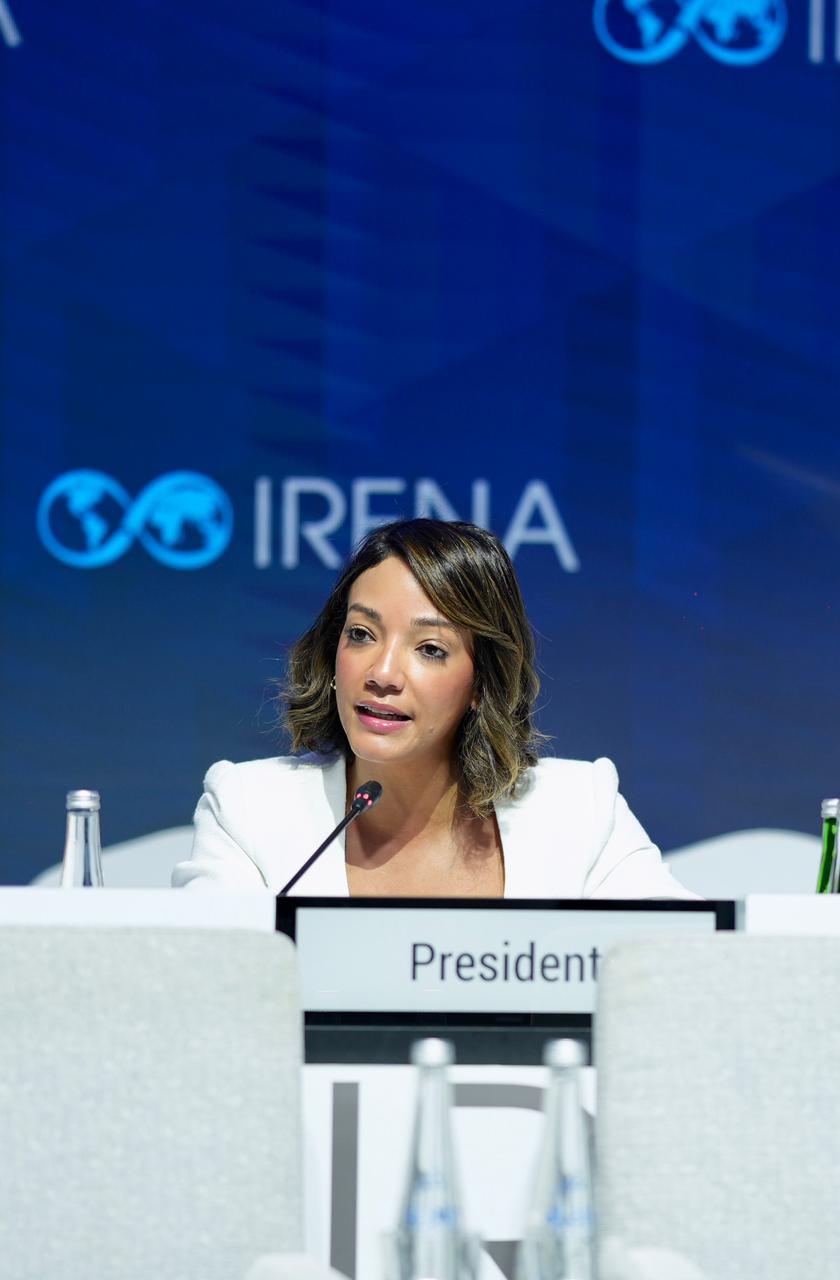 H.E. Ms. Betty Soto, Deputy Minister of Innovation and Energy Transition of the Dominican Republic, representing the incoming Presidency of the 16th IRENA Assembly, opened the High-level Dialogue saying, “Renewables sit at the heart of this discussion, combining substantial economic potential with the capacity to advance climate action and long-term sustainability.” She acknowledged the barriers facing developing countries, adding, “access to affordable financing remains a major concern,” while “energy security has taken on renewed significance, shaped by geopolitical tensions and supply chain vulnerabilities.” Underlining the importance of inclusivity, she stressed that “the success of the energy transition hinges on ensuring that people feel energy systems serve their needs.” She called on delegates to “collectively recommit to accelerating renewable deployment” and reaffirm belief in “international cooperation to deliver a sustainable energy future where prosperity is inclusive and shared by all.” |
As moderator, Ms. Melinda Crane introduced the panel discussion by saying that despite rising renewable deployment, “we are not where we need to be in terms of realising the affordable, reliable, and inclusive energy system promised by SDG 7.” She called for the dialogue to be “a space for reflection and for visions,” adding: “We so often hear words like inclusive, just, sustainable but we want to fill those terms with content and meaning.”
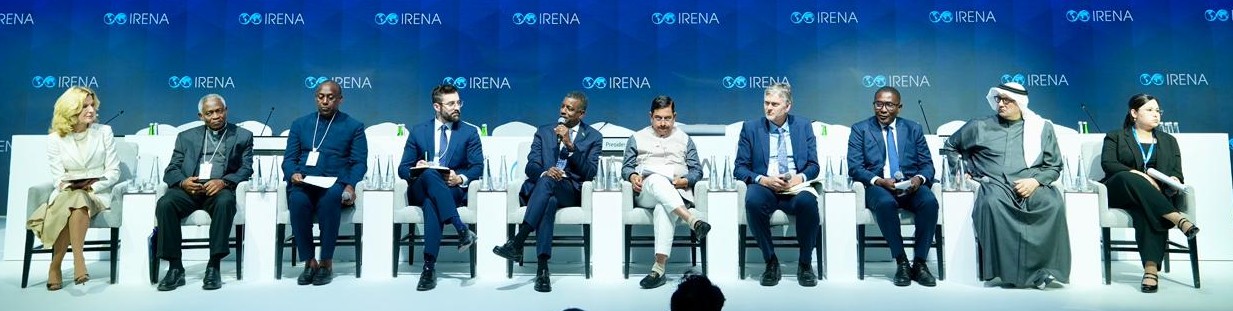
“It is very difficult to have a transition to clean energy if we do not pay attention to resilience,” stated H.E. Vince Henderson, Minister of Foreign Affairs, International Business, Trade and Energy of Dominica, reflecting on the unique challenges facing Small Island Developing States. He acknowledged the compounding barriers of country risk, high financing costs, and exorbitant insurance, but expressed optimism: “The good news is that we are very ambitious across the small island states,” emphasising “Regional approaches are key, that is one of the ways we can overcome the obstacle of size.”
“Equity means it is not just a technological transfer, it is a change toward society, a change for the economy, and a change for a safe earth for the next generation,” said H.E. Pralhad Joshi, Minister of New and Renewable Energy of India. He highlighted that India has achieved 260 gigawatts of installed renewable capacity five years ahead of schedule, with 2.6 million households connected to rooftop solar. He emphasised that the transition “should become a people’s movement” and called for “affordable finance, blended finance, and multidevelopment banks” to support the global south, concluding: “International cooperation for every state, especially for the global south, is most needed.”
“Through partnership, alliances, and political will, we have collectively changed and transformed the world,” says Mr. Mohamed Jameel Al Ramahi, CEO of Masdar, reflecting on private sector contribution to the energy transition. On solving intermittency, he stated: “We can control the power of the sun, even when the sun is not shining, that’s the North Star we have always been working on,” noting the breakthroughs in battery storage technology. He concluded: “With platforms like IRENA, the will of member countries, and multilateral institutions, the way forward is positive.
Ms. Andrea Balcázar González, IRENA Youth Council member says, “The system as it currently works is not delivering, and therefore it must evolve,” sharing a youth perspective on reimagining the energy future. She emphasised that “there is no lack of capacity in youth, but extraordinary potential, strong ideas, and a real desire to have a seat at the table.” She noted that “one of the biggest challenges we face is not the lack of capacity, but the lack of access, we’re often consulted but rarely empowered,” calling on policymakers to “move away from symbolic engagement” and ensure young people are included as partners in shaping policy.
Search
RECENT PRESS RELEASES
Related Post