Is Green Thumb Becoming the “Procter
May 25, 2026
Procter & Gamble (PG +0.72%) is known for its steady earnings growth and family of well-known consumer brands. While it’s hard to compare a nearly 190-year-old consumer goods company to one in the nascent cannabis sector, Green Thumb Industries (GTBIF 2.19%) seems to be copying the classic P&G playbook.
To begin with, both companies are profitable, though Green Thumb doesn’t have the long history of profitability that P&G has. How else are the two companies alike?
They have dedicated portfolios of brands
Just as Procter & Gamble doesn’t sell generic soap — it markets Tide, Dawn, and Pampers to target certain demographics — Green Thumb avoids selling unbranded cannabis. It has built a diversified portfolio of consumer brands designed to capture different market segments and price points. They include vapes, edibles, pre-rolled products, and medical-grade products.
By segmenting the market this way, Green Thumb has been able to build brand loyalty rather than competing purely on wholesale price.

Green Thumb Industries
Today’s Change
(-2.19%) $-0.16
Current Price
$7.14
They focus on consistent product performance
Historically, the cannabis industry has been plagued by erratic product quality due to agricultural inconsistencies. Procter & Gamble’s multi-decade success relies on a simple promise: Every bottle of Crest or Head & Shoulders will perform exactly like the last one.
Green Thumb invests heavily in scaled, highly standardized production facilities, operating 20 manufacturing hubs across 14 U.S. markets. This allows it to achieve consistent formulations, predictable potencies, and reliable flavor profiles across multi-state operations — a foundational requirement to build a true brand.
Financial discipline and blue chip real estate
Many multi-state operators (MSOs) in cannabis grew too quickly, taking on massive, high-interest debt loads to expand. Green Thumb has behaved more like a traditional consumer staple giant by prioritizing capital allocation, maintaining positive net income, and preserving a remarkably healthy balance sheet compared to its peers.
In the first quarter, Green Thumb reported revenue of $300.2 million, an increase of 7.4% year over year, and earnings per share (EPS) of $0.07, up from $0.04 last year. The company has $289.9 million in total debt, but $344.5 million in cash and cash equivalents.
If you compare Green Thumb to other large pure-play cannabis companies such as Curaleaf, Cresco Labs, and Trulieve, it has a superior debt-to-equity ratio and lower long-term debt.
Green Thumb focuses heavily on limited-license states, including Illinois, Pennsylvania, Ohio, and Maryland. By securing retail footprints and manufacturing capacity in states that limit the number of market participants, Green Thumb builds a defensive moat against infinite competition, maintaining pricing power much like Procter & Gamble commands prime shelf space in grocery aisles.
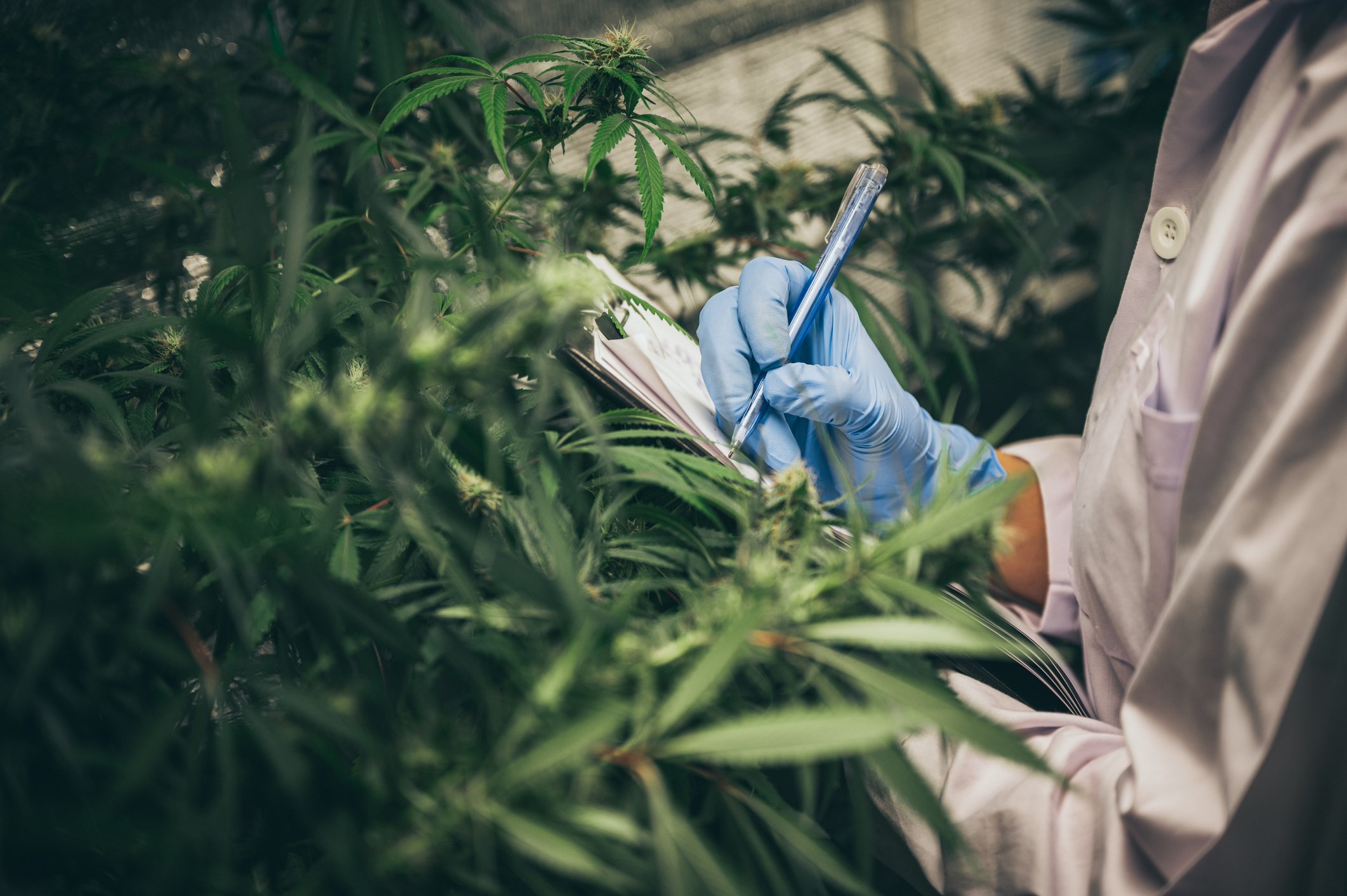
Image source: Getty Images.
Don’t take the comparison too far
While the operational comparison fits, the structural reality is vastly different. P&G enjoys cheap capital, frictionless interstate shipping, and massive institutional investment. It is a Dividend King, one of the rare group of stocks that have increased their dividends for 50 or more consecutive years. The yield is above-average at nearly 3%, and it raised its dividend by 3% this year, the 70th consecutive year it has increased it.
Despite its strong cash position and expanding credit facilities, Green Thumb doesn’t offer a dividend yet, and it still operates in a federally illegal landscape. Its shares also trade over-the-counter, and until just recently, the company faced heavy tax burdens under IRS Section 280E. However, the recent U.S. federal reclassification of cannabis to Schedule III will be a massive looming catalyst for its balance sheet.
Search
RECENT PRESS RELEASES
Related Post