Is silver investing too risky in retirement? Here’s what experts say.
February 16, 2026
MoneyWatch: Managing Your Money
Add CBS News on Google
Getty Images/iStockphoto
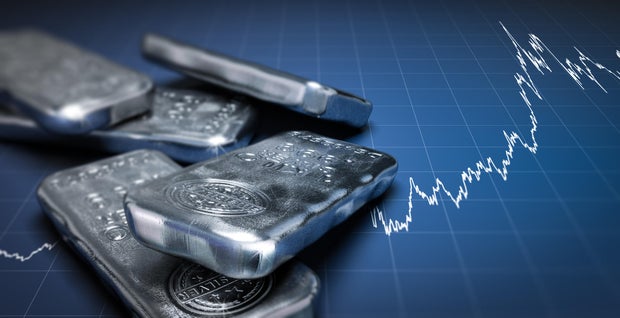
Silver saw a pretty big run-up in 2025, and that price trajectory continued into 2026, with the price of silver even surpassing prior records and climbing past the $100-per-ounce mark. However, prices have moderated a bit recently, leaving precious metal investors wondering if silver is still a smart investment.
And, for retirees or seniors nearing retirement, the silver’s ups and downs in price may be even more concerning, as there’s rarely room in people’s retirement budgets for copious amounts of volatility. That begs the question of whether silver is just too risky a bet in retirement these days.
Timing, goals and your overall portfolio all play a role in the answer to that question, but there are important factors to consider before buying silver once your working days are up. Here’s what experts say you should think about before buying silver in retirement.
Start diversifying your investments with silver now.
Is silver too risky to invest in during retirement? Here’s what experts say.
There’s no hard and fast answer to that question, experts say. However, there certainly are risks to buying silver, especially if you’re entering or already in retirement. Here are some you might want to consider:
It doesn’t produce income
Perhaps the biggest risk to investing in silver when you’re retired is that silver doesn’t produce income. At a time when incoming cash is limited, like during retirement, that can be a problem.
“Silver is a non-income-producing asset,” says Matthew Argyle, founder of Encore Retirement Planning. “Unlike stocks and bonds, it doesn’t generate earnings, dividends, or interest. It doesn’t produce cash flow.”
Instead, silver is more speculative, says Evan Mills, a financial advising analyst at Scholar Advising.
“Investing in silver, especially for retirees, is more of a speculative diversifier than a true investment,” Mills says. “In retirement, a lot of people are looking for consistent and predictable cash flow, and silver doesn’t provide that.”
Add precious metals to your investment portfolio today.
It’s volatile
Another big risk, which has been on display in recent weeks, is silver’s price volatility. While it often has strong run-ups, it also has steep drops that can happen quickly.
“Silver can carry meaningful risk for retirees because of its volatility and its tendency to move with broader markets during stress events,” says Hiren Chandaria, managing director at Monetary Metals. “Silver has experienced sharp corrections over short periods, including double-digit percentage declines in compressed timeframes. While it has delivered strong gains in certain cycles, that upside has historically come with equally sharp drawdowns.”
Just look at the last few years for proof of silver’s volatility. In mid-2024, silver was averaging less than $30 per ounce. By January 2026, it had climbed to over $100 per ounce. Today, it’s down to about $85 per ounce.
“Metals can be very volatile,” says Chris Berkel, investment adviser and president of AXIS Financial. “In the early 80s, silver peaked at $50 before falling to below $5. That’s a 90% drop. If silver trades around $80 today, that would be like silver falling back to $8 per ounce. Pretty painful.”
It can pose liquidity challenges
Silver can also pose problems if you need to liquidate and cash out quickly. This is especially true with physical silver.
“The form of silver you own matters significantly when it is time to sell,” Argyle says. “Physical bullion, such as coins and bars, can involve wider bid-ask spreads, dealer markups, storage costs, and limited resale options. In practice, many investors find the most convenient buyer is the same dealer they purchased from, and pricing can vary.”
For this reason, Argyle recommends having an exit plan if you want to buy silver, particularly in retirement. Sometimes, though, even that can’t help if the timing isn’t right.
“Because it’s cyclical, you can get caught on the downturn,” Mills says. “If you need to withdraw from your portfolio when silver is at the bottom of a cycle, you risk locking in losses.”
Why silver investing could pay off for retirees
Silver investing isn’t limited to risk, though. There are some rewards — at least potentially — for retirees who invest in it. Here’s what to know about the potential benefits:
It can diversify your portfolio
The biggest perk is that silver can diversify your portfolio, which protects you if other asset classes go south.
“Silver tends to behave differently from stocks and bonds. Assets that reduce overall portfolio correlation can improve risk-adjusted returns,” Argyle says.
Silver also exposes you to new markets and industries, which might not be possible with other investments. Its industrial demand exposure, Argyle says, is particularly notable.
“Silver is not just a monetary metal,” Argyle says. “It is widely used in electronics, solar panels, EV components, and medical applications, and that industrial role can support long-term demand.”
It may help with inflation
Silver can also help you beat inflation, holding its value and protecting your wealth when the dollar weakens.
“It can act as a hedge against inflation and currency debasement,” Chandaria says.
Combined with the industrial uses it comes with, these two benefits mean silver tends to “perform well during inflationary periods or times of currency instability, while also participating in long-term industrial growth trends,” Chandaria says.
The bottom line
Alternatively, investing in gold can be a good way to diversify further and protect against the extra volatility that silver carries. As Argyle puts it, “Retirement investing is less about maximizing upside and more about controlling downside. Silver can play a role, but it works best as a complement to a diversified strategy, not as its foundation.”
Regularly monitoring your investments and reallocating as necessary can help minimize the risk that comes with silver, too, as can having an exit strategy.
Finally, to mitigate the metal’s risk even more, Mills recommends keeping your silver allocation to the “single-digits, percentage-wise.” Argyle says no more than 2 to 5% is best.
“The best way to temper risks of any investment is to size it appropriately so that it is not the tail that wags the dog,” Berkel says.
Search
RECENT PRESS RELEASES
Related Post