Is the “Transition Theory” Over? HEVs Return to Center Stage
April 15, 2026
Gasgoo Munich- As pure electric technology hits a temporary bottleneck and competition in the PHEV market intensifies, HEV (hybrid electric vehicles) — a sector once dismissed by some as a mere “transition solution” — is reclaiming the strategic spotlight among Chinese automakers in 2026.
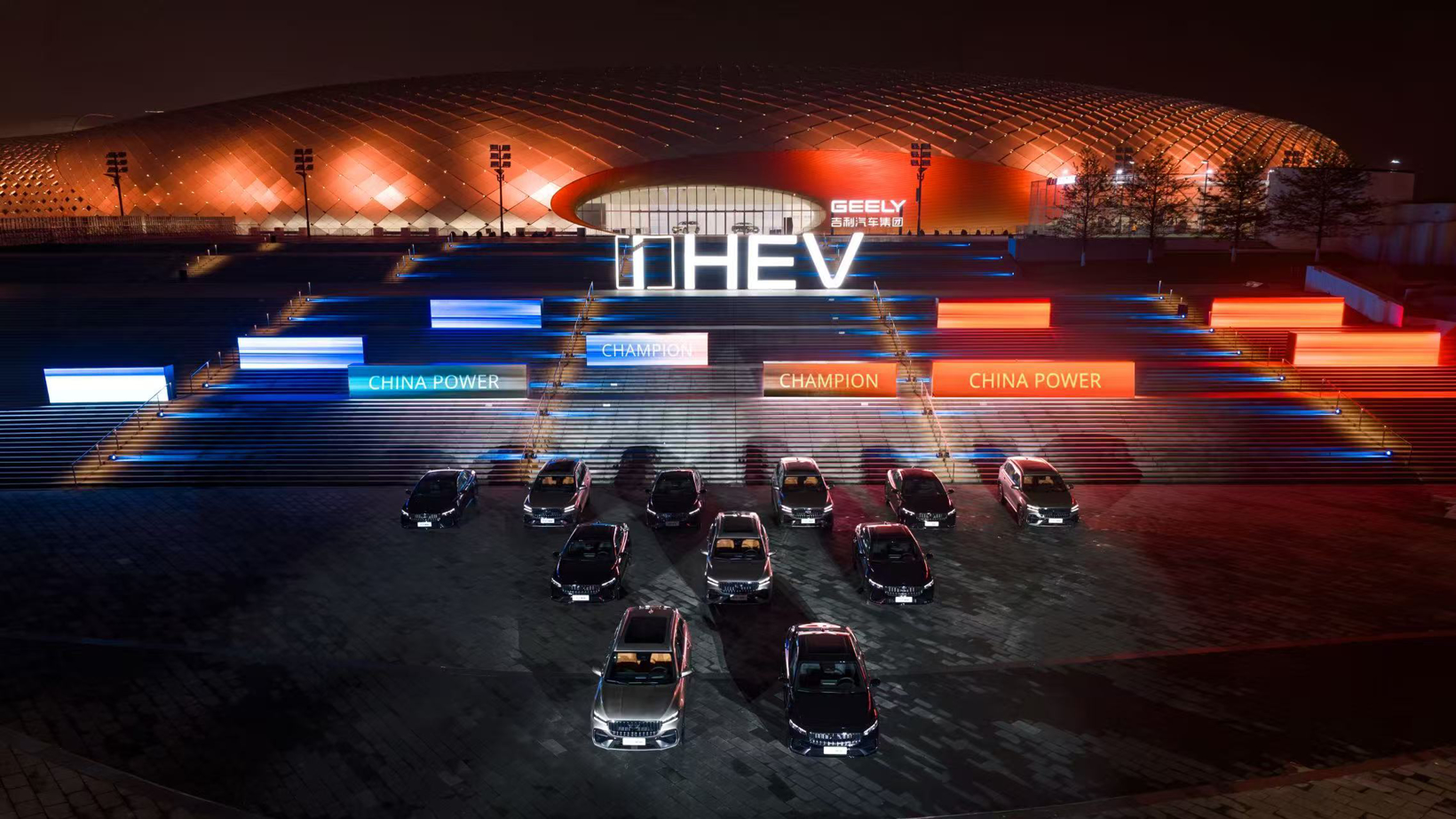
Image source: Geely
On the evening of April 13, Geely Auto officially unveiled its next-generation hybrid technology: “i-HEV Smart Engine.” Pitched as “AI-empowered” and “electric-drive dominant,” the system features a mass-production engine thermal efficiency of 48.41% and a real-world fuel consumption of 2.22 liters per 100 kilometers in the Emgrand. Set to debut in core models like the Xingrui, Xingyue L, Boyue L, and Emgrand, pre-sales will open on April 19.
Geely is not alone in this pivot. In a 2026 Chinese market where pure EV penetration has already topped 50%, Changan rolled out its “Blue Whale Super Engine Hybrid” earlier this year, Great Wall launched its “Super Smart Hybrid HEV” on its Guiyuan platform, and GAC unveiled its Xingyuan Super Dual Engine technology on April 12. Long marginalized by policy and praised more for its promise than its sales, HEV is reclaiming a strategic foothold among domestic automakers.
The Economics Window Reopens
Over the past five years, the explosive growth of China’s NEV market hinged on two key policy levers: green license plates and purchase tax exemptions. Plug-in hybrids (PHEVs) and extended-range electric vehicles (EREVs) capitalized on their dual-fuel flexibility, enjoying policy perks while sidestepping the charging anxiety that plagues pure EVs. They were the prime beneficiaries of that boom.
That landscape shifted structurally in 2026. According to a joint announcement by the Ministry of Finance, the Ministry of Industry and Information Technology, and the State Taxation Administration, NEV purchase tax exemptions were cut from full waivers to a 50% reduction starting this year. Simultaneously, the pure electric range required for PHEVs to qualify for incentives was raised to over 100 kilometers. The result: the policy edge for short-range plug-in hybrids has been significantly squeezed.
Meanwhile, domestic fuel prices have climbed steadily. On April 7, 2026, pump prices rose for the sixth time this year, pushing gasoline and diesel up by a cumulative 2,460 yuan per ton. This surge has inflated operating costs for traditional internal combustion engine (ICE) vehicles, yet it has strengthened the case for HEVs. With no need to plug in and fuel consumption 30% to 40% lower than standard ICE cars, hybrids now boast a distinct competitive edge in running costs.
Notably, HEVs have never been classified as NEVs, meaning they miss out on green plates and tax breaks. During the peak of policy incentives, that exclusion left them out in the cold. But as subsidies fade and fuel prices soar, their inherent strengths — requiring no behavioral changes from drivers, eliminating charging anxiety, and delivering immediate fuel savings — have turned into assets. As the industry sees it, the economics of HEVs are finally getting recognized in the post-subsidy era.
Speaking at a post-launch briefing, Li Chuanhai — vice president of Geely Auto Group and president of its research institute — pointed to market data. Last year, China’s auto market totaled roughly 34.4 million units, with internal combustion engines (ICE) accounting for 52%. Globally, sales hit 96.47 million units, with ICE vehicles making up 76.5%, or nearly 74 million units. “From a demand perspective, there is still significant room in the fuel vehicle market,” Li argued. “Globally, varying levels of NEV awareness, entrenched driving habits, and uneven charging infrastructure all ensure that fuel vehicles will remain a major force.”
From Favorable Timing to Technical Foundation
If shifting market dynamics have provided the “right time” for HEVs, then substantive technological breakthroughs offer the “right place” — the foundation that empowers domestic brands to collectively double down.
Traditional Japanese HEVs, typified by Toyota’s THS and Honda’s i-MMD, operate on a logic of “engine-first, motor-assist.” The internal combustion engine remains the primary power source, with electric motors handling start-stop, low-speed driving, and energy recovery. While this architecture delivered notable fuel savings in the ICE era, it suffers from three inherent limitations: limited coupling between engine and motor, preventing true “electric-drive dominance”; relatively weak power output, particularly during mid-to-high-speed acceleration; and a mechanical logic that resists deep integration with modern intelligent electronic-electrical (E/E) architectures.
Geely’s newly released i-HEV Smart Engine clearly breaks this mold.
Adopting a P1+P3 configuration, the i-HEV achieves complete decoupling of the engine and the two electric motors. This ensures that if one component fails, the others can operate independently, boosting redundancy and safety. Crucially, this layout allows for pure-electric driving across a wider speed range — up to 66 km/h, according to the company — cutting engine runtime by over 27% compared to conventional hybrids. Fundamentally, this is an “electric-drive-first” system, marking a radical departure from the Japanese “engine-first” philosophy.
“Japanese hybrids essentially evolved from fuel technology,” explains Ren Xiangfei, chief engineering technology scientist at Geely Auto Group. “The engine and electric drive are not decoupled; while they save energy, power efficiency is lacking. Geely’s hybrid evolved from electric hybrid principles, designed to NEV standards. Power is scalable, and engine thermal efficiency hits 48.41% — surpassing the Japanese benchmark of 41.4%.”
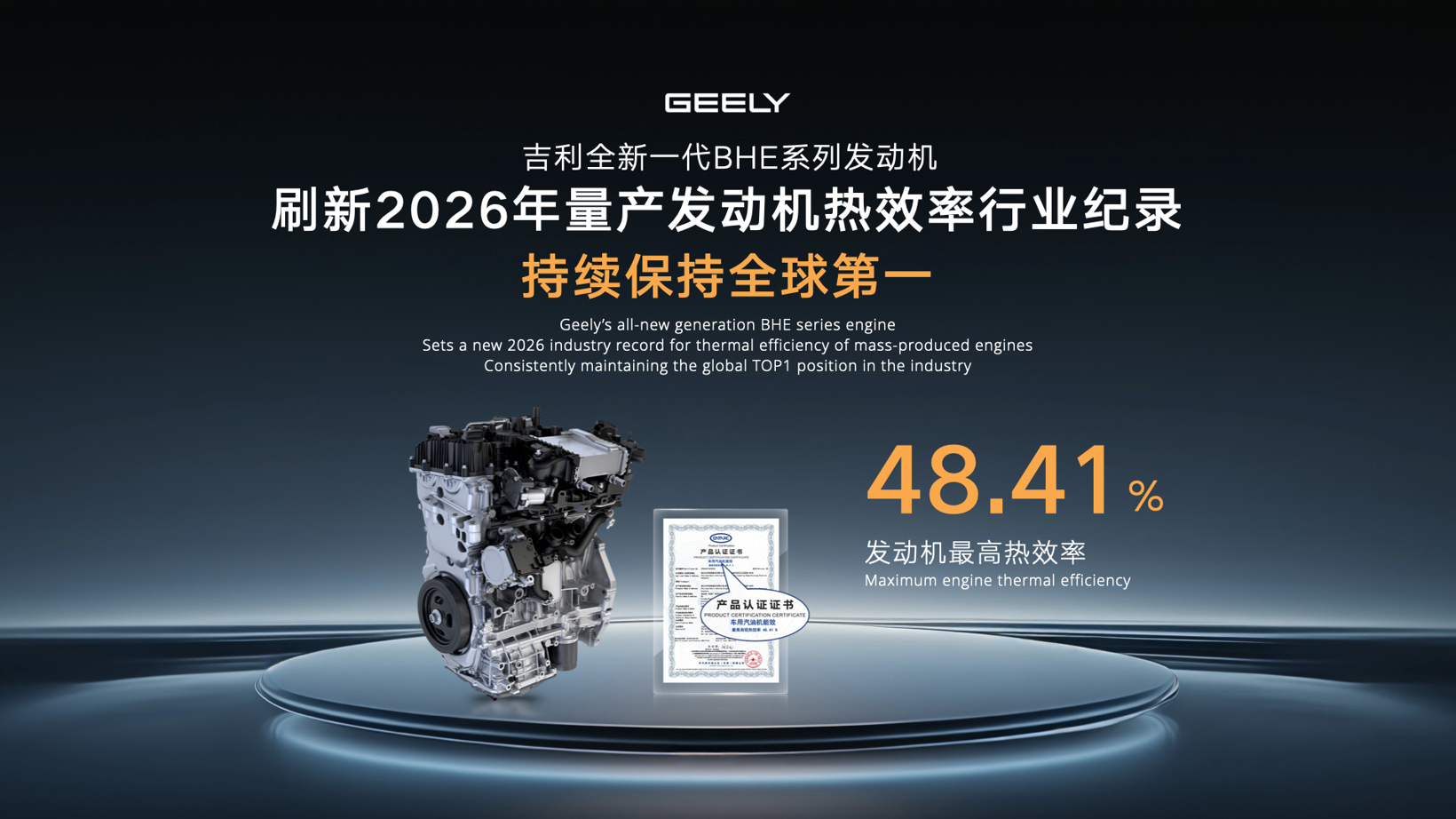
Image source: Geely
A thermal efficiency of 48.41% for a mass-produced engine is a hard engineering metric. Certified by the China Automotive Technology and Research Center (CATARC), it surpasses the roughly 41% to 42% achieved by Toyota and Honda’s mass-production hybrid engines. Under the hood are a 500-bar ultra-high-pressure injection system, a deep Miller cycle, a 15.5:1 compression ratio, and the application of “AI for Science” models in combustion design. However, high thermal efficiency does not automatically guarantee low fuel consumption; real-world economy also depends on system integration, energy management strategies, and driving conditions.
The most significant variable in Geely’s rollout is the “Full-domain AI 2.0.” The i-HEV is the first to feature the Xingrui AI Cloud Power 2.0 model, which dynamically adjusts the balance between gasoline and electricity in milliseconds based on real-time data — outside temperature, humidity, altitude, and road conditions. Geely claims this system contributes to over 10% in overall energy savings. Technically, this marks a shift from traditional rule-based energy management to data-driven predictive management. The core value proposition is transforming HEV energy distribution from “passive response” to “active prediction” — a major leap in hybrid control logic.
Taken together, the new generation of HEV technology from domestic brands — whether Geely’s “AI + electric-drive dominance,” Changan’s “deep electrification architecture,” or Great Wall’s “large-battery HEV” — is no longer a simple imitation or incremental improvement of Japanese systems. It represents a systematic reconstruction spanning configuration, control logic, and core hardware.
From Defense to Offense
From a market perspective, the decision by domestic brands to double down on HEVs is underpinned by clear commercial logic.
First, the existing ICE market remains massive and requires high-value replacements. Domestic ICE sales still hovered near 18 million units in 2025. The core demographic here — buyers in Tier 3 and Tier 4 cities, rural townships, and first-time family purchasers — often grapple with limited charging access, range anxiety, and budget constraints. By cutting fuel consumption by 30% to 40% without requiring changes in driving habits, HEVs are currently the most practical solution for this segment.
Geely’s decision to debut the i-HEV in its “China Star” series — the Xingrui, Xingyue L, Boyue L, and Emgrand — is strategically sound. These models are the pillars of Geely’s ICE sales, moving over 1.21 million units in 2025 and securing the title of best-selling Chinese ICE brand for nine consecutive years. Upgrading this foundational lineup with HEV technology makes logical sense.
Second, it allows them to sidestep the red-ocean price wars plaguing the pure EV and PHEV segments, particularly in the 100,000 to 200,000 yuan bracket. Because HEVs are not classified as NEVs, they avoid the fiercest policy and pricing battles. Furthermore, leveraging platform capabilities like the e-CMA architecture developed with Volvo allows HEVs to be produced on the same lines as ICE vehicles, drastically reducing incremental costs. Geely has explicitly set a goal of “price parity between oil and hybrids.” If HEV models are priced similarly to their ICE counterparts, their appeal to budget-conscious consumers will rise significantly.
If the domestic HEV strategy is about defense, then the overseas strategy is about offense. Globally, HEVs are currently one of the powertrain solutions best suited for international expansion.
Global annual auto sales hover around the 90-million mark, with pure EV penetration far lower than China’s. In key markets like Europe, the U.S., Southeast Asia, the Middle East, and South America, charging infrastructure is patchy, consumer habits around ICE vehicles are entrenched, and policies tend to favor fuel efficiency over zero emissions. In these regions, HEVs represent the most pragmatic energy-saving solution available.
For years, the global HEV market was dominated by Toyota and Honda. In 2024, the Toyota Prius set a U.S. benchmark with a fuel consumption record of 2.52 liters per 100 kilometers. Geely’s Emgrand i-HEV surpassed that record with a certified 2.22 liters per 100 kilometers (Guinness World Records). While there is always a gap between controlled test conditions and real-world driving, the comparison sends an unambiguous signal: Chinese HEVs are now capable of competing directly with Japanese rivals on core technical metrics.
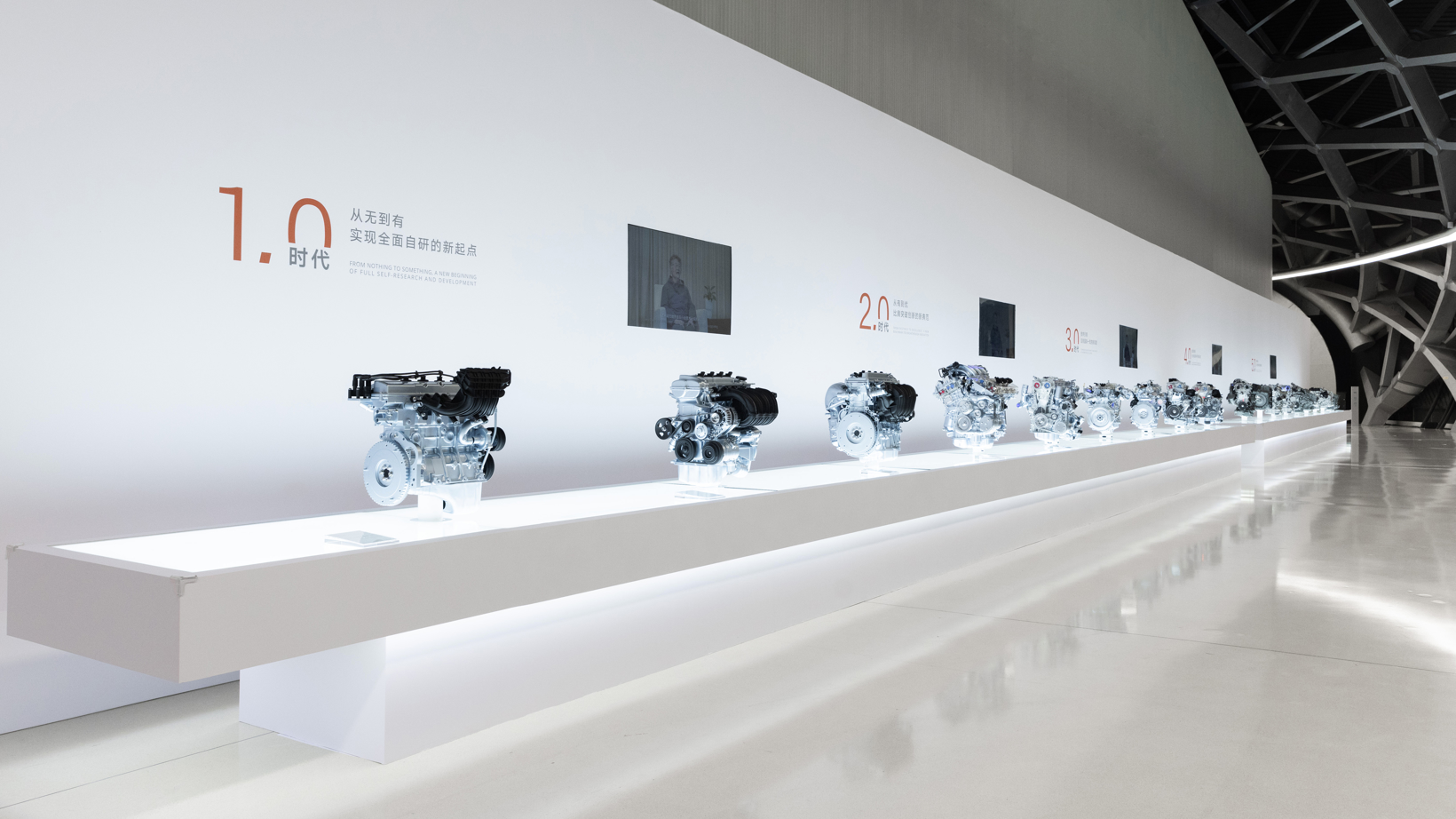
Image source: Geely
More importantly, Geely has established the industrial foundation to export powertrain technology globally. HORSE, a joint venture with Renault, supplies over 8 million engines, transmissions, and hybrid systems annually to 25 automakers, including Mercedes-Benz, Volvo, Renault, and Nissan. This means the i-HEV’s core technology is not built from scratch, but rather atop a powertrain architecture that Geely has already mass-produced and proven globally.
Strategic Repositioning
Industry narratives have long labeled HEVs as a “transitional technology.” Yet the official “Technology Roadmap for Energy Saving and New Energy Vehicles 3.0” offers a definitive verdict: by 2035, all traditional energy passenger vehicles will be hybridized, and by 2040, hybrids will account for over 65% of new traditional energy commercial vehicles. Fang Haifeng, a chief expert at CATARC, echoed this sentiment at the 2026 Intelligent Electric Vehicle Development Forum, stating that hybrid technology is far from a stopgap; rather, multiple powertrain routes — including energy-saving and new energy vehicles — will coexist for the long haul.
This judgment rests on two realities: completing global charging infrastructure will take another 10 to 20 years, and issues surrounding battery mineral resources, recycling systems, and low-temperature performance remain unresolved. By delivering 30% to 40% carbon reduction with minimal resource consumption and infrastructure reliance, HEVs represent a technology path with an exceptionally high return on investment.
Geely’s strategy, therefore, is to continue advancing hybridization, electrification, and intelligent upgrades while carefully allocating resources between ICE and NEV sectors to boost product competitiveness. The company anticipates that while NEV penetration temporarily dipped back above 50% in March due to policy rollbacks and surging oil prices, the market share split between ICE and NEVs will remain stable for the next three to five years. Geely plans to develop both sectors in parallel.
From a strategic standpoint, HEVs, PHEVs, and BEVs are not mutually exclusive; they are progressive routes sharing core technologies. High-efficiency engines, high-power electric drives, and intelligent energy management — the pillars of HEV — are equally foundational for PHEVs and BEVs. By advancing multiple technology paths simultaneously, Geely, Changan, and Great Wall are essentially building a “full-power-coverage” capability system designed to meet the diverse demands of varying markets, policies, and consumer groups.
Challenges remain for HEVs in the domestic market, including the need to rebuild consumer perception, the difficulty of achieving true price parity with ICE vehicles, and the threat that falling costs for BEVs and PHEVs might erode the value proposition of hybrids. Yet one thing is certain: the powertrain competition in China’s auto industry has shifted from a single-track race of “who is more electric” to a multi-lane contest of “who can more efficiently satisfy different users.”
In this sense, Geely’s i-HEV represents more than just one company’s technological choice; it is a milestone marking the maturation of China’s HEV roadmap and a strategic rebalancing for the entire Chinese automotive industry as it moves toward global leadership.
Search
RECENT PRESS RELEASES
Related Post