Israel’s economy and financial markets are booming — even as conflict rages in the Middle
April 29, 2026
Earlier this month, the Bank of Israel slashed its growth forecast for this year, citing the hostilities in the Middle East.
But, remarkably for a country that has been on an effective war footing for almost three years, the central bank still expects Israel’s economy to grow by 3.8% in 2026, even after the 1.4 percentage point downgrade.
And the bank’s governor, Amir Yaron, told CNBC on April 16 that, if conflicts in the region are resolved, Israel’s economy can rebound to 5.5% next year.
The IMF estimates that Israel’s economy will grow by 3.5% this year, compared to 2.3% for the United States and 1.3% for the EU. It also means Israel’s GDP is forecast to outperform all G7 countries in 2026. Next year, Israel is forecast by the IMF to see economic growth of 4.4%, continuing to outperform many major developed economies.
Israel has a much lower debt-to-GDP ratio than many other developed countries, with the IMF forecasting a rate of 69.8% this year. Although a slight uptick from 2025, it’s much lower than the G7’s rate of 123.7%.
The country’s unemployment rate also edged marginally higher to reach 3.2% in March, but falls below America’s 4.3% unemployment rate and the euro zone’s 6.2%.
Read more
Meanwhile, inflation has held steady in the two months since the Iran war started, easing slightly to 1.9% in March while surging oil prices moved broader costs higher in the U.S., the EU and the U.K. The target inflation range in Israel is 1% to 3%.
The country has been engaged in sustained conflict since the attack by militant group Hamas on Oct 7. 2023, which sparked an Israeli assault on Gaza. The country struck Iran along with the U.S. on Feb. 28 and has fought the Iranian proxy group Hezbollah in neighboring Lebanon as the war has continued. Israel has also been targeted by strikes from Yemen’s Houthis.
Keren Uziyel, a senior analyst at the Economist Intelligence Unit, told CNBC that although Israel’s economy has grown below its potential after years of war, a resilient private sector, low inflation, a highly skilled labor force and sustained growth have helped it bounce back from crisis.
“High-tech goods and service exports have been the main factor behind the past two decades of strong growth and wealth creation but the economy has grown strongly in other areas, including developing gas resources and defense exports,” Uziyel said.
“In 2025, Israel recorded its two largest ever foreign investment deals, both in cybersecurity: the $32 billion purchase of Wiz by Google and the $25 billion purchase of CyberArk by Palo Alto Networks, both of which were completed in March 2026.”
She added that Israel’s demographics are also favorable for a developed economy, with population growth averaging close to 2% a year for much of the past two decades.
“By developed world standards, the population is relatively youthful,” she said. “Even on a per capita basis, economic performance has been robust in the past 20 years.”
If ceasefires hold — even weakly — Uziyel said her team expects a fairly robust recovery by mid-year and for the economy to expand overall by about 3% in 2026.
“Low unemployment, strong external demand for Israel’s technology goods and services and defense exports, robust global investment in technology and the windfall to households — especially higher-income earners — from the realization of several large investment deals will bolster growth,” she said.
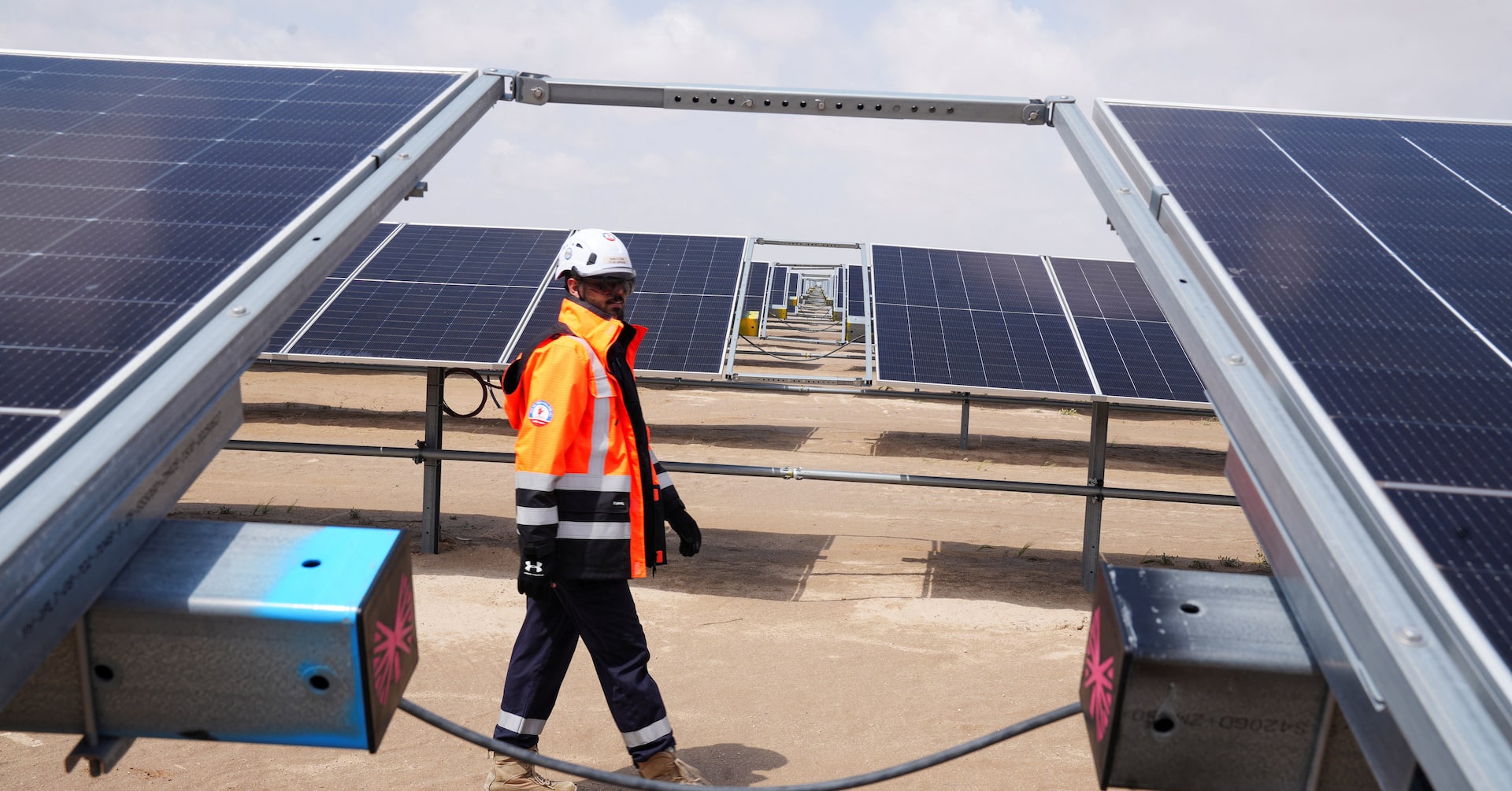
“The energy sector will also see significant investment in 2026-27, both in domestic renewables capacity and in supporting greater production and export capacity in the natural gas sector.”
But Joao Gomes, a professor of finance at the University of Pennsylvania’s Wharton business school, told CNBC that Israel’s economy was beginning to feel the impact of the Iran war, particularly labor shortages among prime-age workers who have been mobilized for the conflict and weaker consumer spending due to safety concerns.Tourism has also been severely impacted, he added, further weighing on growth and government revenues.
Gomes said the long-term economic impact will depend largely on the nature of any peaceagreement in the Middle East and Israel’s perceived security.
“Government debt has increased substantially and will require fiscal adjustment, but it remains manageable provided that Israel can secure a peace framework that allows for a significant and sustained reduction in defense spending [and] preserves foreign investor confidence and its talent base,” he told CNBC by email.
“Less critical, but still relevant, will be the war’s impact on Israel’s international reputation and its appeal to global travelers.”
Gomes added: “Absent a successful peace arrangement, the outlook is more challenging, with risks including capital outflows, currency weakness, and most likely, inflation.”
The EIU’s Uziyel also said that, despite a strong macroeconomic backdrop, the war is expected to take a toll on various aspects of Israel’s economy.
“During the latest round of conflict, the government rolled back economic shutdowns of non-essential services relatively quickly out of concern that longer closures would deepen economic contraction and hit fiscal revenue harder,” she said. “Nevertheless, we expect a significant contraction in consumer activity during March-April (normally a peak holiday season).”
Uziyel said that although Israel’s government would like to “more decisively degrade” both the Iranian regime and Hezbollah in Lebanon, it is likely to broadly align with the U.S. in its next steps.
The Trump administration last week extended a ceasefire deadline to allow more time for peace negotiations with Iran. However, Trump told reporters on April 23 that he will not be rushed into making a deal or providing a timeline on ending the war.
Uziyel told CNBC that, even if there is a breakthrough in talks, “any truce will be extremely fragile and the risk of Israel acting unilaterally, at least in Lebanon, is high.”
Market rally
Alongside growth in the economy, Israel’s capital markets have also seen an influx, according to Karen Schwok, founder and CEO of Tel Aviv-based Lucid Investments family office.
Since the beginning of the year, the Tel Aviv 35
Meanwhile, the Israeli shekelflocked back to the safe-haven greenback.
The Tel Aviv 35’s year-to-date performance puts it well ahead of multiple major developed-market rivals, including all three of Wall Street’s major averages.
“Markets have not only be resilient, but they’ve been remarkably strong. It’s a real shift from shock, I would say, to normalization,” she said, noting that foreign investors represent a significant and growing share of the trading activity in Israel.
“We definitely see foreign capital that is returning to the local market,” she added. “The inflows are concentrated in the technology, financial and defense-linked sectors.”
Schwok told CNBC she sees strong economic growth, demographics, and major corporate dealmaking as economic drivers, adding that she expects to see the domestic defense boom continue in the coming years as Israeli defense primes secure contracts overseas.
“The currency is a real signal,” she added. “It’s driven by the returning foreign inflows, [but] for me it’s an indicator of investor confidence as well.”
Schwok added that investor behavior had “structurally shifted,” adding: “There’s more emphasis on liquidity [and] a more geographic diversification. I think [there’s also] a global trend not to focus on geopolitical risk all the time.”
Search
RECENT PRESS RELEASES
Related Post