Issues of the Environment: The struggle over data centers in Washtenaw County
December 31, 2025
Transcription
David Fair: This is 89.1 WEMU, and on this December 31st, we wish you a safe New Year’s Eve tonight and a Happy New Year. I’m David Fair, and welcome to the final installment of Issues of the Environment for 2025. Throughout the year, one of the most discussed environmental issues has been data centers. In 2026, Washtenaw County could become home to a number of them, and concerns continue to arise. In over 30 years of bringing you Issues of the Environment, I have never once had the same guest on two weeks in a row. But today, we gladly break that streak. Last week, we spoke with Beth Gibbons. She is director of the Washtenaw County Resiliency Office, and we took a look back on local environmental progress in 2025. I deliberately left out data centers because it warrants a conversation all its own. That conversation is today. And once again, we welcome Beth Gibbons. Thank you so much for talking to us two weeks in a row! I appreciate it!
Beth Gibbons: David, I appreciate being here! It’s a pleasure to talk with you!
David Fair: I know when election season rolls around, I start to have election-related dreams. Just part of the deal when you care about the work you’re doing, have you started to have data center dreams yet?
Beth Gibbons: Oh, I certainly do! It’s a huge dominant part of what I’m thinking about and, unfortunately, dreaming about.
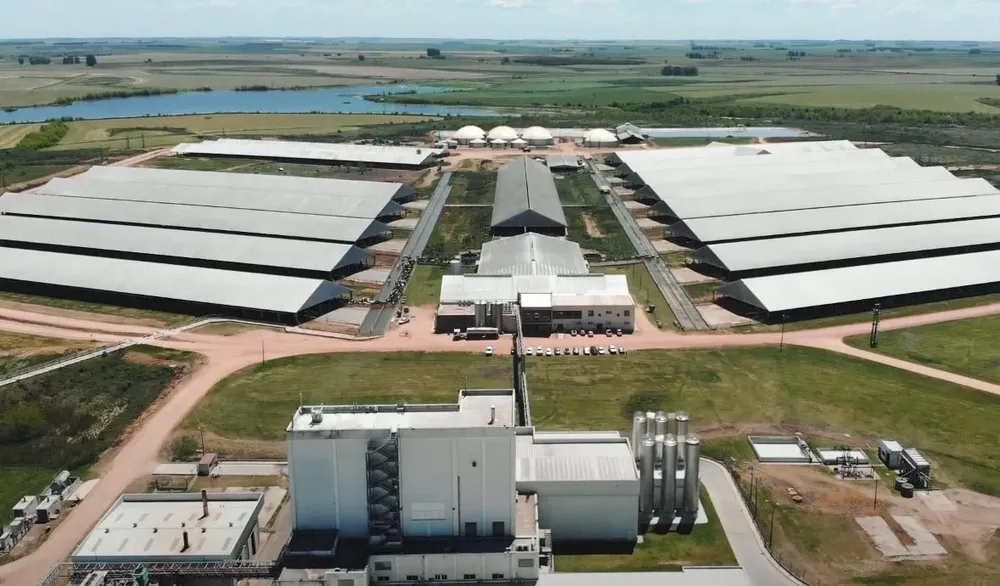
David Fair: Yeah, I totally get it. Well, it’s been almost exactly a year since Governor Whitmer signed into law measures creating tax breaks and incentives aimed at luring large-scale data and computing centers to Michigan, and it is certainly working. In Washtenaw County alone, a 1.4 gigawatt data center being fast-tracked in Saline Township, the U of M and Los Alamos National Laboratory Planning Facility in Ypsilanti Township, and there’s another under discussion in Augusta Township. Right across the border in Western Wayne County, Van Buren Township has been selected as home for another massive center. There are people who are excited about the potential economic and jobs benefits it’s going to bring, and there are people quite concerned about potential environmental damage and impacts. Let’s start with energy, Beth. The amount of energy it takes to operate one of these centers is immense. Increased energy usage, I imagine, could be a barrier to Washtenaw County’s goal of carbon neutrality in 2035. Is that your take on it?
Beth Gibbons: It is what my leading concern is. So, when I think about data centers, and I talk about data centers, I usually begin by saying, “I don’t come to this conversation without a bias.” As my responsibility in the county is helping us to reach our carbon neutrality goals, I do have serious concerns about the increase in energy consumption that data centers are creating in Washtenaw County, the state, and really around the world. And so, that is where I first enter this conversation, and from there, it becomes much more complex. But I do worry about the impact that people have on our renewable energy goals or Ann Arbor’s carbon neutrality goals.
David Fair: You have a very distinct goal and aspiration. How do you adapt and adjust your resiliency process and plans to adjust to the reality of AI and data centers in the community?
Beth Gibbons: That’s a great question! I mean, first and foremost, what we need to do is to recognize that the state legislation that has created these incentives for data centers does require that all data centers are using renewable energy or renewable energy credits. I think that it’s necessary for us to insist that that requirement is held firm, and as data centers are coming into our energy grid, that requirement is being met. I also recommend that, locally, as communities are putting in zoning codes to prepare for data centers in their own community, that they’re replicating those requirements from the state locally, so that we have redundancy of requirement around needing to see data using renewable energy as their primary energy source.
David Fair: And if we want to take a look at a potential positive side that goes even a little further, if, as promised, the economic gains are brought to these communities and there is more tax revenue available, could that be utilized in a manner to further advance carbon neutrality and environmental protection initiatives?
Beth Gibbons: Absolutely, absolutely! I mean, there’s no doubt that these are investments on a scale that we have never seen before. And I think the piece that we want communities to be preparing for is to put in the type of regulatory framework that will protect their water and their sites that will be pushing for energy use that is to renewable energies and then to think about community benefits that are really proportional to the size of investment that these companies are bringing into communities. And the way that we get to that proportionality is through having strong community benefit agreements. And those community benefit agreements can then see us applying those dollars to environmental protections, to schools, to our roads, to water, et cetera, et cetera.
David Fair: WEMU’s Issues of the Environment conversation continues with Beth Gibbons. Beth is director of the Washtenaw County Resiliency Office. Another great concern about data centers is the amount of water needed to cool them, and we’ve had instances in Washtenaw County where mining operations have impacted wells and aquifers. Supporters and operators of these centers insist that technology is advanced to a point where water usage is going down and the concerns are overblown. What level is your concern about water usage?
Beth Gibbons: My open concern about water usage is less than the concern about energy use. Again, the state incentives require that data centers connect to existing municipal systems. I think that is a positive requirement. We also know that with Saline Township, they’re going to be using an air cooling system, so that is going to using less water. But we could say that when you have less water than you have more energy use. If you have more water than you have slightly less energy. So, these are trade-offs. You don’t get to have less energy and less water. The technology isn’t there yet. I think it’s right for people to be concerned about our water. We ought to be. We should be concerned in all times. And that should be about extraction of the water. It should be the discharge of the water. It should also be about the way that we’re preparing our sites. Our state is largely a wetland. How we think about the preservation of our lands is really critical. And so, I think in all ways, for people to be tuning in to concerns about water is right. For me, with data centers, I am more concerned about the energy consumption than the water use. But I think whatever brings people’s attention to something that is really novel for us, it is a good thing. It is good for people to pay attention to really significant shifts in our land use. And that is what we’re seeing now.
David Fair: Well, it could impact agricultural economies, and farmland use could go down. Additionally, wetlands have great carbon capture. And as we head towards carbon neutrality, that’s important, and it could impact the health of our wetlands in the area to some degree–one degree or another. So, how do we address that as a county and as individual townships?
Beth Gibbons: Well, what I am recommending is that for communities that don’t yet have data centers as part of their zoning code, now is a good time for them to consider a moratorium on data centers, something temporary. We’ve seen Pittsfield Township do this recently. Now, if there’s a data center being planned, that cat is out of the bag, so you can’t do it now. But if you don’t have a data center development coming forward, now is good time for a moratorium and then taking the time to talk with the community to think and say, “How do we want to respond to data center developments?” And then, putting in place zoning codes that I hope will include the recommendations that we’ve seen from the Washtenaw Board of Commissioners that replicate the requirements that we seen in the state legislation. And then, have community conversations about what are the community benefits that we want see here that would make a data center something that would benefit our community and provide us with proportional benefit to the investment that we know that these data center companies, AI companies, are going to be bringing in. And so, those are the steps that I would be recommending is planning ahead. When communities are faced with new development and they don’t have a plan on the books already, they haven’t already had community conversations, then it becomes very, very difficult to talk about how to respond to a new development.
David Fair: Are residents reaching out to your office to discuss the matter of data centers with any degree of frequency?
Beth Gibbons: We get quite a few inquiries, not just to my office, but across the county.
David Fair: When you hear these concerns, how do you respond when they have a particular concern?
Beth Gibbons: Well, depending on what the concern is, I try to make sure that they’re directing it to the appropriate level of government or office that can respond. A lot about the planning for data centers is something that happens at a local government scale, not at a county scale. The county is largely responsible for the regulatory authority as it comes to building inspection or health inspection. When we get into land use, those are local decisions. There also are some guidance that, I think, would benefit coming from the state around overarching building inspection, environmental considerations. And so, putting pressure at the state level or the local level. And if there is a question that can be answered from a county office, I’m happy to direct people to the appropriate person here at the county. I think that, at Washtenaw County, we want to make sure we’re responsive to our residents’ concerns and questions. And so, being a connector to the best source of information is really what I can offer.
David Fair: Well, I’m going to venture a rather educated guess that data centers are going to be a primary topic of environmental conversation and policy in 2026. Agreed?
Beth Gibbons: Agreed!
David Fair: Hey, thank you so much for talking with us two weeks in a row! We are most grateful, and I look forward to more conversations in 2026!
Beth Gibbons: Thank you so much, David! I appreciate talking with you as well!
David Fair: That is Beth Gibbons. She is director of the Washtenaw County Resiliency Office and our guest on Issues of the Environment, the final of 2025. Issues of the Environment is brought to you weekly in partnership with the Office of the Washtenaw County Water Resources Commissioner. I’m David Fair, and this is your community NPR station, 89.1 WEMU-FM, Ypsilanti.
Non-commercial, fact based reporting is made possible by your financial support. Make your donation to WEMU today to keep your community NPR station thriving.
Like 89.1 WEMU on Facebook and follow us on X (Twitter)
Contact WEMU News at 734.487.3363 or email us at studio@wemu.org
Search
RECENT PRESS RELEASES
Related Post