Japan and Europe race for hydrogen while America pushes ahead — Tapping super-hot white ro
December 18, 2025
Throughout history, the world has perceived some of the greatest races ever. In the renewable energy world, the greatest race of them all is to achieve net-zero by the deadline. Japan and Europe plan on winning that race by racing for hydrogen, but America pushes ahead by tapping super-hot white rocks with millennia-worth of energy. This race may be the most noble of them all, but will America finally come out on top in this great pursuit? Find out below.
Japan and Europe race for hydrogen while America pushes ahead in another pursuit
We all have one goal at the end of the day, but which method will end up being the best pursuit? Japan believes expanding its hydrogen society is the answer to achieving net-zero and boosting its energy security. According to the Institute for Energy Economics and Financial Analysis, Japan has been investing in hydrogen supply-chain development, public-private partnerships, and encouraging industry adoption.
Similarly, Europe has joined the race for hydrogen primarily for the same reasons, and has even set the EU Hydrogen Strategy with a deadline of 2030. Europe plans to achieve its strategy via several support mechanisms, including market and subsidy platforms to promote commercialization and swift deployment, particularly for industry and transport use.

Meanwhile, America pushes ahead in an entirely different direction by tapping super-hot white rocks with millennia-worth of energy. Could this be the best method to achieve net-zero?
Tapping super-hot white rocks with millennia-worth of energy
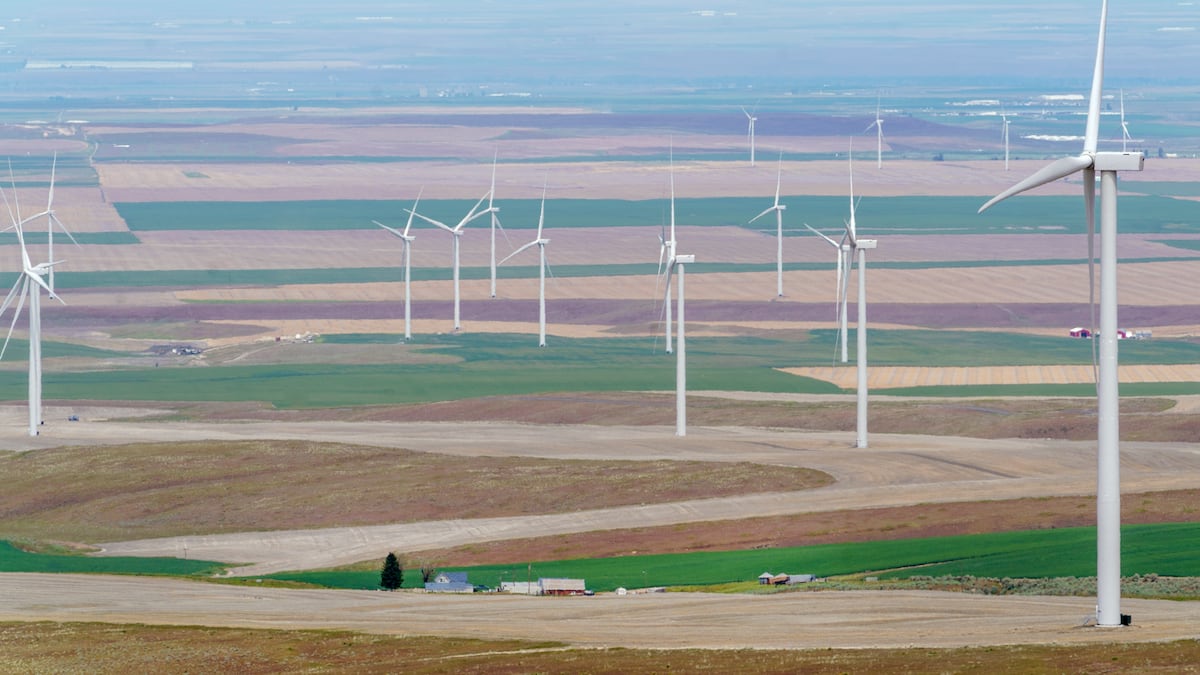
Some experts believe that enhanced geothermal energy is a smart investment, which is why the state of Oregon is so interested in tapping the source from super-hot white rocks. The company, Mazama Energy, has secured a site near Three Rivers, Oregon, called Pad 29. This site is solely focused on harnessing energy from an enhanced geothermal system, which has been dubbed ‘Super Hot Rocks.’
Mazama Energy’s geoscientist, Alain Bonneville, hopes that they, along with their partners, can utilise their pilot project to expand the use of geothermal energy as a renewable source in Oregon and beyond. The pilot project entails drilling two miles deep into the surface to harness heat and inevitably produce enough electricity to power households.
The difference between enhanced and traditional geothermal systems
In traditional geothermal systems, hot steam or water is located near the surface with a natural underground circulating flow. Geothermal energy has been used by the Oregon Institute of Technology in Klamath Falls to provide heat since the 1960s. The institute even constructed Oregon’s first geothermal energy plant in 2010, which, after expansion, produces approximately 2 MW of electricity.
However, these traditional systems are not foolproof, as they are limited to regions with natural elements, such as hot springs, near the surface. Enhanced systems remove these limitations by injecting water to produce pathways in hot rocks, which transports heat to the surface. This hot water is converted to steam, which turns turbines to produce power.
The steam is converted back into water through cooling and then returned to the engineered reservoir, creating a continuous cycle, and thus endless amounts of clean power. This power will not only benefit households, but also energy-intensive data centers.
Bonneville believes this system will produce electricity more efficiently, adding that it generates between six and eight times more power than traditional systems. Central Oregon could potentially benefit from nearly 200 MW of clean energy. Mazama Energy and its partners are currently researching ways to make these systems more cost-effective, as well as the effects of induced seismicity. This research could be the breakthrough that America needed to achieve net-zero. Other countries are also focusing on geothermal energy to diversify their energy portfolios.
Disclaimer: Our coverage of events affecting companies is purely informative and descriptive. Under no circumstances does it seek to promote an opinion or create a trend, nor can it be taken as investment advice or a recommendation of any kind.
Post Views: 406
Author Profile
Search
RECENT PRESS RELEASES
Related Post