Lancaster County farmland advocates and farmers should find middle ground on solar energy [editorial]
May 9, 2026
THE ISSUE
A debate over solar panels is pitting farmland preservationists in Lancaster County against proponents of renewable energy and farmers seeking ways to help sustain their family farms. At issue is whether the installation of solar panels on farm property is considered an agricultural use.
Farming in the United States — even in the prized soil of Lancaster County — has always been a tough occupation.
It’s been made tougher by the escalation in the prices of fertilizer and diesel fuel.
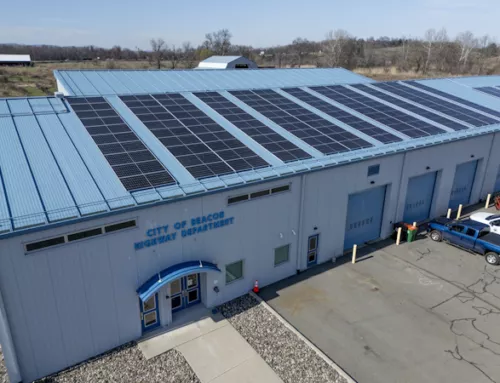
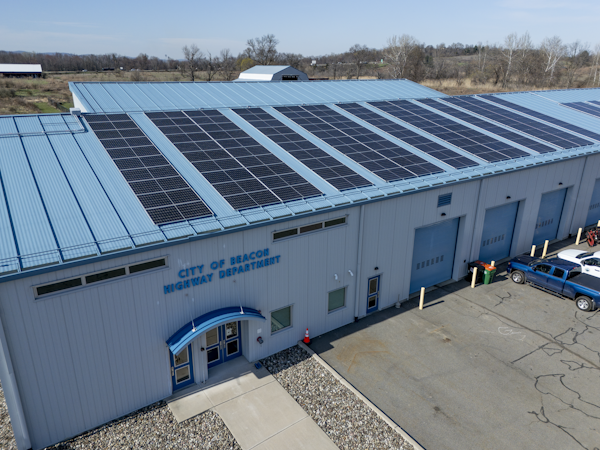
In recent years, some farmers have turned to solar power. To make money or reduce energy costs, they’ve welcomed onto their farmland what are called solar arrays — collections of solar panels installed together to generate electricity from sunlight.
As LNP | LancasterOnline reported, “In 2023, Boston-based solar developer New Leaf Energy and property owners Gerald and Jewel Gruber sought permission from the West Lampeter Township Zoning Hearing Board to build a 25-acre installation of solar panels on their farmland. … The property owners tried to argue that the solar array qualifies as agriculture because of the plan to raise sheep underneath them.”
The property owners lost at the township zoning board and lost in a ruling from the Court of Common Pleas, affirmed in January by the Commonwealth Court on appeal. The ruling concluded that a solar array on top of a sheep pasture did not conform to West Lampeter Township’s rules for agricultural land use.
This pleased Jeff Swinehart, Lancaster Farmland Trust’s president and CEO.
“When we’re sitting on the most productive nonirrigated soils here in Lancaster County and we’re within a day’s drive to large metro areas with big populations, it just seems that the best use (of that land) is food or fiber rather than producing energy,” Swinehart told this newspaper.
Daniel Dotterer, a Clinton County farmer who testified in the case as the shepherd who would have grazed sheep on the property, was not so pleased. He said that putting solar arrays on agricultural land offers an opportunity for multigenerational family farmers to sustain their businesses, while also preserving farmland.
“Ninety-nine percent of all development is permanent,” Dotterer noted. “You put in a house, you put a Walmart, a Dollar General, that land is gone forever. The beauty of solar is it’s all removable.”
Both sides in this debate share the admirable aim of preserving farmland while sustaining family farms. Farmland preservation is particularly critical in Lancaster County, where vast acres of arable land have been lost to development.
But we were struck by this statistic: Pennsylvania ranks 49th in the nation when it comes to how much of its total energy production comes from renewable energy, according to Department of Energy data.
This is shockingly poor, especially as Pennsylvania was the first state to adopt modern renewable energy standards.
Renewable energy has been aggressively discouraged by the pro-fossil fuel Trump administration. From its perspective, concerns about climate change are gone with the wind, and the windmills.
This is a complete denial of reality.
The fact is that whether we acknowledge it, the climate is changing. And our reliance on fossil fuels is accelerating that change. The hot-one-day-cold-the-next temperature swings we’re experiencing this spring are yet more evidence of this.
Jennifer Francis, senior scientist at the Woodwell Climate Research Center in Massachusetts, recently told the Bloomberg Green Daily newsletter that studies suggest these “whiplash events” will “become more common in the future.”
Farmers have had to deal with the extreme weather brought by climate change in recent years. And they’ll have to deal with whatever it brings — drought, flooding, shifting growing seasons, vector-borne diseases, etc. — in the years to come.
Even if they don’t acknowledge climate science, farmers tend to be practical people. They see rising energy costs spurring some of the increasing demand for solar power.
This is why some Lancaster County farmers have installed roof-mounted solar arrays on barns and other buildings to offset their energy bills, a practice dubbed “net-metering.” The solar power generated is calculated against their energy bills; excess energy can be sold off through the grid.
This is a sensible and climate-friendly way to reduce energy costs. And yet some people object to solar arrays because they think solar panels are ugly. Or folks have been led, inaccurately, to believe that solar panels cause cancer. Such myths have been perpetuated by some within the fossil fuel industry and its lobby.
We’d like to see Lancaster County farmers, preservationists and other residents find some middle ground; perhaps that would mean determining, with zoning officials, what percentage of a farm’s acreage could hold solar arrays. Because fossil fuels are harming the planet. And the overwhelming demand for artificial intelligence is leading to the construction of energy-sucking data centers. That energy has to come from somewhere. Why not the sun?
In a letter to the editor published this weekend, Lancaster farmer Aidan Fife makes a case for agrivoltaics, the use of land for both agriculture and solar energy generation.
“I would argue that solar grazing is one of the easiest environmental and economic win-wins for preserving farmland and producing energy,” Fife wrote. “Solar farms require mowing and maintenance to keep the grass down. Sheep require grass! And sheep also benefit from the shade of solar panels during hot months. Agrivoltaics … isn’t opposed to farmland preservation; it supports it.”
He added: “At a time when data centers will start taking over vast amounts of (Lancaster County’s) energy, and farmland is under threat, why close off an avenue to locally grown energy, food and additional farm revenue to keep land from being developed?”
As LNP | LancasterOnline reported, it may be difficult at this point to grow crops under solar panels — cost-effectiveness and commercial viability remain in question — but grazing sheep under solar panels seems like a reasonable way for a farmer to earn additional revenue.
Lancaster County isn’t likely to be blanketed in solar panels because land here is pricey and farms tend to be smaller than elsewhere. So we think some flexibility is called for in cases in which solar arrays make sense for farmers.
In 1986, a song by the English indie band The Housemartins contained the lyric, “It’s sheep we’re up against.”
In 2026, it’s not sheep we’re up against. It’s old ideas about energy and land use. It’s time for some fresh thinking to save our planet and our farmland.
Search
RECENT PRESS RELEASES
Related Post