Legal weed, lingering concerns
February 6, 2026
As concerns about the possible health consequences of recreational cannabis rise in U.S. states where the substance is legalized, Yale’s Deepak D’Souza isn’t surprised. He first noticed the negative impacts of cannabis on patients with serious mental illness when he started practicing psychiatry 30 years ago.
In 2013, while serving on the Physicians Advisory Board as Connecticut drafted its medical marijuana laws, D’Souza expressed some reservations.
“It’s been clear for a while that at least in people with serious mental illness — including conditions like schizophrenia and bipolar disorder — cannabis has a negative consequence on both the expression and course of the illness,” said D’Souza, the Vikram Sodhi Professor of Psychiatry at Yale School of Medicine. “People with schizophrenia who use cannabis are more likely to end up in the emergency room or hospitalized.”
When Connecticut and other states began adopting policies legalizing recreational cannabis in the early 2020s, D’Souza grew increasingly concerned. It was already clear that cannabis posed risks to those previously diagnosed with serious mental illnesses. But the rub, he said, is that it can be difficult to predict who will develop such an illness in the future. Family history is an obvious risk factor, but for many young people who will develop these illnesses — and may be extra vulnerable to cannabis — there may be no known family history.
In addition to behavioral health concerns, recent reports have linked cannabis use to elevated risks of heart disease and stroke, brain developmental disorders, and spikes in emergency visits. In Massachusetts, which legalized recreational marijuana in 2016, a statewide referendum campaign to reverse the legalization policy has gained support.
A keen observer of the ongoing recreational cannabis debate, D’Souza is also director of the Yale Center for the Science of Cannabis and Cannabinoids, which studies the effects of cannabis on neurodevelopment and mental health, among other research topics.

Photo by Allie Barton
In a recent conversation with Yale News, he discussed the fragility of the adolescent brain, why the “Big Tobacco playbook” is relevant to the cannabis debate, and why many of the new varieties of cannabis are a far cry from the weed that Baby Boomers, Gen Xers, and Millennials might have smoked back when the stuff was still illegal.
This interview has been edited for length and clarity.
How is today’s recreational cannabis different from earlier versions?
Deepak D’Souza: The products currently available are very different from what was available 30 years ago. They’re much more potent i.e., much higher THC [Tetrahydrocannabinol] levels, which is the principal psychoactive constituent of cannabis. And with the more potent products, we’re beginning to see more negative consequences.
Back in the 1960s, the THC content of cannabis was about 3 to 4%. In 2018 it was closer to 18%. But now you can go to a dispensary in Connecticut or elsewhere and buy cannabis that is 35% THC.
Average THC levels
And this is to smoke?
Yes, I’m just talking about the herbal material, what people put in a joint or a bong to smoke. But you can also buy what are known as concentrates. For concentrates, manufacturers use a sophisticated procedure to extract THC from cannabis. And these products sometimes have up to 95% THC. That’s 20 times more than what your grandparents smoked back in the 1960s and ’70s.
Are there no regulatory caps on these substances?
D’Souza: They’re highly variable. Connecticut, I believe, has a cap on the THC content of herbal material that’s about 35%, and concentrates can have up to 70% THC. Buteach state has its own rules, and they vary considerably. There’s no coherent, universal policy around the regulation of cannabis. And that makes it challenging.
You’ve said that cannabis poses real danger to people with serious mental illnesses, but what about the population at large?
D’Souza: That’s a great question. The overwhelming majority of people who use cannabis use it in extreme moderation and sporadically. Most don’t experience negative consequences. I want to be very clear about that. Most people who use cannabis and use it sporadically, and don’t use high potency products, may not experience negative consequences.
But there are exceptions?
D’Souza: Yes, for reasons we don’t understand, some people do experience negative consequences even with sporadic or modest use. And we think those people who are at risk for psychiatric disorders may be at even greater risk for these negative consequences of cannabis. The problem is that we currently don’t have any good way of identifying who is at risk for psychiatric disorders. The only obvious indicator of a risk for psychiatric disorders is if you have a family history of them. But there are many people who develop these disorders who don’t have a family history. So, part of the problem is that we can’t currently identify who is and who is not at risk for these serious lifelong illnesses.
Is it true that adolescent boys using cannabis are at even greater risk of mental health consequences?
D’Souza: There is very clear evidence that adolescence is a window of greatest risk. The developing brain in both males and in females is more vulnerable to the effects of cannabis. Mid-adolescence is associated with much greater risks than cannabis use in young adulthood. If you’re comparing 13- to 15-year-olds with 22- to 25-year-olds who use cannabis, the risks are much greater for the younger group. And it’s because the developing brain is more sensitive to any perturbations including those from the use of drugs like cannabis. The reason you hear more about boys is because, in general, males seem to be more vulnerable to psychotic disorders.
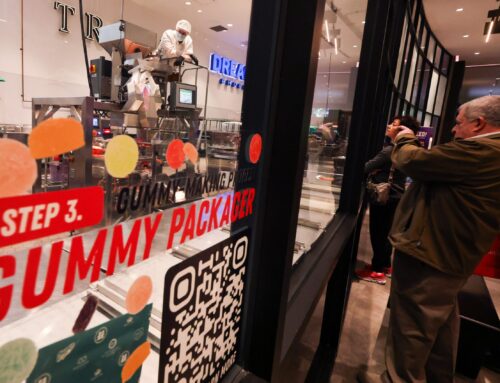
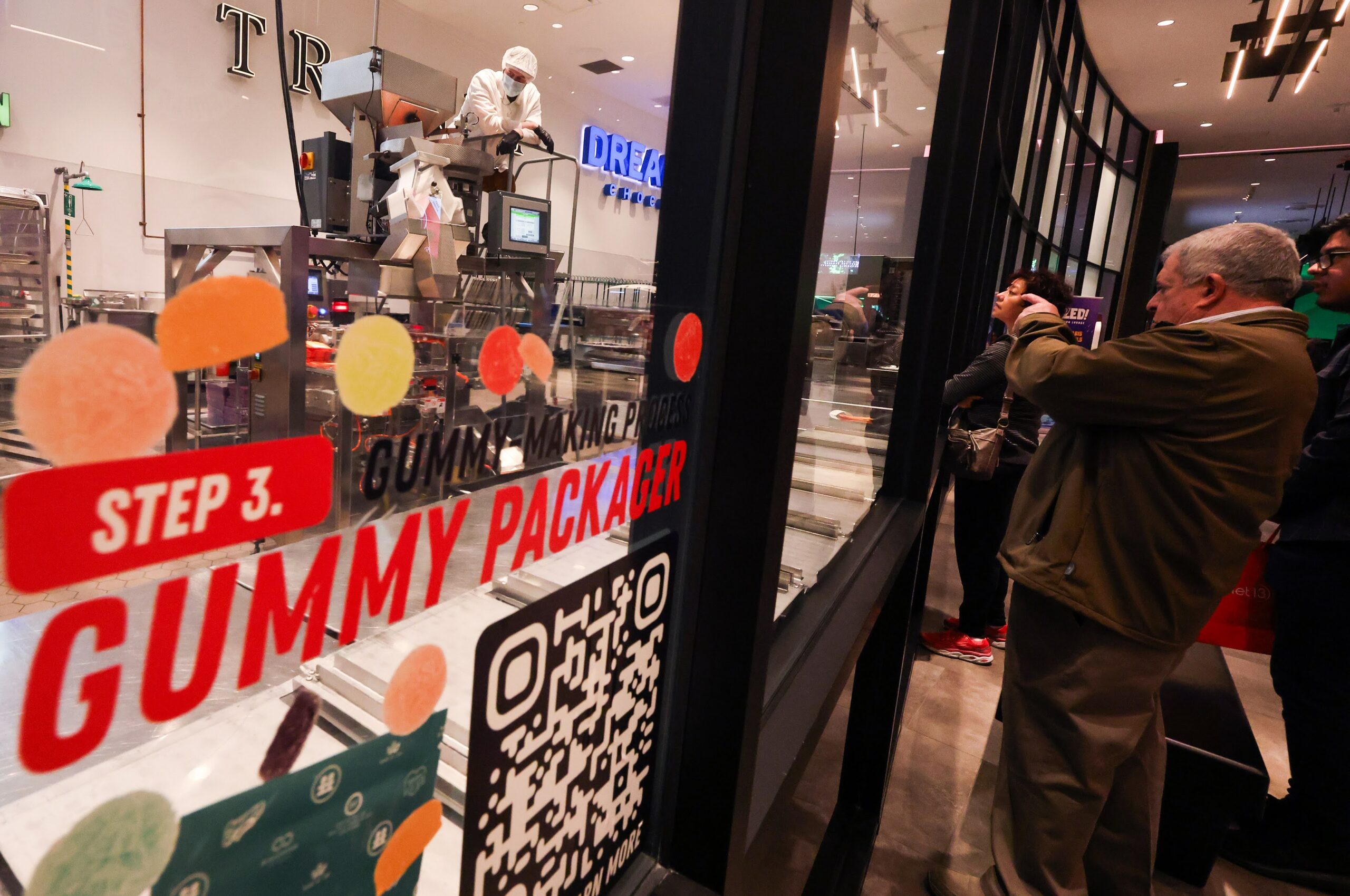
There is a staggering array of cannabis products out there now that appeal to young people: gummies, candies, cookies — many loaded with THC. We need better regulation.
Deepak D’Souza
Why is the adolescent brain more sensitive?
D’Souza: The brain has an important chemical messenger system called the “endocannabinoid system.” The endocannabinoid system is present in our brains regardless of whether we smoke weed or not. It’s there for a purpose. It regulates critical bodily functions, such as learning and memory, emotional processing, sleep, pain control, inflammatory and immune responses, and eating. Another important function that the endocannabinoid system is involved in is neurodevelopment. Most of neurodevelopment occurs in the fetal brain and then during adolescence. So, let’s say we’re born with 100 billion neurons at birth (and I’m just making up these numbers to illustrate the point), during adolescence there’s a process that occurs called pruning, where we go from, let’s say 100 billion neurons to 70 billion neurons. Connections that are unnecessary are removed, and connections that are necessary are strengthened. And this process is influenced by the endocannabinoid system.
And if that system, which is functioning normally and is important for neurodevelopment, is bombarded by THC during adolescence, you can imagine that it might lead to far reaching implications.
Recognizing these concerns, why do you think it is that the United States is one of only a handful of developed, Western nations that have legalized recreational marijuana?
D’Souza: The whole legalization issue is unfortunately not well understood. It’s not so much about legalization. It’s about commercialization. When you think about other substances like alcohol or tobacco — tobacco has been used by humanity for centuries. The game-changer in terms of widespread use was the commercialization of tobacco, the rise of “Big Tobacco” as an industry, and likewise with alcohol. It’s commercial enterprises that are driving the legalization of cannabis today.
And the government plays a role here, as well?
D’Souza: Many city, town, and state governments are earning revenue based on recreational and medical cannabis sales. And it’s hard for them to give that up now. You could say that with recreational legalization we haven’t adequately weighed the psychiatric consequences, especially on our youth. There’s no dollar amount you can put on health. I hope we don’t have to wait as long as we waited with tobacco and smoking to realize the health consequences of cannabis.
To that point, if you could advise policymakers, what would you suggest as the most prudent way to handle this issue going forward?
D’Souza: If you believe that the train has already left the station, there are still some important things we can do. One is education — that is, educating the general public, and particularly young people, about the risks of cannabis. We haven’t done a good job of this, but it’s one area that I’m somewhat optimistic about. We were quite successful convincing young people that smoking cigarettes is not cool. We know how to reach them. If we have the commitment — that’s really the key, the commitment — and the money to educate young people, it will help. Another is to limit use by teens and young adults. Part of the commercialization playbook is that if you can get young people to start using, you’ll have lifelong customers. There is a staggering array of cannabis products out there now that appeal to young people: gummies, candies, cookies — many loaded with THC. We need better regulation.
If recreational sales are generating a lot of money, would it be unreasonable to ask for some portion of that money to fund educational and surveillance initiatives?
Deepak D’Souza
Are there other steps to consider?
D’Souza: It’s also important to have epidemiological surveillance programs in place. When I joined the physicians advisory board for Connecticut’s medical marijuana program back in 2013, I asked at that time if we could set up a program that looks at the number of new cases of schizophrenia, of bipolar disorder, and of people seeking treatment for cannabis use disorder after medical use was legalized. I don’t think anything happened there, because if you set up a program, then you need to do something with the data you collect. If you really don’t have much interest in doing that, you’re not going to have a program. But I think having surveillance programs to monitor outcomes will lead to better regulation regarding advertising and a cap on the potency of THC.
These programs would all require additional funding.
D’Souza: If recreational sales are generating a lot of money, would it be unreasonable to ask for some portion of that money to fund educational and surveillance initiatives? And in addition, our law enforcement colleagues need new tools that can detect people who are intoxicated on cannabis. Driving on the highway, it is not uncommon these days to encounter stoned drivers — it puts all of us at risk.
Search
RECENT PRESS RELEASES
Related Post