Lincolnshire solar farm to last 60 years, county council says
January 13, 2026
‘Solar farm will remain until 2090,’ council says
 Getty Images
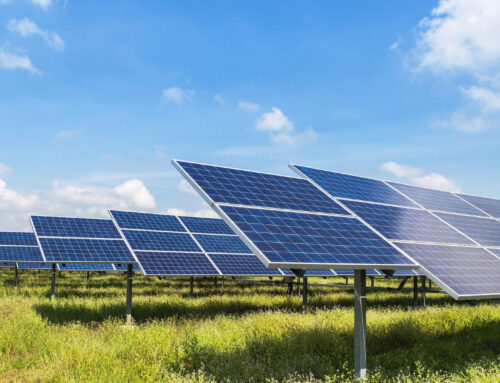
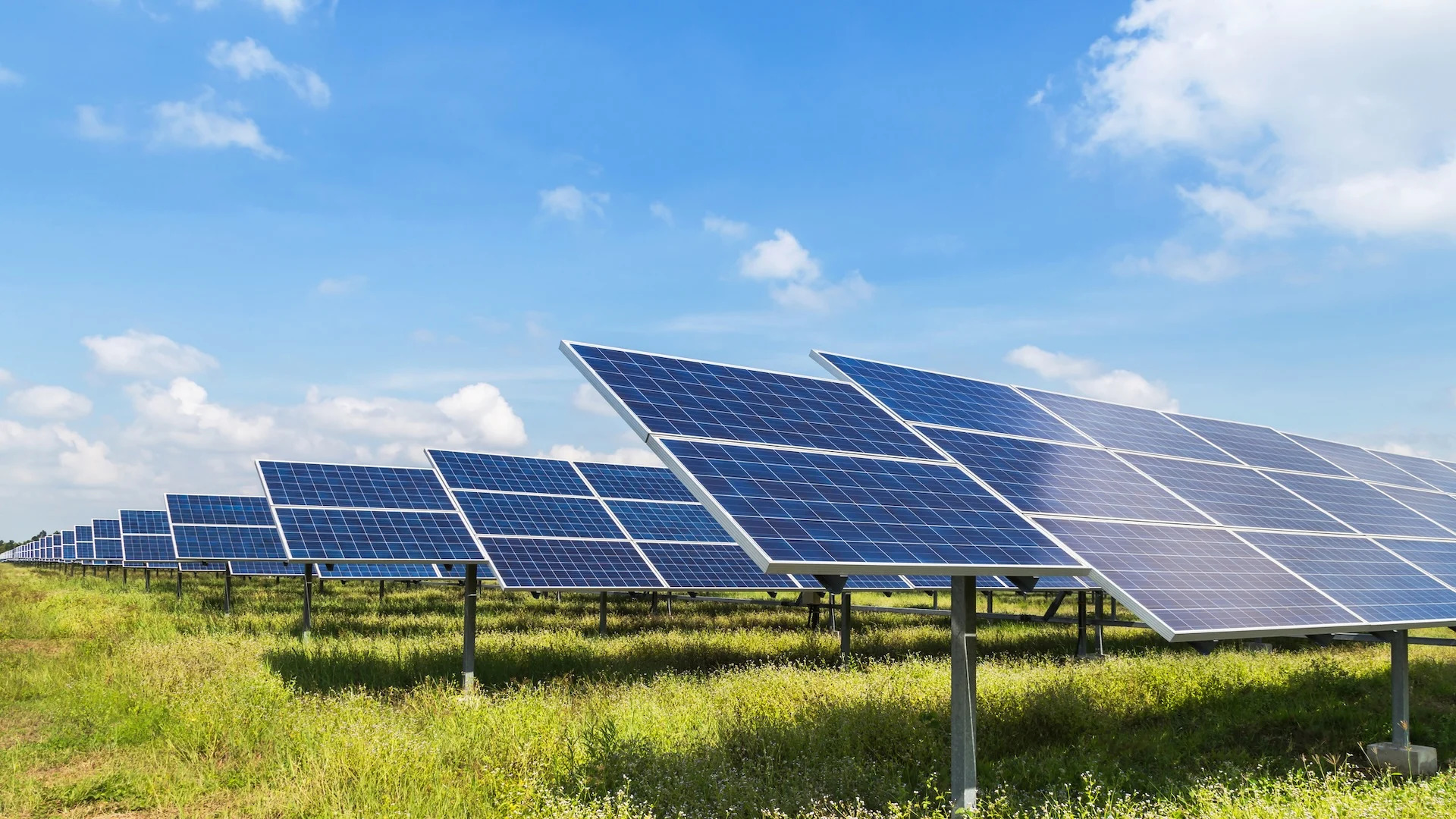
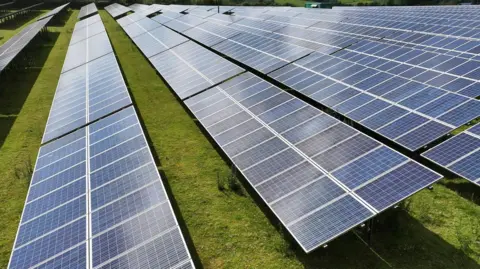
A solar farm planned for the Lincolnshire countryside will remain until about 2090, the county council has said.
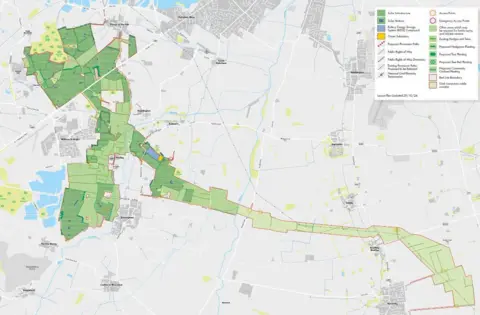
Fosse Green Energy Limited (FGEL) is seeking a 60-year development consent order to put panels on about 3,000 acres of land in North Kesteven, south of Lincoln, according to the Local Democracy Reporting Service (LDRS).
If approved, the order would allow the solar farm to occupy the land for 60 years. After that period, the land would return to its original use.
Lincolnshire County Council made strong objections to the plansat a meeting on Monday, warning it would irreversibly transform a large part of the county for generations.
FGEL is a partnership between Windel Energy and Recurrent Energy. The plans also include a battery farm and cables towards a new proposed substation at Navenby.
The developers claim it would be able to power 110,000 homes, with construction potentially starting in 2031 and energy generation beginning in 2033.
According to the LDRS, the dismantling of the solar farm is expected to take about two years, which would mean the last panels will be removed after 2090.
 Fosse Green Energy Limited
Nick Lyons, chairman of Thorpe on the Hill Parish Council, which is one of the closest villages to the proposed facility, said it would damage the area’s appeal.
“It will industrialise a rural area, and would consume 51% of all land in the parish boundary,” he told the LDRS.
“Panels will be all you see as you drive down the A46 into Lincoln – a vast solar array. Think about the effect on tourism.”
Conservative councillor Charlotte Vernon added: “It will irreversibly change our local area forever, and won’t be temporary – 60 years is effectively all of our lifetimes. We need to consider the impact for future generations.”
Labour councillor Neil Murray, who is in favour of the plans, told the meeting: “We all want electricity and know we need to stop using fossil fuels.
“Lincolnshire needs to do its bit by having some infrastructure, the same as everywhere else.”
Changes, including creating paths linking to public rights of ways, were made to the proposals following feedback from residents on the initial plans in 2024.
But residents are still not happy, with some attending the council meeting to present 500 letters opposing the project.
The council will send a report to the government laying out its concerns, including the loss of farmland, impact on the landscape and the detriment to mental health.
A final decision by the government is expected later this year.
Listen to highlights from Lincolnshire on BBC Sounds, watch the latest episode of Look North or tell us about a story you think we should be covering here.
Download the BBC News app from the App Store for iPhone and iPad or Google Play for Android devices
Search
RECENT PRESS RELEASES
Related Post