Look up for a “space jellyfish” Thursday morning
May 18, 2026
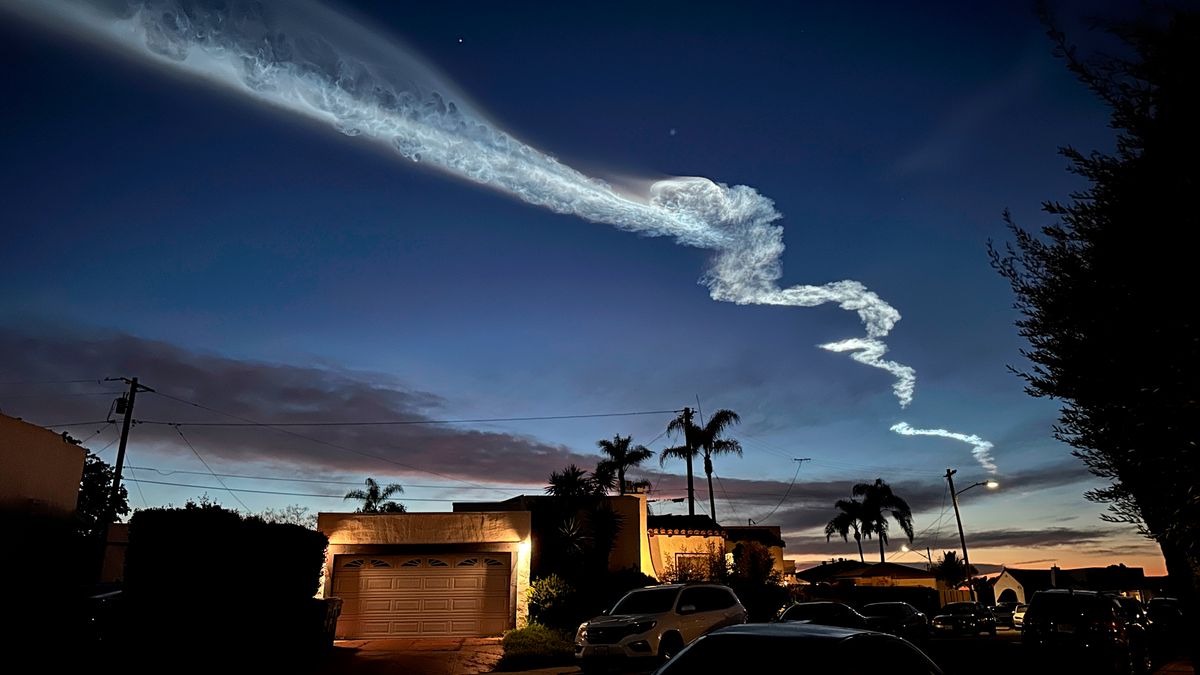
When the launch time is just right, about 30 minutes before sunrise or after sunset, sunlight illuminating a rocket’s exhaust gives it a jellyfish appearance.
Posted
5/19/2026, 2:57:35 AM
By Tony Rice, NASA Ambassador
Before dawn on May 21, skywatchers across the Southeast may have a chance to see a glowing cloud drifting across the twilight sky after a rocket launch from Cape Canaveral.
The effect can occur when a rocket launches shortly before sunrise or just after sunset. Scientists refer to it as a twilight phenomenon, but it has become widely known as a “space jellyfish” because of its glowing, tentacle-like appearance.
Other WRAL Top Stories
You are actually seeing is sunlight reflecting off the rocket’s expanding exhaust plume high above Earth, while the ground below is still in darkness.
The rocket itself is tiny compared to the illuminated plume surrounding it. As the Falcon 9 climbs higher, the atmosphere becomes dramatically thinner, allowing the exhaust gases to expand outward into a huge fan-shaped cloud that can stretch hundreds of miles across the sky. Depending on atmospheric conditions, the cloud may glow white, blue, silver, or even pink and orange as sunlight scatters through tiny ice crystals in the exhaust.
The May 21 launch is timed almost perfectly for this phenomenon. Partly cloudy skies are expected across the region, but the illuminated plume can become so large and bright that it may still be visible through gaps in the clouds.
For the best chance to see the effect, look toward the southeastern horizon beginning around the 5:26 a.m. launch time. About three and a half minutes after launch, the rocket will climb high enough to be seen from hundreds of miles away as it and its exhaust rise into direct sunlight.
Search
RECENT PRESS RELEASES
Related Post