Looking Past the Initial Cost of Renewable Energy
February 5, 2026
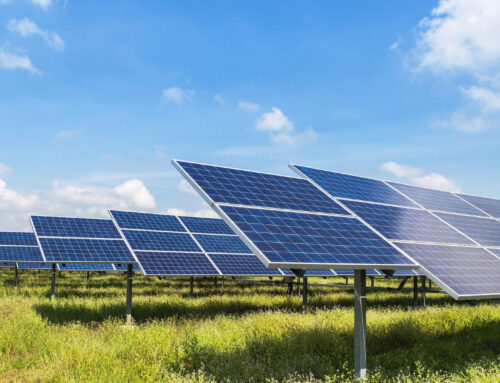
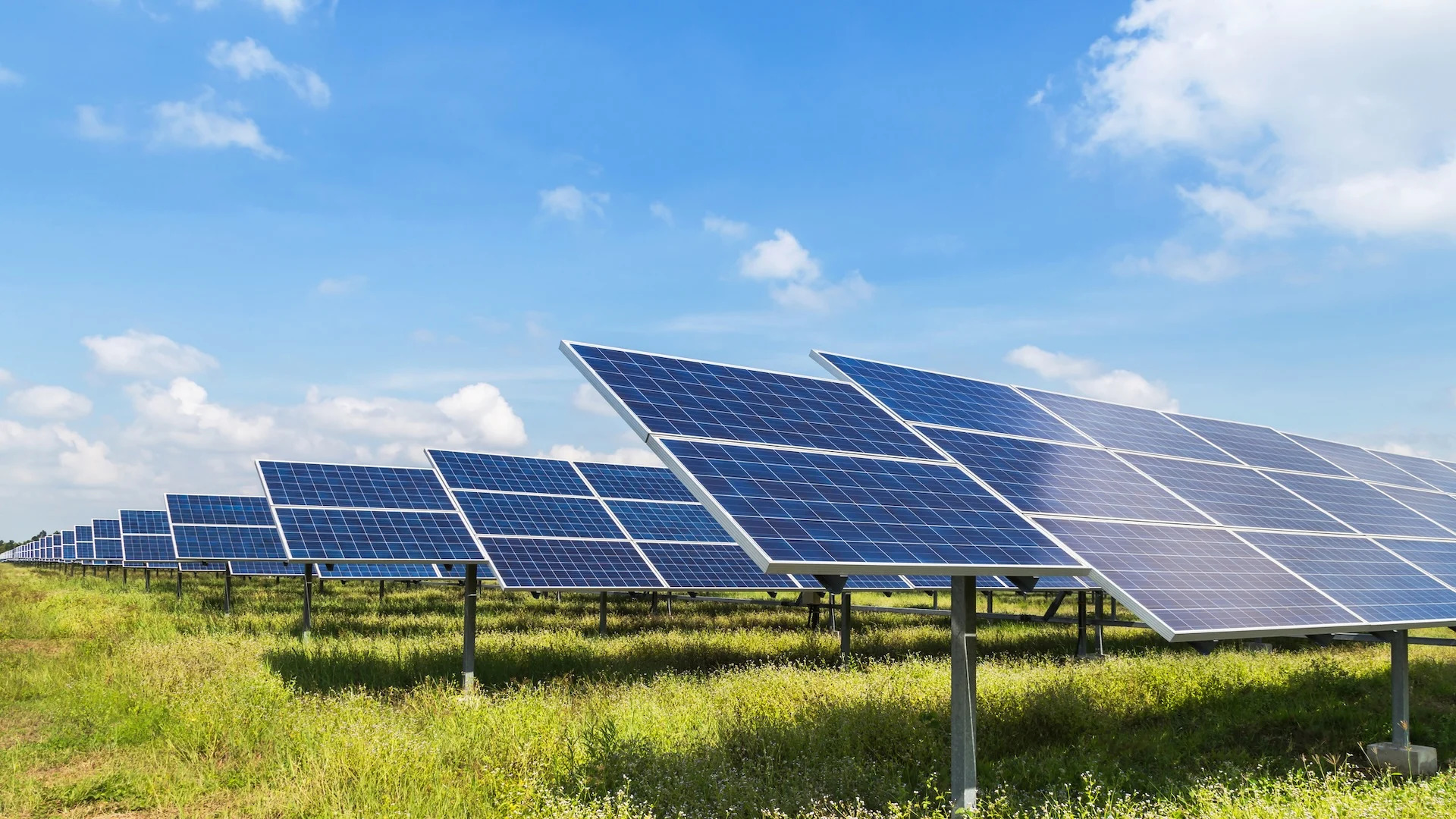
In a number of articles I’ve written—including my recent piece “There’s No Need for a Climate Change Debate”—I’ve discussed the financial benefit of adopting renewable energy. Now, there is no denying that there is an initial cost to this transition. The initial out-of-pocket cost for the materials and installation of the solar array at my house was $23,858. However, less than six years later, this array has already saved me $25,530.90 in energy costs, meaning it has already covered that initial cost. What’s more, the lifespan of the system is 30-40 years—so I will now have free electricity for my home and EV for the next 23 to 33 years!
Of course, transitioning to renewable energy on a regional, national, or global scale is a lot more complicated—and a lot more expensive. This is not just due to the cost of building renewable energy sources such as wind farms; it is also because, in order to handle the electricity generated by renewable energy sources, the whole infrastructure needs to be overhauled.
Offshore wind farms are essentially electric power plants. So are solar panels—even the ones on your house! All of these sources of electricity need to be integrated into the electricity grid—and our current electricity grid can’t handle it. First of all, our infrastructure here in the U.S. is over a hundred years old. It needs to be rebuilt, period. Secondly, we need to transition our energy grids from transmission grids to distributed grids, which can accommodate energy coming from multiple, distributed sources—from wind farms to individual solar arrays like the one I have at my house.
If the infrastructure is not overhauled, you end up with a fiasco like the one in Scotland. As The Wall Street Journal reported recently, “When Scotland’s biggest offshore wind farm opened in 2023, it was feted as a symbol of Britain’s push into a new era of cheap low-emissions energy. But today, British taxpayers spend tens of millions of pounds a year for the Seagreen wind farm to not produce electricity. Why? If the wind farm was left constantly on, it would send big pulses of energy from northern Scotland to southern England that would fry the U.K.’s aging grid.”
The fact that our infrastructure is so old and needs to be rebuilt factors into the cost of adopting renewable energy and extends the time it takes to recoup that cost. Luckily for us on Long Island, this work on our grid started long before the offshore wind farm was built and during the time solar panels were being built—though it was for an unfortunate reason. When Hurricane Sandy hit us here on Long Island, it showed how many band-aids we had on our electric grid. Damage from prior hurricanes and nor’easters had been patched up, but underlying issues were never resolved. The damage from Sandy revealed just how bad shape our infrastructure was in. It was shocking how poorly our grid had been managed by the Long Island Power Authority.
But they were soon replaced by PSEG, a New Jersey-based utility company, who started to rebuild our grid. This meant we were already rebuilding our grid before we started converting from a transmission grid to a distributed grid. This means we weren’t doing both at the same time. The rebuilding efforts were spread out over a period of time prior to us getting offshore wind power, so the cost of going renewable was not immediately as great.
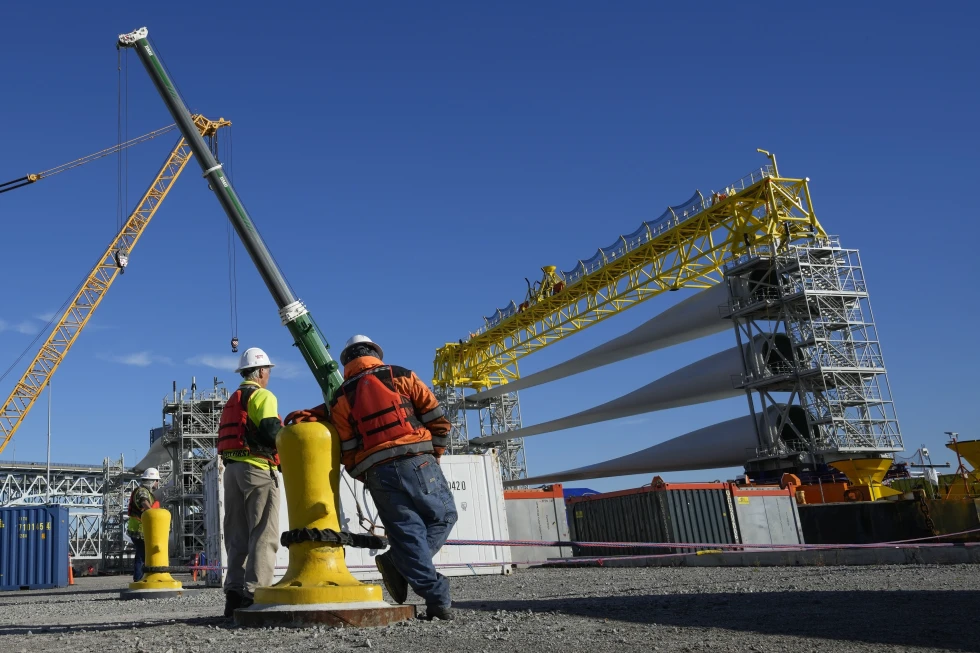
The U.S. is already reducing its carbon footprint—by incentives, but also voluntarily—and that reduction is accelerating. South Fork Wind, the wind farm project off the coast of Long Island, has been operating for over a year now. More renewable energy projects in various stages of approval are already underway all up and down the East Coast, and more are being planned on the West Coast. Assuming funding for these projects is not cut and they are allowed to be completed, within the next couple years, almost the entirety of Long Island—over three million people—will be getting their electricity from offshore wind. Meanwhile, amazing technological advancements are happening with offshore wind on the West Coast as well. The ocean there is much deeper, so for the offshore wind farms, they’re using technology developed in Norway for offshore oil platforms in the North Sea, which utilize thrusters to stay in place, rather than being tethered to the ocean floor.
Technology has improved incredibly, and there are so many possibilities—and all of them will have incredible financial benefits in the long run. As The Wall Street Journal article reports, “Proponents of renewable energy argue that high prices will prove transitional. Since sunshine and wind are free and abundant, renewables will ultimately be cheaper once the new infrastructure is built, they say, while it will continue to cost money to dig oil and gas out of the ground. […] ‘Energy costs in the future will be a lot lower,’ once Europe’s renewable system is up and running, said Jacob Kirkegaard, an economist in Brussels with the Peterson Institute for International Economics. The problem is getting to that point, Kirkegaard said.”
We all know there is an initial cost to adopting renewable energy—but we tend to overlook the lifecycle cost. When lifecycle cost is taken into consideration, adopting renewable energy always ends up saving money. If we can accept the fact that there is an initial cost, we will be able to reap the financial benefits in the future.
Frank Dalene, an Amazon Best Selling Author in Green Business & Environmental Economics titled, Decarbonize The World: Solving The Climate Crisis While Increasing Profits In Your Business, and Founder of the Hamptons Green Alliance, a 501(c)(3) Public Charity. Learn more at frankdalene.com and hamptonsgreenalliance.org.
Search
RECENT PRESS RELEASES
Related Post