Markets are the driver of energy transition
January 19, 2026
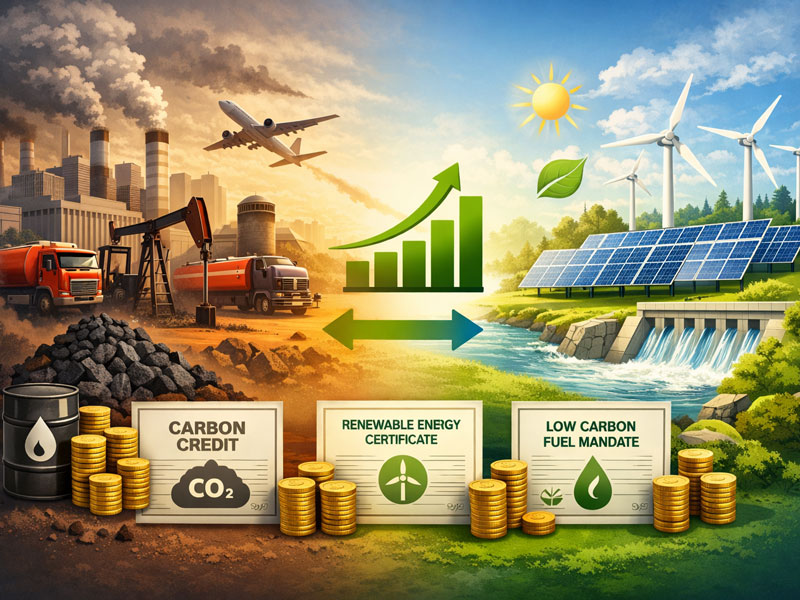
 
Despite strong global momentum to accelerate decarbonisation, fossil fuels still have a strong hold of the energy use across most sectors. The IEA reports that industrial energy consumption is still dominated by fossil fuels, in particular coal; and transportation relies on oil products for nearly 91 percent of its energy. As of the first half of 2025 however, the global energy supply shows a more positive picture as renewable energy overtook coal as the leading source of energy for the first time in history. But that was no miracle; that is market logic in action. The environmental commodity markets have played the role of scaffolding by providing the framework and support on which the energy transition can be built.
To explain the concept of environmental commodity with a simple analogy: If a homeowner wants to lower his or her carbon footprint, they might install some solar panels. But presuming they live in a block of flats, they might ask a friend to put solar panels on their roof instead. The flat owner helps the friend to finance that and in return can claim that they have neutralised the carbon output of their flat. What those homeowners are doing is creating a marketplace for decarbonisation opportunities, which is exactly what is happening at a macro-level between energy producers, corporates and major industry. It allows people who want to make moves to decarbonise, but who might be constrained. It allows them to invest in the move to decarbonise elsewhere. Similarly, it also enables people who have the opportunity, but not the finance, to get their projects off the ground.
The levers of transition
Emissions Trading Systems (ETS) that put a price on emissions were first launched in 2005. In addition, renewable energy certificates (GOs, IRECs, RECs) that link clean energy generation with consumer demand and fuel mandates (LCFS, REDIII) that reward low-carbon alternatives have gained their importance as tools to put a price on emissions and address environmental impact. These markets exist not to virtue-signal but to account for the cost of emissions and make decarbonisation bankable. Just as in other markets, traders, like us at STX Group, come in to facilitate pricing structures and climate solutions that simplify sales and manage risk for both the buyer and the producer. This market mechanism brings more investment to the market and is therefore an essential part of the commodities markets.
Carbon is finally being priced appropriately — and investment is following
The energy transition is ultimately executed through three levers: efficiency, switching towards renewable fuels and feedstocks, and carbon capture. But these levers only move at scale when markets make them investable; for example, when carbon emissions have been properly priced. The good news is, carbon is being appropriately priced and, as a result, environmental commodity markets have been growing rapidly over the last 20 years. New regulations are also taking effect, especially in Europe, across multiple industries. In shipping, FuelEU Maritime is reshaping fuel demand. In aviation, ReFuelEU mandates are driving uptake of sustainable fuels. RED III is pushing EU member states to increase renewables in power and heat. CBAM is levelling the playing field between domestic and foreign producers in the EU. All these regulations put more pressure on European refineries to ramp up their production of clean energy products. These regulations and increased renewable energy also translate into growing demand for certificates, and that demand makes the transition investable. The future growth of the ‘sustainable economy’ is driven largely by the widening net of regulatory compliance but also has become a lifeline for energy companies operating on markets rapidly shifting towards renewables.
While the pace of change to decarbonise the global economy is arguably still slow, we cannot ignore the emissions that have been capped and addressed because of market schemes like the ETS and a large variety of environmental commodities. To give a sense of the scale, the global EAC market has grown to over 2,400 TWh annually since its formalisation in the early 2000s, representing a size equal to more than 60 percent of the total electricity demand of the European Union. It now covers approximately 40 percent of the EU’s total GHG emissions and generates €38bn in revenues in 2024.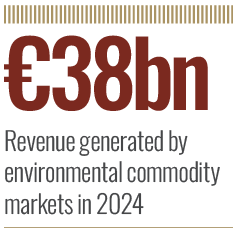
By my latest count, more than 70 countries now operate carbon pricing systems. Clean fuel mandates and schemes are spreading across North America and Asia. In Europe, numerous clean energy policies and regulations are making carbon a balance-sheet cost for major heavy industries including aviation, shipping and manufacturing. There are plenty more schemes similar to the existing regulation that we expect to see make a big impact in the coming years, such as sustainable aviation fuel certificates (SAFc), white certificates to drive energy efficiency and biofuel mandates. One thing is clear: emissions now carry a price, and that price is rising.
I strongly believe that market mechanisms are the most efficient way to align political ambition, corporate obligation and consumer demand to decarbonise, at an affordable cost. Without them, the transition risks becoming slower, costlier and more divisive.
Search
RECENT PRESS RELEASES