Massachusetts exceptionalism takes some knocks
April 16, 2026

Welcome back to Trendlines. The secret password is “Wile E. Coyote.”
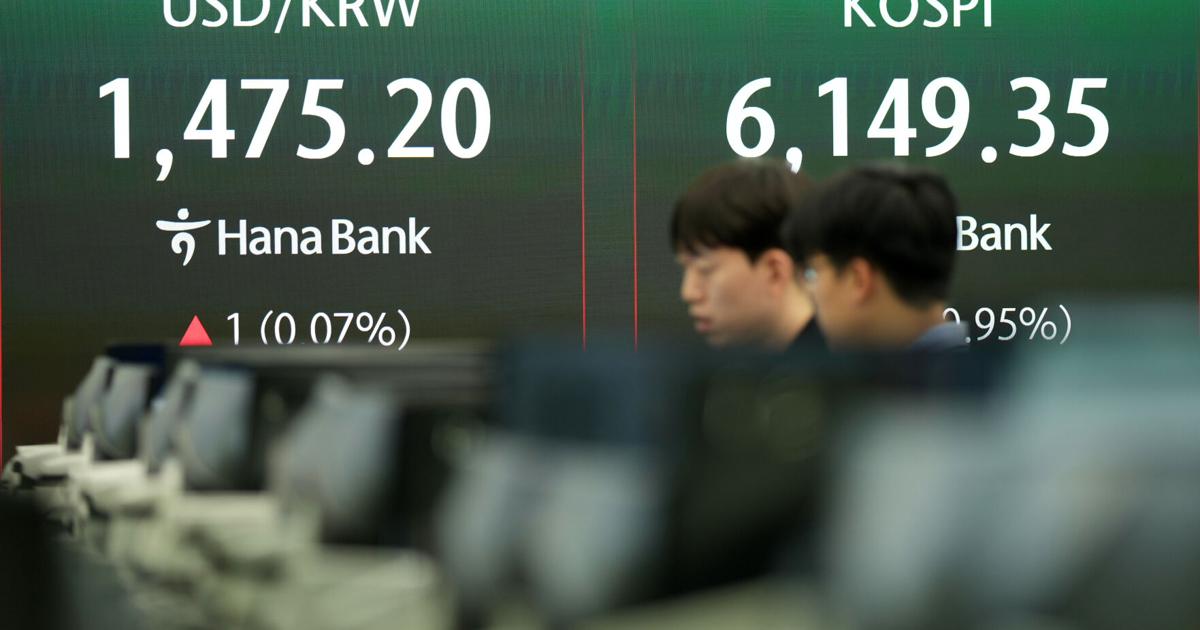
What are investors smoking? The stock marketis headed for another new high (bad pun intended) on Thursday, showing once again that global turmoil is no reason to get bummed out.
Today, what do the closing of Hampshire College, a decline in Massachusetts startup funding, and a rent control ballot question have in common? I explain below. Plus: Allbirds tries to exploit the AI boom. But first . . .
➡️ The Latest
- What to know about the antitrust verdict against Live Nation and how it could affect ticket prices.
- High costs, murky admissions practices, uneven academic standards, and fears about free speech on campuses are among the reasons for plunging public trust in higher education, according to a new Yale University committee report.
- Meet Grace Nah, the college sophomore who makes a six-figure income as a social media influencer.
📉 Wrong way
Another local college is closing. Texas startups just out-raised their Massachusetts counterparts for the first time. And a dozen mayors are so worried a misguided rent control measure will make it to the November ballot that they’re warning its passage would deepen the state’s housing shortage rather than ease it.
Read together, these Globe stories this week deliver a clear message: The state’s elite higher education industry, innovation economy, and housing market are all under stress.
School daze: Hampshire College, a small liberal arts school that has been under financial pressure for years, said it would close after the fall semester.
Enrollment at the Amherst campus has declined by half since the early 2000s to about 625 students, according to Hampshire president Jennifer Chrisler.
Its closing is part of a broader trend within higher education, in which smaller private colleges in particular have struggled, while the soaring costs of tuition have prompted more families to question the value of a four-year degree, write the Globe’s Brooke Hauser and Diti Kohli. By one new estimate, more than one-quarter of all private colleges in the US could close or be forced to merge within the next 10 years.
Fewer high school graduates are choosing to go to college amid a “public discussion in this country about the value of a liberal arts education,” Chrisler told The New York Times.
Moreover, higher education is facing an enrollment cliff. The number of college-age students will fall about 15 percent through 2029, according to Carleton College economist Nathan D. Grawe.
The implications for Massachusetts are large. Fifty-nine private, nonprofit colleges and universities contributed $71.1 billion to the state’s economic output, supported more than 320,000 jobs, and generated $2.4 billion in annual tax revenue, according to a 2023 study by Econsult Solutions for the Association of Independent Colleges and Universities in Massachusetts.
Texas toast: When it comes to venture financing, Austin is hot on Boston’s heels.
Texas startups gathered $5.8 billion from venture capital investors in the first three months of the year, topping the $5.3 billion for Massachusetts startups, according to research firm PitchBook and the National Venture Capital Association.
My colleague Aaron Pressman says it’s likely the first time ever that the Bay State has fallen behind the Lone Star State. In the previous four years, Massachusetts held an average quarterly advantage of $2 billion over Texas.
Though it may just be a slip in the rankings, and Massachusetts startups could pull back ahead for the rest of the year, the news comes as the state is dealing with several major challenges, Aaron reports. And it continues the narrative of decline for the state that invented venture capital investing and ranked behind only California as recently as 2013, when New York’s position as a capital of finance and media helped it pull ahead.
Trump administration policies, including research cuts and hostility to climate-change initiatives, have hurt the biotech and green-tech industries. The state hasn’t been a player in AI, which is sucking up hundreds of billions of dollars in investments. Texas, meanwhile, has emerged as a power in defense tech, robotics, and energy.
The financing slowdown matters because venture capital is the lifeblood of the life sciences, biotech, and technology sectors at the heart of the state’s high-end economy. Jobs, workers — and tax revenues — will go where that money flows.
Rent ruckus: Sky-high housing costs put the state at a competitive disadvantage to lower-cost rivals, and that disadvantage is getting worse.
A statewide rent control initiative likely headed to the November ballot is being sold as a fix. It isn’t.
The proposal would limit annual rent hikes to the rate of inflation, with a cap of 5 percent. But controlling rents won’t build a single new unit. And by capping landlord returns, it discourages the new construction that is the only real path to keeping rents in check. It would also depress property values, straining municipal budgets.
Last month I argued that the measure is a bad idea. This week, a group of mayors made their case against the initiative.
“What is especially ominous about the proposed ballot question is that it applies not just to the red-hot Boston housing market, but everywhere else in the Commonwealth,” New Bedford Mayor Jon Mitchell warned. “In Greater New Bedford and other regions where housing developers at times struggle to make their numbers work, it would effectively shut down housing production.”
Mayors from Worcester, Lawrence, Quincy, and Revere also oppose the initiative.
The solution to Massachusetts’ housing crisis isn’t a limit on what landlords can charge. It’s a combination of development incentives and zoning changes that make it easier and more profitable to build.
Final thought: None of this week’s developments — one soft quarter for venture capital, one college closing, one ballot initiative that hasn’t passed — is fatal on its own.
But the trends continue to move in the wrong direction.
🎙️ On the Record
“As a proud son of Dorchester, I joined the Boston Fire Department because I wanted to give back to the communities where I grew up.”
— Rodney Marshall, Boston’s new fire commissioner, the first Black man to lead the department in its nearly 350-year history.
🏛️ Federal Reserve
Feud flare-up: President Trump Wednesday threatened to fire the Federal Reserve’s Jerome H. Powell if he does not step down once his term as chair ends, renewing his attacks on a Fed chief he has long accused of keeping interest rates too high.
🏫 Higher Education
Pop quiz: Professors are questioning UMass Amherst chancellor Javier Reyes’s commitment to campus after questions about his voter registration surface.
⚡ Utilities
Refund me: Federal regulars gave New England utilities an extra year to repay $1.5 billion in overcharges.
🏠 Real Estate
Crash pads: The Dorchester section of Boston is seeing the biggest Airbnb rental surge in the area ahead of the World Cup.
🖥️ AI
NIMBY-AI: Maine legislators passed a moratorium on large data centers, part of a growing backlash to the energy-intensive facilities that fuel the rise of artificial intelligence.
🔢 By the Numbers
495 New Zealand dollars
— The starting price — the equivalent of about $291 — for a four-hour session in Skynest, Air New Zealand’s new lie-flat pods in a bunk-style layout between the economy and premium economy cabins.

👟 The Closer
Talk about a bird of a different feather.
Allbirds, whose eco-friendly wool sneakers were briefly all the rage in Silicon Valley, was about to go out of business after selling its assets last month for $39 million — a fraction of the $4 billion-plus stock market valuation it enjoyed after its initial public offering in 2021.
Now, Allbirds has decided to rise from the ashes as an AI company. Yes, AI.
The company plans to sell $50 million in debt to finance its Phoenix-like bid to become a “fully integrated GPU-as-a-Service (GPUaaS) and AI-native cloud solutions provider.” Whatever that is.
Allbirds’ stock soared 582 percent after it announced the move on Wednesday. The stock gave up some of that windfall as of mid-day Thursday, but was trading at $12.23 a share, up from $2.49 on Tuesday.
Such name changes were common during the dot-com bubbleand later when crypto mania went mainstream.They are a sure sign of an investment bubble.
📆 On this date in 2010, the US government accused Goldman Sachs of fraud for selling mortgage investments without telling buyers the securities were crafted with input from a client who was betting on them to fail. In July of that year, Goldman agreed to pay $550 million in a settlement with the Securities and Exchange Commission but did not admit wrongdoing.
👋 Thanks for reading. Trendlines will be off on Monday, better known as Patriots’ Day in Massachusetts. See you next Thursday.
✍🏼 If someone sent you this newsletter, you can sign up for your own copy.
Larry Edelman can be reached at larry.edelman@globe.com.
Search
RECENT PRESS RELEASES
Related Post