Meet One of the First Graduates of the Environment and Sustainability Undergraduate Degree
April 28, 2026
Over the course of two weeks, she and her classmates explored the region’s ecology, sustainability and culture. Li also completed a project examining community-based ecotourism in the region.
“It was life-changing. Even though it was a quick experience, it definitely had a lasting impression,” she said.
During the trip, Li also learned about the new interdisciplinary degree on the environment and sustainability. Just a few weeks later, Li switched her major, joining the program’s inaugural cohort.
For Li, the degree represents a major milestone for her family. Her parents came from low-income families and immigrated to the U.S. before Li was born. They told Li they had worked hard to get to the U.S. so she could pursue her dreams. In the new program, Li felt like she was doing just that.
“I already had such an incredible experience in this study abroad program, and it felt like that was just a tiny window into what this major and experience could offer,” she said. “Growing up with parents who did not have the luxury to choose what they could study, I feel like that is what this major stood for and what made me really excited.”
When she first joined the program, Li was interested in environmental conservation and how to support communities affected by climate change. Through her major, she took interdisciplinary classes, met with professors with different expertise and interned at multiple organizations, all of which helped narrow her focus in the fields of environment and sustainability.
Over time, Li found her passion for the intersection of museum science, the environment and sustainability.
During her junior year, she interned at the Natural History Museum of Crete in Greece with some funding from Earth Commons. At the museum, Li studied barn owls and the bones of the small mammals that the birds consume and regurgitate, like mice, rats and even small bats. The research helps map where small-mammal populations live in the Mediterranean and how they shift in response to a changing environment.
Li also spent the spring semester of her junior year abroad in Tokyo, Japan. At Waseda University, she connected with a Japanese classmate who has a family member living near Li’s family in Maryland and teaches ikebana, a Japanese floral art form Li had always been interested in. The connection ultimately inspired Li’s capstone project for the environment and sustainability major.
“I love ikebana. I love flowers,” she said. “I thought, why don’t I have that as my capstone? It feels like the universe is trying to tell me something.”
Over her senior year, Li has researched how flower arranging practices shape people’s perceptions of nature. She’s currently interviewing people interested in flower arranging to understand their motivations and how the hobby has shaped their views of nature.
“We go out to seek these flowers and spend $10 to buy materials to arrange a bouquet,” she said. “If that changes the way we think about flowers, how does it change the way we think about nature? Does it build a deeper connection? Can we be more sustainable if we feel connected?”
Over the last year, Li has been living and studying at the Capitol Campus. She said she appreciates having easy access to places like Chinatown, Union Station and the city’s plentiful museums. Living downtown also allowed Li to bike to her internship, which is a credit-bearing requirement of the major.
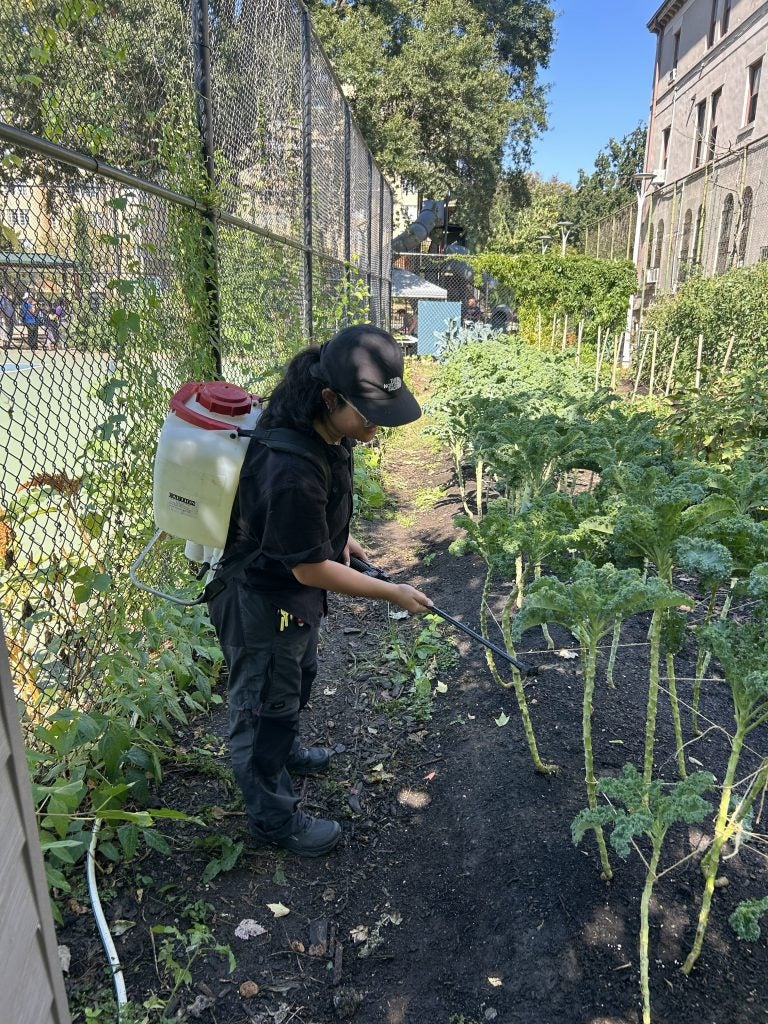
In the fall, Li interned with DPR Communal Farms, which is a part of the DC Department of Parks and Recreation. She worked across three different urban farms in DC, helping harvest crops, distribute food to needy community members and conduct maintenance.
Li said she’s grown close with other students in her environment and sustainability major and appreciates the small, tight-knit cohort. She’s also grateful for the mentorship program Earth Commons facilitates between undergraduates in her program and graduate students in the Environment and Sustainability Management program.
Search
RECENT PRESS RELEASES
Related Post