Meta signs AI licensing deals | NYT and Chicago Tribune sue Perplexity
December 8, 2025
And a US judge has ruled that OpenAI must share 20 million output logs to help assess the extent to which it steals publisher content.
Hello from the team at Press Gazette on Monday, 8 December. Here’s our daily round-up of media news.
🤖Meta has become the latest tech giant to announce AI licensing deals with publishers.
Some of the biggest publishers in the US are involved – including People Inc and CNN.
The deals will allow Meta to crawl publisher websites to inform Meta-AI news-related answers. In return publishers will get links, citations and likely some cash (the exact terms of the deals are, as ever, secret).
The move follows Microsoft launching its Publish Content Marketplace in September with launch partners including the FT, Reuters, People Inc and Axel Springer. That licensing deal seeks to figure out a way to pay publishers on commission when their content is used to deliver AI answers.
Both these deals follow one of the world’s largest internet hosting platforms Cloudflare announcing that it was blocking AI scrapers by default in July this year.
That move has forced tech companies to the negotiating table.
Google is the one AI giant yet to announce publisher content licensing deals and (not coincidentally) it is the only bot not blocked on Cloudflare by default.
The search giant continues to scrape pretty much the entire internet because access for its AI tools can’t be separated from visibility on search.
Speaking to Wired, Cloudflare founder Matthew Prince said on Friday: “It shouldn’t be that you can use your monopoly position of yesterday in order to leverage and have a monopoly position in the market of tomorrow.”
⚖️Meanwhile, litigation continues apace as publishers fight against the wholesale theft of their content by AI companies.
The Chicago Tribune alleged on Friday that AI platform Perplexity has copied millions of stories, videos, images and other content to feed its answer engine, enterprise chatbot and Comet web browser.
The New York Times is similarly suing Perplexity for copying its journalism without permission or compensation.
See our full round-up of publisher AI deals and litigation here (it’s a long list!).
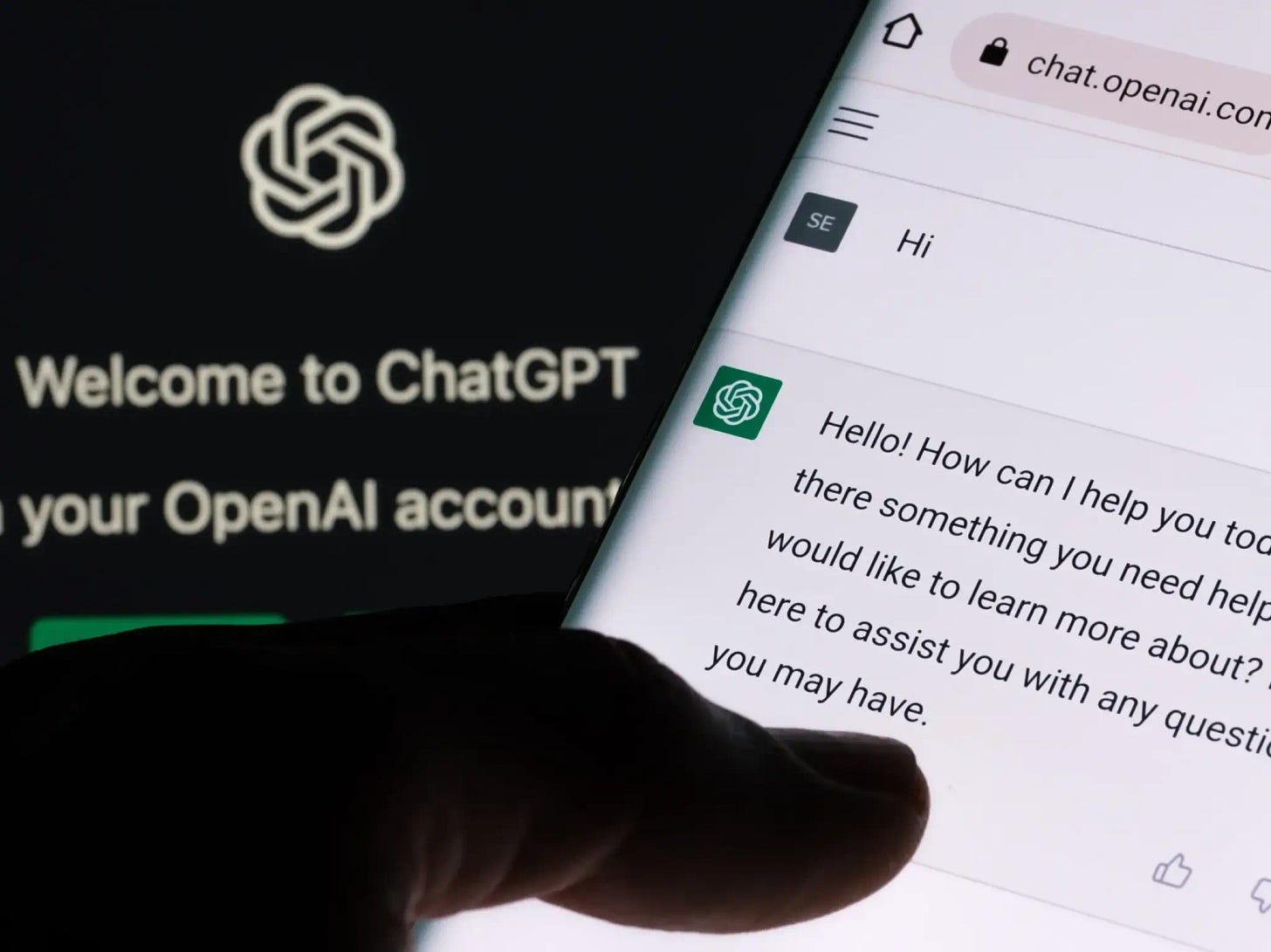
🖥️Still looking at the world of AI, The New York Times has won a preliminary ruling in its fight with OpenAI. A US judge has ruled that the ChatGPT founder must share a sample of 20 million output logs to help assess the extent to which it steals publisher content.
Some 17 other US publications have joined the same case against OpenAI.
OpenAI appears to believe it should be allowed to copy and repurpose the entire free internet regardless of copyright. And it also helps itself to paywalled content too, as Press Gazette has found.
Unlike Google search, which only used to share headlines and intros, the value exchange is far harder to discern when it comes to publishers appearing in ChatGPT.
At Press Gazette, ChatGPT accounts for one-sixtieth of the referral traffic we get from Google. But balancing that, I’ve heard publishers say that readers who come via ChatGPT are far more likely to turn into subscribers.
🧳Travel trade title TTG Media’s move to a digital-only operation is being powered by a new tech stack that will help it develop a deeper understanding of its readers and achieve its goal of 90% market capture within its industry vertical (SPONSORED).

🤏News In Brief
National Association of Press Agencies founder Barrie Tracey has died aged 85. The former Mirror journalist was known for scoops on “Costa del Crime” characters. (Press Gazette)
Brussels journalism stalwart Hans de Bruijn dies aged 75. De Bruijin was secretary general of the International Press Association since 2013. (Press Gazette)
Cloudflare has blocked more than 400 billion bot attempts to crawl websites since it began controlling AI access for its customers on 1 July. CEO Matthew Prince says Google bots continue to get through because it has tied access to search visibility. (Wired)
Warner Bros Discovery plans to split into two publicly traded halves in 2026. Netflix said it has agreed to acquire the Warner half (the TV and movie studios and HBO Max) while the other half, Discovery Global, will house CNN and other cable channels. (CNN)
Meanwhile CNN staffers are reportedly “relieved”. CEO Mark Thompson told staff it will help CNN’s digital transition, adding the head of the company is committing to more investment and maintaining editorial independence. (Semafor)
Conde Nast is a pilot partner in a new Microsoft scheme to compensate publishers when their content is used in AI-generated responses on Copilot. (Adweek)
Bloomberg Media chief operating officer Julia Beizer is leaving to join Microsoft, leading its AI news product. Beizer has been credited with helping Bloomberg reach 700,000 paying subscriptions.(Adweek)
Premiership football team Brighton has removed press accreditation from Guardian journalists after reporting from the title about the gambling activities of owner Tony Bloom. Bloom said the story in question was “inaccurate and misleading”. (The Guardian)
Dozens of New Yorker staff protested at a screening of the Netflix documentary The New Yorker at 100 in New York on Thursday over recent controversial firings. They said they “won’t stop fighting until our colleagues are reinstated”. (The Wrap)
Business Insider is piloting the use of AI to publish “a few stories a day”, marked as being created with AI and edited by a person, to see if this will free staff to “spend more time on the kind of work that leads to distinguishing, impactful journalism”. (Talking Biz News)
MS NOW, formerly MSNBC, plans to launch a membership product next summer which will give people access to talent through live and virtual events, provide “curated insights”, and new “moderated spaces for intelligent discussion”. (Axios)
Maurice DuBois is departing CBS Evening News later this month, reportedly leaving the network without a replacement anchor. (CNN)
Wikipedia is seeking more AI licensing deals – similar to Google’s – in a bid to help the firm monetise AI companies’ heavy reliance on its content, co-founder Jimmy Wales says. (Reuters)
📈Top five on Press Gazette this week:
1) Dubious experts deployed by MyJobQuote published more than 600 times in UK press
Quoted experts do not appear to be real and some have AI-generated profile pictures.
2) Future takes action on ‘Google Zero’ as revenue declines
Future focusing on engaging audience without relying on Google.
3) People Inc launch of MyRecipes proves publishers can beat LLMs
Rich Maggiotto and Alysia Borsa say recipe content benefits from human touch.
4) The Economist reveals revenue growth as Rothschild stake up for sale
Expressions of interest being gathered for Rothschild family 27% stake in The Economist.
5) How Essentially Sports grew from $100 domain to $8m-plus annual turnover
Sports news site, founded in dorm room, provides fans-eye view of sport.
📻Latest podcast

Forbes CEO Sherry Phillips on life after Google
Press Gazette UK editor Charlotte Tobitt speaks to Forbes CEO Sherry Phillips about how the US business brand has shifted tack in response to massive changes in Google referral traffic to publishers.
She said: “I think a lot of publishers were in the same spot, or still are in the same spot. And so for us, it’s getting back to those core communities and those businesses and our editorial journalism that we take pride in and protect. And so how do we look at that in new revenue models?”
Search
RECENT PRESS RELEASES
Related Post