Meta’s new ‘AI Zuckerberg’ is a mirror for every C-suite
April 16, 2026
Meta’s new ‘AI Zuckerberg’ is a mirror for every C-suite

7 Min Read
SOPA Images Ltd./Alamy
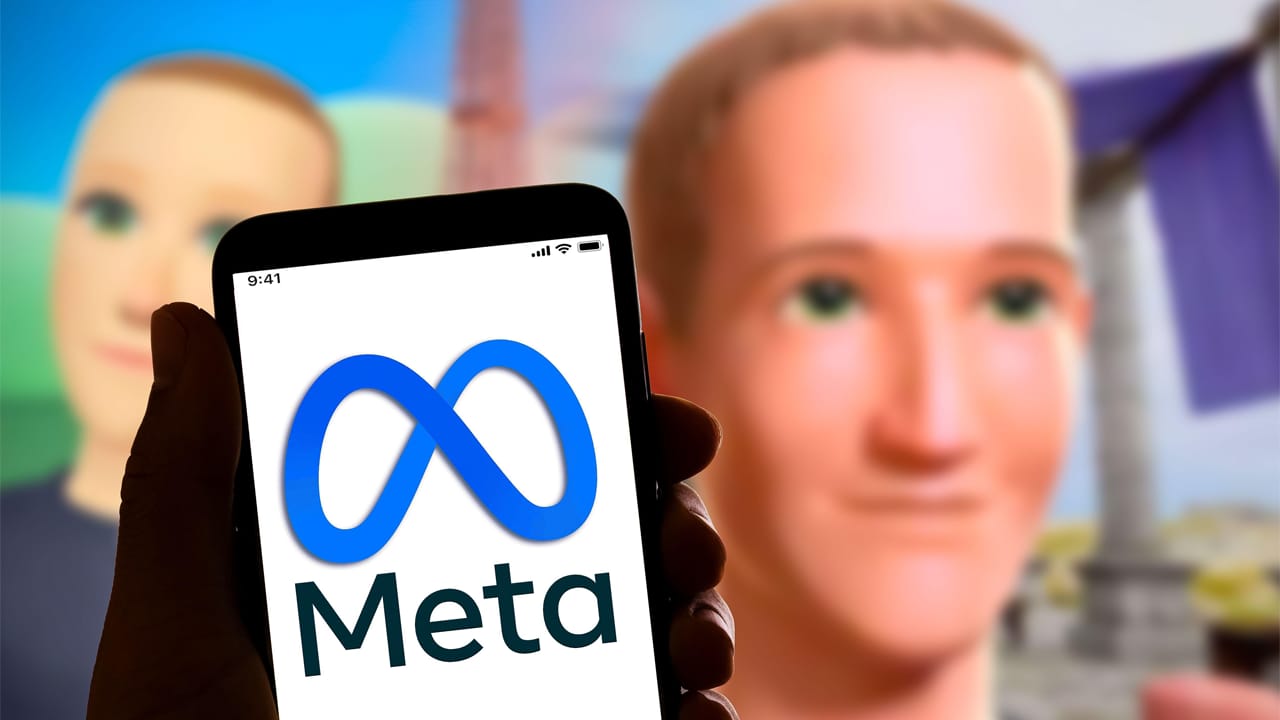
Meta is building an AI version of Mark Zuckerberg, according to a report from the Financial Times earlier this week. The goal is for the digital proxy to interact with employees, field questions and simulate the executive presence of one of the most recognizable technology CEOs in the world. The immediate reaction — somewhere between fascination and eye roll — is understandable. But executives would be wise not to dismiss the announcement altogether.
The more useful read is that Meta has made explicit a question that the entire industry is tiptoeing around: How much of what we call leadership actually requires a human being ?
“What Meta is really testing with an AI version of Mark Zuckerberg isn’t novelty — it’s whether leadership itself can be scaled, simulated and partially offloaded,” said Patrice Williams Lindo, CEO at Career Nomad and senior principal for enterprise AI transformation and workforce strategy at Accenture.
“Most organizations are underestimating how disruptive that question actually is,” she said.
How much of leadership is operational?
According to Lindo, a surprising amount of what gets labeled as leadership is really just structured communication and signal distribution — tasks that AI can already perform at scale. Standardizing executive messaging across organizational layers, synthesizing employee sentiment data and responding to common questions consistently have never been uniquely human activities; they just looked that way because humans were the only ones doing them.
“What this exposes is that much of executive presence was operational, not existential,” Lindo said.
Andy Spence, a workforce futurist and publisher of the Work 3 Newsletter , agrees that leadership involves a lot of information processing and signaling — which can be automated. He also identified a common misconception of the executive role: “We’ve historically confused visibility with leadership,” Spence said. The extreme version is something he’s termed corporate peacocking, where leaders mistake presence for performance.
This leaves the executive role more vulnerable to AI encroachment than the industry might first think. For Bugge Holm Hansen, director of tech futures and innovation at the Copenhagen Institute for Future Studies, the concern is that “most organizations are still asking ‘what can we automate,’ ‘what can we augment,’ but augmentation is only half the story.” When agentic AI is used to retrieve information, coordinate tasks, and interact with other systems without iterative human input, there are repercussions. As this AI-mediated layer matures, executives may find themselves downstream of decisions that have already been shaped, Hansen warned.
“Not replaced, but progressively marginalized from the actual flow of organizational intelligence. The human in the loop becomes, structurally, the human at the edge of the loop,” he said.
The functions that AI can’t scale
So far, so alarming. But there are executive responsibilities that resist automation: accountability and strategy.
“AI can recommend, but it cannot be held responsible,” Lindo said. “And leadership, at its core, is a liability function, not just an intelligence function.”
Making calls when data is incomplete, owning trade-offs that produce losers as well as winners, absorbing the reputational consequences of getting it wrong — none of that can be delegated to a proxy, digital or otherwise. And accountability is important for not just governance and justice, but also for maintaining trust within an organization. Hansen and Lindo both spoke of how AI can simulate empathy, but that alone is not enough, especially in times of conflict or struggle.
“[An AI] cannot bear moral responsibility, and that remains a deeply human function,” Hansen said. “When things go wrong — a crisis, a moral dilemma, a hard restructuring — organizations need someone who is not just accountable in name, but who is carrying the weight of the decision in a way that others can recognize and relate to.”
Kyle Elliott, a career and executive coach for tech leaders, identified another area that executives can carve out for themselves.
“AI can analyze patterns, model scenarios and pressure-test ideas; It cannot set direction in moments of newness, ambiguity, risk or incomplete data,” he said. “It requires history and the full picture to work at its best. That’s where executives earn their paycheck.”
The risks organizations aren’t ready for
That’s not to say that the premise of an AI executive twin is without benefit. The executive suite is busy, and automation frees up their capacity. Andreas Welsch, founder and chief human agentic AI officer at Intelligence Briefing , an AI advisory service, used the example of a global electronics company that built digital twins for their senior executives, for employees to consult during development cycles.
In practice, employees can use these systems to anticipate how their bosses would react to their proposals and adjust them before a meeting.
“The system has been trained on executives’ typical preferences and feedback,” he explained. “The process ensures that the most common feedback points have already been incorporated in the proposals before the meeting takes place, reducing executive time and increasing the quality of results.”
But the risks that follow from AI-mediated leadership are, predictably, the ones that don’t make it into press releases.
Those risks are not abstract.
Organizational risks of AI-mediated leadership
Outdated information. Effective consultation with a digital twin requires accurate, up-to-date training. Welsch flagged what he calls drift: when an executive’s digital avatar operates on stale information, diverging from the leader’s actual current thinking in ways that are invisible to the employees relying on it. The system then produces confident outputs that no longer reflect the person it’s supposed to represent. In time-sensitive, evolving situations, drift can compound exponentially.
Eroding trust. Lindo and Spence raised a culture concern: What happens when employees want to engage meaningfully with leadership but are diverted to an AI proxy? This “synthetic leadership access” can erode credibility and trust within the organization — even if efficiency improves. It can also convey that a member of staff is low on the human executive’s priority list, undermining working relationships.
Executive atrophy. On a more individual scale, executives may also face unintended and undesirable consequences. For Hansen, there is a real risk of deteriorating cognitive engagement.
“As AI takes over more of the thinking work, there’s a growing danger that leaders disengage from judgment itself — not because they’re forced to, but because it’s frictionless not to. The executive who always chooses from AI-generated options is not leading, they’re ratifying, and over time the real decisions migrate to whoever designs the options,” he said.
Soft skills gap. Even if the AI is deployed perfectly and within specific bounds, that may not save the executive. Elliott noted that as AI absorbs more of the operational workload, the expectation is that leaders compensate by stepping up in communication, coaching and emotional intelligence. But many managers, he said, simply aren’t equipped for that shift.
“There’s a growing skill gap in human leadership,” he said. “As an executive coach, I’m utterly shocked by how frequently I need to teach executives how to effectively conduct difficult conversations.”
Rethinking the structure of leadership itself
As the world adjusts to an increasingly AI-centric operating system, the C-suite will have to grapple with entirely new questions about executive positions. Welsch noted that, as AI encodes more of an executive’s thinking and preferences, organizations will have to decide who owns that institutional knowledge when the executive moves on. And if AI is handling a material share of the workload, does that change how the role is valued and compensated?
The key is not to be trapped in the status quo. The dominant response to AI disruption has been to reposition humans as overseers, but Hansen argues that this is insufficient: It enforces the current structure, without interrogating whether that structure is the right one anymore . The organizations that navigate this well won’t be those that defend existing roles, but those that see new configurations before others do and have the leverage to act on them.
“What will actually matter is whether an organization’s leadership logic is built for the world that is coming, or the one that is already passing,” he said.
Read more about:
About the Author
Search
RECENT PRESS RELEASES
Related Post