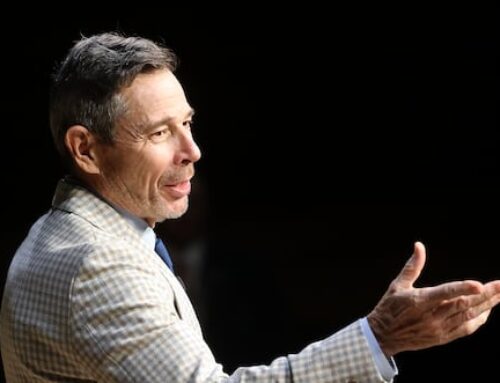
Nature, learning return as LC reopens environmental science center
May 4, 2026
Maria Ruiz/Laredo Morning Times
The Lamar Bruni Vergara Environmental Science Center at Laredo College has reopened after nearly three years of renovations.

Elementary school students and stakeholders attended the ribbon-cutting event, eager to see the future of the nature center. Laredo College President Maria Minerva Ramirez called the space “a living classroom.”
Article continues below this ad
“The Lamar Bruni Vergara Environmental Center is a place where curiosity comes to life. Every improvement was designed with education at the heart of what we were going to do here — helping children and adults across our community learn more about the vibrant flora and the fauna of our region,” Ramirez said.
The $6 million investment, funded in part by a grant from the Lamar Bruni Vergara Charitable Trust, creates a living laboratory focused on the flora and fauna of the Rio Grande watershed. It aims to provide educational services that address the environmental needs of the regional and international community.
Center Director Bianca Brewster said she is excited to finally open the center to the public.
“We’ve been getting a lot of calls asking us ‘When are you going to be opening?’ We can finally say, ‘Yes, we’re open,’” Brewster said. “I’m just very excited to invite everyone to come visit us.”
Article continues below this ad
With its reopening, the space has expanded its facilities and learning areas while adding new enclosures for 100 to 120 animal species.
One change, Brewster said, is the addition of some non-native, invasive animals, such as a ball python and chameleons, as educational tools.
“We are still displaying the local flora and fauna of South Texas with some invasive critters that, if released into the wild, could harm our environment,” Brewster said. “But we’re still using them as ambassadors to teach.”
Inside the center, guests can visit the Student Center, which includes jarred wet specimens and displays with preserved earthworms, monarch butterflies and frog species. One student, Athena Rodriguez from Anita T. Dovalina Elementary, took time to write on a notecard to name the new alligators at the center. She suggested naming one “Mark.”
Article continues below this ad
Outside in the main courtyard, attendees can see tortoises, a skittish javelina, lounging bobcats, raccoons and chickens. An aquatic space also offers multiple viewing points for visitors to observe underwater fish species.
A new aviary space allows residents to walk through an area filled with rehabilitating baby birds, a goose, a peahen and a peacock. It also features a walking trail and a shallow water fountain for birds to bathe in.
A reptile enclosure houses species such as the vibrant Mexican milksnake, a Rhinoceros iguana and others.
Ramirez also highlighted the center’s focus on sustainability.
Article continues below this ad
“One of the things we’re very proud of is that the people we have working here are trying to use and reuse for self sustainment,” Ramirez said. She said eggs laid by the chickens are used as a food source for some animals, while leaves that fall from trees are fed to the tortoises. Twigs and branches are used to create habitats for toads, lizards and snakes. “Nothing goes to waste.”
Former director Thomas “Tom” Miller, who retired after a 20-year tenure in 2020, visited the space with his wife, stepdaughter and granddaughter.
“A lot of good has come from it. I’m abashed from seeing the different changes in how the footprint was here, and now every part of it has been improved,” Miller said. “I hope more and more people will be able to come here. In 20 years, we had a quarter of a million people come through, so hopefully they’ll have half a million people come through in the next 20 years.
Article continues below this ad
“I think with this type of facility, they certainly have something for everybody to see and enjoy.”
Search
RECENT PRESS RELEASES
Related Post