NEV growth slows, value changes
April 19, 2026

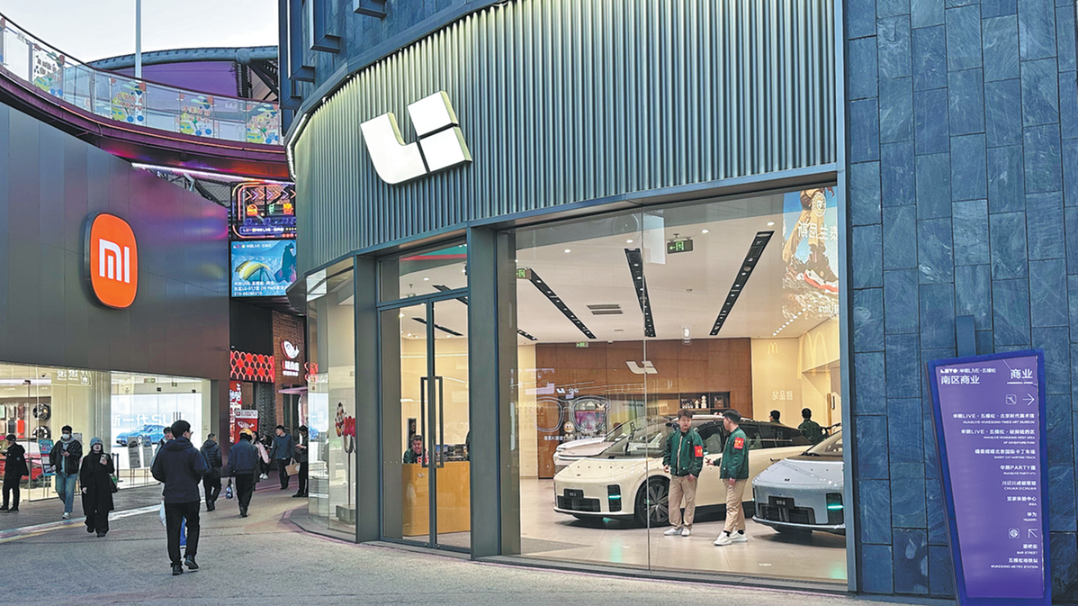
If the key phrase for China’s automotive industry over the past decade was scale expansion, industry leaders are now signaling a shift that the focus is moving from speed and volume to value creation and rules-based competition.
Executives and policymakers noted that with the era of breakneck expansion ending, automakers must now focus on system capabilities, user experience and sustainable profitability. This comes amid supply chain waste and consumer caution, they said at the Intelligent Electric Vehicle Development Forum 2026, hosted in Beijing earlier in April by think tank China EV100.
The new energy vehicle sector in China has become a dominant force, with its share set to surpass 50 percent of total sales in 2026, up from 5.34 percent in 2020 to 47.9 percent in 2025, an average annual increase of 8 percentage points.
Su Bo, a former vice-minister of industry and information technology, said at the forum that NEVs would account for at least 70 percent of new car sales by the end of 2030, though annual growth may slow.
“In some sense, the pace of global competition in the NEV sector is being set by China,” said Han Sanchu, executive vice-president of Volkswagen Group China and CEO of CARIAD China, the group’s software unit.
He believes that the Chinese market is not only the “largest in scale” but the most complex and dynamic worldwide. There are currently over 100 brands in the Chinese NEV market, and the market is characterized by fierce competition and rapid technological iteration.
“We are in an intense stalemate phase,” said Lian Yubo, chief scientist at BYD. “Growth is slowing … The competition is moving from scale expansion to value creation, and from single-point breakthroughs to system-level capabilities.”
The relationship between automakers and suppliers is being restructured, leading to an increase in the overall value of the industry chain. This growth is driven by enhanced collaboration in areas such as R&D, manufacturing and services. This value growth is amplified by technological advancements and continuous improvements in user experience.
Li Ming, general manager of JAC Group, noted a shift in the value chain toward upstream technologies like batteries, chips and downstream services. He emphasized that this restructuring breaks traditional automotive value divisions, urging cross-industry collaboration to create new value.
William Li, founder and CEO of Nio, delivered a stark warning about the hidden costs of fast vehicle model iteration, which leads to chronically mismatched supply and demand.
“It’s common to see waste amounting to several hundred million yuan on a single model,” he said at the forum. Companies spend heavily on capacity ramps — hiring, equipment, overtime — only to suspend production lines and cut staff a few months later when sales fall short. The waste across the industry is staggering, he added.
The two biggest challenges are battery supply-demand balance and the stability of chip supply. Adjusting battery production capacity is difficult, and chip supply is affected by geopolitical tensions and resource competition from AI data centers, leading to many uncontrollable factors. Moreover, the costs of these two components account for over 50 percent of the total cost of smart electric vehicles.
Standardizing battery cells and reducing chip varieties could unlock over 100 billion yuan ($13.7 billion) in industry-wide cost savings, Li said, adding that neither carmakers nor suppliers would see their profits eroded by taking these two steps.
Lu Fang, chairman of Dongfeng’s Voyah brand, warned that rising raw material, battery and chip prices — especially for memory chips — are making cost control extremely difficult.
“If prices continue to rise, the increase will likely be passed on to consumers, making higher vehicle prices a high-probability event,” Lu said. “The auto industry must have profit, even if it’s thin, to sustain itself.”
Auto sales in China fell 20.3 percent in the first quarter from a year earlier to 4.82 million vehicles, while NEV sales dropped 23.8 percent to 2.01 million, according to the latest data from the China Association of Automobile Manufacturers. Only 18 new models were launched in the quarter, down from 28 a year earlier.
One reason is that consumers are waiting on the sidelines because soaring memory and chip costs have left carmakers unable to sustain aggressive discounts, making caution a rational choice for buyers.
Zhang Yongwei, president of the China EV100, said China has transformed from a follower into a global leader. “On forward-looking questions — how to define the car, how to create new forms of auto consumption, how to build a new car culture — global companies are increasingly looking to China for answers,” Zhang said.
Yet he cautioned that the industry is at a critical juncture. “If we fail to navigate this well, we could miss a major development opportunity. But if we get it right, the results will be better than ever.”
Search
RECENT PRESS RELEASES
Related Post