NI agriculture 2025: From blue-green algae to bluetongue virus
January 1, 2026
Blue-green algae to bluetongue – 2025 in NI agriculture and environment
 Getty Images
After the past 12 months, anyone in the agriculture and environment sphere could be forgiven for feeling a little blue.
The year has once again been defined by the shade: from blue-green algae dominating the summer in Lough Neagh, to bluetongue virus being detected in County Down.
But along the way, there was also some positive news: A fightback on wildfires, and a long-awaited support scheme outline for renewable energy generation.
Lough Neagh woes
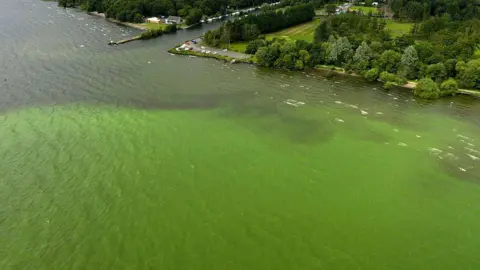
Once again, Lough Neagh was turned green, as algal blooms spread across its surface.
After two years and three summers of the crisis, you may think the community would be used to it.
And the Lough Neagh plan to tackle the problem has now been in place for a year, albeit with a warning that it will take time to turn the situation around.
 Getty Images
But as the season drew to an end, people like fisherman Patrick McCoy told BBC News NI as part of a major focus on Lough Neagh that it was “worse and getting worse”.
The problem stems predominantly from pollution in the water – nutrients like phosphorus – combined with the effects of climate change and the invasive zebra mussel.
While wastewater, household and industrial pollution all play a part, runoff from agriculture is the largest contributor to the nutrients reaching Lough Neagh.
 PA Media
The Agriculture, Environment and Rural Affairs Minister, Andrew Muir, apologised to farmers for a policy that had encouraged more intensive agricultural production but led to an increase in slurry.
The Nutrients Action Programme seeks to tackle water pollution from agricultural sources.
But an overdue review of the policy sparked anger in the farming community and provoked a motion in the assembly led by the DUP, that called for a consultation on the proposals to be scrapped.
In the end, Muir formed a group to review the consultation responses and report back in 2026.
After that is consulted on, the proposals that follow will become a final document for executive approval.
The food and farming sector weighed in behind that approach.
But they were feeling pressure in other quarters too.
There was concern when a blueprint to eradicate bovine TB (bTB) was published, but without any commitment to any precise form of wildlife intervention.
Shared Island funding was announced for a pilot project in the north west.
It will see a badger and sett survey carried out from December 2025 to April 2026, and a two-year test, vaccinate or remove programme in a 250km2 area around the border.
A consultation on all options for wildlife intervention is due next year.
Bird flu and bluetongue
 Getty Images
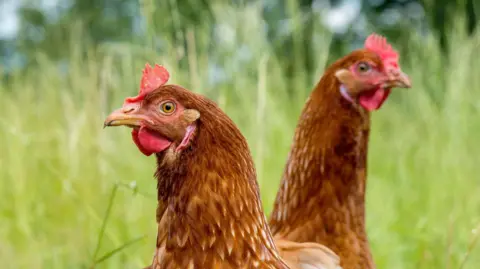
When Muir warned about a “triple threat” of animal diseases in March – bird flu, bluetongue virus, and foot-and-mouth – he may not have expected to have ticked off two of them by the end of the year.
And the outbreak of Bluetongue Virus (BTV) in County Down came a serious blow to farmers, who had hoped they might avoid it for another season.
The initial detection at the Clandeboye Estate was followed by another suspect case about 10 miles away in Greyabbey, then two more detections.
But there was some light at the end of the tunnel, when restrictions were eased to allow movement of animals to Great Britain and into the Temporary Control Zones (TCZ).
Moves within and out of the TCZs remain prohibited though.
Bird flu bracketed the year: three outbreaks in commercial settings in February, at the end of the 2024/25 season, were followed by another three at the start of the 2025/26 season, along with a case in a backyard flock in Bangor.
Once again, poultry competitions were cancelled at Balmoral, as the show felt the knock-on effects of housing restrictions.
In November, birds were once again housed and poultry gatherings banned.
Several outbreaks were also recorded in the Republic of Ireland.
Another unwanted first for Northern Ireland was recorded with the appearance of the highly invasive quagga mussel in Lough Erne.
With its potential to disrupt the ecology of waterways, it will be kept closely under watch in 2026.
Renewable energy boost
The renewable energy sector celebrated when a long-overdue support scheme was announced in September.
The Renewable Energy Price Guarantee scheme will lead to lower prices for consumers by increasing the amount of green power generated locally.
It will also cut greenhouse gas emissions.
But as the year wore on, industry leaders were left waiting again, this time for terms and conditions to enable the scheme to begin.
Meanwhile, renewable generation showed a dip for a third consecutive year.
With the first auction for contracts under REPG due in early 2027, industry leaders warned the clock is ticking.
Eyes in the skies?
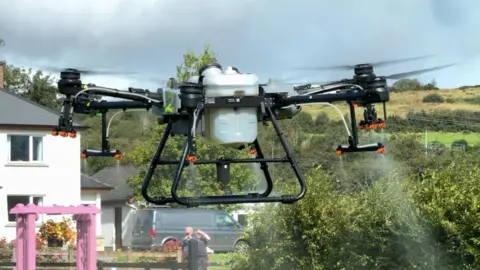
The entire Northern section of Slieve Beagh was destroyed in a three-day wildfire in May.
Wildfire prevention is set to take to the skies in 2026, with drone technology being used to patrol the remote area and scan for any potential fires.
Roy Spence from River Blackwater Catchment Trust said he hoped it would prove a deterrent.
Search
RECENT PRESS RELEASES
Related Post