Nissan’s JATCO scraps £48.7m Sunderland EV powertrain investment amid weak European demand
May 26, 2026
Sunderland Setback
Nissan’s transmission-making subsidiary has abandoned a major electric vehicle powertrain investment in Sunderland, as sluggish European demand and a sweeping restructuring of Nissan’s global plant network rewrite the economics of electrification.
Nissan’s transmission-making subsidiary has abandoned a major electric vehicle powertrain investment in Sunderland, as sluggish European demand and a sweeping restructuring of Nissan’s global plant network rewrite the economics of electrification.
When JATCO announced in January 2025 that it would invest £48.7m ($65.5m) in a dedicated manufacturing facility at Sunderland, it appeared to mark another confident chapter in that plant’s long and largely improbable success story. The Wearside site, home to Nissan’s UK operations for four decades, would host production of up to 340,000 integrated electric vehicle powertrains annually, each combining motor, inverter and reducer into a single, purpose-built assembly. The plan spoke of scale, of conviction, and of an electrified future being forged on Tyne and Wear. Little more than a year later, that conviction has quietly dissolved.
JATCO, a drivetrain specialist that operates as a subsidiary of Nissan Motor, has scrapped the Sunderland investment, according to a report by the Nikkei business daily published on Sunday.
The cause is not manufacturing complexity, nor supply chain fragility, nor the friction of post-Brexit trading arrangements that have historically shadowed decisions of this kind. It is something more fundamental, and in many respects more unsettling for the industry at large. The vehicles that would have required those powertrains are simply not selling quickly enough.
Advertisement
The anatomy of an abandoned plan
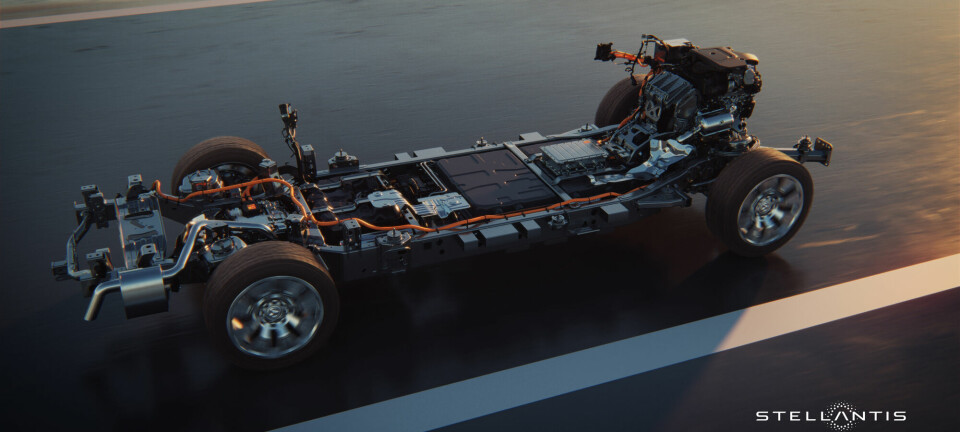
The original investment was to have been a substantial commitment to UK electrification. A dedicated JATCO facility at Sunderland would have produced up to 340,000 e-powertrain units per year, each integrating the motor, inverter and reducer that sit at the heart of an electric vehicle’s propulsion system. At £48.7m ($65.5m), the capital commitment was not trivial, particularly for a supplier whose output is intrinsically tied to the production volumes of its parent. That figure broadly represents the kind of expenditure that component manufacturers commit to when they have sufficient demand visibility to justify multi-year tooling, recruitment and facility costs.
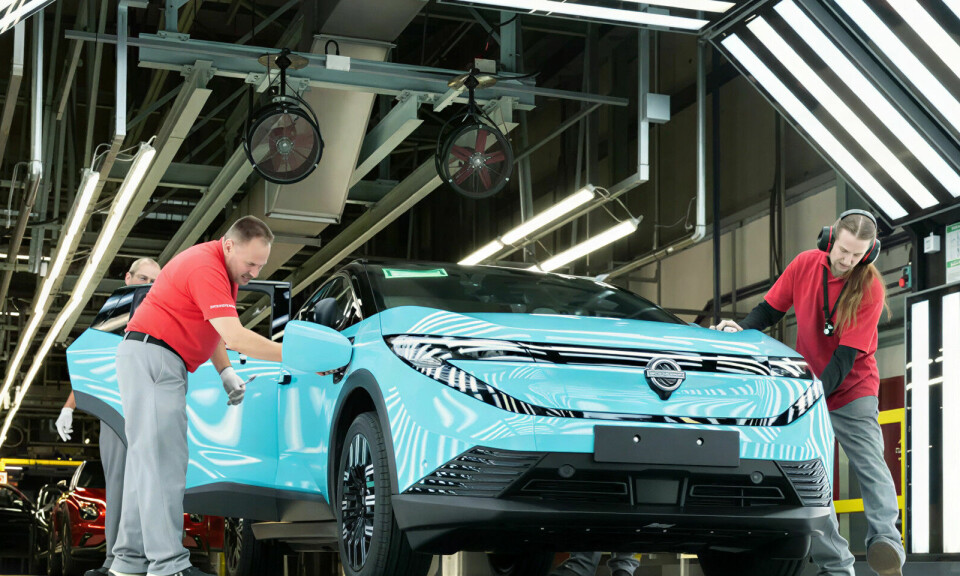
That visibility, it now appears, was misplaced. Nissan’s electric vehicle sales in Europe have failed to meet the expectations that underpinned the investment case. The Nissan Leaf, once a standard-bearer for mass-market electrification and the world’s first genuinely high-volume battery electric car, has faced intensifying competition and steadily eroding market share.
Newer models have struggled to generate the kind of sustained European volume that would feed a dedicated powertrain plant running at anything approaching capacity. Without that demand signal, the business case for the Sunderland facility becomes impossible to defend.
Nissan…has been badly damaged by weakening sales in both the United States and China, its two most strategically critical markets. In response, the Japanese carmaker has announced plans to cut the number of its automotive production plants from 17 to 10
Nissan’s wider contraction
The JATCO decision does not exist in isolation. It is one consequence of a far more profound crisis at Nissan, which has been badly damaged by weakening sales in both the United States and China, its two most strategically critical markets. In response, the Japanese carmaker has announced plans to cut the number of its automotive production plants from 17 to 10, a reduction of extraordinary proportions for a global manufacturer that once styled itself among the industry’s most formidable volume producers.
The company has also said it will conduct a thorough review of its powertrain factories, a process that has now claimed the Sunderland JATCO project as one of its earliest identifiable casualties.
The scale of Nissan’s restructuring is difficult to overstate. Reducing a global manufacturing network by more than 40 per cent is not simply a surgical adjustment, and represents a fundamental reappraisal of where and how a company chooses to produce. Powertrain manufacturing, traditionally regarded as a core and strategically sensitive activity kept close to the parent’s centre of gravity, is no longer exempt from that assessment.
Advertisement
Given that EV powertrains require entirely different capital investment from their internal combustion equivalents, a period of pronounced demand uncertainty is precisely the wrong moment to be committing to new electrified drivetrain capacity at greenfield sites far from home.
A question without an answer?
Neither Nissan nor JATCO has formally confirmed the cancellation. No one was immediately available for comment at Nissan outside regular business hours, and a query submitted via JATCO’s website has yet to receive a response. The silence is itself instructive. When investments of this kind are quietly unwound rather than officially announced, it typically signals that the decision has been made but that the messaging around it remains sensitive, particularly in a region where automotive manufacturing carries considerable political and economic weight and where any sign of retreat tends to attract scrutiny well beyond the trade press.
Sunderland’s Nissan plant has been a cornerstone of the British automotive sector since 1986. It has endured multiple rounds of industry turbulence, not least the prolonged uncertainty over post-Brexit trading arrangements, and has consistently been cited as one of Europe’s most productive vehicle manufacturing facilities.
The loss of an investment of this magnitude, before a single unit had been produced and before a spade had entered the ground, is a meaningful blow to the plant’s electrification trajectory, even if it falls short of threatening the facility’s established core operations.
What the retreat reveals
The JATCO withdrawal is symptomatic of a broader and growing tension within the automotive industry’s electrification programmes. European EV demand has proved considerably more uneven than manufacturers and their supply chains anticipated when committing capital in the early years of this decade. Consumers have been slower to transition than projected, constrained by charging infrastructure gaps, vehicle purchase prices that remain elevated relative to combustion alternatives, and a macroeconomic environment that makes large discretionary purchases feel more exposed than they once did.
Manufacturers who structured their capital plans around demand forecasts that assumed a steeper and more linear adoption curve are now quietly revisiting those positions. For Nissan, the recalibration is especially acute. The company was among the earliest mainstream manufacturers to commit to electrification in earnest, launching the Leaf in 2010.
Advertisement
That pioneering role, however, has not translated into the kind of durable European volume leadership that could justify an independent, dedicated powertrain supply chain on British soil. The gap between ambition and execution is proving costly, and Sunderland is now bearing a measurable portion of that cost.
Search
RECENT PRESS RELEASES
Related Post