OnePoint BFG Wealth CIO Details Global Investment Strategy
January 21, 2026
OnePoint BFG Wealth CIO Details Global Investment Strategy

7 Min Read
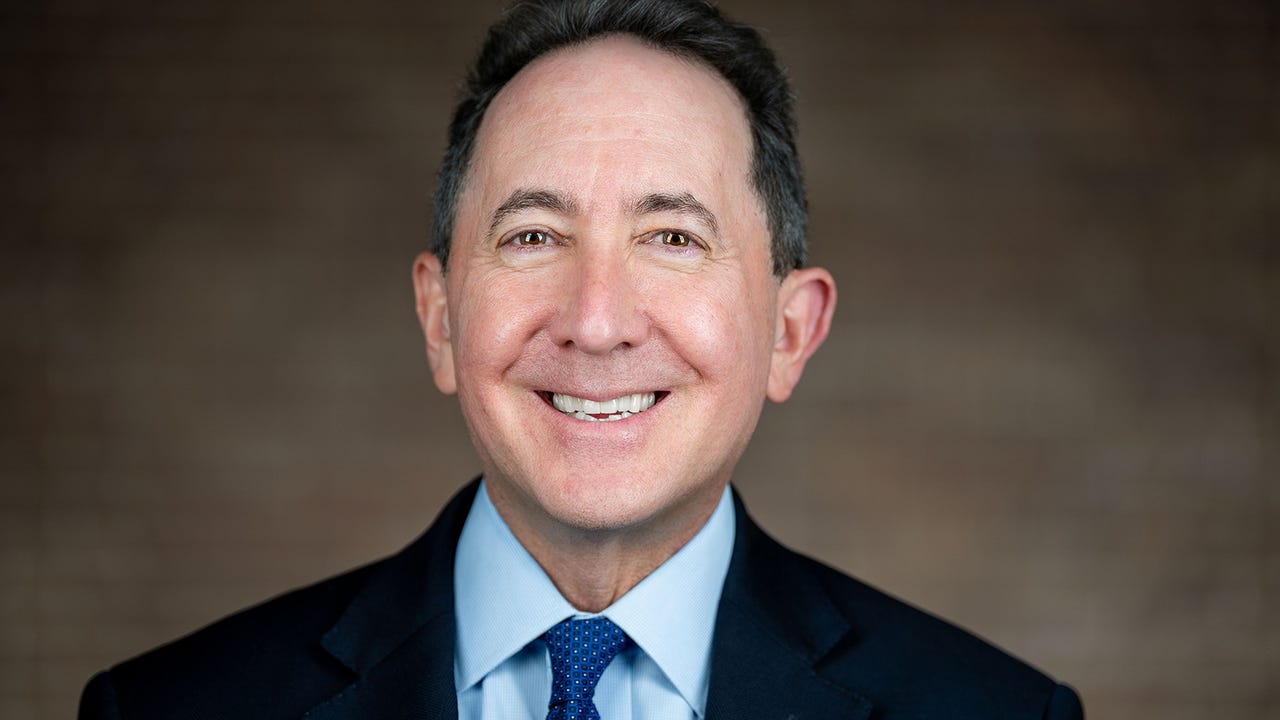
OnePoint BFG CIO Peter Boockvar
OnePoint BFG Wealth Partners, an independent RIA with over $12 billion in AUM, got its start 40 years ago as Bleakley Financial Group, an insurance practice affiliated with Northwestern Mutual. Throughout its existence, the firm has undergone several iterations, including as a practice under the supervision of LPL Financial. Its growth spurt accelerated in the past few years, after Joe Duran’s Rise Growth Partners took a $50 million non-controlling minority stake in the firm in 2024. Rebranded as OnePoint BFG Wealth Partners, the firm added $2 billion in AUM and set itself a target of $5 billion in inorganic growth a year.
OnePoint BFG Wealth Partners wants to make it big on the national stage while improving both the advisor and client experience, according to comments from CEO Andy Schwartz. How does this translate to the firm’s investment approach? Wealth Management spoke to OnePoint BFG CIO Peter Boockvar to find out.
This Q&A has been edited for length, style and clarity.
Wealth Management: Can you describe your overarching investment philosophy?
Peter Boockvar: Generically, diversification is a pretty standard thing that we adhere to. When it comes to equities, we span the scale of market caps from large to small, with medium in between. We also find it important to have international exposure—75% of the world’s GDP takes place outside the U.S., 96% of the population lives outside the U.S. So, we feel it’s important to invest outside the United States.
On the fixed-income side, we try to figure out where along the yield curve is the best place to extend our duration. We’ve been [betting] on shorter duration over the past couple of years with the Fed raising interest rates and now central banks doing the same outside of Japan. We have exposure to sovereign bonds, corporate bonds.
The particular strategies that I manage—one is a global macro strategy, where I can invest in any of the main asset classes: equities, fixed income, commodities and currencies. I am very asset class-agnostic, as well as geographically agnostic. I invest in things through a value perspective. I like to find things that are down and out, in anticipation of that changing. I do believe that clients who already have exposure to large cap tech stocks, I have the opportunity to invest client money in other parts of the global market, anything from gold to an oil stock to a food stock based in Europe or getting exposure to Asia and fixed income. It’s not just focusing on U.S. markets, but finding attractive markets around the world. We put our feet in a lot of different investment opportunities, both to create money for clients, but also to create a natural diversification, not for the sake of diversification. It just ends up being that way.
WM: Where in international equities do you currently see opportunities, both in terms of geographic markets and sectors?
PB: I think 2025 was a big sea change in investor use toward international markets because, for the first time in many years, international markets well outperformed the U.S. market. I do think there is a possibility that could be a multi-year trend.
We tend to be bullish on Asia, in particular, where half the world’s population lives. We have exposure to markets in China, Vietnam, Singapore. We are finding attractive stocks in Europe and Brazil, as well.
On the bond side, I happen to be bullish on emerging markets, sovereign bonds denominated in local currencies, believing that there is a nice yield capture there and the possibility of benefiting from a weaker U.S. dollar. I think the 2025 outperformance of international markets can continue this year.
WM: Do you have any allocations to private markets?
PB: We do offer that to clients here, on the hedge fund side, the private equity side, the private credit side. We do provide that as an option for clients if they choose. We are not necessarily pushing them, but we want to provide a menu of opportunities. I am of the opinion that a lot of the opportunities that private investments offer can be replicated in the public markets. But no doubt, privates are a large asset class, and they can’t be ignored.
WM: How often does the firm review and update its allocations?
PB: Not very often. When we take a view on something, when we allocate money, we do our best to have a long-term perspective with it. Therefore, we don’t really change it that much. That said, I don’t believe in being rigid with one’s approach, and I believe if circumstances change, then we should change too. It’s always good to have a flexible approach when investing in markets.
WM: When was the last time that you made any tweaks to those allocations?
PB: One of the portfolios that I manage, we reduced our allocation to silver. We had a multi-year position in silver, and on this spike in silver pricing, we dramatically cut back on our position. Sometimes, price drives an allocation position if something gets very expensive.
WM: Do you anticipate any significant change in oil prices as a consequence of the U.S. actions in Venezuela? Do you think it might impact your holdings in oil company stocks?
PB: We happen to be very bullish on oil and natural gas and are long stocks in that sector. I don’t think there is going to be much change in the supply picture with oil until there is a lot more clarity on who will be running the country, what political system they will have and what legal protections will be in place. Until that happens, you won’t see an incremental increase in oil supply. And even when you do have that clarity, it’s still going to take many, many years for there to be a notable increase in supply.
At the same time, demand is still growing at a pretty healthy clip. So any supply we do get will be satisfied by an increase in demand. So, still pretty bullish on oil prices. It’s a contrarian view of ours, but I believe that’s where opportunities are found—to go the opposite way of the conventional wisdom.
WM: Do you work with third-party asset managers? If not, why not?
PB: If we buy a mutual fund or an ETF, we are using third-party managers. Most of the portfolios I manage I do not, I use some. If I buy gold, I’ll buy an ETF. Or if I buy emerging market bonds, I’ll use an ETF. We definitely employ them when we feel we can’t necessarily replicate [what they do] in-house.
WM: What criteria do you use to choose which managers to work with?
PB: They have to have a track record, and they have to do what we want them to do. If we want to get a certain level of exposure to, let’s say, an international market or the small-cap market in the U.S., we want to make sure the manager is carrying out the strategy we want. It’s a combination of first finding where we see the investment opportunity and then finding the right manager to satisfy that, rather than the other way around.
WM: You mentioned you do use some mutual funds and ETFs. When it comes to private markets, which fund structures do you work with?
PB: I would say we are using a combination. We are providing advisors here a menu of options for clients that want to invest in privates. Like I said earlier, I believe that investors can replicate a bunch of the private investments in public markets, and therefore not give up liquidity and not have to pay a lot of the fees that privates charge. But investors, clients, some choose to invest in privates, and we want to provide that opportunity.
WM: Do you invest in cryptocurrency in any way?
PB: It’s not a standard allocation, but if a client wants an allocation, they are certainly welcome to have one. But it’s not something we standardize in the general client portfolio; it’s not a top-down decision.
WM: Do you hold any cash on hand?
PB: In my portfolios, I hold a little bit of cash. I always think it’s good to hold cash as dry powder and optionality. With interest rates still well above zero, at least you get paid to have that cash. Our typical allocation for clients does not include cash, but some of the holdings within that allocation do hold cash—like some of the portfolios that I manage. But it tends to be a small piece of the overall portfolio.
WM: What else should people know about your approach to investment strategy?
PB: As a firm, it’s pretty straightforward in terms of the allocations and the mix between fixed income, equities and owning some precious metals and some other alternatives. The strategies that I particularly manage tend to be value-focused, I tend to be valuation sensitive. Therefore, we try not to chase things just because they are going up. We want to have a good valuation and fundamental theses behind our ideas.
Search
RECENT PRESS RELEASES
Related Post