Opinion: 2 myths about cannabis are unraveling in real time
May 13, 2026
Advocates of cannabis legalization have used two major arguments to persuade the public in the past few decades. Increasingly, both seem to be completely specious.
The first is that cannabis has medicinal benefits. This argument was widely deployed during the AIDS epidemic, with advocates telling the public that cannabis would help the terminally ill to eat when they seemed to be wasting away. Who could be so heartless as to oppose cannabis use for this population? Most of the states that legalized cannabis began with allowances for medical use.
Over time, the supposed health benefits have expanded to include treatment for anxiety, depression or post-traumatic stress disorder. It is astonishing to hear how many teenagers (and their parents) were fooled into believing that weed was going to cure their problems. But in April, The Lancet published a meta-analysis concluding that there is no evidence of cannabis’s effectiveness at treating any of these psychiatric conditions.
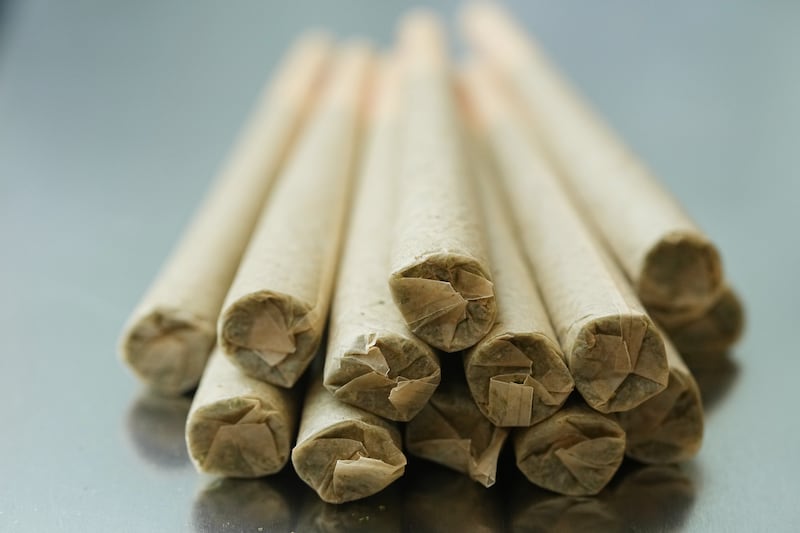
And last week, consumers in 12 states filed a class-action lawsuit against three cannabis companies for claims that their product could help with mental health, pain and other disorders while knowing that the evidence didn’t support that.
The second important myth proffered by cannabis advocates is that legalizing the drug would improve the lives of African Americans. The narrative was that Black people were disproportionately impacted by the war on drugs and that decriminalizing cannabis would mean fewer Black people would be incarcerated for nonviolent drug offenses. There were several problems with this argument. First, our prisons are not filled with people who were locked up for getting caught with a dime bag. They are filled with people who have committed violent offenses and unfortunately there are racial disparities in those crimes.
Just as cannabis hasn’t been any kind of panacea for those seeking relief from physical or psychiatric ailments, it also hasn’t brought much in the way of “social justice” for the supposed beneficiaries of legalization.
A 2022 article called “Racial and Ethnic Differences in Cannabis Use and Cannabis Use Disorder: Implications for Researchers” by researchers at the Center for Addiction Research at the University of Cincinnati College of Medicinesuggests that the current environment of widespread legalization has had the opposite effect: “Several recent studies have found an increased use of cannabis among African American/Black people relative to their White counterparts, especially among adolescents and young adults.”
The meta-analysis goes on to note that “cannabis use among African Americans/Black individuals is linked to other drug use … showing heavy rates of cannabis and tobacco co-use and cannabis and alcohol co-use relative to other racial/ethnic groups.” Concerningly, in a “national study of pregnant women, African American/Black women were at an increased odds of using cannabis and tobacco relative to tobacco only.”
The researchers also found racial differences in frequency of cannabis use. Black people “reported significantly greater hits per day of cannabis compared to their White counterparts … (and they) spend more money on their cannabis … relative to their White peers.”
The authors also “highlighted an increase in cannabis-associated emergency department visits among African American/Blacks.”
None of this is particularly surprising. Though drug use is often made out to be simply a response to trauma or despair, it is also a matter of opportunity. And legalized cannabis has provided people with a lot more opportunity to buy weed. Both the legal market and the illegal market have expanded in recent years.
In fact, the policy has provided certain populations with much more opportunity than others. A 2025 article about New York’s cannabis industry found that the places with the highest concentration of dispensaries “tend to be urban areas with clusters of Black and Hispanic residents.” Indeed, the article notes that “New York City imposed spatial constraints on the locations of cannabis dispensaries, which mirror the types of zoning and land use regulations already imposed for liquor stores, bars, and other adult businesses.” So neighborhoods that are already suffering from being the site of strip clubs and bars now have to contend with cannabis stores, too.
The authors say “it is unclear what the current spatial patterns of cannabis dispensaries are and how they impact neighborhood quality of life.” Really? Have you asked the residents? Because they will tell you no one wants these stores in their neighborhood. Indeed, wealthier suburban areas have fought tooth and nail to keep them out.
So it’s not just Black users who are being disproportionately impacted by cannabis legalization, but also Black families who are living in proximity to more dispensaries and the problems that go along with it — including the public misbehavior of drug users. And the children in these families are getting the message that cannabis use is socially acceptable.
Now that the evidence is in, can we sue legalization supporters for falsely claiming their policy would improve the lives of Black people in this country? Probably not, but the public should at least stop buying these lies.
Search
RECENT PRESS RELEASES
Related Post






View Comments