Our Power, Our Planet: Faith Traditions, Unite!
February 2, 2026
Today, as we wrap up Tu BiShvat, we look ahead to the first Earth Day. In 1970, 20 million Americans took to the streets to advocate for clean water, clean air, and the common good for our shared home. Over the following years, this clear and determined public pressure helped usher in the modern environmental movement, with the creation of the Environmental Protection Agency and the passage of laws such as the Clean Air and Clean Water Acts.
This year’s Earth Day theme, Our Power, Our Planet, focuses on how community action can build progress. As we gear up for 2026, we’ll examine how faith traditions, at their best, are grounded in a more sustainable future for our children and future generations. We’ll also feature ways your community can get involved, leading up to and during our global week of actions, beginning Saturday, April 18th, and on Earth Day, April 22nd.
Within the Jewish faith, Tu BiShvat, or the “New Year for Trees”, honors Jewish values such as tikkun olam, repairing the world, and tzedakah, charitable giving, by planting trees. This year’s observance began at sundown of February 1, 2026, and goes through the evening of February 2. It’s a time when Jewish people from across the globe recommit to their relationship with the natural world, using trees as a symbol of renewal.
Tu BiShvat can be traced to Jewish Kabbalist rituals in the sixteenth century, and, in its relatively modern observance, beginning in 1908, it recognizes the tree as a metaphor for one’s connection to the Jewish faith. As Jewish immigrants, like my great-grandparents, settled in the United States, Tu BiShvat became one way the Jewish community stayed grounded in their faith.
I can imagine my grandmother’s family, newly arrived immigrants to the United States, gathering for a Tu BiShvat seder, a ritual meal of fruits and nuts, symbols of the tree’s bounty, as a way to remind themselves of both their rootedness and their connectedness while finding their place in a new land.
The Tu BiShvat Seder plate symbolizes the seven species referenced in the last book of the Torah, or Hebrew Bible: “a land of wheat and barley, of vines, figs, and pomegranates, a land of olive trees and honey” (Deuteronomy 8:8).

Mid-February, perhaps not during a bitter cold spell, but in other parts of the world, is when tree buds first start to appear, reminding us that winter will end, and rebirth and hope are not lost. Tu BiShvat allows us to put Jewish values of repairing the world andcharitable giving into practice.
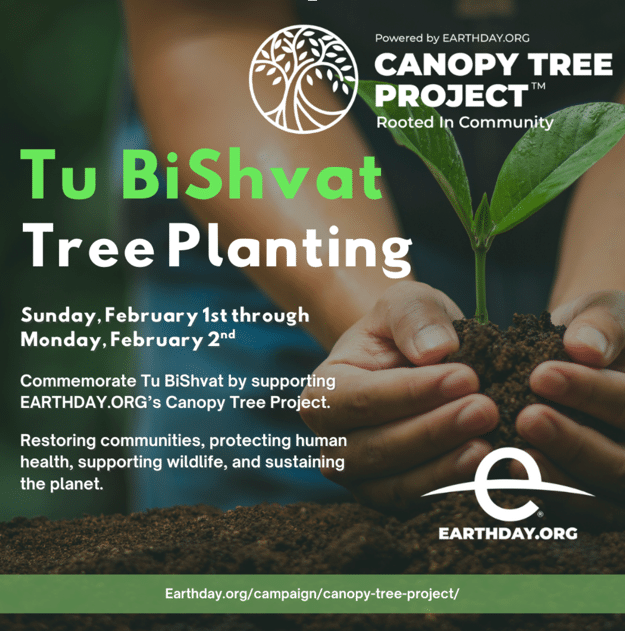
In honor of Tu BiShvat, we invite you to support tree planting and land restoration efforts with the Canopy Tree Project. Rooted in strengthening ecosystems, supporting communities, and restoring balance to the land, the Earth Day plantings bring these values to life through native trees and guidance from local communities. A gift in support of this work creates lasting environmental and community impact, especially meaningful during Tu BiShvat.
We’ve designed a shareable graphic that you’re welcome to use in whatever way feels most appropriate, whether in a newsletter, during a Tu BiShvat seder, through a social action committee, or simply as an invitation to reflect and participate.
We invite you to explore EARTHDAY.ORG’s additional resources for reflection.
“When you plant a tree, you plant for generations you may never meet.” Greek Proverb As we approach April, we’d love to learn how your community is honoring Earth Day 2026. Contact us at [email protected]. Anyone can add their Earth Day event to our global map. We hope you’ll join us!
Search
RECENT PRESS RELEASES
Related Post