Ouyang Minggao: NEV Productivity Revolution Triggers Five Major Production Relation Transformation Models
April 13, 2026
Gasgoo Munich- On April 11, Ouyang Minggao, an academician at the Chinese Academy of Sciences, told at the 2026 Intelligent Electric Vehicle Development Forum that the revolution in new-energy vehicle productivity will inevitably reshape production relations.
Ouyang traced the shifting geography of the auto industry: Europe ceded ground to the U.S. with the rise of Ford’s assembly line, just as the U.S. later yielded to Japan’s lean production methods. He argued that China’s rise as the global auto hub will likewise be accompanied by a transformation of industrial models, a restructuring of value chains, and a revolution in production methods.
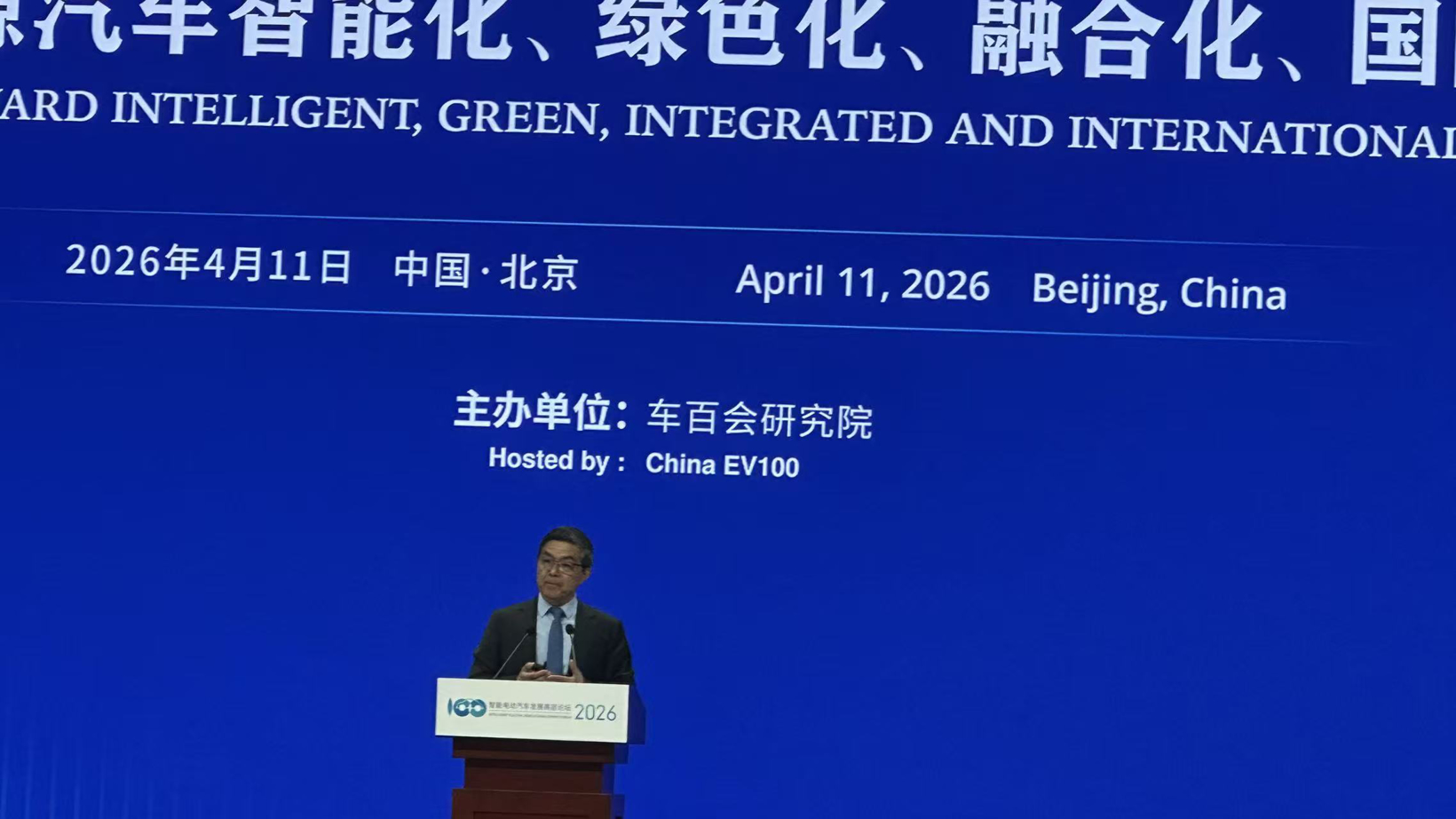
Image source: Gasgoo on-site photo
Five emerging models are taking shape:
1. Electrification-driven vertical integration
Anchored in full electrification, this model uses intelligence to empower electric capabilities while leveraging global markets for massive scale and cost advantages. It has largely achieved a deep integration of technology and industrial chains; the next challenge lies in building the value chain to gradually merge all three.
2. Dual-drive model for domestic brands
This approach involves developing both internal combustion engine and electric vehicles, as well as domestic and international markets simultaneously. Backed by deep automotive heritage and extensive market experience, its success depends on balancing the positioning of these two distinct drivers. Ouyang noted that in the coming years, a shift toward large-battery hybrids for ICE vehicles and pure electrics for NEVs is highly probable.
3. New entrant Internet manufacturing model
Blending internet thinking, smart terminal marketing, and user ecosystems, this model treats electrification as the gateway to intelligence. It could eventually pivot from car manufacturing to mobility services, expanding horizontally into embodied intelligence — including autonomous vehicles, drones, and humanoid robots.
4. Value chain-oriented horizontal integration
This model restructures the auto value chain, centering on intelligence and brand marketing to form cross-brand alliances led by entities outside traditional automakers. Ouyang posed a question: Will we see a horizontal integration model built on battery swapping and vehicle-energy fusion to maximize asset value?
5. SOE self-owned + JV reform and transition model
By reforming systems and mechanisms, this model aims to boost market competitiveness, leveraging the overall strengths of state-owned auto enterprises and enhancing cross-sector synergy. It also utilizes state assets for mergers and acquisitions, effectively integrating the stabilizing role of the “regular army” with the disruptive “catfish” effect of startups.
All Rights Reserved. Do not reproduce, copy and use the editorial content without permission. Contact us: autonews@gasgoo.com
Search
RECENT PRESS RELEASES
Related Post