Pokémon Go players unwittingly contributed to tech with military drone uses
June 12, 2026
The repurposing of Pokémon Go data for AI training continues to draw scrutiny.
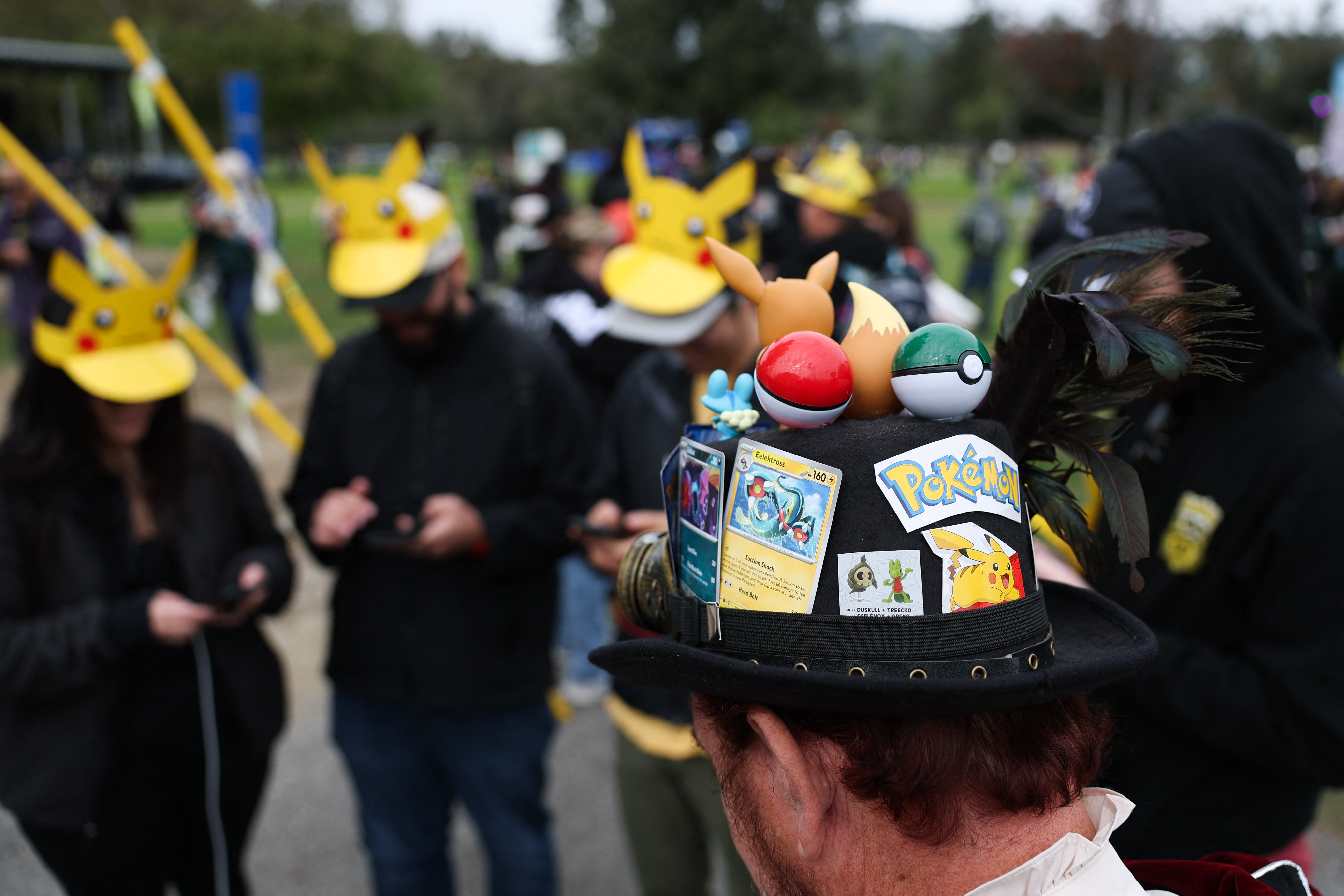
A decade after the global craze for Pokémon Go peaked, an AI company has been using billions of real-world images captured by millions of players to develop navigation technologies for delivery robots and possibly military drones. That represents an intriguing but potentially discomfiting legacy for an augmented reality mobile game that has incentivized gamers to capture short smartphone videos of physical neighborhoods and landmarks.
The AI company, Niantic Spatial, was spun out of Pokémon Go game developer Niantic in May 2025, after Niantic separately sold its licensed games such as Pokémon Go to the Saudi-backed video game publisher Scopely. But before that deal, Niantic publicly announced plans to use scans from millions of Pokémon Go players along with data captured by users of the company’s Scaniverse app to train and develop a “large geospatial model”—a 3D model of the physical world trained on the geolocated images provided by app users scanning real-world locations.
“Ground scans were one component to help train Niantic Spatial’s real-world foundation models —AI systems that learn to recognize and interpret physical spaces,” a Niantic Spatial spokesperson told Ars. “The models are the product of that training, not a copy of or a means of accessing the underlying scans, which were of public points of interest such as statues and fountains.”
After Niantic Spatial spun out as a standalone company, it trained its model on 30 billion images mostly clustered around urban environment locations that game players were incentivized to visit, according to MIT Technology Review. The images often captured the same location from many different angles under different lighting and weather conditions, and came with valuable metadata showing the location and orientation of user phones when they were capturing such images.
Such ground scans “were an entirely optional feature in games, where users created a short video of a public location,” the Niantic Spatial spokesperson said. “We’ve been transparent about the fact that the scans would improve our technology platform since 2019 in our privacy policy and public announcements.”
That allowed Niantic Spatial to develop its own visual positioning system—a type of technology that can provide a device’s position and orientation by comparing visual data from cameras with reference data from detailed 3D maps of environments. Such a system can be especially helpful indoors, in city environments where GPS and other global navigation satellite systems’ signals are unreliable, or in regions where there is active GPS jamming.
MIT Technology Review highlighted Niantic Spatial’s technology in March 2026, when the company announced a new partnership with Coco Robotics. The robotics company aimed to use Niantic Spatial’s AI model and visual positioning system to help its fleet of four-wheeled delivery robots navigate city streets.
But in December 2025, Niantic Spatial had also announced a deal with the spatial intelligence company Vantor to develop a positioning system that could help both flying drones and ground vehicles navigate GPS-denied environments. Vantor, formerly known as the space and satellite company Maxar Intelligence, has multiple US government contracts with the National Geospace-Intelligence Agency, various branches of the US military, and the Department of Homeland Security.
The new military-industrial complex
The “comprehensive positioning system” aimed to integrate Niantic Spatial’s visual positioning system with Vantor’s 3D terrain data and Raptor software. During the Defence Geospatial Intelligence (DGI) conference held in London in February 2026, Tory Smith, director of product management at Niantic Spatial, described early testing of the integrated system as leading to a 70 percent reduction in positioning error with accuracy to within 1.5 meters in many scenarios.
The partnership between Niantic Spatial and Vantor received more public attention through a recent story by Trouw, a Dutch news publication. “Without the large number of scans from all those gamers, the development of this system would never have progressed so quickly,” said Jeroen van den Hoven, professor of ethics and technology at Delft University of Technology in the Netherlands, in an interview with Trouw. “The players have indirectly, in a perhaps minimal but still effective way, made a contribution to military applications.”
Visual positioning systems are not necessarily fraught with ethical problems, even in a military scenario. For example, the Ukrainian military has been deploying battlefield robots and drones with their own visual positioning systems to survive the prevalence of GPS jamming in the ongoing Russo-Ukrainian war. “If the Ukrainians can win the just war against aggressor Russia with this, it is a good development,” Van den Hoven told Trouw.
But the Dutch newspaper also interviewed Floris De Hingh, a longtime Pokémon Go player who expressed concern about his gameplay data supporting US military systems. De Hingh specifically described himself as “strongly opposed to the war Trump is currently waging against Iran.”
“The training data came from people who thought they were catching Pikachu, under a license most never read, sold up a chain that ends at a sovereign wealth fund and a defense prime,” wrote Haye Kesteloo, editor in chief and founder of the news website DroneXL. “Consent obtained for a game is not consent for a weapons program, even if the end use turns out to be defensible.”
A Vantor spokesperson told Ars that the company “is not using any Pokémon Go data, nor do we have access to any information from the Pokémon Go dataset.” Similarly, Niantic Spatial’s spokesperson said that the agreement between the companies does not include direct sharing of game data.
But some Pokémon Go players, such as De Hingh, will probably be uncomfortable with the idea that their gameplay data helped train Niantic Spatial’s models in the first place—especially when the company’s visual positioning system may be used for military applications. Vantor acknowledged that it is “exploring adapting Niantic Spatial’s ground-based visual positioning system” to work alongside Vantor’s existing “GPS-denied positioning capabilities,” which currently rely on satellite imagery.
Niantic Spatial told Ars that it has no ongoing access to data from current Pokémon Go players, because the game license has belonged to video game publisher Scopely since May 2025. But players may still want to stay on top of the game’s Terms of Service agreement and privacy policy to understand how their data is currently being used—or may otherwise be used in the future. It’s a lesson that goes well beyond Pokémon Go.
Search
RECENT PRESS RELEASES
Related Post