Powerless to block solar arrays, central CT town plans lawsuit against Siting Council
March 31, 2026


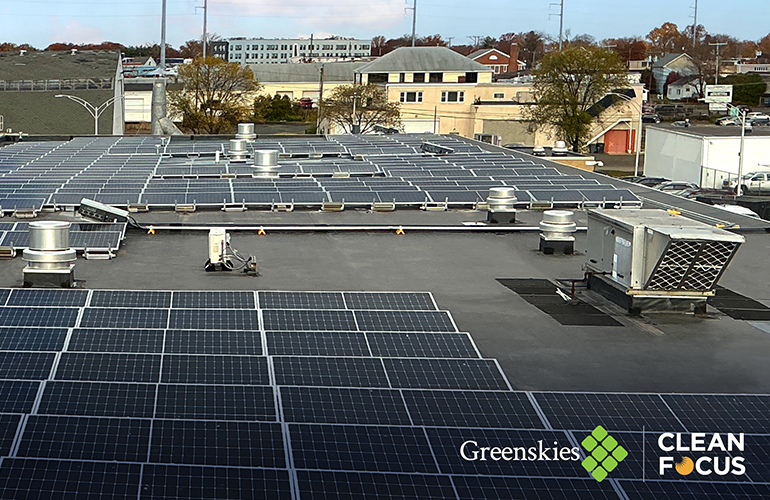
After state regulators rejected East Windsor’s argument that it’s carrying way too much of the burden of Connecticut’s solar energy industry, the town is preparing to appeal the approval of a highly unpopular solar array.
Municipal officials who were once advocates of DESRI Holdings’ enormous Gravel Pit solar project have changed positions, saying for more than a year that East Windsor no longer wants a 30-acre expansion of the facility.
They tried to persuade the Connecticut Siting Council that the town is now giving up too much acreage to solar panels, but at the beginning of March the council unanimously approved DESRI’s expansion.
The decision infuriated local opponents, who have applauded selectmen’s decision in mid-March to authorize legal action to try to reverse the vote. Residents are still circulating a petition against the Gravel Pit solar expansion and are up to a little over 2,400 signatures.
It is the kind of conflict that the Siting Council frequently encounters. Charged with advancing the needs of the entire state, the council periodically authorizes cell towers, trash plants, battery storage farms or solar facilities despite loud, angry — but very localized — opposition.
But East Windsor leaders insist this case stands out.
“Often times people think our constituents are bringing up NIMBY concerns,” state Rep Jamie Foster testified at the Capitol earlier this month. “What’s really happening is one community has all of the problems.”
In a letter to the council last year, East Windsor said it shouldn’t have to bear so much of the cost of solar energy.
“Achievement of the state’s renewable energy goals should be the responsibility of the entire state, not just a few rural towns,” the letter said. “The proposed expansion alone would be larger than Tobacco Valley Solar, which was the largest grid-scale solar project in Connecticut before Gravel Pit Solar.”
Foster, a Democrat whose district includes East Windsor, and First Selectman Jason Bowsza told state lawmakers that part of what’s wrong is the lack of enforcement when Siting Council-approved projects generate unwelcome side effects. Bowsza said homeowners nears large solar projects in East Windsor hear relentless high-pitched buzzing noises whenever the sun it out. The town has no authority to punish the owner, and no state agency has been willing or able to intercede.
“It’s intrusive on families and children, and there seems to be nobody willing to take ownership of addressing the underlying concerns of that,” Bowsza said. “It’s seemingly the purview of nobody to enforce.”
The Siting Council has maintained it needs independence from influence by town officials precisely because it must make decisions to benefit a whole region or the entire state, even when that displeases a specific community.
But Bowsza and Foster have been advancing an argument that after the Siting Council authorizes a project in a town, it does nothing to help ensure that the operators follow the rules and conditions they agreed to.
“They are adamantly not interested in addressing municipalities’ concerns,” Bowsza said.
East Windsor spent more than $60,000 on legal fees to take part in the months-long Siting Council proceedings on the Gravel Pit case, he said.
“We’ll spend more money on appeal. If we have to go beyond Superior Court into Appellate Court, we’ll have to spend more local dollars on that,” he said.
RevContent Feed
More in Uncategorized


Search
RECENT PRESS RELEASES
Related Post